DD
MM
YYYY

PAGES

DD
MM
YYYY

spot_img

PAGES

Home Blog Page 5623

Lafiya Telehealth, Beeptool Welcome NCC Delegation in Lagos

0

Let me thank a high powered delegation from the Nigerian Communications Commission (NCC) for checking our team today (Wed) in Lagos. We have successfully built and deployed a broadband service which uses TV whitespaces, delivering services which support telehealth services and payment systems. Provided there is a TV signal, our internet works.

We appreciate the support from the regulators, continuing from our playbook of proactively engaging them, and working with them on our designs, experimentations and processes.

Thank you for your support to BeepTool, LaFiya TeleHealth, etc. We are the only health-tech company in Africa which is also a medical device maker. Our vision is simple: every market, village square, church, mosque, school, etc will have a cloud hospital with medical diagnostic tools, linked into a cloud via IP addresses so that they can reach doctors in any part of the world.

Our technology will serve Nigeria – and we thank NCC for visiting. Please come back again, and again. And to Tekedia Capital investors who have supported the mission, we are confident that party time will be huge.

Why Temperature Data Loggers are Critical to the Covid-19 Vaccine Rollout

0

As we prepare to put the coronavirus pandemic behind us, it’s become clear that widespread and rigorous Covid-19 vaccine programs will play a very indispensable role. Even more important, the recovery from the pandemic must be supported by large-scale use of advanced data and monitoring technologies, which can ensure that the vaccine reaches the right people at the right time, in the right conditions.

And that’s where temperature data loggers will have a critical role to play. These nifty pieces of temperature-monitoring equipment have seen a dramatic leap in technology, features, and capacity in the last few years. So, they are well-equipped to stand up to the challenge of making sure billions of doses of potent Covid-19 jabs end up safely in the hands of people around the world.

Let’s talk about temperature data loggers and why their value to the Covid-19 vaccine rollout is absolute.

The Unique Covid-19 Vaccine Cold Chain Challenges

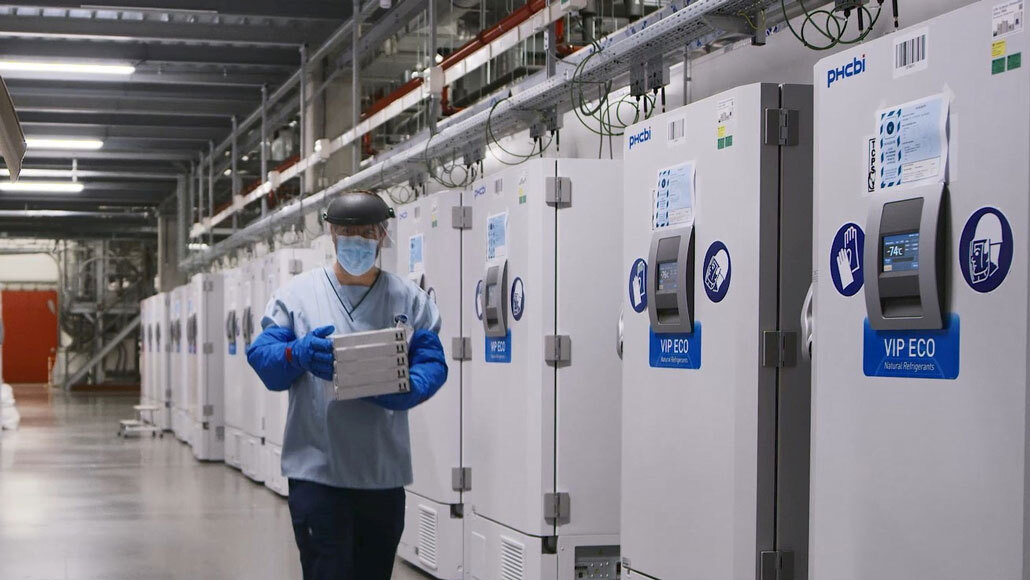
Much has already been told about the need for certain Covid-19 vaccines to be made, shipped, and stored at ultra-cold temperatures. Perhaps the BioNTech / Pfizer and Moderna variants are the two most talked-about coronavirus vaccines when it comes to the ultra-freezing storage requirement.

You see, carriers and logistics companies are well-equipped and experienced in cold supply chains of traditional vaccines like flu shots that must be stored and transported at a standard temperature range of between 2°C and 8°C. 

However, mRNA-based vaccines like the BioNTech / Pfizer are a different kettle of fish. They must be stored at extremely low temperatures between -80°C and -60°C to maintain optimal potency and efficacy. These ultra-cold conditions will keep fragile ingredients of the mRNA-based vaccines from falling apart for up to 6 months. 

But, once they’re broken out of the dry ice packs, the vaccine must be stored in a freezer at a temperature range of -25°C to -15°C for up to 14 days, according to the U.S. Center for Disease Control and Prevention (CDC).  

Even Johnson & Johnson’s Janssen Covid-19 vaccine, which doesn’t require ultra-freezing storage, can be kept at average cold supply chain temperatures of between 2°C and 8°C for only up to six hours.  

No matter the kind, if vaccine batches are exposed to temperatures outside of their recommended range, the heat introduced into the freezer or storage box will break down the fragile components, rendering the vaccine ineffective and thus unusable. 

While vaccine spoilage and wastage due to inadequate temperature controls and other logistical problems are not new to the industry, the need to address the issue is now more critical than ever. After all, we cannot afford to lose more precious Covid-19 vaccines — as we’ve recently witnessed in countries like France where around 25 percent of the delivered Oxford/AstraZeneca vaccine went to waste, especially now when dire vaccine shortages are being reported around the world.

Closer to home, numbers from 10 states reveal that well over 1 million Covid-19 doses have gone to waste since vaccine rollout kicked off in the U.S. According to the New York Times, the culprits for coronavirus vaccine wastage range from transportation and storage issues to equipment breakage and expiration.

It goes to show that constant monitoring of vaccine temperature and other environmental factors is crucial at every step of the vaccination process. We must keep an eye on every Covid-19 vaccine, every storage facility, every box, every refrigerator, every vaccination station, and every piece of shipping equipment.

And that’s shining the spotlight only on the Covid-19 vaccine cold supply chain. We must also consider the timely supply of all stabilizing agents, syringes, vials, and everything else that’s needed for the end-to-end vaccine rollout process.

Digital Temperature Data Loggers to the Rescue

The need for constant monitoring to ensure the vaccines are kept at ultra-cold temperatures poses a unique challenge to cold chain managers. For one, you can’t simply open the door of the cold box or freezer every time you want to check the temperatures. That would let in heat and end up degrading the fragile components of the vaccine.

That’s why everyone, from doctor’s offices to big-box pharmacies like Walgreens, has switched to automated temperature data loggers. The intelligent temperature sensors are placed inside the transport equipment or freezer to continuously keep track of vaccine temperature in transit and storage.

But temperature data collected by the loggers must be accessed and analyzed to ensure that vaccines are always in the right conditions. In the past, you’d have to use a USB flash dish or plug the data logged physically into a computer to retrieve the data so that personnel can inspect the temperature records for anomalies and cold chain breaches.

Thankfully, device companies like Dickson have come up with next-gen, cloud-based wireless cold chain data loggers. A set of these compact devices sit side by side with vaccines inside freezers or transport containers, continuously transmitting temperature data to cold chain managers, pharma companies, and clients.

According to Dickson, today’s data loggers are versatile and can be configured to not only transmit temperature data wirelessly but can also integrate with software applications for easy analysis, storage, and documentation. Some state-of-the-art digital data loggers can also double up as alarms, capable of sending out customized alerts via text, phone call, or email.

Because of the cloud connection, anyone with permission can access the monitoring data on vaccine temperature at any time, from anywhere, and using any internet-connected device, be it a computer, tablet, or mobile. Thanks to this setup, any damaging event (such as a breach of the cold chain) can be detected and quickly rectified before the vaccine starts to degrade.

Conclusion

Rolling out Covid-19 vaccinations has not been an easy walk in the park. Countries and pharmaceutical companies have to manage cold chain logistics of millions of Covid-19 jabs, all while battling widespread vaccine shortages, hesitancy, and misinformation. Data logger technology can help them ensure the successful delivery of safe and effective coronavirus vaccines by monitoring temperature every step of the way.

New Tekedia Mini-MBA Course: “Lean Principles in Supply Chain Optimization”

0

Every edition of Tekedia Mini-MBA is different. We use feedback and questions asked by our learners during live sessions to develop new courses and update existing ones. One of the things we noted in the supply chain and logistics course was the necessity of deepening optimization, agility & lean management within the supply chain framework.

To deal with that, we went to one of the best in that domain: he worked in DHL for close to 4 years and UPS for close to 10 years rising to Global Engineering EUD Manager – Global Logistics.  Because supply chain is commerce, he moved into the financial side, making sure we enjoy cocoa in many ways at Barry Callebaut Group, Belgium.

Chibueze Noshiri will teach a new course in the 6th edition of Tekedia Mini-MBA titled “Lean Principles in Supply Chain Optimization”. Our syllabus has been updated accordingly.

Welcome Mr. Noshiri to Tekedia Institute school.tekedia.com

Nigeria Unveils A National Vehicle Registry (VREG) To Ensure Inter-agency Database on Cars

2

Nigeria has unveiled a National Vehicle Registry (VREG). The project is designed to make it easier to track vehicles, reducing car theft in Nigeria while ensuring an inter-agency database on cars in Nigeria. This is a new playbook which among other benefits is designed to generate more revenue for the nation. More so, it could boost the insurance industry vehicle premium revenue. Time to unload on insurance stocks?

Comment by Mrs Zainab Ahmed, the Minister of Finance, Budget and National Planning“Providing the NCS with guidance in all clearing, duties, registration and redistribution of vehicles, targeted at ensuring that all vehicles are trackable, taxable and generate more revenues.

“The integration of the National Insurance Commission (NAICOM) onto VREG for aggregation and regularisation of vehicle insurance across the country.

“Communication between Central Bank of Nigeria’s (CBN) moveable asset registry and VREG to provide dynamic records of vehicular assets, thus boosting lendability to Nigerians.”

Mr Aliyu Ahmed, Permanent Secretary of the Ministry said“VREG portal would improve road user safety, enhance vehicle roadworthiness and improve traffic regulation enforcement.

“It will provide users, insurance firms and third parties with car facts and history of vehicles, thus creating a disincentive by ensuring that stolen, accident-wrecked and other unsafe vehicles are no longer brought into the Nigerian market.”

This is a redesign and formalization of the economy begins: all vehicle owners must be ready to pay annual taxes on their movable assets. And Nigeria can pick billions of naira on tax receipts from this.

Yes indeed, the nation needs that money as it needs funds to pay all the monies it has borrowed from the central bank especially in the last few years: “The Federal Government’s total borrowing from the Central Bank of Nigeria through Ways and Means Advances has ballooned to N15.51tn, rising by 2,286 per cent in six years, data collated from the CBN have shown.”

The N15.51tn owed by the Federal Government to the central bank is not part of the country’s total public debt stock, which stood at N33.11tn as of March 2021, according to the Debt Management Office.

The public debt stock comprises the debts of the Federal Government of Nigeria, the 36 state governments and the Federal Capital Territory.

The Nigeria’s N170 Billion Dividends Problem

1

Nigeria has an important job ahead: identity management. And that management is not just to know who is who before a bank account is opened. There is something even more critical: preventing people from using fake names and pseudonyms to buy financial products.

During the “golden years” before the Great Recession, banks were hitting initial public offers which were typically oversubscribed. For some people to capture more units, they engineered their names to get different allocations.

Unfortunately, some of those men and women have died – and magically, no one could trace their families! That is partly why Nigeria has close to N170 billion (about $410 million) unclaimed dividends.

The Securities and Exchange Commission (SEC) revealed that unclaimed dividends in the Nigerian Capital Markets rose to N170 billion as at December 2020.

This was disclosed by Director-General, SEC, Mr Lamido Yuguda, at the second post-Capital Market Committee (CMC) virtual news conference, on Friday. He added that the figure rose from N158.44 billion total unclaimed dividends as of December 2019, citing issues related to poor identity management.

It is a hard thing preventing people from doing crazy things! But I blame our primary and secondary education. Like I wrote the other day, in primary 4, some US primary schools are already introducing property rights to kids. In Nigeria, we do not care.

Do not get me wrong, we score many own-goals in the nation and some of these things have nothing to do with governments! Avoiding those own-goals may be the beginning of a national rebirth, economically.

Nonetheless, the government should not take over the dividends. Rather, this money should be invested since it came through those who have investing spirits. We can distribute the dividends to help support the companies of the future while making sure there is liquidity in case relations and families of the investors show up!