

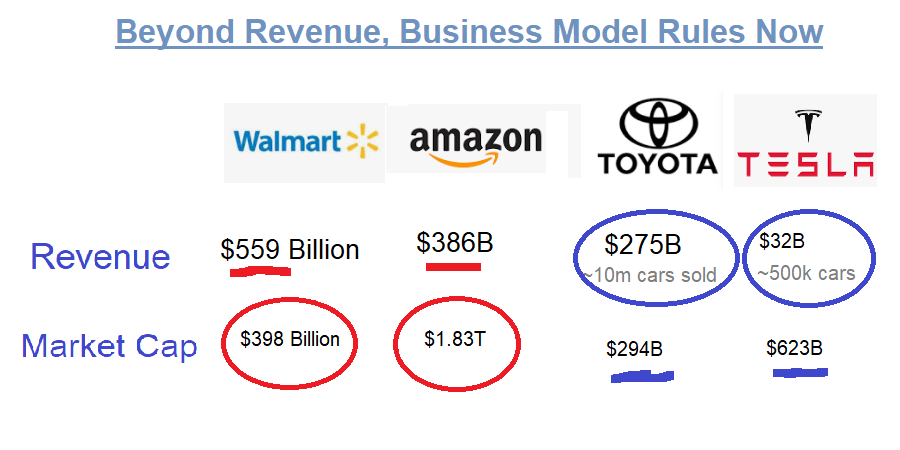
Innovators, how you make money matters. Yes, besides how much money you bring, the business model that brings that money is extremely important for investors. In this era, investors want to see a business model that delivers accelerating returns which keep compounding.
The Ascension in America – Blowout Quarters for BigTech
Two points:
Apple, Alphabet, and Microsoft had yet another blow-out quarter, as expected. Google parent company Alphabet managed to more than double its net income year over year, thanks primarily to YouTube’s online advertising sales. Apple TV and Apple Music helped lift the iPhone giant to 93% higher quarterly profits, though CFO Luca Maestri dashed hopes for that high level of growth to continue next quarter. And while Microsoft took a hit in its Xbox gaming subscription business, its profits still climbed 47% from the same period of 2020. All told, Apple, Alphabet, and Microsoft posted combined quarterly profits of $57 billion. (Fortune newsletter)
Mark Zuckerberg’s social media behemoth, Facebook, got in on the fun as well Wednesday. Facebook’s Q2 EPS of $3.61 and revenue of $29.1 billion handily beat analyst expectations; however, the company did warn of slowing growth: “In the third and fourth quarters of 2021, we expect year-over-year total revenue growth rates to decelerate significantly on a sequential basis as we lap periods of increasingly strong growth.” Facebook shares fell by as much as 5% after the close Wednesday. (Fortune newsletter)
Those are how the American big tech companies are performing. They are capturing massive value and returning the glory to America. Left and right, there is no sector in the world today that can deliver this type of numbers. I think it is high time Nigeria works harder on its technology policy by seeding a strong regime of entrepreneurial capitalism. We certainly need to capture value, at least in Africa.
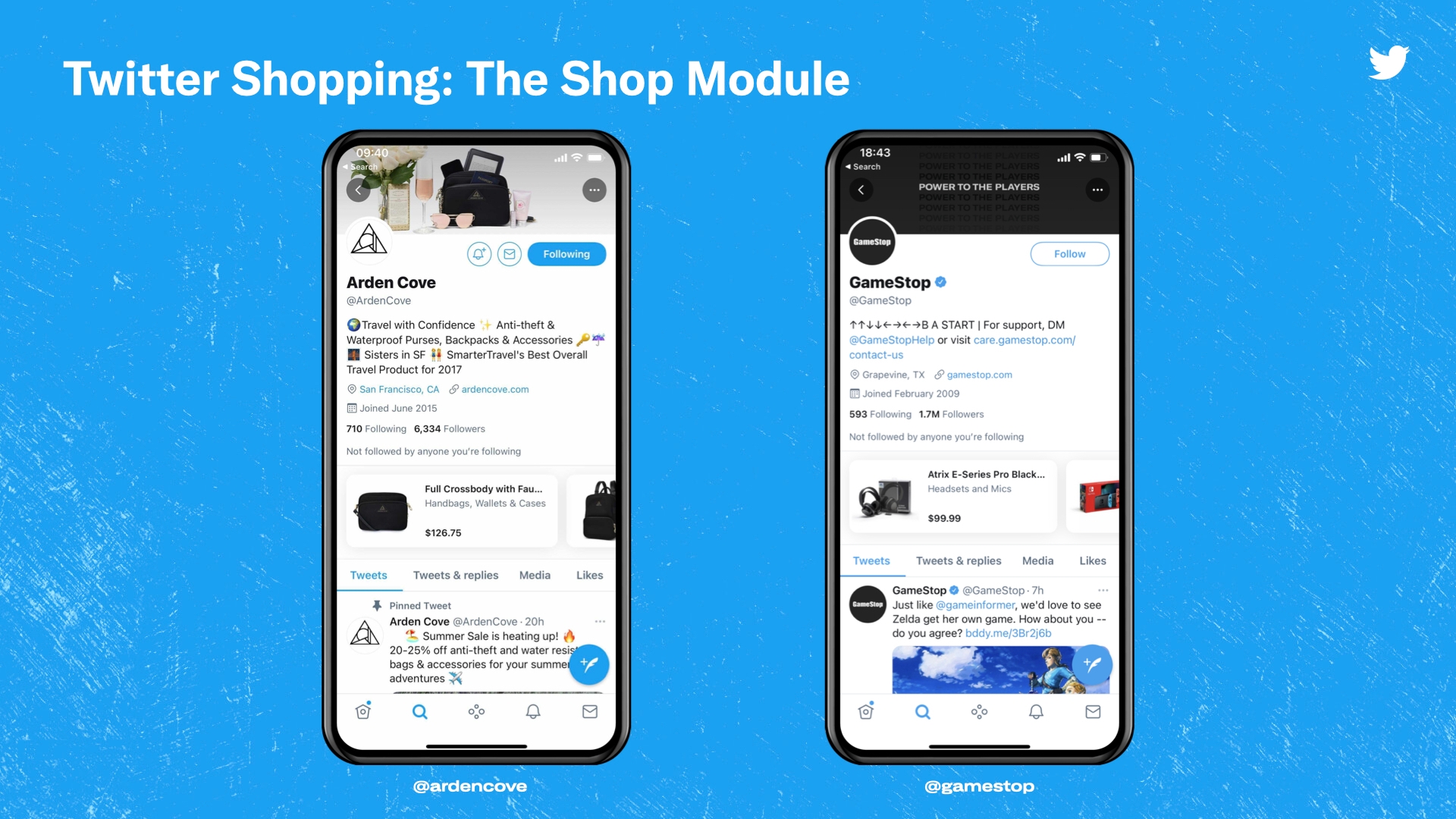
Meanwhile, there is a new feature in Twitter called Shop Module: “The Shop Module is a dedicated space at the top of a profile where businesses can showcase their products. When people visit a profile with the Shop Module enabled, they can scroll through the carousel of products and tap through on a single product to learn more and purchase — seamlessly in an in-app browser, without having to leave Twitter.”
Joining fellow social media giants like Instagram and Facebook in the shopping business is none other than Twitter. The company has started testing a new feature on its iOS app in the U.S. where a small group of participating businesses — including Arden Cove and GameStop — can feature products for sale near the top of their profiles. This marks the latest step from Twitter to monetize its platform, having recently rolled out Tip Jar and the long-awaited premium subscription service Twitter Blue.
Money Anoints in Nigeria As The Politician Spreads [Video]

Obi Cubana, this is how to do it – you spread it and keep your job as a politician. Let me leave the name and the constituency of this politician to avoid unnecessary distraction. But one thing you should know is this: spreading money is an evolving entertainment in Nigeria as poverty scales, and all the laws the central bank has put in the books, criminalizing the behaviour, have failed.
As those men and women LOOK up for the naira manna to fall, the politician smiles for another 4 years. He knows what works – stomach infrastructure because you need that before you will notice if there are schools, roads and light. As always, if Nigeria did not elect Buhari as president, historians would have anointed him as the greatest leader who could have fixed Nigeria because he could have stopped many crazy things.
To be fair here: Obi Cubana said he spread money to polish his brand. The politician is spending to improve his electability. If you check, the destination is the same: money anoints in Nigeria.
Today, Naira hit N522/$. It used to be different as this photo below can show.

Obama Now “Plays” for NBA Africa As A Strategic Partner!

The National Basketball Association (NBA) has announced that former President Barack Obama has joined NBA Africa as a strategic partner. President Obama will help advance the league’s social responsibility efforts across the continent, including programs and partnerships that support greater gender equality and economic inclusion. In this capacity, President Obama will have a minority equity stake in the new venture, which over time he intends to use to fund Obama Foundation youth and leadership programs across Africa.
NBA Africa conducts the league’s business in Africa, including the Basketball Africa League (BAL), which held its inaugural season in May featuring 12 of the top club teams from 12 African countries. NBA Africa is focused on expanding the NBA’s presence in priority African markets, deepening the league’s engagement with players and fans across the continent, and continuing to grow Africa’s basketball ecosystem through programs like the Jr. NBA, Basketball Without Borders (BWB) Africa and NBA Academy Africa. In addition, NBA Africa has launched several social responsibility initiatives aimed at raising awareness of gender-based violence, supporting girls’ education, and improving the livelihoods of African youth and families.
“The NBA has always been a great ambassador for the United States—using the game to create deeper connections around the world, and in Africa, basketball has the power to promote opportunity, wellness, equality, and empowerment across the continent,” said President Barack Obama. “By investing in communities, promoting gender equality, and cultivating the love of the game of basketball, I believe that NBA Africa can make a difference for so many of Africa’s young people. I’ve been impressed by the league’s commitment to Africa, including the leadership shown by so many African players who want to give back to their own countries and communities. That’s why I’m proud to join the team at NBA Africa and look forward to a partnership that benefits the youth of so many countries.”
Let’s expand basketball because sports work!
Understanding Forward Integration
Every business chasing growth does one of three things; consolidate their present space (expanding their market share), integrate horizontally (getting into new businesses) or integrate vertically (getting deeper into other parts of their business). The biggest technology firms in the world have gone past consolidation; most of them are presently so big, they’ve consolidated their respective markets to the extent the government is now concerned about their growth. One major metric to know when your business is hugely successful is when the regulators start coming after you – what do Facebook, Apple, Amazon and Google have in common? They’re all trillion dollar businesses, what else do they have in common?
The United States Senate is looking for ways to break them up due to antitrust concerns. You can’t really blame them, for context sake, the combined net worth of Facebook, Apple, Amazon and Google is about US$7.1 trillion, this is more than the GDP of Nigeria multiplied by two – then multiplied by two again. Twenty years ago Microsoft was in this shoe, they’ve surprisingly learnt how to avoid the lime light and stay underneath the shadow while they grow an insanely successful cloud business (Azure) and make more than US$143 billion in annual revenue. For the purpose of this piece, the three most successful businesses in Nigeria by order of importance are Bitcoin, MTN and Multichoice.
If Bitcoin was a company, at more than US$400 million in annual recurring revenue from local trades alone (before the CBN ban), Bitcoin is likely on par with Dangote Cement on the basis of profitability. When you process more than US$400 million – don’t pay taxes, and are completely self-regulated, it’s only a matter of time before they come after you.
The next two companies that exemplify success in Nigeria are MTN and Multichoice; one in two Nigerians are on MTNs mobile network, the former is reportedly owing Nigeria US$5.2 billion, while the latter has refused to pay more than N1.8trn (US$4.7 billion) it reportedly owes in taxes (a number I have strong reasons to believe was probably made up). When you make more than N7 billion (US$17 million) in 3 months by keeping 22 young people in a house and letting them do whatever they like while they take orders from some strange guy who is probably too shy to show his real face, it is also only a matter of time before they come for you. I hope Obi Cubana is reading this.
Anyways, Horizontal integration is usually what happens when you’ve made so much money for your investors and you’re looking for new ways to satisfy their insatiable desire for profits – like Netflix going into gaming, Facebook’s foray into VR, and Apple gradually turning itself into a Fintech by offering BNPL (Buy Now Pay Later) services.
However, vertical integration is where all firms try to compete to succeed.
Vertical Integration
When you’re vertical integrating, you’re usually trying to achieve two core goals – create a better user experience for your users by owning (more of) the end to end user experience of your product.
If you own the restaurant, the raw material production and the transportation chain, you’re vertically integrating – you can have full control over raw material supply and product delivery for your users, and optimize your processes accordingly. The second core reason you should vertically integrate is cost leadership. There are two major ways any business can out compete it’s competition by pricing; one is if it is high on steroids (VC money) and chasing growth (Blitzscaling) by all means necessary (Uber, Jumia etc), if everything goes as planned, the startup will usually have a large user base it may then be able to profitably sell to, if it doesn’t – they will either have to pivot to something else, or go home. The second way you can out compete the competition on pricing is a strong vertical integration strategy. Excluding the fact that Amazon has a cash cow in AWS (Amazon Web Services) that can bankroll any project, it can also outcompete any player in its space via pricing because it holds a good portion of the end to end delivery solution and can essentially pay lesser than any player to deliver its solutions to its users.
Vertical integration is a powerful strategy that can help you advance your business, depending on what part of the matrix you fall into.
However, not every business should vertically integrate. Sometimes, you’re better off staying in your lane and making the best of where your strength and domain expertise keeps you. A good example of this is the food delivery space.
Chicken Republic is a great business, with more than 70 outlets scattered nationwide. However, Chicken Republic is not a technology firm, and they should not try to be one. In a bid to take advantage of the increased demand for on demand food delivery, Chicken Republic has gone ahead to develop a mobile application. The Chicken Republic app is a clear proof that they are not a technology business. The Mobile app has a little over 5,000+ downloads, and as at the time of writing this piece, the first comment in the ratings section says USELESS APP.
As much as I am critical of Jumia as a business, Jumia Food’s is doing a great job in aggregating restaurants into a single platform and making it easier for users to order food from anywhere in Lagos. I really hope these services really work, and it doesn’t become a situation of waiting till 2pm for breakfast you ordered at 10am to be delivered, or a classic case of what I ordered versus what I got. However, I personally believe that the potential winner in this space will likely be Gokada. The location tracking tool on their riders may be the game changer as it makes it easier to reduce wrong expectations; like when the rider is still at Ikeja GRA but keeps telling you he’s at Cement Bus stop (the same bus stop he has been at for the past 30 minutes).
Gokada’s Super app strategy is a brilliant way to consolidate their market.
Forward Integration
In essence, there are two types of vertical integration; you could either integrate forward or integrate backward. Most smart businesses integrate backward to (like I said earlier) create a better user experience for their users, drive down their cost of production or even create a new product lineup. So think about Apple making their own M1 Chips for their iPhones and hardware devices which serve as a way to both bolster their user experience (the M1 is a massively powerful chipset) and to probable drive down costs in the long run, Nestle going into farming to secure some part of its supply chains, lower down costs, and reduce its dependency on third party suppliers, or Samsung’s decision to build its own Exynos Chipset to cut down its reliance on Qualcomm, and its decision to build its own displays which it actually sells to Apple, Gionee, Sony, Acer and the likes. Selling to your competition is actually a complex issue – I imagine Samsung executives praying for their competitors to fail but realizing that the success of their competitors is also the success of their display business, a business unit bringing in more than $20 billion a year for the conglomerate, but I digress. TeamApt, the Nigerian Fintech firm is integrating backwards when it announced it gained a switching license from the CBN. GTbank, Zenith Bank etc owning their own payment gateways are also doing the same thing.
Forward integration is almost always a bad idea. Most businesses who integrate forward do not usually succeed. Forward integration occurs when a business decides to move forward in its vertical integration initiatives and take a more customer facing role. Forward integration usually gives businesses cost advantages, but gaining adoption from customers is usually an entirely different ball game altogether.
Google decided to switch from just providing the Android operating system to building out its own smartphone to run on the same OS. It started out with the Nexus brand which it left for third parties to design and develop for them – which had subpar performance, then they decided to throw money at their problems, buy Motorola Mobility for US$12.5 billion, convert 2,000 Motorola Mobility employees into Google employees to work on their smartphone (and other hardware) projects, and they still sell around 7.2 million pixel phones a year. For context purposes, Samsung sells more than 250 million smartphone units annually.
Most companies have challenges with Forward integration because forward integration is less about superior technology (although this is important) and more about brand strength and user perception. I’ve had a good number of arguments in recent weeks about Kuda Bank not being an MFB (Microfinance Bank) (although it operates with an MFB license), Kuda is a Digital/Neo bank that brands itself as the bank of the free. I know at least three people who use their Kuda account to actively receive money, but I have however not met anyone – not a single living and breathing soul that uses a MFB for everyday transactions. Kuda’s strength isn’t necessarily its technology, it is its superior brand image and perception among younger demographics that makes it standout and lead its market. Breaking that product and brand moat will take a lot more than just throwing money at problems.
Chicken republic has a higher chance of success if it were to backwardly integrate to take full ownership of the logistics required to run deliveries (if it has enough delivery volume), than Gokada has if it decided to open up its own restaurant chain to serve customers food. Chicken Republic already has a brand name in the fast food space, Gokada has none.
Conclusion
Forward integration is usually a bad idea for most businesses to do, by taking on the frontend and customer facing roles of any business, especially when they’ve spent the majority of their time delving in the back end of a products architecture and don’t have a strong customer brand, they set themselves up for unnecessary and meaningless competition in spaces they aren’t properly wired to compete in.
Inspired By The Holy Spirit