DD
MM
YYYY

PAGES

DD
MM
YYYY

spot_img

PAGES

Home Blog Page 5685

The Age of Sachetization and Why Pricing for $3 Daily Spending Captures Most Value in Africa

0

You have these elements when it comes to business playbooks:

  • Nature to consumers (N2C): Nature provides them to consumers and the products are not available under normal circumstances to be monetized. Examples are air and village clean water from the stream.
  • Government to consumers (G2C): If the Nigerian government goes ahead with its e-naira digital currency, moving deposits from commercial banks to the central banks, that would be a great example. Companies can still monetize on it but lower in the food chain.
  • Business to Consumers (B2C): an example is Tekedia Mini-MBA where companies serve consumers, fixing their frictions.
  • Business to business(B2B) like Fidelity Bank Plc buying cars from Innoson Motors. 
  • Consumer to consumer(C2C ): this is peer-to-peer where people attain equilibrium and execute business transactions. That is happening in Nigeria with the cryptocurrency ban.
  • Others: B2B2C, etc

As a founder, picking the space to play in these options and how you serve the clients is the most critical decision you would make. Largely, where you commit will determine your business model. In Tekedia Capital, I will not fund a B2C company in Rwanda because it does not have the numbers. But I am open to B2C in Nigeria. Rwanda can only be attractive for B2B provided I can get early commitments for the product. So, geography shapes your playbook.

Once that is determined, the next question is this: how do I monetize now that I have known how to hit the market? For that one, you look at different indicators. One is how much can people afford to pay? Recently, breaking the pricing into “sachets” helps. That ensures people can buy what they can afford.

Flour Mills Nigeria Plc has improved its pricing and the market rewarded it. Nestle is now the queen of sachetization and it is doing amazingly fine. Cadbury is struggling because its products are not that well optimized on pricing. Unilever is also under siege but it has to clean its books first. In these entities, having well priced products, in segments that customers can afford, at their levels, is very important.

[…]

This is the age of sachetization in Nigeria irrespective of whatever you are selling. We are doing it in Tekedia Mini-MBA with bands for core courses, review of labs, projects supervision, etc. Having broken all into “sachets”, our members have the freedom to pick as they need. If we had lumped all together, resistance to conversion would mount. Pay attention to your pricing playbook – it is a key factor now to success in Nigeria.

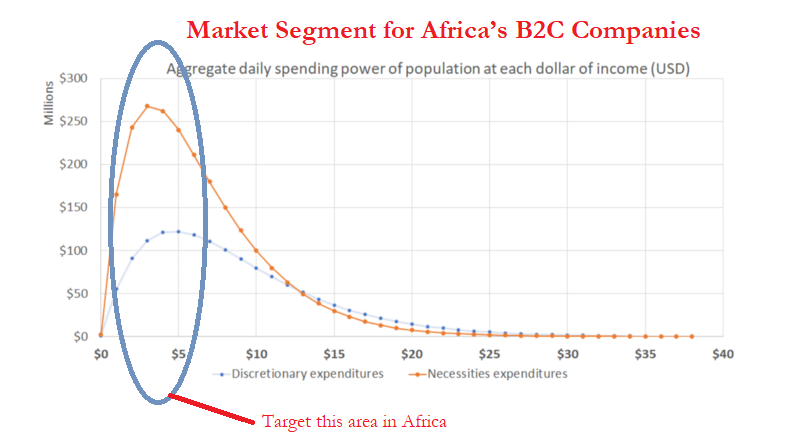
To a large extent, Africa’s largest consumer base for B2C is at $3 daily spending bucket. So, if you want the highest possible capture of the population, that product must be priced around that point. There are many ways to do that including packaging in sachets and doing Buy Now Pay Over Time. 

This is it: to win in Africa, you must understand your pricing playbook and the broad mechanics of product pricing. The market is super sensitive to prices.

The Core Market Segment in Africa – Middle of the Pyramid

What Is Your Sachetization Playbook in Nigeria?

African Startup Founders: The Special Party Will Begin In Year 2025

1

I have seen a pattern in most things in technology: it typically begins in the United States. Then, in 3-5 years, it diffuses into emerging markets at scale. Then, American firms begin consolidation. They always begin with India – and after 5-7 years, what they have done in India is replicated in Africa. That pattern has been followed on opening offices, design centers, labs, etc. In the last three years, I have seen a massive acceleration of US firms acquiring Indian companies.

YouTube just picked India’s SimSim this week, to boost YouTube ecommerce. With most US big tech largely barred from acquiring within the US (antitrust), outside America will see action. And you know what: I expect them to come to Africa by 2025!

YouTube said on Tuesday it has acquired social commerce startup Simsim. The Google-owned firm said the acquisition is to help viewers discover new products and find expert advice they trust.

The firms did not give details of the deal, but two people with knowledge of the matter told TechCrunch the Indian startup was valued at over $70 million.

Two-year-old Simsim had raised about $17 million prior to today’s announcement and was valued at $50.1 million in its 2020 Series B financing round.

People, from 2025, American dollars will come, shopping for startups in Africa to acquire at scale. My playbook is to prepare for that moment: mergers or acquisition would be HUGE. They want exposure to add more digits in Wall Street’s market caps, and they will buy themselves into the soul of Africa’s entrepreneurial capitalism.

This is the age of application utility and Africa’s startup ecosystem will begin to experience exits at scale from 2025. Yes, what happened to Paystack would become very common. I am investing and building for that future. Not all will sell, but because of the buy-activity, those that stay the course will see massive value accumulation.

Be ready ,.. #build #innovate #move

LinkedIn Comment on Feed

My Comment: Are we now building for Americans to acquire? How is this different from the playbook of using permanent residency and scholarships to weaken Africa? We don’t seem to understand what these guys have done to us already, and we are still providing them ropes to hang us.

Why is everyone worried about China? Because it managed to upend the playbook the West has used to keep every other region on the ground, and China is now the bad guy…

How has selling natural resources to the West helped Africa rise? The people who make the purchase fix the price, they take the valuables and give you paper money, and we celebrate. Now we want to do same with our start-ups too? We will remain owned forever then.

I think western education the way it’s currently structured is weakening our people, we now give so much for so little, and we are even grateful to them.

For the sake motherland, our heritage and pride, the idea of wholesale of our innovations should be discouraged, the best we can do is to give them a small slice, they will need us more than we will need them.

So, for me, let that 2025 be when African start-ups will take their rightful position in global economic power play, I wasn’t brought in this world to be enslaved by any race.

My response: It is continuum as in mathematics – if you acquire them, they go and build new ones, and after 3 cycles, they attain equilibrium. China’s model is not applicable as using state capitalism, the government became a platform for exit. We need liquidity at the first cycle and after that maturity will come later. For building to host at all costs will emerge from 2032.

Comment: Ndubuisi, while we need money to attain equilibrium, we need to identify our precious jewels, the poster children, and keep them away from wholesome acquisition, because they will become symbols of our heritage; some things cannot be repeated once sold.

My response: The people funding African startups today are not mainly Africans – they will want quick exit. By after two cycles. Africans will have capacity to fund for long-term. By then, our people would have made money and can stay the course. Things take time.

My response: “by quick exit that means they are doing debt financing and not equity…..” . But I was referring to VCs who have been investing in African startups. Most are foreign funds or money. They are actually taking equity. But they will want to be out as quickly as possible. So, if the big tech comes they will dance. Today, those with money in Africa are not investing in tech at scale. The young people in tech will end up doing the investing but they have to exit and money made first!

Robinhood Files for IPO, Targeting $35 Billion Valuation

0

After dealing with a scandalous trading conflict that pitied it against GameStop earlier in the year, Robinhood Markets Inc. is targeting a valuation of up to $35 billion in its initial public offering in the United States. The company disclosed this in a filing on Monday, in a listing that will become one of the biggest in the year.

In January, the online brokerage was caught at the center of a confrontation between a new generation of retail investors and Wall Street hedge funds. Last month, the trading platform was fined $70 million by the financial industry regulatory authority (FINRA) over allegations that it caused customers “widespread and significant harm” on multiple different fronts over the past few years.

Reuters reported earlier that Robinhood was aiming for an IPO valuation of up to $40 billion. The filing reveals price and expected ownership of shares from individuals and companies including Salesforce.

About 55 million shares are being offered in the IPO to raise over $2.3 billion. Nearly 2.63 million of those shares are being offered by the company’s founders and chief financial officer, the filing showed. Proceeds from those will not go to Robinhood.

Shares are expected to be priced between $38 and $42, the company said.

Salesforce Ventures, the investment arm of software provider Saleforce.com Inc, is looking to purchase up to $150 million worth of Class A common stock at the IPO price, the filing showed.

Robinhood was founded in 2013 by Stanford University roommates Vlad Tenev and Baiju Bhatt. They will hold a majority of the voting power after the offering, the filing showed, with Bhatt having around 39% of the voting power of outstanding stock while Tenev will hold about 26.2%.

The company’s platform allows users to make unlimited commission-free trades in stocks, exchange-traded funds, options and cryptocurrencies. Its easy-to-use interface made it a go-to for young investors trading from home during coronavirus-induced restrictions and its popularity has soared over the past 18 months.

The trading mania in the so-called meme stocks helped fuel a four-fold jump in its revenue over January to March, Robinhood’s IPO filing earlier this month detailed, but the quick expansion came at a cost as Reuters report reveals.

The company faced criticism after it was forced to curb trading in the middle of the surge this year in GameStop and other previously beaten-down stocks.

At the time, Robinhood was forced to raise $3.4 billion in emergency funds after its finances were strained by the massive jump in retail trading and a resulting jump in capital demands from clearing houses.

That round valued the company at around $30 billion, according to people familiar with the matter.

Robinhood’s stock market flotation comes amid a record 15-month run for the U.S. IPO market, as investors rushed to buy shares of high-growth tech companies.

The company plans to list on the Nasdaq under the symbol “HOOD”. Goldman Sachs and J.P.Morgan are the lead underwriters for the offering.

YouTube Acquires India’s Social E-commerce Startup, Simsim

1

YouTube said on Tuesday it has acquired social commerce startup Simsim. The Google-owned firm said the acquisition is to help viewers discover new products and find expert advice they trust.

The firms did not give details of the deal, but two people with knowledge of the matter told TechCrunch the Indian startup was valued at over $70 million.

Two-year-old Simsim had raised about $17 million prior to today’s announcement and was valued at $50.1 million in its 2020 Series B financing round.

The Gurgaon-headquartered startup helps small businesses in India transition to e-commerce by using the power of video and creators. The startup’s eponymous app acts as a platform to connect local businesses, influencers and customers.

The thesis, according to Rohan Malhotra of Good Capital, an early backer of Simsim, is: “micro-influencers are more effective at building a targeted audience (growth), creating entertaining experiences (retention), building trust (higher value) and personalizing messaging (conversion). Consumer social platforms (Facebook, YouTube, Instagram, etc.) cannot meaningfully monetize via advertising-financed models in India; this unlocks the opportunity for more deeply integrated transactional platforms. New internet users in India need an interactive seller-led experience to replicate the offline e-commerce experience this market is used to.”

He, like everyone else, declined to comment on the size of the deal. The Simsim chief executive didn’t respond to a query about the acquisition Monday evening (IST).

“We started Simsim with the mission of helping users across India shop online with ease, enabled through small sellers and brands showcasing and selling their products using the power of content by trusted influencers. Being a part of the YouTube and Google ecosystem furthers simsim in its mission,” Simsim cofounders Amit Bagaria, Kunal Suri and Saurabh Vashishtha said in a joint statement. Bagaria and Vashishtha previously worked together at Paytm.

“We cannot think of a better ecosystem in which to build simsim, in terms of technology, reach, creator networks and culture. We can’t wait to be part of YouTube and are excited to build simsim within the most admired tech company in the world.”

For YouTube, the acquisition will enable the video streaming giant help small businesses and retailers in India reach new customers in even more powerful ways, wrote Gautam Anand, VP of YouTube APAC, in a blog post.

The video streaming service, which reaches over 450 million monthly active users in India, doesn’t plan to make any immediate changes to Simsim and the startup’s app will continue to operate independently “while we work on ways to showcase Simsim offers to YouTube viewers,” he added.

Tuesday’s announcement is Google’s latest push in India, where it has committed to invest $10 billion in the next couple of years. The internet giant has also backed Indian startups Glance and DailyHunt, both of which operate short-video apps.

“With over 2500 YouTube creators with over one million subscribers, and the success of YouTube Shorts, which we launched in India first, we’re committed to bringing the best of YouTube to India and growing the creator community by making it even easier for the new generation of mobile-first creators to get started,” he added.

Simsi has been helping small businesses in India transition to e-commerce by using the power of video and creators. The Simsim app is an intermediary app where local businesses, influencers and customers meet.

Creators post video reviews about products from local businesses, and viewers can buy those products directly through the app. The app uses three languages, Hindi, Tamil and Bengali to post videos, which helps retailers to see items in their preferred language.

Google said it is committed to expanding the experience of YouTube Shorts, by bringing the best of YouTube to India to grow the creator community by making it even easier for the new generation of mobile-first creators to get started.

Lafiya Cloud Hospital – A Telehealth System At Best

1

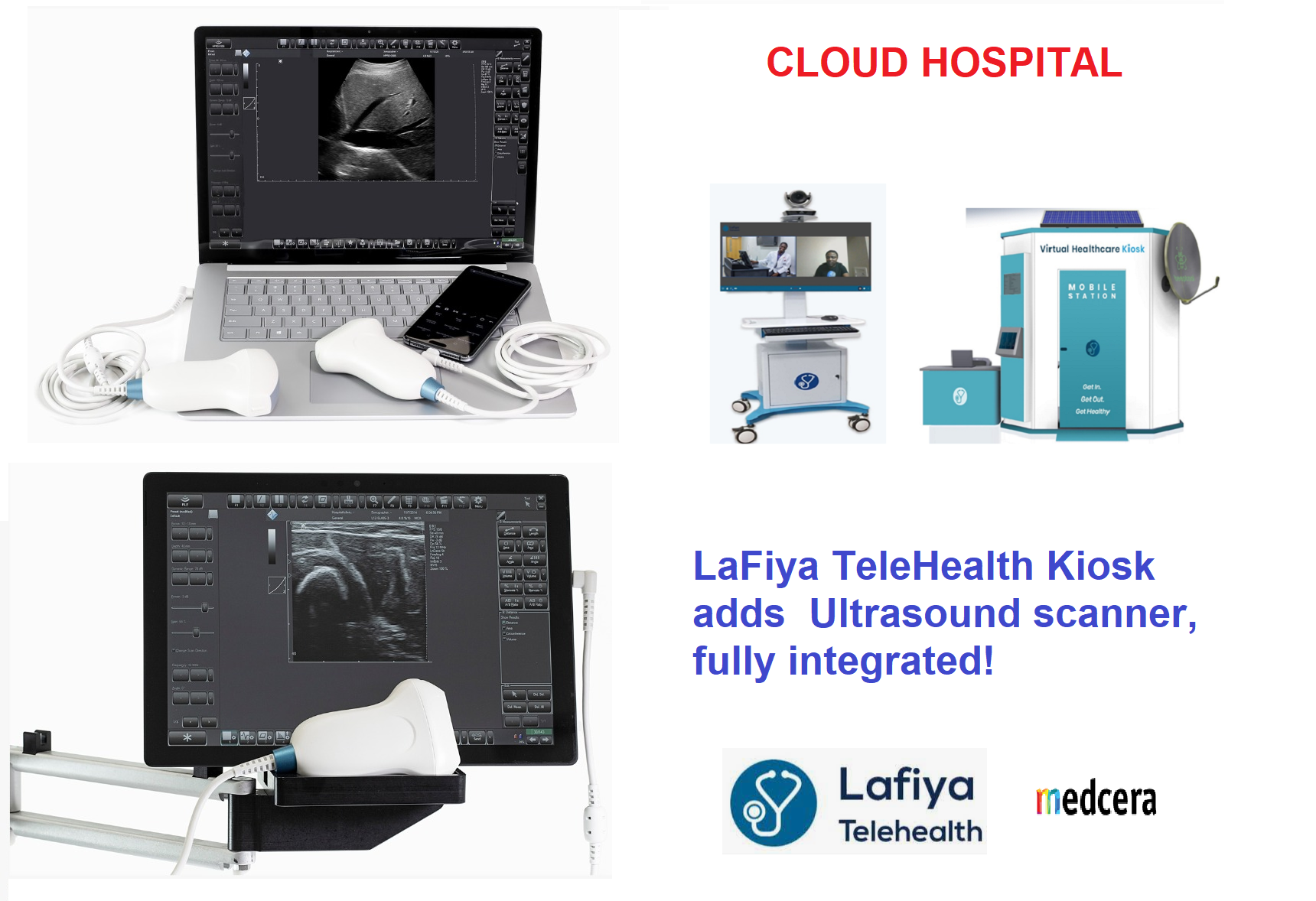
We are happy to announce that Tekedia Capital portfolio company which recently sealed a deal with Mastercard has  fully integrated ultrasound scanner to its Cloud Hospital. The “hospital” which can be positioned in churches, village squares (hello Ovim), schools, offices, mosques, INEC voting stations, etc now come equipped with satellite connectivity via Beeptool, solar charging station, sensors and diagnostic equipment (typical in hospitals), and so on.

Once you work into the “hospital”, you can dial a doctor via the mobile app and as the doctor speaks with you, he/she can ask you to take your temperature reading (we have a thermometer there) or other things.  This is Telehealth at the best; we have unified atoms and bytes, unbounding the constraints on the geography of doctors (the scientific miracle people).

Our vision is this: doctors should not be tethered to any specific location. Yes, we hate brain drain but if that happens, even in UK, Canada, etc, African doctors can still support.

In the next coming weeks, you will be seeing these solutions in your neighbourhood. A state government is partnering to grow micro-health entrepreneurs who can be trained to “operate” the equipment and improve the lives of people in urban and rural communities. And who knows: you may like to order one.

Have access to American doctors. Have access to Nigerian doctors. Have access to British doctors. etc. LaFiya TeleHealth is amazing; EHR powered by Medcera (email contacts on these websites for inquiries).

We loaded this device with the following, among others:

  • 12 lead ECG, URT (Urine Routine) & GLU (Glucose).
  •  UA (Uric Acid) & Blood Lipid (TG, LDL-C, HDL-C, TCHO).
  •  Non-invasive Blood Pressure (NIBP) & Infrared Forehead TEMP.
  •  Pulse Oximeter/SPO2, Heart Rate (HR) & Pulse Rate (PR).
  •  GLU (Blood Glucose) & UA (Uric Acid).
  •  GLU Strip 50pcs/bottle & UA Strip – 50pcs/bottle.
  •  Urine Analyzer & 11 items urine test strip 100pcs/bottle.
  •  Dry Biochemical Analyzer & Blood lipid strip 15pcs/bottle & Adapter.
  •  Hemoglobin Analyzer & HB strip 50pcs/bottle.
  •  WBC Analyzer & WBC strip 100pcs/bottle for 100 persons..
  •  ETC

We #Move

We are actually more than a telehealth company. We are a medical equipment manufacturer with all systems engineered for IP connectivity-based world where we connect them via cloud. If you live in Zamfara and have a health app, you can speak with a doctor. But with our solution, our sensors/tools will make it possible for you to take temperature reading, do ultrasound, etc right in your home or village square or church We go beyond talking to a doctor at bytes, we deal with atoms, capturing patient data with our devices.

Families are buying the tools and right in Lagos, they call American doctors and have conversations based on data acquired via our many diagnostics tools.

We are excited for the promise of the future. Engineers save nations and we are engineering for Africa’s healthcare future.

Lafiya card