DD
MM
YYYY

PAGES

DD
MM
YYYY

spot_img

PAGES

Home Blog Page 5692

The World Bank Blames CBN for Nigeria’s Current Forex Paralysis

1

“The way the exchange rate was managed limited access to FX and thus adversely affected investor confidence and investment appetite,” the World Bank.

The Central Bank of Nigeria (CBN) ran a really brilliant, in my opinion, exchange rate playbook just before 2016. The apex bank kept the exchange rate  around N197/$ for years after it moved from around N157/$. They created and deployed tools, using the basic economic framework: if you improve supply, keeping demand constant, price will fall. But here, at least, the price will stay constant. Magically, businesses were not worrying over exchange rate as they curtailed the movement within an optimal equilibrium point.

But starting in 2016, the apex lost its mission. It began a season of rascality and that old nuanced movement vanished. They discarded what was actually working, and many bad things started happening. Of course, many would blame the fall of crude oil and the mild recession. Nonsense. For you to know that it has nothing to do with crude, put the graph of crude oil and the exchange rate volatility in Nigeria, you will see that the correlation is not strong since 2016. If the correlation is strong, at least, since the oil price stabilized by being perpetually down, it ought to have stopped crashing.

For a long time, Nigerian naira has been under the fearful trio of massive speculation, fear of devaluation and high demand. Add the economic apocalypse of three exchange rates depending on your status in the society – official rate, IEFX (I&E Foreign Exchange Window) and the black market rate – you see confusion.

So, it is not a surprise that the World Bank is blaming CBN for the current forex crisis. The World Bank thinks that CBN mismanaged the foreign exchange regime and that mistake is what we are paying for in the fall of Naira against major global currencies: “According to the World Bank, the central bank’s management of the exchange rate reduced supply in the market thus affecting investor confidence and ultimately leading to a ditch of the official market for the black market.” That is very blunt and I do hope the CBN pays attention.

Sure, we are not saying that the World Bank is a high priest which knows it all. But one thing I know is this: the current state of the Naira is not giving many people confidence to ship money from the US to Nigeria. People want stability in a currency before they can buy stocks, treasury, etc so that when you exit and have to return the funds back to America, your hands would not be burnt.

“In May 2021, the CBN formally took concrete steps towards rates unification between the official and IEFX rates. However, the IEFX rate continues to be managed and is not fully reflective of market forces. Furthermore, there remains a 20 percent premium between this unified rate and the parallel market rate. The two-month naira-for-dollars scheme introduced by the CBN in March 2021 to serve as an incentive for increased remittance inflows through formal channels was extended indefinitely in May and was preceded by regulatory directives in December 2020—that mandated all licensed operators to pay remittances in dollars. While this may indeed encourage the use of the formal channels, it is not clear that incentive payments will increase remittances to the country,”

“While the CBN has taken steps towards operationalizing unification of exchange rates, greater flexibility will be necessary to support the recovery. Until oil companies are allowed to sell FX receipts to IEFX bank participants, CBN would still have an important role to play as supplier of FX. In this scenario, participating banks in the FX market will start to play an expanded role that goes beyond just executing buy/sell orders of its clients to start acting as market makers, meaning that they start to quote two-way prices buying and selling on its own behalf and carrying a stock of FX.

With increased flexibility, the CBN could start intervening only to smooth large fluctuations and work toward ensuring a single, market-driven rate. Keeping market stakeholders fully informed of such efforts would help attract both domestic and foreign investment. The right mix of exchange-rate flexibility and expanded supply (e.g., through banks and FX agents) would enable the FX market to efficiently allocate resources, which would allow the CBN to focus its interventions on smoothing large and disruptive FX fluctuations.”

People, this is evident: if confidence is low on your currency, speculation rises and bad things happen. What brings low confidence? That is what the World Bank refused to touch in that report! I expect CBN and the government to search their economic hearts!

Meanwhile, World Bank has revealed that inflation has pushed about seven million Nigerians below the poverty line in 2020 alone: “According to the report, the rise in inflationary pressure has been driven primarily by surging food prices, as Nigeria’s rate of inflation rose steadily throughout 2020 and reached a four-year high in March 2021.” That is something the government needs to fix.


Nigeria Has Recovered $20 million Worth of Cryptocurrency from Criminals

2

We are now learning some of the reasons why the Central Bank of Nigeria (CBN) banned the use of cryptocurrency in the Nigerian banking ecosystems. It turns out that criminals were using the digital currency to perpetuate their frauds.

According to the Executive Chairman of the Economic and Financial Crimes Commission (EFCC), Abdulrasheed Bawa, the commission has recovered about $20 million worth of cryptocurrency loot from cybercriminals: “We have seen time and time again where cybercriminals are using this avenue to get their proceeds of crime. Before it used to be through money transfer agencies like Money Gram and of course Western Union. Now they have gone E. They will defraud somebody. They will get gift cards, exchange them on the dark web, and they will use the proceeds to buy crypto, and they can get it to their e-wallet, and then, of course, they can sell and get their money.” EFCC has also created a crypto e-wallet to store the assets.

The EFCC boss expressed his support for the Central Bank of Nigeria (CBN)’s ban on cryptocurrency transactions, saying that it has helped to limit the avenues through which these criminals launder their proceeds of crimes in the country.

Bawa said, “As it is today, there is nowhere in the world where cryptocurrency is being regulated. The EFCC is looking at an avenue in which people are laundering and receiving proceeds of crime and that is our worry.

[…]

As it is today, we have about 20 million dollars worth of cryptocurrency as of last statistics that I have because we also created our own e-wallet to recover cryptocurrency, you know it has never happened before but we created it. We are now recovering these proceeds of crime from that means as well.

So, we are in support of what the CBN has done because it has limited the ways in which some of these criminals can exchange their crypto and get naira for it.”

Yet, the nation does not need to ban crypto. It simply has to find a mechanism to police and regulate the use of cryptocurrency.

Brace Up and Cross the Rivers!

2

If you don’t like where you are, move; you are not a tree.

The Serengeti, located in East Africa, holds a phenomenal event every year. It’s the Great Wildebeest Migration. This is the movement of vast numbers of the Serengeti’s wildebeest accompanied by large numbers of zebra and smaller numbers of gazelle, eland and impala.

Trailing the rain and its provisions of fresh grazing, better quality water and opportunity for procreation, the herds must cross two great and dangerous rivers on their paths from the hinterland of Tanzania to the Masai Mara in the southern fringes of Kenya and back to where they set off.

The Mara and the Grumeti rivers are notoriously populated by large crocodiles that feast on these herds as they cross their territories. Across the great rivers are survival, abundance, and safety. There is no middle ground, the herds must brace up and cross the rivers or perish!

And so it is with man in the pursuit of better opportunities, he must migrate, and in his course, must cross his rivers in perpetuity. The herds in the Serengeti have been traversing this route for thousands of years in the same manner as their forebears, facing the same perils year after year. If only they could think beyond their natural limits, maybe they could build a bridge over the Mara and the Grumeti and never again be eaten by the crocs.

It is a good thing we are higher creatures that can acquire capabilities that expand our capacities to go beyond chasing to creating opportunities. To capture and create these opportunities, we must first plan our paths to the destination identifying the rivers we must cross. Your river could be your job that has boxed you into the rat race. It could be your environment with unequal opportunities created by inept political leadership. Is it the small scale you have operated your business on without access to the knowledge to become a category king firm? Is your river your mindset that you can’t think outside the box to achieve your potential? Your river could also be your current social network, relationship, and perspective.

Around these rivers, you would want to “invent, innovate and drive organizational transformation and growth. Capture emerging opportunities in changing markets while optimizing innovation and profitability. Digitally evolve your business or functional area, turning digital interruptions into competitive capability and advantage. Master the concept of building category king companies and thrive.”

Did I hear you say let’s do this? Then, welcome to Tekedia Institute where they run an amazing business school which has attracted professionals and students from 38 countries. Faculty members come from Microsoft, Shell, Flutterwave, Nigerian Breweries, Jobberman, Coca Cola, and other great organizations. Thrice weekly, Prof Ndubuisi Ekekwe, the Lead Faculty, personally coordinates Zoom live sessions on the mechanics of business systems. Faculties and guests are brought together on sessions covering industries and business domains.

Register today to join the Great Tekedia Migration and cross your rivers to better opportunities with Tekedia Mini-MBA Edition 5.

EU Adds US to Its Safe Travel List, Opening Door for Wider Economic Activities

0

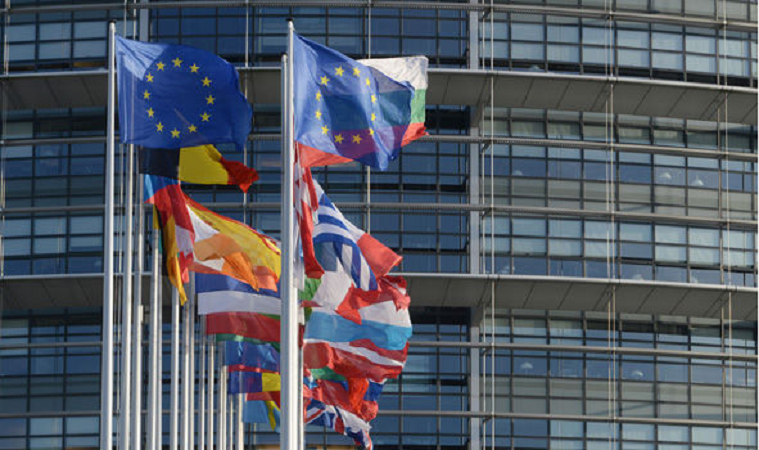
The European Union decided Wednesday to add the United States to its safe travel list, meaning it will be easier for American citizens to take a vacation in one of the 27 member states, two EU sources have confirmed to CNBC.

The decision signals optimism for free movement and economic growth in 2021, changing the travel restriction trajectory that has dealt the hospitality industry a plunging blow.

Nonessential travel from the United States and from other places had been banned in the EU in the wake of the coronavirus pandemic to avoid further contagion. However, as vaccinations gather pace, the 27 EU ambassadors based in Brussels recommended on Wednesday that the region allow nonessential travelers from eight new countries and territories.

These are the U.S., Albania, North Macedonia, Serbia, Lebanon, Taiwan, Macau and Hong Kong.

In an interview with The New York Times in April, European Commission President Ursula von der Leyen said that fully vaccinated American tourists would be allowed to visit the bloc this summer.

But this new EU recommendation could go one step further in allowing U.S. tourists to visit with only a negative test and avoid the need for a period of quarantine. It is now up to the individual EU countries to decide how they will implement the guidelines and allow tourists to enter. Travelers should confirm the rules on their intended destination before flying.

Individual EU nations have taken their own measures to open up travel to international visitors, including from the United States.

Several EU member countries have already opened their doors, including Greece, Italy and Spain, to U.S. visitors with proof of a vaccine, proof of a recent, negative Covid-19 test, or a combination of both. The U.S. still bars most non-citizens who have recently been in the EU from visiting the U.S., however.

Airlines on both sides of the Atlantic have urged governments to open trans-Atlantic travel up for the key summer season and have added service whenever a country reopens its borders.

Wednesday’s recommendation at the EU level aims to coordinate the travel rules across the bloc and should be finalized in coming days, following the national decisions from each member state.

UK omitted

One notable absence from the exemption list is the United Kingdom, where almost half of the population is currently fully vaccinated against the coronavirus.

One EU official, who did not want to be named due to the sensitivity of the subject, said nonessential travel from the U.K. remains banned “due to the delta variant.”

The U.K. government earlier this week delayed a plan to lift all coronavirus restrictions this month due to rising infections. A recent surge in the number of Covid cases is linked to the delta variant first discovered in India, which is believed to be around 60% more infectious than previous variants of the virus.

The U.K. is now hoping that more vaccinations in the next four weeks will allow it to end all coronavirus measures on July 19.

The U.S. meanwhile continues to block entry from most non-U.S.-citizens who have been in Britain in the last two weeks. The White House last week said it is setting up a working group with Canada, Mexico, the U.K. and Europe to figure out how to reopen travel.

India Moves to Control Twitter

0

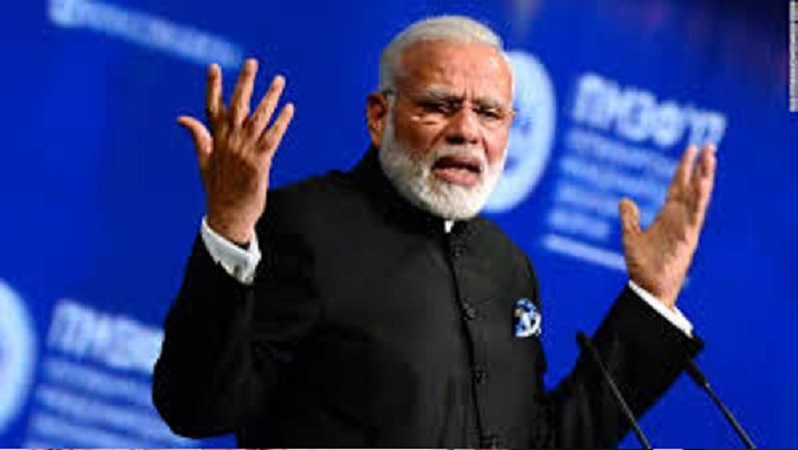
The Indian government has said that Twitter could lose its “safe harbor” protections — the rules that designate it an intermediary, rather than a publisher — and make it responsible for all of the content that appears on the platform. Rest of World has the story.

Writing on Twitter, Ravi Shankar Prasad, the minister of communications, electronics and information technology, accused the company of “deliberately [choosing] the path of noncompliance” with new rules governing social media in the country.

The move is the latest in a series of attacks on Twitter by the government of Narendra Modi, culminating in a widely covered police raid on the company’s offices in May. However, legal experts told Rest of World that the latest threat is essentially hollow, and that it is the courts, not the government, that have the power to decide whether or not Twitter should keep its safe harbor provisions.

“I would like to clearly state: the IT Act, IT Rules do not contain any power for the process for grant[ing] or revocation of an ‘intermediary status’,” said Apar Gupta, executive director of the Internet Freedom Foundation. “When companies like Twitter are prosecuted, they will seek protection before courts. Hence, at that time, courts will decide, not the government if it is an intermediary.”

Narendra Modi’s Bharatiya Janata Party has used Twitter extensively for political communications over the years, and the prime minister has 69 million followers on the platform. However, the relationship between Twitter and the government has deteriorated dramatically over the past year and a half. The government has frequently demanded the platform remove tweets critical of the regime, requests that Twitter has sometimes resisted. In May, the platform marked some political figures’ tweets as “manipulated media.”

In February, the government introduced new rules governing social media platforms, requiring them to appoint an India-based grievance officer, who would be responsible for acknowledging the complaints or requests from the government, or from ordinary users, within 24 hours. Failing to comply could result in criminal prosecution.

Digital rights groups and social media companies oppose the regulations, versions of which have been implemented around the world, and which have been dubbed “hostage-taking laws” by critics. Cases have been filed in multiple courts challenging the constitutionality of the rules, while WhatsApp is suing the government over a provision that would require them to trace the originators of messages on their platform.

The three-month deadline to comply with these rules lapsed on May 26. Google, Facebook, and Indian Twitter-clone Koo have all appointed local grievance officers (Koo was the only platform to appoint a grievance officer before the deadline passed), but Twitter hasn’t. The government’s argument is that this means the platform has failed to meet the requirements, and hence has forfeited its status as an intermediary. That would mean it would be treated as a digital publisher, and held responsible for all of the comments posted on the site.

Legal experts told Rest of World that this isn’t something the government can unilaterally declare, and would need to go through the courts. Instead, it’s an attempt to bully the company into compliance.

“It’s basically a political pressure tactic,” said Divij Joshi, a lawyer and researcher studying technology regulation in India. “Twitter is in a situation right now where it has to balance its human rights considerations with the political environment in India. And the government is trying to do its best to make sure the balance falls in its favor.”

In a statement, a Twitter spokesperson said the company is keeping the IT ministry “apprised of the progress” in the process.” The spokesperson also added that an interim chief compliance officer had just been retained and Twitter continues to make every effort to comply with the new guidelines.

Joshi said that although the government could do something unconstitutional to clip Twitter’s wings — they have previously shut down the internet for large sections of the population multiple times, and last June banned hundreds of Chinese apps, including TikTok — they still depend on the platform for their political reach. An outright ban would be too politically damaging, so the government is likely to keep trying to “nudge Twitter’s behavior to be more favorable towards [them].”

“I personally think the government for its own good will not ban Twitter, because Twitter is a source of legitimacy. It’s kind of a symbiotic relationship,” he said. “It depends on it for electoral victory, it depends on it for its own political messaging.”

The microblogging app has been at the center of attempts by governments to gauge what its users post, and it’s been fighting to stand its ground. On June 4, the Nigerian government suspended the operation of Twitter, aligning with other countries that have found the activities of the social media platform unacceptable, as it promotes free speech beyond what the government can accept.

While the enormity of economic and political consequences holds back Indian government from taking arbitrary decision on Twitter, the Nigerian government is suggesting by its decision to ban the app that it has nothing to lose.