DD
MM
YYYY

PAGES

DD
MM
YYYY

spot_img

PAGES

Home Blog Page 5694

Nigerian FM Practitioners on a Mission to Enhance Solution and Service Quality

0
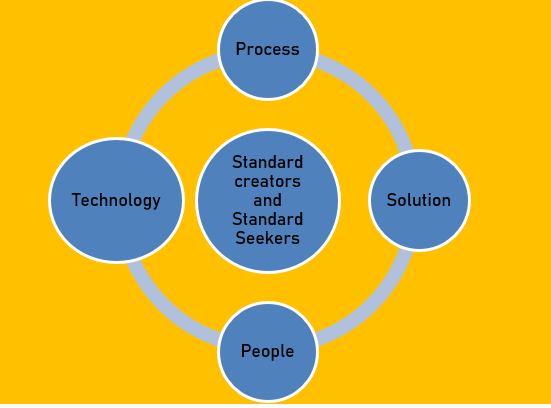
Global FM Standards Framework
Source: Infoprations Analysis, 2019

In 2020, the Standard Organisation of Nigeria inaugurated committee on facility management standards in Nigeria. After the inauguration of the committee, which has some notable practitioners in the industry as chairman and members, our analyst noted that the regulatory organisation took a strategic decision which would advance the creation and delivery of quality solutions.

Our analyst believes that from August 2020 to July 2021, the committee has done a number of underground activities that led to the forthcoming maiden edition of roundtable discussion on localisation of global standards in the industry.

Information has it that the focus of the roundtable discussion will be explication of the significance of ISO 4100 series, which has ISO 41011, ISO 41012, ISO 41013, ISO 41001 and ISO 41014, to the industry growth and development. From ISO 41011 to ISO 41014, our check reveals that practitioners and key players will be walked through the nitty-gritty of applying FM concepts and constructs, specific guidance on strategic sourcing and the development of agreements. We also found that the discussion will afford practitioners and captains of the industry opportunity to gain the needed insights in the areas of outlining solution scopes and benefits of the FM to their clients.

With the touches expected on ISO 41001 and ISO 41014, attendees are expected to learn how to set up and apply relevant strategic tools for needs identification and solution delivery in a proactive, cost-effective and sustainable manner. Participants would not leave without being equipped with the core elements needed for standardised processes towards decision making, carrying out activities, gathering required information and analyzing relevant data for the development of sustainable strategy of FM solution delivery.

Our analyst has also noted in one of the previous analyses that standards that would be localized must establish how facilities management solutions should be delivered effectively and efficiently. The standards must consistently meet the needs of interested parties and applicable requirement. Responsiveness and responsibility of the people within the supply side to the demand side should also be considered as sacred towards inclusive solutions delivery and value capturing. Our expectation is that the keynote speaker and the panelists would dwell on critical issues in the industry in relation to the various components of the ISO 4100 series.

NIGERIA’S REAL ESTATE MARKET: The Cost of Not Replying Customers in an Era of Big Reviews Analytics

0

In every business, customers are believed to be treated as kings and queens. This has always been premised on the fact that without them business does not exist. In our previous analysis, our analyst stressed the place of conversation analytics in building and sustaining superior customer engagement in the market. His analysis, coupled with the views expressed by an expert in the market, shows that the real estate companies are missing a lot when they failed to extract value from the big conversation data inherent on Twitter, Facebook and other social networking sites.

For instance, a study from the Harvard Business Review discovered that when businesses responded to customer reviews — good or bad — ratings subsequently increased. The researchers of the study note that “responding to online customer reviews, especially when they’re bad, can help you learn from your mistakes as a business owner — and this learning curve will improve your customers’ overall experience and your business’ reputation.” In another study, it emerged that user-generated online reviews help customers for making decisions about ‘continuance’ or ‘withdrawal’ or ‘staying away’ from projects of developers.

As submitted by another set of researchers, when a real estate developer utilized online customer reviews in the areas of new product development and refinement of the existing ones, there is a likelihood of having superior ability and capability over others. As the Harvard Business Review’s study indicates, our analysis of the number of reviews of the 50 real estate companies’ customer reviews and ratings given to the companies reveals that the higher the reviews the higher the ratings.

However, our analysis only establishes 6.2% increase in ratings when a customer reviewed the companies’ products or performance. Our relational analysis further indicates that replying to the customers’ questions enhances ratings by 16.7%, while it was 21.7% when the companies replied to reviews. Our expectation of 50% or more than 50%, which indicates a good relationship, was not met. Therefore, the real estate developers need to work on the customer engagement on Google Business Review and other platforms that allow conversational engagement with the prospective and established customers.

In line with the emerging insights, our Real Estate Marketing Analyst, Mariam Akanni notes that “not replying to customers on the Review Platforms is an indication that companies do not care if their products satisfy customers and are comfortable with becoming obsolete in no time.”  She stresses that the Nigerian real estate companies should engage their customers through online conversation for better understanding of their needs.


A Call to Mission: Build And Prepare An Extremely Committed Team

3
Mission

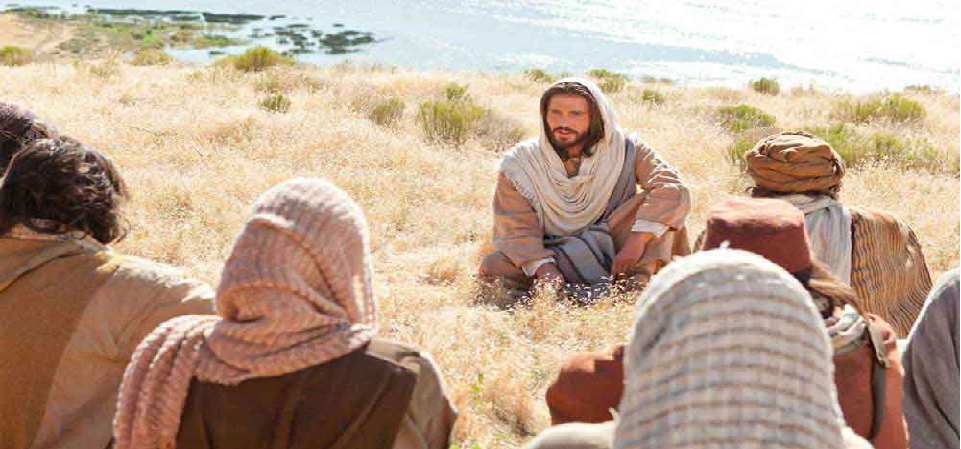
I was in Kos Island, Greece. If you drive out of Athens, you will see a  signpost pointing to Thessaloniki. The hotel I stayed in was practically built on the Mediterranean Sea. I touched the waters and constructed in my mind the path of the Missionary Journey. The more I look at reality, the more I think about a  Call to Mission.

He hired 12 men for a mission. He trained them. He equipped them. Then, he left. Later, on the Day of Pentecost, He equipped them further. Largely, none of the disciples had a clear template for the call. It was in AD 69 when Roman General Titus was putting Jerusalem in ruins that the action began. Titus and Emperor Vespasian have destroyed the rebuilt Temple.

With Jerusalem desolate, the apostles had to leave Jerusalem to live. Mathew was killed in Ethiopia with a sword. Mark was tied to horses, dragged until he died in Alexandria. Luke was hanged in Greece. John was boiled in oil which he survived. He later served as the Bishop of Edessa (in modern Turkey); he died of natural causes. Peter was crucified upside down.  James was beaten to death.

James, the son of Zebedee, was beheaded. Bartholomew (Nathaniel) was flayed to death by a whip. He had preached in Asia but died in Armenia. Andrew died in Patras, Greece, crucified. In India, Thomas was stabbed with a spear. Jude died on arrows. Mathias who replaced Judas was stoned and beheaded. And let me add: Paul was beheaded by Emperor Nero in AD 67.

The men executed the mission but I can assure you that few knew at the beginning the full playbook. From companies to nations, those that answer great calls typically shape everything. But sometimes they do pay severe personal penalties. 

At different levels, a Call to Mission requires extremely committed people. Even in your business, you must have that capacity to find and recruit people that can help you execute a great mission. You must prepare them. Equip them. And push them to go for glory.

Jesus has a great template on how to accomplish missions: build and prepare an extremely committed team.


–the longer version is here.

Delta Variant: Emerging Covid-19 Variants Stymying Vaccination Impact

0

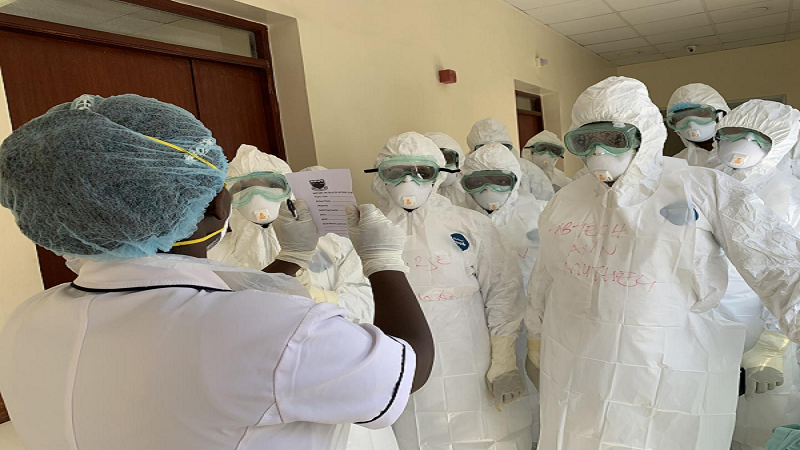
The “delta variant”, the new COVID-19 variant that has its origin in India, has rattled the world as the fight to contain COVID-19 keeps getting complicated by emerging variants.

Before now, there had been other variants in the UK, Brazil, South Africa etc. As of April, the Alpha variant was the dominant variant in the US. Now there is “delta plus” a more deadly mutant of the delta variant, that India described as “variant of concern”.

The World Health Organization (WHO), said it’s the fastest and fittest coronavirus strain yet, and it will “pick off” the most vulnerable people.

“It has the potential to be more lethal because it’s more efficient in the way it transmits between humans and it will eventually find those vulnerable individuals who will become severely ill, have to be hospitalized and potentially die,” Dr. Mike Ryan, executive director of the WHO’s health emergencies program, said during a news conference.

Delta plus has toppled the talk of the delta variant without minimizing its impact, augmenting the variant roller-coaster trajectory that has undermined the vaccination outcome to a great extent.

Alpha was the most dominant variant until delta showed up and took its place with 60% more severe effect.

Delta has now spread to 92 countries, Maria Van Kerkhove, the WHO’s technical lead for COVID, said. At a White House briefing on COVID-19 on Tuesday, Dr. Anthony Fauci of the National Institutes of Health said 20.6% of new cases in the U.S. are due to the Delta variant.

The Centers for Disease Control and Prevention, said it’s on its way to becoming the dominant variant in the nation.

The United Kingdom recently saw delta become the dominant strain there, surpassing alpha variant, which was first detected in the country last fall. The delta variant now makes up more than 60% of new cases in the U.K.

Israel, the first country to have the highest number of its population fully vaccinated, is now grappling with a new spike in COVID-19 cases. The country recorded 125 new cases on Monday, and the director of Israel’s health ministry, Dr. Nachman Ash said around 70% of new infections were the Delta variant.

The rate of the emergence of the variants, their spreading pace and how deadly they are, cast doubt on the chances of vaccination stopping COVID soon.

A growing number of vaccinated people are concerned about getting infected again by the variants as they appear to undermine vaccines’ efficacy.

A study of the delta variant in Scotland from the University of Edinburgh found that while the variant was associated with a doubling in the risk of hospitalization in those infected in the region, the Pfizer and AstraZeneca vaccines offered a 79% and 60% protection, respectively, against infection two weeks after the second dose. Another study from Public Health England showed that two doses of the Pfizer vaccine were 88% effective against symptomatic disease from the delta variant.

However, the Wall Street Journal reported Friday that about half of adults infected in the delta variant outbreak in Israel were fully vaccinated with the Pfizer-BioNTech vaccine, confirming the concern of many vaccinated people.

The WHO said last week that vaccinated people should continue to wear masks and observe other safety measures as the variants spread.

“People cannot feel safe just because they had the two doses. They still need to protect themselves,” Dr. Mariangela Simao, WHO assistant director-general for access to medicines and health products, said during a news briefing from the agency’s Geneva headquarters.

“Vaccine alone won’t stop community transmission,” Simao added. “People need to continue to use masks consistently, be in ventilated spaces, hand hygiene … the physical distance, avoid crowding. This still continues to be extremely important, even if you’re vaccinated when you have a community transmission ongoing.”

Leadership in Nigeria: To be Trusted or to be Loved?

0
Nigerian leaders

The trouble with Nigeria is simply and squarely a failure of leadership. There’s nothing wrong with the Nigerian character…, land or climate or water or air or anything else” – Chinua Achebe.

A well-thought commentary of the Nigerian quandary by the great writer, Chinua Achebe. However, as overarching as this analysis, certain elements of this seminal profession is terribly untrue. The Nigerian state is anything but simple.  

Let me start like this; being ushered into the glorious courts of self-determinism (or independence), the world held Nigeria in high expectations. She was to blaze the trail for the other countries particularly in the sub-Saharan African zone where the colonial powers still hoisted their national flags as a show of the prevailing authority. Twenty years, forty years…, sixty years from October 1, 1960, could she be said to be deserving of more pecks than knocks?

Did she like a spoiled child, blast the hope of her glorious sequined future? Many have argued that Nigeria should be fairly treated and allowed to make mistakes, her own mistakes – in the words of Nkrumah Kwame.

Many governments, including ones manned by military brass are gradually being attracted by the prospects of freedom and justice that democratic systems are ideally known by. In the context of this discourse; I often ask myself – Nigeria (in the pursuit of fairness and justice as promised by democracy), how far or how hard must we endure to reach the Promised Land?

Max Siollun in “Nigeria Military Coup Culture” finely captured the timeline of the Nigerian post-colonial leadership woes. He analysed how the political scene of Nigeria was a panoply of recycled former military personnel cum civilians and former civilian political office holders leading the country in lacklustre fashion. I tend to agree and I have also included academics and clergymen to this trial, due to the huge influence they have on the perception of the Nigerian public to national issues. Talk about leadership!

So I wonder! What could be so wrong with the leadership model in Nigeria? Why is it that some societies seem to produce ‘good’ leaders at the critical moments of their national life while others throw up ‘tyrants and rogues’ who do nothing but run same aground?

True leadership has been described as the capacity to influence others, which is the outcome of a balance of certain essential attributes such as inspiration, passion, vision, conviction and purpose. To a large extent, leadership is even more associated about trustworthiness. As ancient wisdom teaches “… to be trusted is a far greater compliment than to be loved.” This, I believe is even truer for leaders; for trustworthiness is a powerful quality of a leader. Being a Nigerian isn’t easy, and I am not talking figuratively.

Imagine living with a spouse or a roommate whom you are aware isn’t too well. You have done an evaluation on the situation and you believe if you are not well-guarded; you could be another homicide. It is the worst feeling one could ever have, to always be in constant apprehension.

In today’s Nigeria, it is almost both consistent and customary in spite of the multileveled bureaucracies to have public funds missing with the most ridiculous reasons under the sun. Leaders can predictably not be trusted to rise above religious, political and tribal sentiments; hence, the term, Islamisation, fulanisation, North and Southern Nigerian bigotry among others. There’s also been several reported cases of rackets, schemes and opaque public policies planted in plain sight to accidentally or deliberately ensure citizens depend on a few private individuals to do the simplest things. It seems just like ‘another day’ when leaders (elected or appointed) breached public trust. As a Nigerian, I can say – when it comes to leadership at both corporation and national-wide levels; it leaves a lot to be desired.

On the other hand; broadly-speaking, are the national problems unique to the sort of leaders or leadership style? Without going into specifics; globally, we’ve seen leaders fall short of ‘the glory’ yet in that inglorious moment, followers collectively rise to save a country from itself. Therefore, when it comes to the subject of failure in government; it could be argued that there is just enough blame to be shared between leaders and the people they lead.

Great leaders become great because they have great followers. Richard Dowden, a British journalist identified two ‘exceptional’ nature of Africa: That ‘Africa always has hope’ and that ‘African patience allows exploitation and oppression to thrive’. Quite aptly, isn’t this the case with Nigeria? Isn’t it true that we nurtured the frankenstein-ic nature of our leaders? Isn’t it the case of ‘when the mouth is completely full of food, the eye gets shut in turn.’

In Nigeria like in many developing nations, we have failed to establish a climate of enquiry. This even echoes what Nelson Mandela said, that ‘…when the government is afraid of the people, it is liberty but when the people are afraid of the government, it is tyranny”. Therefore, in way, haven’t we created a climate optimized for the growth of tyrants? So it has consistently been a case of fellow angels suddenly morphed into demons once they bite the delectable crumbs of power at both sub-national and national levels.

In today’s Nigeria, the air of frustration is palpable; made more complicated by insecurity, ailing economy and gaily attitude of leaders. The possibility of ‘change’ is usually met with cynicism perhaps because it is true that once the cord of trust has been broken, the scar is forever.

Ultimately, with enough said on the current state of the nation; we must still hold up the flames of hope. Yes! Hope for an outstanding Nigeria in all sense of the word. More importantly, we must know with some level of truism that we are not alone in these struggle for principle-centered leadership.  What is, has already been and what will be, has been beforethere’s nothing new under the sun. Human beings are the same everywhere.

As Professor Remi Sonaiya rightly noted “Do we Nigerians not flee from danger as do others? Are we not incensed about injustice done to us? Do our hearts not yearn after all the good things of life too? Indeed, all these things are dear to our heart just as they are dear to the hearts of the Bantu, the Russians, or the Icelanders”

Through human history, there have always been certain exceptional moments that has given rise to a path that lead to redemption. No matter how long the night is, there will be day break. These thoughts in a certain way echo the voice of Dr. King about the inevitability of the arc of the moral universe bending towards justice.

Currently, there is so much noise, protests and counter-protests. It seems such a mess. There is no difference between facts and fiction.

In the Nigerian context, the question of current state of affairs – to be trusted or to be loved: which is better with respect to national unity? isn’t an easy debate. Right now, there are several crises which could get worse.

As I had earlier mentioned, we could learn from history; leaders have been upstanding in times when their followers have faltered and vice versa. However, the most beneficial outcomes arise when leaders and followers can indeed put their personal sentiments aside, and look towards national unity and progress.