DD
MM
YYYY

PAGES

DD
MM
YYYY

spot_img

PAGES

Home Blog Page 57

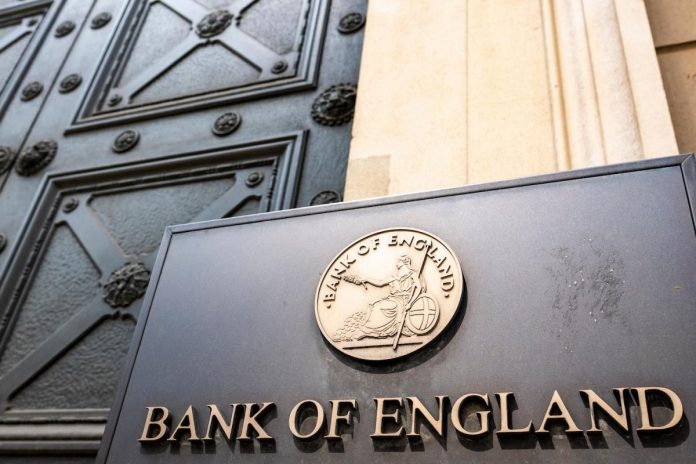
Bank of England Takes on More Risk as UK Banks Pledge £17.8 Billion in Higher-Risk Assets

0

British banks are increasingly turning to the Bank of England’s funding facilities to pledge higher-risk and potentially less liquid assets as collateral, exposing the central bank to a growing pool of loans and securities tied to areas such as vehicle leasing, store-card lending and buy-to-let mortgages.

A Reuters review of Bank of England filings shows that banks pledged £1.9 billion of the central bank’s highest-risk category of collateral, known as “Level C”, at its weekly auction for six-month funds on August 18. That was the largest amount since March 2020 and roughly three times the £600 million pledged a week earlier.

The increase has pushed the total value of Level C collateral held by the BoE through its Indexed Long-Term Repo facility to about £17.8 billion, according to Reuters calculations. That compares with £8.7 billion a year earlier and less than £1 billion in mid-2024.

The figures provide a window into an unintended risk that can emerge as central banks unwind years of extraordinary monetary stimulus. By accepting a broad range of collateral, the BoE can provide banks with access to central-bank liquidity while reducing the amount of cash circulating in the financial system following the reversal of its £895 billion quantitative-easing programme.

But the growing use of riskier assets raises questions about the quality and liquidity of collateral ultimately sitting on the central bank’s balance sheet, particularly if private markets become less willing to finance such assets during a period of financial stress.

The BoE said the ILTR was specifically designed to allow financial institutions to use a broad range of assets as collateral. At the same time, its risk-management framework protects the central bank from potential losses.

The facility has become so relevant since the BoE began reversing quantitative easing in 2022. Commercial banks use reserves held at the central bank to settle wholesale transactions, and the ILTR provides a mechanism for banks to obtain term funding against eligible assets as the stock of excess reserves in the financial system declines.

Level C collateral has represented roughly one-fifth to one-quarter of collateral accepted through the ILTR over the past year. Its share has not changed dramatically, but the absolute amount has more than doubled as banks have made greater use of the facility.

“The BoE has got good reasons for wanting to buy grade C assets but there’s a risk that if they do too much then that can encourage bad lending. I think they probably understand that already,” said William Allen, a visiting fellow at the National Institute of Economic and Social Research and a former head of the BoE’s money markets division.

The BoE said it continually reviews its collateral framework to ensure that it remains consistent with its risk-tolerance objectives.

The central bank also protects itself by applying larger “haircuts” to riskier assets. That means banks receive less funding than the face value of the securities they pledge, providing the BoE with a buffer if the collateral loses value. Banks also pay a higher interest rate when using riskier collateral.

Still, the composition of the eligible assets underpins the tension between providing liquidity to the banking system and maintaining strict standards around what a central bank is willing to accept.

Reuters’ analysis of the BoE’s Level C collateral list found several types of assets that are no longer accepted under tighter European Central Bank rules. These include securitized debt linked to mortgages and other loans, as well as assets backed by vehicle leases and higher-risk consumer credit.

This has gained attention because securitization played a central role in the build-up to the 2008 global financial crisis. Packaging loans into securities enabled lenders to transfer credit risk and generate new lending, but the process also helped obscure the underlying risks in some parts of the financial system.

The ECB has tightened its collateral rules in recent years amid concerns that eligibility for central-bank operations can effectively create an additional source of demand for assets that may become difficult to sell during a market shock.

The BoE’s broader framework therefore gives British banks greater flexibility in accessing central-bank liquidity, but potentially leaves the institution more exposed to assets whose market liquidity could deteriorate sharply in stressed conditions.

“It is possible that the non-BoE market for these assets might not be as active as it was because there’s a lower appetite for credit in private markets,” said Moyeen Islam, a fixed-income analyst at Barclays.

That concern comes as private credit has expanded into a roughly $3.5 trillion global industry. The sector has attracted investors with the prospect of higher yields than traditional fixed-income markets, while regulators have increasingly scrutinised underwriting standards, valuation practices and the ability of borrowers to withstand higher financing costs.

The assets eligible for the BoE facility provide examples of the types of credit exposure involved.

Investec-linked Temese Funding has loan notes backed by heavy-equipment and vehicle leases, according to S&P Global. The leases include large payments due toward the end of their terms, commonly known as balloon payments. The ECB effectively excluded such products from its eligible collateral pool in January following changes to its rules, according to an analysis by law firm Jones Day.

The BoE does not disclose which specific securities from its Level C list are actually pledged by banks through the ILTR.

Among the eligible securities are also notes issued by Harben Finance, which public filings show is controlled by Barclays and holds payments from buy-to-let mortgages originated by Bradford & Bingley, the former UK lender that was rescued by the British government during the 2008 financial crisis. Some tranches of the debt have been downgraded twice by Fitch Ratings and once by S&P Global over the past year.

Other eligible assets include loan notes backed by credit-card receivables from KKR-backed NewDay, whose lending has included higher-risk borrowers, according to Fitch.

The BoE’s collateral list also includes debt issued in 2024 by the Small Business Origination Loan Trust, which packages repayments from business owners who obtained financing through Funding Circle’s lending platform.

S&P Global said in an August 21 note that almost one-fifth of the loans in that Funding Circle pool were likely to default. Funding Circle declined to comment.

The immediate risk to the BoE is mitigated by its haircuts, pricing and other safeguards. The larger issue is what the expanding use of Level C collateral says about the underlying credit market.

If banks increasingly need the central bank as a source of liquidity for assets that private investors are reluctant to finance, the ILTR could become an important backstop for segments of the credit market. That would strengthen the BoE’s role as a liquidity provider, but could also increase pressure on the central bank to distinguish between temporary liquidity problems and deterioration in the underlying quality of bank assets.

For now, the rise in Level C collateral does not by itself indicate that British banks are facing a systemic liquidity crisis. It does, however, show that the BoE is accepting exposure to parts of the credit market that European regulators have moved to treat more cautiously, making the quality of its collateral pool a crucial issue for financial stability.

CryptoQuant Analyst Suggests Bitcoin’s Downtrend May Be Nearing Its End as Cycle Momentum Turns Positive

0

Bitcoin’s prolonged downtrend may be approaching a turning point, with CryptoQuant analyst Gaah, pointing to improving cycle momentum as a potential sign that the market’s bearish phase is losing strength.

In a chart on X, Gaah noted that the shift, currently reading just above zero at approximately 0.4, raises the probability that Bitcoin is breaking out of its prolonged downtrend and beginning a reversal of the recent bear phase.

The Bitcoin Cycle momentum indicator posted, tracks the strength and direction of Bitcoin’s longer-term cycle momentum, distinguishing broader bullish and bearish regimes against the asset’s price history.

Historical charts spanning 2013 to the present show these momentum phases aligning with major market expansions and contractions.

After remaining negative for roughly eight months, coinciding with a period of price weakness following the October 2025 all-time high near $126,000, the metric has now crossed into positive ground.

However, the analyst emphasized that full confirmation of a reversal requires the indicator to advance into the 20–30 range in the coming weeks, supported by continued upward price recovery. Without that follow-through, the current reading could prove temporary, he noted.

At the time of writing this report, Bitcoin was trading below the $77,000 range, reflecting recent volatility after climbing above the $80,000 level in late August.

The reversal posed a direct test whether August rally was a durable shift in Bitcoin’s macro positioning or simply a byproduct of falling yields that has now gone into reverse.

Bitcoin has struggled to reclaim its all-time high of around $126,000 reached in October 2025, despite staging several recovery attempts in 2026.

The cryptocurrency has remained well below the record level as investors continue to navigate weaker momentum, macroeconomic uncertainty and changing market sentiment.

One of the major factors behind Bitcoin’s inability to return to its peak has been a lack of sustained buying pressure. While institutional investors and spot Bitcoin exchange-traded funds remain important sources of demand, periods of ETF outflows have limited the strength of Bitcoin’s recovery.

Macroeconomic conditions have also continued to influence investor appetite. Uncertainty surrounding U.S. interest rates, inflation and broader financial conditions has encouraged investors to remain cautious toward risk assets, including cryptocurrencies.

Despite these challenges, Bitcoin’s recovery from its 2026 lows suggests that demand has not disappeared. Crypto analyst Willy Woo highlighted on Monday that Bitcoin has higher global adoption than the S&P 500 and Gold.

He stated in a post on X that roughly 5% of the world population owns Bitcoin, comparable to 4% for the S&P 500 and approximately 4.5% for Gold.

For now, Bitcoin’s return to positive territory marks a notable change after months of bearish readings and provides a data-driven point of optimism for those monitoring Bitcoin’s position within its multi-year cycles.

Market participants will likely watch whether the indicator builds further strength in the weeks ahead as price action unfolds.

Outlook

The outlook for Bitcoin remains cautiously optimistic as the Cycle Momentum indicator moves back into positive territory.

While the shift suggests that the prolonged bearish phase may be losing strength, it does not yet provide sufficient confirmation of a sustained trend reversal.

However, a failure to maintain positive momentum could leave Bitcoin vulnerable to further consolidation or another wave of selling pressure.

With the cryptocurrency still trading significantly below its October 2025 record, the coming weeks could prove critical in determining whether the recent recovery represents the beginning of a new bullish cycle or merely a temporary rebound.

Meta’s $17 Billion Settlement Could Clear Legal Path for New AI Product Push – Morgan Stanley

0

Meta’s roughly $17 billion settlement with U.S. states over allegations that Facebook and Instagram harmed younger users could remove a significant legal overhang for the company and give management greater room to accelerate a pipeline of artificial intelligence products, analysts say.

The settlement followed a trial that began in August after attorneys general from 29 U.S. states accused Meta of deliberately designing features on Instagram and Facebook that encouraged excessive use and exposed children and teenagers to harmful content.

Under the agreement reached during the second week of the trial, Meta will introduce a series of changes affecting users under 18. The measures include a two-hour daily usage limit, tighter age-verification requirements and restrictions on certain features, including extreme makeup and cosmetic-surgery filters.

Meta is expected to pay the settlement over 10 years and has said it will record a $10 billion legal charge in the third quarter of 2026. The company has otherwise maintained the financial guidance it issued in July.

For investors, however, the settlement could represent more than the removal of a costly legal liability. Morgan Stanley analysts argue that major legal disputes have sometimes been followed by an acceleration in product development at large technology companies.

“We see multiple new products in the pipeline from Meta,” the analysts said in a Saturday note, pointing to MetaClaw, improvements to Meta AI, agentic advertising tools for small and medium-sized businesses, new subscription products, an expanded application programming interface offering, potential “neocloud” services and other initiatives.

The analysts cautioned that they were not suggesting all of the products were immediately ready for commercial launch.

It comes as Meta seeks to turn its enormous AI investment into new sources of revenue beyond its core advertising business.

Meta is reportedly preparing to launch Hatch, a consumer AI agent, as early as September. According to an internal memo seen by Business Insider, the assistant is expected to operate within WhatsApp and Instagram and could autonomously carry out tasks such as making online purchases and booking restaurants.

If launched as described, Hatch would push Meta further into the emerging market for agentic AI, in which software does not simply answer questions but takes actions on a user’s behalf. Such products could create new opportunities for Meta to monetize its massive messaging and social-media user base while competing with AI assistants developed by companies including OpenAI, Google and Anthropic.

Morgan Stanley drew a parallel with Google, saying a series of major product and model launches followed a U.S. Justice Department decision last year not to force the sale of key Google assets.

Those launches included Gemini 3 and a broader expansion of AI-powered search products such as AI Mode and AI Overviews, which the analysts said also contributed to an increase in Google’s valuation.

“There are certainly signals, in our view, that Meta’s product pipeline could start flowing following this legal clearing event… just like Google’s last year,” the analysts said.

The settlement also appears less threatening to Meta’s advertising business than its headline figure might suggest.

Morgan Stanley estimates that revenue generated from teenagers accounts for only about 1% of Meta’s total revenue. The relatively small direct exposure means that restrictions on teenage usage could have a limited immediate impact on the company’s overall advertising sales.

The analysts nevertheless warned that youth-engagement restrictions could become a greater long-term problem for YouTube if similar measures are imposed across competing platforms, given YouTube’s stronger adoption among younger users.

One condition attached to the full settlement is that competing services, including YouTube and TikTok, implement comparable changes for younger users, potentially reducing the competitive impact of Meta’s restrictions if the requirement is broadly enforced.

Needham, meanwhile, retained its “hold” rating on Meta, focusing less on the settlement itself and more on the company’s increasingly broad investment strategy.

The investment bank described Meta’s approach as “strategy diffusion,” citing simultaneous spending on custom AI chips, data centers, enterprise AI software, business agents, model APIs, computing services, advertising technology, consumer AI assistants, smart glasses and other hardware.

“By not concentrating its capital and free cash flow on the highest-return products and services, it raises the risk that management attention, engineering talent and shareholder capital are spread across too many things, and lowers the likelihood that Meta succeeds at any of them,” Needham analysts wrote in an Aug. 27 note.

That concern is growing as Meta’s AI spending reaches unprecedented levels. The company expects capital expenditure of as much as $145 billion in 2026 as it builds data centers, acquires computing capacity and develops AI infrastructure and models.

The $10 billion legal charge will therefore arrive at an expensive point in Meta’s investment cycle. Although the settlement payments are spread over a decade, the accounting charge and ongoing compliance costs add another layer of expenditure while Meta is already committing tens of billions of dollars to infrastructure whose returns may take years to materialize.

The central investment question is consequently shifting from whether Meta can absorb the settlement to whether it can convert its massive AI spending into sufficiently large new businesses.

Meta’s advantage is its scale. Facebook, Instagram and WhatsApp give the company distribution to billions of users, while its advertising infrastructure provides an established monetization system. The challenge is ensuring that its expanding AI portfolio produces incremental revenue rather than simply adding to capital expenditure and operating costs.

The settlement could give Meta greater legal clarity to pursue that strategy. But analysts remain divided over whether a broader product pipeline will translate into higher returns.

India GDP Growth Hits 7.8%: Economy Beats Forecasts Despite Global Challenges

0

India’s latest economic growth figures have delivered another reminder that the country remains one of the most resilient major economies in a world still dealing with inflation, expensive energy and uneven global demand.

First-quarter gross domestic product expanded 7.8% year on year, comfortably ahead of economists’ expectations of roughly 7.2%.

The headline number matters because India’s growth story has increasingly become a crucial counterweight to weakness elsewhere.

While many developed economies continue to struggle with high borrowing costs and subdued industrial activity, India is maintaining a much faster pace of expansion.

The latest figures suggest that domestic demand, government support and relatively strong economic fundamentals are continuing to provide momentum. One important factor behind that resilience is the government’s approach to essential commodities and energy.

State-owned oil refiners have been subject to price controls that limit how much consumers pay for fuel. This intervention can shield households and businesses from some of the immediate effects of higher global energy prices.

For an economy as large and energy-dependent as India, containing fuel-cost shocks can have significant consequences for inflation and consumer spending. The government’s fertilizer subsidies provide another important layer of protection.

Agriculture remains central to India’s economy and to the livelihoods of millions of households. Fertilizer prices can have a direct impact on farmers’ production costs, food prices and rural incomes.

By subsidizing fertilizers, the government reduces some of that pressure and helps maintain agricultural activity even when international commodity markets become volatile.

These policies highlight an important feature of India’s growth model: the state continues to play a significant role in absorbing economic shocks. Price controls and subsidies can protect consumers in the short term.

But they come with fiscal costs and can distort market incentives if maintained for too long. The challenge for policymakers is therefore to balance immediate economic stability with long-term efficiency.

The 7.8% growth rate reinforces India’s position as one of the most important emerging-market stories. Strong GDP growth can attract foreign capital, support corporate earnings and encourage investment in infrastructure, manufacturing, technology and consumer industries.

It also strengthens the case for India becoming an increasingly influential destination for global companies seeking alternatives to slower-growing markets. Yet the numbers should not be interpreted as evidence that every part of the economy is equally strong.

GDP growth is an aggregate measure, and underlying sectors can perform very differently. India still faces challenges involving employment, household purchasing power, inequality, infrastructure and the sustainability of public spending.

The latest result is significant. Beating expectations by such a wide margin suggests that India entered the quarter with considerable momentum.

Government intervention in fuel and fertilizer markets has helped cushion households and businesses from external shocks, while the broader economy continues to benefit from domestic consumption and investment.

The bigger story is that India is demonstrating an ability to grow rapidly without being completely insulated from global pressures. That combination of strong domestic demand and active policy support could remain one of its greatest economic advantages.

At 7.8%, India’s first-quarter growth is more than a better-than-expected statistic. It is a signal that the country’s economic expansion remains remarkably durable—and that its growing importance in the global economy is becoming increasingly difficult to ignore.

Good Good Golf’s New President Faces Immediate Challenge as Ad Scandal Erupts

0

Good Good’s new president, Joe Flannery, has been handed one of the most difficult executive starts imaginable: taking charge of a rapidly growing creator-driven golf company at precisely the moment its biggest advertising crisis exploded into public view.

His appointment was dated August 21, the same day the controversial Callaway advertisement appeared, leaving Flannery almost no transition period before being forced into crisis-management mode.

Flannery arrives with a résumé that suggests Good Good was preparing for a much different chapter.

He has experience with major consumer and sporting brands including Nike, Adidas, The North Face and Callaway, and most recently served as CEO of Score Sports. His mandate at Good Good covers major parts of the business, including merchandise, sporting goods and the company’s YouTube operation.

That background could prove valuable because Good Good is no longer simply a YouTube channel. With more than two million subscribers and roughly $45 million in funding, the company had been building itself into a broader sports and entertainment brand.

Combining creator content with merchandise, sponsorships, retail distribution and live events. The strategy was increasingly moving Good Good from internet personality brand to mainstream sports business. Then came the advertisement.

The Callaway campaign featured Good Good co-founder Garrett Clark pushing fellow creator Alexis Miestowski to the ground in a scene that critics said trivialized violence against women. Although the concept was reportedly intended as a parody, the reaction was immediate.

The advertisement was removed, apologies followed, and what initially appeared to be a bad creative decision quickly developed into a serious corporate crisis. The consequences spread well beyond social media criticism.

Callaway ended its partnership with Good Good and pledged $1 million to organizations working to prevent violence against women. Dick’s Sporting Goods and Golf Galaxy pulled Good Good products, while the company withdrew as title sponsor of an upcoming PGA Tour event.

The Golf Channel also postponed a planned Good Good-related project. For Flannery, this means his first major assignment is not growth. It is trust reconstruction.

Good Good’s success was built around personality, relatability and community. Its audience was not merely buying golf equipment; it was buying into a lifestyle and a group of creators.

Once a brand’s content appears inconsistent with the values it claims to represent, rebuilding credibility becomes considerably harder than repairing a conventional advertising mistake. The timing also raises questions about internal governance.

Flannery was hired through an extensive search and was apparently not responsible for the controversial advertisement. Yet his arrival now places him at the center of the company’s response.

Reports indicate that members of Good Good’s marketing operation were subsequently dismissed, highlighting the extent to which the company is reassessing its creative and approval processes. His challenge is larger than managing a public-relations crisis.

He must help determine how a creator-led company can professionalize without losing the spontaneity that made it successful. Good Good’s next phase will depend on whether it can turn this scandal into a governance lesson rather than merely a communications exercise.

Stronger content review, clearer accountability, better brand-safety procedures and greater sensitivity around partnerships will be essential. Flannery entered Good Good expecting to help scale a promising sports-media company.

Instead, he inherited a brand fighting to protect its reputation. His success may ultimately be measured not by how quickly Good Good grows, but by whether he can help it earn back the trust that made that growth possible in the first place.