DD
MM
YYYY

PAGES

DD
MM
YYYY

spot_img

PAGES

Home Blog Page 5734

How Nigeria Can Reduce Imports And Boost Naira Within 180 Days

3
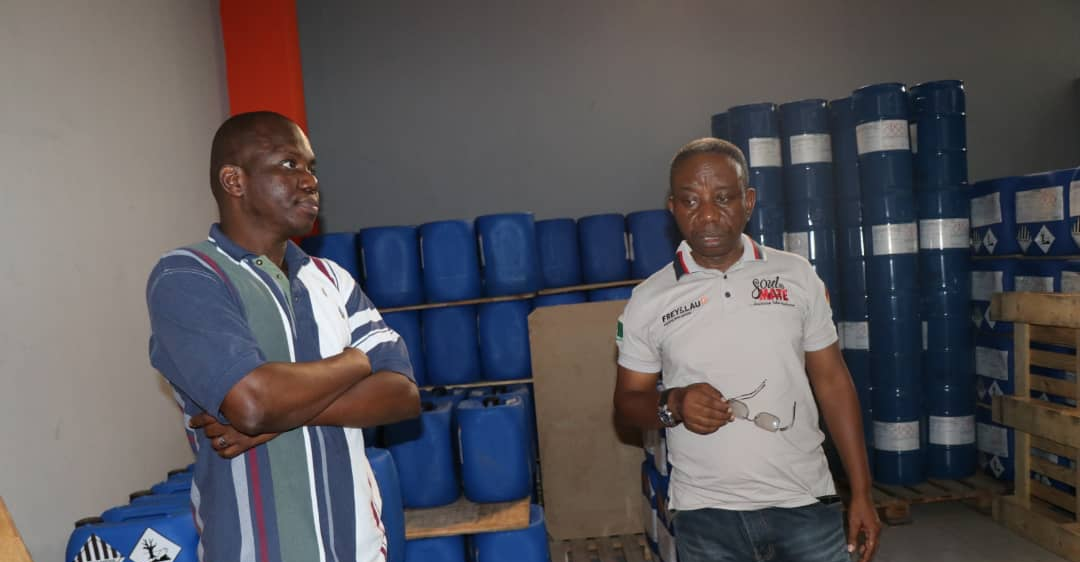
In Soulmate Factory with Founder

In Q1 2021, Nigeria spent 66% of all imports on manufactured goods; that was N4.5 trillion. On export, about 66% of exports went for crude oil but our receipt was only N1.9 trillion. The implication is this: unless we have import substitution  for manufactured goods, our balance of trade will not be good. In other words, there is a high level of imbalance in the balance of payment, and that imbalance is the reason Naira has hit N500/$ in the black market.

How do we solve this problem? I will examine China which is our biggest challenge on trade. Yes, we need to buy less from China, and doing that means we need to make many things we buy from it.

A simple idea we can execute is what I have called “180 Build Plan” which means within 180 days, we can provide 24/7 electricity in six cities in Nigeria (Aba, Osogbo, Uyo, Jos, Potiskum, and Sokoto), by working with renewable energy companies, with backup from Tesla batteries, guaranteeing electricity. We have a real chance of getting light manufacturing up and running.

How do we fund it? Disband N-Power initiative and use the money to provide this electricity. Over time, Nigeria via the private sector will hire more permanent people than give graduates $60 monthly for largely nothing. Then, from these 6 cities, we keep ramping things up.

Ladies and gentlemen, only factories and warehouses (modern and old which include startups, digital, cement, noodles, etc firms) will fix Nigeria’s paralysis as it is easier to cut our import of manufactured goods than improve our export of crude oil.

image credit: Chukwuemeka Nwagwu Bsc, Msc

A Tekedia Capstone On Ecommerce and Fashion Industry

0

Tekedia capstone-based Certificate is the practical phase of Tekedia Mini-MBA. We consider it the final year project where we challenge members to use what they have learnt in Tekedia Mini-MBA, pick a research topic, and come up with a new idea on something. When the governor of Anambra state, Governor Obiano, read one on his state, he hired our member, John, as his special advisor on Innovation. The graduate had taken time to model how innovation can improve the state.

In this capstone report by OLadunni Niniola Salaam MBA , FCAI, you have one of the most comprehensive studies in the fashion sector and ecommerce in Lagos state. It is a beauty; part of the abstract.

“This study investigated the effect of electronic commerce on customer patronage and satisfaction with emphasis on consumers in the fashion industry in Nigeria. A study of consumers in selected areas in Lagos state. The study used descriptive research design based on multi staged sampling procedure made up of purposive sampling technique and simple random sampling technique to select members of the population involved in the study. A sample size of four hundred (400) respondents were selected for this study.  The data collected from the study was analyzed using descriptive and inferential statistics with the aid Statistical Package for the Social Science (SPSS) version 20.0. The findings…”

Tekedia Institute, advancing the wealth in nations through knowledge. We have hit 634 capstone records, primarily by learners who are researching global and local issues. My best remains “How To Win 2023 Presidential Election in Nigeria – A Case Study for an Ijebu Man”. That one is classified!

A Tekedia Capstone Report by Bernard Okolie

0

We designed our programs within the construct of Symphonic Innovation where everything is integrated. You do the Tekedia Mini-MBA, and we ask you to do the capstone-based Certificate course, to apply what you have learnt in your company. By the time you are done, you have a report which can be sent to the supervisor on how to improve the business.

Weekly, we work on those reports with our learners, helping them to deepen the understanding of their sectors and in the process advance the efficiency of the utilization of factors of production in where they work. I do pick some of these works and share.

Let me congratulate Bernard Okolie, a drilling fluid engineer for his work. That was really great. I am confident that the big boss will appreciate reading this case from a member of the team.

Let more about Tekedia Institute school.tekedia.com

Digital Product Management – A New Module in Tekedia Mini-MBA’s Digital Transformation Course

0

Our Digital Transformation course is superb, developed by an industry leader. I am happy to share that our Faculty, Access Bank Plc’s digital scrum master, Jude Ayoka [MBA, PMP, TOGAF], is developing an additional module on Digital Product Management. Because most digital transformation efforts involve products, Tekedia Institute Institute wants to pay more attention to products here.

The module will be ready this month, and will be added to the Digital Transformation section of our program. This edition of Tekedia Mini-MBA is focusing heavily on business growth. We believe that growth can only happen with Great Products and Superior Execution.

GREAT COMPANY = Great Products + Superior Execution

(You will meet this equation in Week 3 and we used Physics to prove it, translating momentum (mass x velocity) into business scaling. Get a short book on Physics 101)

So, next week, our Innovation & Design Thinking faculty Aderinola Oloruntoye of Workforce Group, and Strategy & Business Execution faculty Eromosele Omomhenle F.IMS from Microsoft will be on Tekedia Live.

Welcome to the Institute. Our courses are fresh, relevant and impactful because they are created by those business leaders.

Registration continues for the 5th edition of Tekedia Mini-MBA.

Bosch Opens $1.2 Billion Semiconductor Factory in Germany

1

As chip scarcity continues to disrupt the tech industry, a new push by tech players is aiming to upset the shortage. Many tech companies have been working to establish semiconductor factories to produce chips for their own use and to supply to others.

Germany technology and parts supplier Robert Bosch, is the latest among them. The company opened a €1 billion ($1.2 billion) chip factory in Dresden, Germany on Monday, the single largest investment in the company’s history. The plant, which will mainly supply automotive customers, is a major signal that connected and electric vehicles are here to stay. TechCrunch has the story.

“Regardless of which powertrain we talk about … always we need a semiconductor and sensor,” Bosch’s executive vice president of automotive electronics Jens Fabrowsky told TechCrunch.

The plant will handle front-of-the-line processing, or wafer fabrication, in the semiconductor manufacturing process. The 300-millimeter wafers will be sent to partners, typically in Asia, to do packaging and assembly of the semiconductors.

300 millimeters is a “new field of technology,” Fabrowsky explained. As opposed to the 150- or 200-millimeter wafers that are produced at Bosch’s nearby factory in Reutlingen, Germany, the larger wafer size offers greater economies of scale because you can produce more individual chips per wafer.

The 77,500-square-foot plant will run on what Bosch calls “AIoT,” a term that combines artificial intelligence and Internet of Things to denote a fully connected and data-driven system that’s unique to the facility. Bosch will not only have real-time data on the approximately 100 machines, but also on the power, water and other aspects of the facility — up to 500 pages of data per second, Fabrowsky said. The AI-driven algorithm should detect an anomaly from any of the connected sensors immediately.

Despite its high levels of automation, the plant will employ around 700 people once it is fully operational.

It is unclear whether the plant will help resolve the ongoing global semiconductor shortage, which has forced automakers like General Motors and Ford to slash production volumes and temporarily shutter manufacturing facilities.

“At the point when we decided [to build the plant] it was purely driven by technology,” Fabrowsky said. “It was clear we needed to go into 300 [millimeters], and we needed to invest in some more capacity.”

The facility will begin production in July with chips for power tools before beginning production on automotive chips in September. It generally takes over 20 weeks to make a semiconductor chip, Fabrowsky said, including 600 individual steps in the wafer facility alone.

The company will also be investing €50 million ($61 million) to extend the clean room facilities at its Reutlingen plant, Bosch board member Harald Kroeger said at a media briefing Monday.

Bosch has applied to Germany’s Federal Ministry for Economic Affairs and Energy under a microelectronics investment program to subsidize expenditures for the plant of up to €200 million ($244 million). It must submit evidence of expenditures before it receives the funds, a Bosch spokesperson told TechCrunch.

The global chip scarcity, induced by the pandemic is likely going to last into the near future. Glenn O’Donnell, a vice president research director at advisory firm Forrester, believes the shortage could last until 2023.

“Because demand will remain high and supply will remain constrained, we expect this shortage to last through 2022 and into 2023,” he wrote in a blog.

As manufacturers grapple with the hard reality, help lies on increased production and new companies stepping into the semiconductor business. With existing chip companies like TSMC and Intel, working on production expansion; and new companies augmenting their production, the 2023 projection may well be beaten.