DD
MM
YYYY

PAGES

DD
MM
YYYY

spot_img

PAGES

Home Blog Page 5766

Fintech app usage up 61% year-on-year: deVere

0

The use of fintech apps has increased more than 61% since the pandemic started last year, reveals deVere Group, one of the world’s largest independent financial advisory and fintech organisations.

The jump comes as financial technology apps show further evidence that the way we manage our finances further shifted in light of the coronavirus pandemic.

James Green, deVere Group’s Divisional Manager of Europe, notes: “Pre-coronavirus, we were already in an exciting new era driven by the lightning pace of the digitalisation of our everyday lives.

“But like so many areas of our lives, the pandemic has accelerated this trend.”

He continues: “The jump in usage of fintech apps from existing clients, and a sharp increase in enquiries from potential ones, underscores that people are becoming more tech-savvy than ever.

“Like never before, people are embracing the convenience of immediate, low-cost access to, use and management of their money.”

The deVere CEO and founder, Nigel Green, who has been a long-term advocate of fintech having launched a series of pioneering apps, believes the trend will further increase.

“The financial services sector is currently undergoing, I believe, possibly the most profound transformation in history.

“We’re seeing seismic and far-reaching shifts in client expectations. As the world moves towards an ever-more digitalised and globalised future – which is increasingly influenced by those who’ve grown-up with ‘on-the go’ tech – this phenomenon can only be expected to gain momentum.

“The way we save, invest, use and manage our money has changed forever. We are witnessing a personal finance revolution.”

The CEO goes on to add: “This revolution is a positive force.

“Fintech allows all clients’ personal financial services to be dealt with online and/or on their mobile devices, wherever they choose to be.

“It will speed-up financial inclusion around the world, especially for those who aren’t able to use financial services because of the biases of traditional financial firms.

“In addition, it allows firms within the financial sector the opportunity to diversify, reduce costs, fulfil regulatory requirements and further enhance the client experience.”

Of the year-on-year jump in fintech apps usage, James Green concludes: “Whether the trend in the usage of fintech is a long-term one will be demonstrated as lockdown restrictions are eased around the world and we look ahead to a post-pandemic future.

“I will be surprised if those new users of fintech will ever go back to traditional methods of accessing, using and managing their money.”


deVere Group is one of the world’s largest independent advisors of specialist global financial solutions and fintech to international, local mass affluent, and high-net-worth clients.  It has a network of offices across the world, over 80,000 clients and $12bn under advisement.

Welcome Future Leaders To Tekedia CollegeBoost

0

Tomorrow, many Nigerian students, led by their Students Union Government leaders will begin a great journey. I want to welcome them to Tekedia Institute CollegeBoost, a mini-MBA designed for students.

Our mission is simple: “to discover and make scholars, noble, bright, and useful”. We will do this by working with schools, governments, firms and individuals.

The Board opens tomorrow. Eyitayo Adeleke will be scheduling a Zoom and I will be speaking with you all. It’s a beautiful world and one of abundance.

Future Leaders, welcome to the Institute.

Ndubuisi Ekekwe To Give A Major Speech On AfCFTA and 4IR

2

I wrote a well-received article in Harvard Business Review which most African policy leaders have circled back to me. In that piece, I posited that pursuing an African industrialization policy that mimics China’s model is hopeless since what made China what it is today would be disintermediated by new technologies. Africa has anchored its industrialization policy on the paradigm that once wage rises in China, the continent would magically pick some opportunities in low skilled manufacturing which have typically moved from US and Western Europe. 

However, in my piece, I made the case that those jobs and opportunities may not even leave US and Western Europe because of robots and AI. So, if that is the case, what Africa hopes to happen will not come to pass. China will not get the low level manufacturing opportunities of the future, and Africa will not either. Nonetheless, China is deepening its abilities to become a leader in high skilled manufacturing. 

In December, on the invitation of the African Union and Afreximbank, I will speak on AfCFTA and the 4th Industrial Revolution (4IR) and how our continent can lead into the future. That talk will be in Kigali, Rwanda.

You can read the piece here.

As COVID-19 Wreaks Havoc in India, Its $1trn Digital Economic Dream Totters

0

On April 25, India recorded over 353,000 cases of new infection, the highest daily rate since the pandemic began, putting its total cases at 17.3 million, making the South Asian country, the epicenter of the deadly virus.

The second wave, whose impact has pushed the death numbers to more than 195,000, has riled up global sympathy for India, as hospitals and crematoriums run out of space.

The United States, France, Singapore, the United Kingdom and China are coming to the aid of India.

WHO chief Tedros Adhanom Ghebreyesus described the situation as “beyond heartbreaking”, and said the World Health Organization is sending extra staff and supplies there to help fight the pandemic.

“WHO is doing everything we can, providing critical equipment and supplies, including thousands of oxygen concentrators, prefabricated mobile field hospitals and laboratory supplies,” Tedros told a briefing on Monday.

But as the ugly face of the pandemic wrecks human lives, it also stares sternly at the economic prospects of the country.

India has accelerated its quest for a digital economy recently. The goal is to create $1 trillion digital economy by 2025, about 80% increase from its current value.

Social media is huge in India

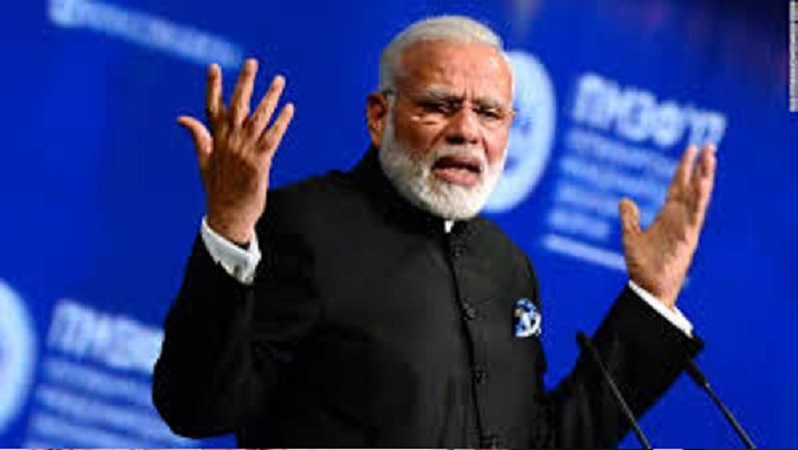
To set the ball rolling towards the goal, Indian Prime Minister Narendra Modi launched ‘Digital India’ that its masterplan involves a scope of institutional changes, geared toward more liberal economic practices that will entice the big names in the tech industry.

Since 2020, there has been increase in the number of big tech companies embracing India. Google doled out $4.5 billion for a 7.73% stake in Reliance Jio following its $10 billion investment in India’s digital infrastructure, a part of Google’s India’s mission. Qualcomms made $97 million investment in Jio and Facebook, $5.7 billion for a 9.99% stakes in the conglomerate. Amazon is another Silicon Valley big name to take the Indian route. In January 2020, the founder of the ecommerce giant, Jeff Bezos, announced $1 billion investment to help digitize small and medium businesses. It has been followed by other deals including partnership with Airtel to offer affordable streaming service to Indians.

Tesla CEO Elon Musk also said the electric vehicle company will find its way to India soon.

India has a booming telecom industry of over 500 million subscribers that presents a digital economic goldmine to both the country and investors. Covid-19 pandemic exposed the country to more digital opportunities as activities moved online at the peak of the plague.

However, the surge in Covid-19 cases has presented obstacles to digital growth and its future prospects as other traditional businesses originally in the digital masterplan are likely going to be shut out. The government has reintroduced restrictions that affect many states and sectors driving the economy. Transport services have been mainly shut down, all public and private offices closed, factories, hospitality and most other businesses have been halted. Some economists said that there is already Covid-induced job loss of 40 million people and counting (MRD report) in the country, mostly in the unorganized sectors.

With the cases still rising, many more sectors are likely going to be impacted sooner or later, and the economic impact will undermine the whole ‘digital India’ masterplan as focus will shift to economic recovery.

Lexicology predicts that a lot of traditional businesses are likely to go out of business in the coming months and e-commerce and online businesses will gain further market share as a lot more people in India are learning and using online platforms to order groceries, eatables, and almost all household items.

While traditional businesses will be forced to go online to stay afloat, there is concern that poor digital infrastructure in India will hamper their efficiency and growth. And also, many other conventional entities, although they are in the digital economy masterplan, will be left out as more time is needed to incorporate them into the digital life.

Purchasing power and confidence of the consumer are projected to hit an all-time low. Tax collections will also drop and a global economic recession seems to be in the offing which will severely affect the Indian economy and recovery from this crisis could take over a year or two. This means the 2025 one trillion dollars digital economy dream will have to wait, and no one knows when it will come true.

Reasons People Bully One Another

0

Bullying is, to date, one of the problems of every society. Many people believe that only children bully one another and that is why most contents on bullying have to do with parenting. But judging from what is happening around us, you will agree with me that most bullies are adults. You find these people in the office, market, bus stations, neighbourhood, your village, and even your home. Many of our political, religious, and academic leaders are also bullies. That is why many persons are afraid to challenge or disagree with the opinions of their leaders irrespective of how wrong those leaders are.

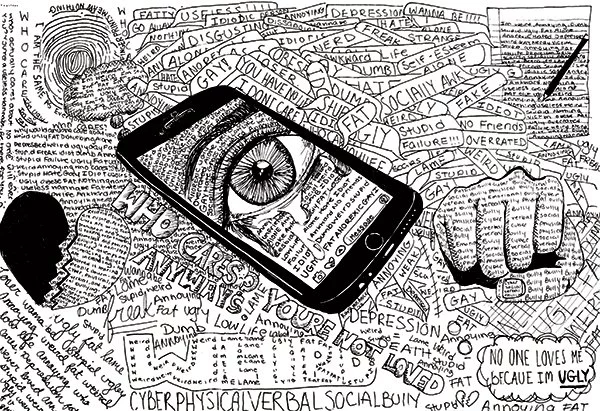
Bullying has been identified as the major cause of mental, psychological, and physical health problems. People that were bullied are never happy. They are constantly on their guard because they are unsure of what they will do or say that will land them the next pain. Victims of bullying develop low self-esteem, become depressed, go into substance abuse, and can even harm themselves. Academically, most victims of bullying perform below standard because they don’t believe in their capabilities. Emotionally, victims of bullying are stressed up. In offices, bullied colleagues try as much as possible to shy away from responsibilities that will bring them to the limelight because they believe they will expose them to more bullying and possible harm. The consequences of bullying are so enormous that they all can’t be discussed here. But it is pertinent for you to understand that bullying has grave effects on its victims.

One thing people continue to ask concerning bullying is why people do it. As mentioned earlier, bullying is supposed to stop when people grow up but it doesn’t. More adults are becoming bullies, even though they know the adverse effects their actions have on others. The fact that these adult bullies continue with their wicked acts despite knowing their effects will tell you that they do them deliberately. They use bullying as their objects of control and manipulation. They believe that by hurting others, they can instil fears into them and turn them into their puppets. Unfortunately, they are right because they succeed.

Some people also resort to bullying because they see it as the only way they can attract the desired attention. These are the unsecured persons that feel no one wants to relate with them. If they bully someone and notice that it attracted the attention of the people they wanted, they continue with that modus operandi despite how damaging their actions are. In the cyber world, this is the usual method many social media ‘influencers’ use to attract followers and businesses.

Some bullies use their actions to cover up their offenses or crimes. Growing up, we witnessed this type of bullying (many of us were guilty of this). Remember the time you promised your younger siblings and cousins of a “beating they will receive” if they tell your parents what you did? You actually bullied them into silence. Many children do and still do this, but they stop as they grow older and realize their parents won’t punish them for every ‘crime’ they commit. But, unfortunately, many people grew up with this attitude. Criminals use this approach to silence witnesses. Politicians use it to quell opposition. Religious leaders promise people of imminent death and ‘generational curses’ if they expose their atrocities. All these and more are instances of bullying done to cover crimes and offenses.

Some people bully others because they want to destroy them. This may sound outrageous but it is true. Some people bully their targets because they are jealous of their progress and, hence, want to bring them down. The problem here is that the bullies can go to any length to destroy their targets because they are motivated by a negative emotion – jealousy – which can burn the soul of the bearer so long as he entertains it. So, as long as this bully continues to envy his target, he will continue to bully him. The downfall of his target may not even satiate his jealousy-induced appetite.

People also bully those they see as threats. It does not matter if the target is aware of his threatening status or not; so long as the bully believes he (the target) will stand in his way of achieving the desired goal, he will devise means of tormenting him. This is commonly found in offices, where senior colleagues think the junior ones may become managers before them because of their vast knowledge and expertise. This, here, is one of the major reasons bright employees are targets of their immediate superiors and other colleagues that were in the office before them. This is also why people’s files disappear in some offices.

“Who is a bully?” some of you may ask because you don’t believe adults are capable of doing all that was mentioned above. Well, if you say hurtful words, even as a tease, to people because you want to manipulate and/or control them, you are a bully. If you promise a person that you will “deal with him” for challenging you or your stance, you are a bully. If you hit people to force them into doing what you instructed (dear parents), you are a bully. If you force your colleagues, be it junior, peer, or senior, to adhere to your rules or face losing their promotion (or having low appraisal), you are a bully. So long as there is intimidation, coercion, aggression, threat, or hurt, to make people act as you desired, you are a bully.