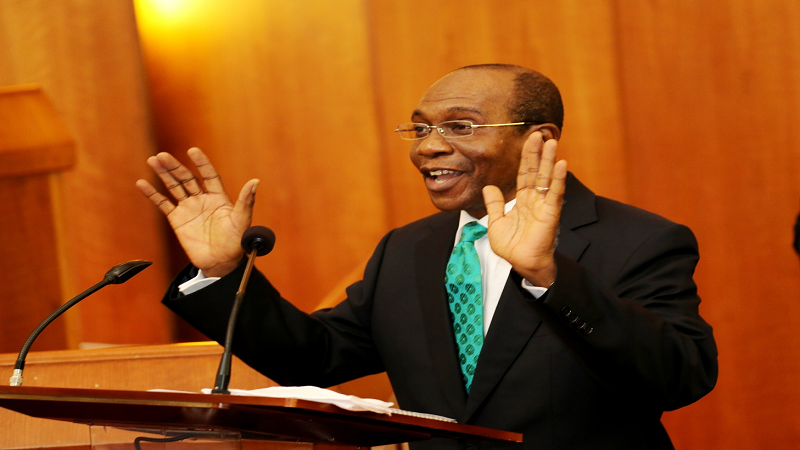
“Since I became the CBN governor, I have been hearing about the size of diaspora remittances; some say $20 billion, in fact some say it’s about $30 billion. Honestly, I have been looking for the $30 billion or $20 billion, I have not seen it.
“But this time, I have decided that I will focus to see those billions of dollars. You know what, I am not only expecting $20 billion, if we get even up to $10 billion to $15 billion, I can tell you it can help the Nigerian economy.
“Pakistan, Indonesia and others generate an average of $2 billion monthly in diaspora remittances and this has helped to reduce the impact of COVID-19 on their economy,” Central Bank of Nigeria Governor, Godwin Emefiele (source).
Then, “the CBN Governor, Godwin Emefiele, recently said that weekly diaspora remittances rose from $5m to $30m. He noted that the initiatives introduced by the CBN to boost foreign exchange in the country were yielding results.” Yet, the numbers are way off the soundbites. At that rate, you get less than $2 billion in a year.
So, where is the extra $18 billion? They are there: peer to peer remittance; the official traditional remittance channels are being disintermediated. CBN’s problem is not Nigeria but US tax systems which make peer-to-peer preferable. Try to remit $10,000 from the US to Nigeria. You will share your social security number and practically everything about your life.
Next time, the same person may just prefer to wire that money to somebody in the US who will credit him in Nigeria. With that, no remittance in CBN books but remittance has actually taken place. To fix remittance, it is what happens in Nigeria that matters to the diasporas, it is what they have to prove before that money lives US when the amount is significant.
As Nigeria’s economy spirals quarter-on-quarter into deeper dismay, the Central Bank of Nigeria (CBN) has been trying many policies to stop the plunge. The CBN has granted operating licenses to 10 additional international money transfer operators (IMTOs) as part of efforts to boost diaspora remittances.
In March, the Apex bank introduced the ‘Naira 4 Dollar Scheme’ for diaspora remittances, which offers recipients of diaspora remittances through CBN’s International Money Transfer Operators, N5 for every $1 received as remittance inflow.
“In an effort to sustain the encouraging increase in inflows of diaspora remittances into the country, the Central Bank of Nigeria (CBN) hereby announces the introduction of the “CBN Naira 4 Dollar Scheme”, an incentive for senders and recipients of international Money Transfers,” a circular shared by the CBN said.
“Accordingly, all recipients of diaspora remittances through CBN licensed IMTOs shall henceforth be paid N5 for every USD1 received as remittance inflow,” it added.
The move was geared towards taking pressure off the naira by boosting dollar liquidity in Nigeria as most of the diaspora remittances shifted to cryptocurrency channels, compounding the country’s forex instability. It’s a two-month trial that will end next month but may be extended if successful.
Well over a month after the scheme started, it is yet to effect significant change in Nigeria’s economy. And now, the CBN governor Godwin Emefiele wants to expand the number of IMTOs in the country in the hope of achieving its aim as the trial deadline nears.
He said if the country could have inflows of about $10 billion to $15 billion, it would have a significant effect on the economy amidst the current fiscal constraints.
An IMTO
The newly-licensed operators are Transfercorp Limited/VFD Group; Comot Trading Nigeria Limited; Direkt Wire UK Limited; Gabtrans UK Limited in partnership with Moneyto Limited; GDM Transfer PTY Limited; Innovate 1 Pay Limited; Paysend Plc; SANAA Capital LLC (Money4 Diaspora Services LLC); Swift Payment Limited and WI-PAY Global LLC.
The new additions bring the total number of IMTOs in Nigeria to 57, as the CBN restricts all diaspora remittances to deposit money banks rather than mortgage or fintech institutions.
This move is to accommodate anticipated wider dollar inflow to Nigeria, even though there is no sign diaspora remittance is breaking away from the shackles of cryptocurrency. Although cryptocurrency trading volume has declined in the first quarter of the year compared to the last quarter of 2020 when it hit a record $400 million, there has been a surge in peer-to-peer (P2P) trade volumes.
Recent data fromUsefulTulips shows that Nigeria still dominates the African cryptocurrency market, despitethe central bank’s ban that forced dealers to P2P late last year. Nigeria’s P2P bitcoin traded volumes in the past 90 days surged to nearly $100 million, indicating that the central bank has been defied by still a huge number of diasporans who have chosen cryptocurrency as their means of remittance.
The CBN is counting on the diaspora remittance to stabilize cashflow as government’s revenue generation plunges further.
Emefiele said the remittances would help to curb the strains of COVID-19 just as in other countries like Pakistan and Indonesia.
“Since I became the CBN governor, I have been hearing about the size of diaspora remittances; some say $20 billion, in fact some say it’s about $30 billion. Honestly, I have been looking for the $30 billion or $20 billion, I have not seen it.
“But this time, I have decided that I will focus to see those billions of dollars. You know what, I am not only expecting $20 billion, if we get even up to $10 billion to $15 billion, I can tell you it can help the Nigerian economy.
“Pakistan, Indonesia and others generate an average of $2 billion monthly in diaspora remittances and this has helped to reduce the impact of COVID-19 on their economy,” he said.
While these targeted efforts are feasible, market frictions driving cryptocurrency surge are still at large, expanding its scope of authority to stymie CBN’s moves. Cross-border bureaucratic bottlenecks and intermediary costs of making remittances through regulated traditional financial institutions, are inadvertently pushing increasing crowd of people to cryptocurrency.
This was acknowledged by the Association of Bureau De Change Operators of Nigeria (ABCON), which stated that cryptocurrency transactions have an edge over the counter-remittance measures being introduced by the CBN.
“These exchanges override the political complications of official channels. The global reach of cryptocurrencies avoids the inflation risk inherent to official currencies, especially in politically unstable countries reliant on fickle foreign investors,” ABCON said.
With this trajectory, the CBN will need more than the ‘Naira 4 Dollar Scheme’ to save the naira from the oppression of cryptocurrency.
The 2021 first quarter results for Apple and Facebook show growth above analysts’ projections. The two tech giants recorded increased earnings that once again defied the pandemic, thanks to iPhone 12 sales and increased ad revenue.
Apple reported a profit of $23.6 billion in its second quarter, up twofold from a year ago, on record sales of $89.6 billion. The iPhone maker’s sales were up 53.7% jump from the same quarter last year, exceeding the $77.4 billion expected by analysts.
Net earnings were $1.40 per share, also beating the consensus analyst expectation of 99 cents per share.
iPhone sales totaled $47.9 billion, accounting for 53% of Apple’s total revenue, far surpassing the $29 billion reported in the first quarter of 2020 and the $41.7 billion predicted by Wall Street analysts.
The growth has been attributed mainly to the iPhone 12 series, Apple’s first with 5G cellular technology, prompting more people than usual to replace their devices.
Nevertheless, Apple reported strong growth across all its segments.
Revenue from services like iTunes and the App Store grew 27% to $16.9 billion, and sales of Mac computers, iPads and accessories like AirPods and watches also increased from last year. IPhone sales rose 66%, Macs were up 70%, while iPad sales jumped 79%.
Apple is boosting both dividends and buybacks. The company said Wednesday it will increase its share buyback program by $90 billion. The company repurchased $43 billion in the first half of the year and $72 billion in fiscal 2020.
“Success was broadly distributed across our product categories,” Apple CEO Tim Cook said in a Wednesday evening conference call.
Also, Facebook got on the profit page with a revenue growth that thrashed previous records. The social media giant reported that revenue rose 48% to $26 billion, helping nearly double its net income to $9.5 billion. That’s a significant increase from the 33% growth the company recorded in the fourth quarter. The growth has been fueled by strong demand that helped stoke both robust price increases and more ads, as the world adapts to the digital life.
Facebook daily active users (DAUs), were 1.88 billion on average for March 2021, an increase of 8% year-over-year.
Facebook monthly active users (MAUs), were 2.85 billion as of March 31, 2021, an increase of 10% year-over-year. Family daily active people (DAP), was 2.72 billion on average for March 2021, an increase of 15% year-over-year.
Family monthly active people (MAP), was 3.45 billion as of March 31, 2021, an increase of 15% year-over-year.
Capital expenditures, including principal payments on finance leases, were $4.42 billion for the first quarter of 2021.
Facebook founder and properties
Cash and cash equivalents and marketable securities were $64.22 billion as of March 31, 2021. Headcount was 60,654 as of March 31, 2021, an increase of 26% year-over-year.
“We had a strong quarter as we helped people stay connected and businesses grow,” said Mark Zuckerberg, Facebook founder and CEO. “We will continue to invest aggressively to deliver new and meaningful experiences for years to come, including in newer areas like augmented and virtual reality, commerce, and the creator economy.”
The social media company said the strength of its advertising revenue growth in the first quarter of 2021, was driven by a 30% year-over-year increase in the average price per ad and a 12% increase in the number of ads delivered.
However, there are questions about the sustainability of the growth as Facebook is confronted with hard realities such as the new Apple’s iOS 14.5 privacy policy that came into effect this month, and stricter European regulatory developments threatening its services in Europe.
Facebook said it expects second quarter 2021 year-over-year total revenue growth to remain stable or modestly accelerate relative to the growth rate in the first quarter of 2021 as it lap slower growth related to the pandemic during the second quarter of 2020.
It is always a privilege to be called to speak before legends. On Tuesday 18th May 2021, I will deliver a presentation before the CEOs who make Nigeria run. Yes, members of the Manufacturers Association of Nigeria (MAN). If the oil & gas sector is the high priest to our foreign exchange, MAN and its members hold the economic vitality of Nigeria.
Irrespective of any financial engineering in Nigeria at any level (central bank, commercial bank, finance ministry), the best friend Naira can have is MAN because only MAN holds the long-term sustainability of Naira.
I expect it to be a great conversation with men and women who MAKE things.
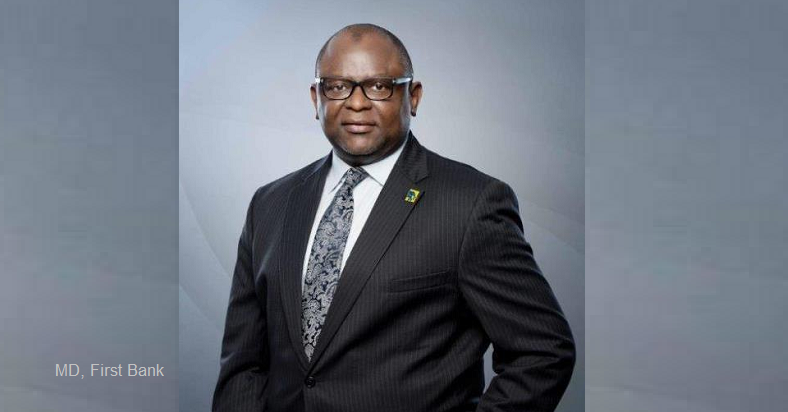
The news was that First Bank of Nigeria Plc had appointed Gbenga Shobo, the erstwhile deputy GMD, as the GMD/CEO of the 127-year old banking giant. He was to take over from Adesola Adeduntan.
People, there is brewing warfare in First Bank. The Central Bank of Nigeria has queried the Board for removing Dr Adesola Adeduntan without regulatory approval; he has 8 months in his contract to go. The letter was addressed to the bank’s Chairman, Ibukun Awosika.
First Bank is fine. What is happening here is a battle of who controls this bank, according to ThisDay. Oba Otudeko & co with about 10% on one side, and Oye Odukale (with 10%) and billionaire Mike Adenuga (with 6%) alliance on another.
But all that may now be put on hold as a major boardroom manoeuvre appears to be at play among the three dominant shareholding groups, who are now weighing their options.
Otudeko and his allies with 10 per cent shareholding might be up against an emerging alliance between Oye Odukale (10 per cent) and Mike Adenuga (6 per cent).
Odukale and Adenuga, who THISDAY learnt might have teamed up last night, are pushing for the return of the ousted CEO with the ultimate aim of sacking the board presently controlled by Otudeko.
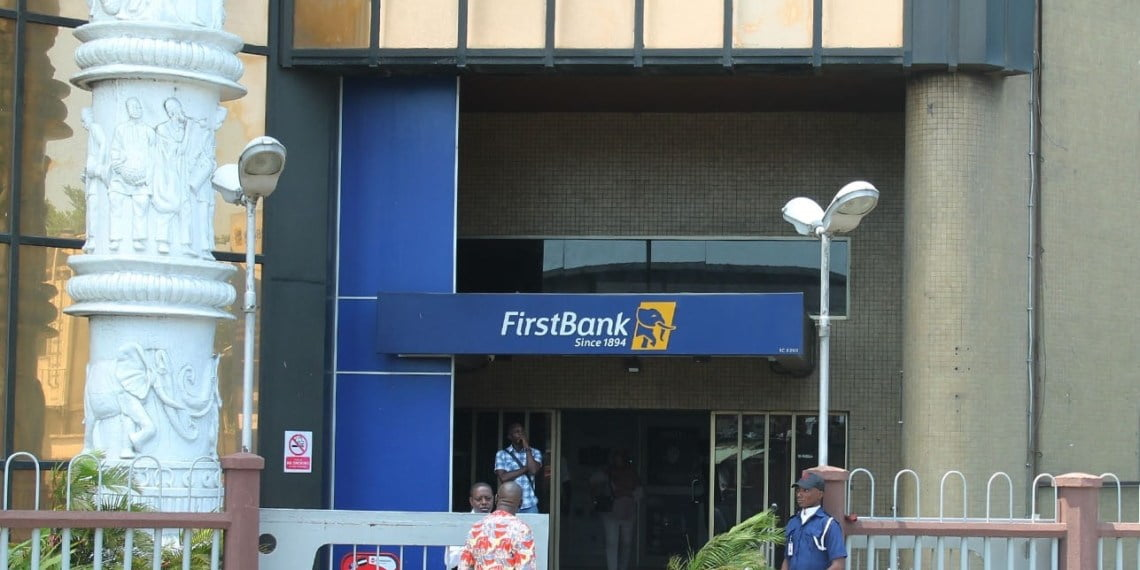
Depending on what the apex bank does, you may see a new guard in the pioneer bank. This battle has nothing to do with the bank but interests. Sure, First Bank books and ratios may not be superb, but what is happening is not about those; CBN was already helping on those. I want you to wish the elephant well.
“We are particularly concerned because the action is coming at a time the CBN has provided various regulatory forbearances and liquidity support to reposition the bank, which has enhanced its asset quality, capital adequacy and liquidity ratios amongst other prudential indicators.
“It is also curious to observe that the sudden removal of the MD/CEO was done about eight months to the expiry of his second tenure, which is due on December 31, 2021.”
The News Agency of Nigeria (NAN) reporting. Pardon my copying in full for context.
First Bank of Nigeria Limited has appointed Gbenga Shobo as its managing director/chief executive officer effective from April 28.
Mr Shobo, who until now was the lender’s deputy managing director, will take over leadership from Adesola Adeduntan, who will be retiring in accordance with the bank’s term limits for chief executives, having headed it since 2016.
“His appointment has proven the resilience of our succession planning mechanisms and the value we place on our long-standing corporate governance practices, which underpin the institution’s enduring sustainability and 127-year legacy,” Ibukun Awosika, chair of the bank’s board of directors, said Wednesday in a statement reported by The Cable.
The Central Bank of Nigeria (CBN) has queried the Board of the First Bank of Nigeria Plc for removing Dr Adesola Adeduntan, the Managing Director/Chief Executive Officer, without regulatory approval.
The query is contained in a letter dated April 28, 2021, signed by the CBN Director, Banking Supervision, Haruna Mustafa, and obtained by the News Agency of Nigeria (NAN).
The letter was addressed to the bank’s Chairman, Ibukun Awosika.
Mr Mustafa said that the action was taken without due consultations with the regulatory authorities, especially given the systemic importance of the commercial bank.
CEO Adebola
He noted that the tenure of Mr Adeduntan has yet to expire.
“The CBN was not made aware of any report from the board indicting the managing director of any wrongdoing or misconduct; there appears to be no apparent justification for the precipitate removal.
“We are particularly concerned because the action is coming at a time the CBN has provided various regulatory forbearances and liquidity support to reposition the bank, which has enhanced its asset quality, capital adequacy and liquidity ratios amongst other prudential indicators.
“It is also curious to observe that the sudden removal of the MD/CEO was done about eight months to the expiration of his second tenure which is due on Dec. 31, 2021,” he added.
Mustafa noted that the removal of a sitting MD/CEO of a systemically important bank was not good.
“The removal of a sitting MD/CEO of a systemically important bank that has been under regulatory forbearance for five to six years without prior consultation and justifiable basis has dire implications for the bank and also portends significant risks to the stability of the financial system.
“In light of the foregoing, you are required to explain why disciplinary action should not be taken against the board for hastily removing the MD/CEO and failing to give prior notice to the CBN before announcing the management change in the media.
“In the meantime, you are directed to desist forthwith from making any further public/media comments on the matter. Your comprehensive response on the foregoing should reach the Director, Banking Supervision Department, on or before 5p.m. on April 29, 2021,” he said.
NAN reports that First Bank on Wednesday announced the appointment of Gbenga Shobo as the new Managing Director and Chief Executive Director.
Mrs Awosika said that the appointment was subject to all regulatory approvals.
She said that Mr Shobo succeeds Mr Adeduntan who would be leaving the bank in accordance with the bank’s term limit for its chief executive after successfully leading the bank since January 2016.
:These decisions will take effect from today, April 28, 2021,” Mrs Awosika said.
“We are proud to announce Gbenga Shobo as our new Managing Director/Chief Executive Officer.
“His appointment has proven our resilience of our succession planning mechanisms and the value we place on our long-standing corporate governance practices, which underpin the institution’s enduring sustainability and 127-year legacy.
“Shobo has had a successful career in the bank and elsewhere culminating in his appointment as the deputy managing director in 2016 prior to his appointment as the managing director.
“The board is confident that Shobo has the experience and the understanding of the bank and the know-how to lead the bank through this next phase of growth, which is focused on positioning First Bank as the preeminent bank in our chosen market, delivering value to our stakeholders,” she added.
Mrs Awosika said that the bank also appointed Abdullahi Ibrahim as the Deputy Managing Director.
According to her, Ini Ebong, Segun Alebiosu, Seyi Oyefeso and Bashirat Odunewu were also appointed as executive directors.
She noted that these decisions were subject to all regulatory approvals.