DD
MM
YYYY

PAGES

DD
MM
YYYY

spot_img

PAGES

Home Blog Page 58

Apple Unveils $1,999 Foldable iPhone as New CEO John Ternus Begins Tenure

0

Apple unveiled its first foldable iPhone at its flagship fall product event on Wednesday, putting new Chief Executive John Ternus on stage for the company’s biggest hardware launch in years and marking the first leadership change at the keynote since Tim Cook became CEO 15 years ago.

Taking a page from Steve Jobs’ presentation playbook, Ternus saved “one more thing” for the end of the event before introducing the iPhone Duo, a foldable device that opens from a passport-like form factor into a larger, iPad-style display.

The launch gives Ternus, a longtime Apple hardware executive who previously led the company’s hardware organization, an early opportunity to establish his leadership with consumers and investors. It also places him at the center of Apple’s effort to persuade customers to pay higher prices for upgrades as the smartphone market becomes more mature.

Ternus took over from Cook at the start of September, making the event his first major public product presentation as CEO. His decision to highlight the foldable iPhone as the keynote’s climactic announcement also gives Apple a new flagship product category with which to distinguish its premium lineup.

The iPhone Duo represents Apple’s most significant change to the iPhone’s physical design since Jobs introduced the original model in 2007. When folded, the device functions as a conventional smartphone, while opening it transforms the display into a substantially larger screen.

Ternus used the launch to draw a contrast with existing foldable phones, arguing that competing products have often failed to integrate the two halves of the device into a cohesive experience.

“Others have created foldables that just feel like two phones stuck together,” he said.

Apple is charging a substantial premium for its first entry into the category. The iPhone Duo starts at $1,999, with pre-orders beginning October 16 and the device scheduled to launch October 23.

The price puts the Duo well above Apple’s conventional flagship iPhones and turns the foldable into a product aimed squarely at the premium end of the smartphone market. Its success will therefore depend not only on consumer interest in foldable designs but also on whether customers see the larger display and new form factor as worth paying hundreds of dollars more.

Apple says the Duo uses two batteries and can deliver up to 44 hours of usability when customers use only the outer display, while video playback on the inner screens can reach up to 31 hours. The company is also offering a small kickstand and a protective case designed to shield the edges of the folded device.

The foldable launch came alongside a broader increase in Apple’s hardware prices. The company raised the starting price of its high-end iPhone Pro models by $100, with the iPhone 18 Pro starting at $1,199 and the iPhone 18 Pro Max at $1,299.

Apple has attributed recent price increases across its hardware lineup to the difficult memory-supply environment. MacBooks and iPads have also become more expensive in recent months, increasing the cost pressure facing consumers across Apple’s ecosystem.

The combination of a $1,999 foldable and higher prices for the mainstream Pro lineup gives Apple more room to increase average selling prices, but it also raises the stakes for its upgrade strategy. Consumers who are already holding onto smartphones for longer may be less willing to absorb another price increase unless the new hardware offers a sufficiently meaningful improvement.

Apple’s revamped financing and subscription approach could help address that problem. The company recently overhauled its device subscription program and renamed it Apple Upgrade, allowing customers to access a new iPhone, Apple Watch, iPad or MacBook through monthly payments rather than paying the full cost upfront. The program is powered by buy-now-pay-later provider Klarna.

That model becomes relevant with a foldable phone approaching the $2,000 mark. Spreading the cost over monthly payments could make the Duo more accessible to customers who would otherwise reject its upfront price, while allowing Apple to preserve the premium headline price.

The company also introduced the iPhone 18 Pro and Pro Max with new colors and upgraded computing technology aimed at improving photography and AI features, including the next generation of Siri.

One of the biggest camera upgrades is a variable-aperture system, which Apple said uses six laser-cut blades to control how much light enters the camera. Kaiann Drance, Apple’s vice president of iPhone marketing, described it as the company’s most advanced camera system.

Apple also unveiled new Apple Watch models, including the Apple Watch Series 12 and Ultra 4, with an increased emphasis on health and fitness. A new sensor system takes background heart-rate readings every five seconds throughout the day, including while the wearer is moving.

The company introduced AirPods 5 with a redesigned acoustic architecture and computational audio while retaining the open-ear fit of the standard AirPods. The new models start at $129 with a standard charging case and $149 with wireless charging. Apple is also adding a swipe-based volume control on the side of the earbuds.

The event included a detailed look at iOS 27, with the software update scheduled to launch September 14.

But the foldable iPhone remains the most consequential announcement of the event. Apple is entering a category that competitors have spent years developing, meaning it will need to persuade consumers that waiting for Apple was worthwhile.

The launch also gives Ternus an opportunity to establish a different era for Apple. Cook spent more than a decade building on the foundation created by Jobs, expanding the iPhone ecosystem and turning services and wearables into major businesses. Ternus inherits a company with a massive installed base but faces the harder task of creating new reasons for customers to upgrade.

The iPhone Duo could become one of those reasons if Apple succeeds in making foldable technology feel sufficiently different from the conventional smartphone. Its $1,999 price, however, means Apple is simultaneously testing the limits of what consumers are prepared to pay.
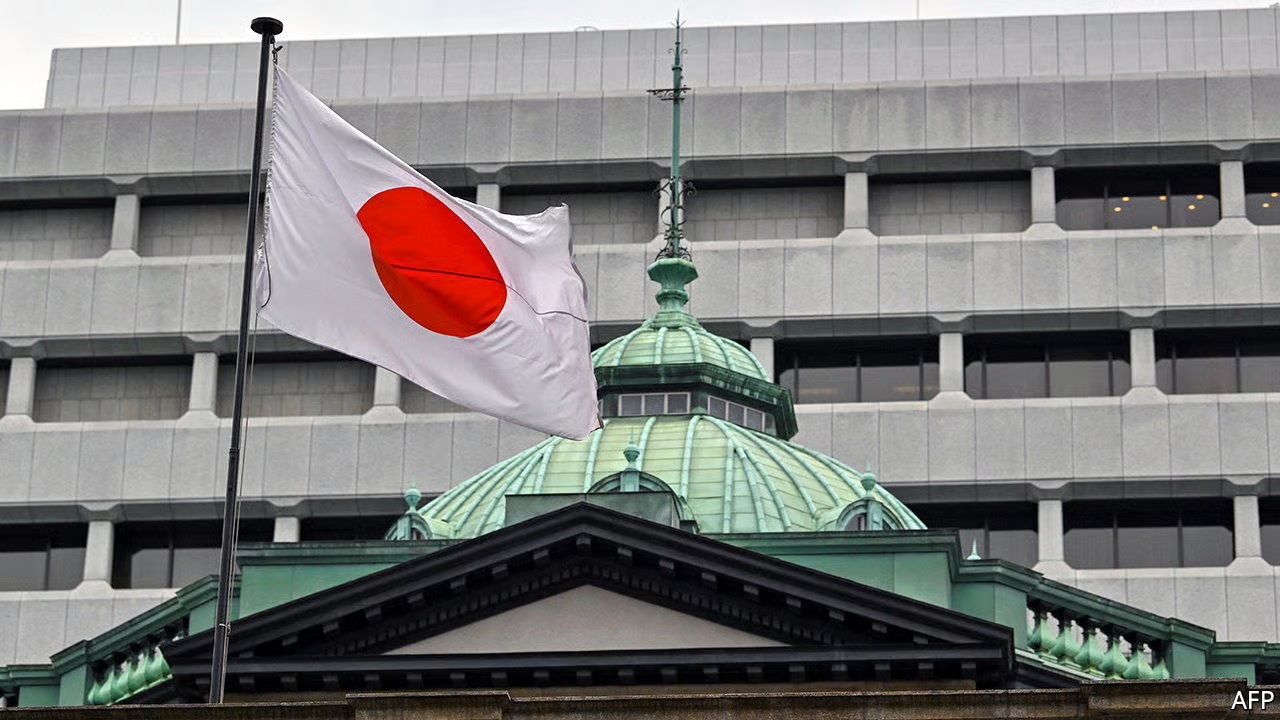

Bank of Japan Set to Raise Interest Rates to 1.25% in September as Yen and Global Markets Brace for Impact

0

Japan’s central bank is preparing to take another step away from the extraordinary monetary accommodation that defined its economy for decades.

The Bank of Japan is widely expected to raise its key interest rate by 0.25 percentage point at its September meeting, lifting the policy rate to 1.25% and marking another decisive stage in the country’s gradual return to conventional monetary policy.

The expected move comes as inflationary pressures remain persistent and the yen continues to face structural weakness.

A Reuters survey conducted from September 1 to 8 found that 97% of economists expected the Bank of Japan to deliver the increase on September 18, a dramatic rise from 57% in the previous poll.

The consensus suggests that markets are no longer debating whether the central bank will tighten policy, but how quickly it will continue tightening afterward. The pressure on policymakers has intensified as the yen previously fell to a four-decade low, raising the cost of imported energy, food and other commodities.

Japan and the United States have also coordinated foreign-exchange intervention to stabilize the currency. The subsequent recovery of the yen has reduced some of the immediate pressure, but it has not eliminated concerns about inflation or currency volatility.

For the Bank of Japan, however, the decision is about more than defending the yen. Policymakers are increasingly concerned that inflation expectations could become entrenched if price growth remains above the central bank’s 2% target for too long.

A member of the Bank’s policy board, Kazuyuki Masu, has argued that further rate increases may be necessary to prevent inflation from becoming more persistent. The consequences will extend far beyond Japan.

For years, investors borrowed cheaply in yen and deployed the funds into higher-yielding assets overseas, creating the enormous global yen carry trade. As Japanese rates rise and the yen strengthens, that strategy becomes less attractive.

Reuters estimates that cross-border yen borrowing reached about ¥360 trillion, highlighting the scale of potential exposure. The yen has already strengthened sharply, rising nearly 5% against some major carry-trade currencies in early September.

Investors are therefore watching closely for signs that another wave of position unwinding could disrupt global markets, particularly equities, emerging-market currencies and other risk-sensitive assets.

Japanese government bonds are also responding. The 10-year JGB yield has moved above 3%, its highest level in roughly three decades, encouraging domestic institutions to reconsider the balance between overseas and domestic investments.

Fitch has suggested that rising Japanese yields could keep more Japanese capital at home and provide further support for the yen.

The September hike may therefore be only the beginning. The Reuters poll found that more than one-third of economists expect another increase to 1.50% as early as October or December, while the median forecast sees the policy rate reaching 1.75% by the second quarter of 2027.

Japan’s monetary era is changing. What was once an economy defined by deflation, negative rates and ultra-cheap money is increasingly becoming one where inflation, yields and currency strength determine policy.

The September decision may be only 25 basis points, but its consequences could ripple through the yen, Japanese bonds and global markets.

CreditCheck Expands Into Uganda Through Algosys Acquisition

0

Nigerian fintech CreditCheck has expanded into East Africa by acquiring Ugandan core banking startup Algosys, giving it a direct foothold in the Ugandan market and access to 22 financial institutions currently using Algosys’ technology.

The acquisition forms part of Creditcheck’s broader strategy to expand beyond borrower assessment and provide a wider range of financial infrastructure covering customer acquisition, risk assessment, loan issuance and loan management.

Commenting on its expansion to Uganda, Co-founder of Creditcheck Kingsley Ibe wrote via a post on LinkedIn,

“We are excited to announce the acquisition of Algosys, a core banking and lending management company based in Uganda. Today, lenders often rely on multiple disconnected providers for credit bureau information, income verification, identity verification, loan management, collections, and other parts of the lending lifecycle.

Our long-term goal at Creditchek is to bring these capabilities together under one infrastructure layer that connects the different parts of the lending value chain—enabling financial institutions to make faster, more accurate, and more inclusive credit decisions. This incredible milestone brings us closer to our planned East Africa expansion and strengthens our ability to build localized credit and lending infrastructure for the markets we serve.”

Also speaking, founder of Algosys Innocent Bigega said,

“We are excited about what this next chapter means for Algosys. Joining CreditCheck gives Algosys access to broader technology platform and resources while allowing us to continue building for financial institutions we already serve. Together, we can build significantly more powerful infrastructure for lenders in Uganda and beyond”.

Algosystems is a leading solutions provider operating in the Information & Communications, Automation & Control, and Metrology markets.

With offices in Greece and Qatar, the company has implemented a vast number of both simple and complex projects with specialization in the private sector. Algosystems has extensive experience and expertise that extends to a very wide range of solutions.

As a unique system integrator, it uses its specialized convergent knowledge in Information & Communication Technologies and in Business Software, Automation & Control and Metrology to offer solutions and services to a very wide range of customers.

Algosystems is in pace with technological developments, owns the knowledge and expertise needed to support its technical proposals and effectively supports its customers with a full range of integrated services.

Algosys will continue serving its existing customers as a Creditchek subsidiary. Existing products and services will continue to operate, while customers will progressively gain access to Creditchek’s technology, infrastructure and product capabilities.

With Algosys’ technology having facilitated more than 10,000 SACCO loans,  the acquisition provides Creditchek with both established local technology and an existing customer base as it strengthens its expansion across East Africa.

Founded in 2021 by Kingsley Ibe and Lionel Orishane, Creditchek is a credit assessment infrastructure, enabling financial institutions to verify nd assess the creditworthiness of African consumers.

The company has always been focused on a simple challenge, helping financial institutions make better credit decisions with better access to information.

The platform partners with African credit bureaus to enhance financial data transparency. Its core offerings include Credit Insights, which connects with African credit bureaus, and Income Insights, a tool for financial institutions to assess creditworthiness from bank statements.

Last year, Creditchek acquired CreditCliq, a U.S.-based company that helps businesses underwrite credit for newcomers while reducing default risk by accessing customers’ global credit reports.

The acquisition was a strategic move by the fintech company, aimed at breaking one of the biggest barriers for African immigrants, to accessing credit in new countries.

With the acquisition of Algosys, CreditChek wants to move beyond simply providing data to lenders and build the infrastructure that enables them to acquire customers, assess risk, make credit decisions, originate loans, and manage those loans throughout their lifecycle.

By combining Algosys’ core banking infrastructure with CreditChek’s credit and financial data capabilities, the company can build much more localized lending infrastructure for African markets.

Airport Security Gets a New Twist as TSA Allows Eligible Visitors Beyond Checkpoints

0
Cape Town airport

The airport security checkpoint has long represented a firm boundary: once a traveler passed through, only passengers with valid boarding passes could enter the secure side.

Now, nearly 25 years after the September 11 attacks transformed that system, the Transportation Security Administration (TSA) is opening the gates again — but only for certain trusted travelers.

The new initiative, called Gateside by TSA PreCheck, allows eligible people without plane tickets to pass through security and enter airport gate areas at participating U.S. airports.

The program is designed to restore some of the personal experiences that disappeared from American airports after 9/11, including accompanying loved ones to their gates, welcoming arriving relatives, meeting someone during a layover, or simply enjoying restaurants and shops beyond security.

The change is significant because airport security has traditionally been built around a simple principle: access to the secure area should be limited to people who have a legitimate reason to fly. After the 2001 terrorist attacks, that principle became considerably stricter.

Friends and relatives were largely forced to say goodbye before security, while gate-side reunions became something remembered through older photographs and movies.

Gateside represents a carefully controlled attempt to bring some of that experience back without abandoning the security architecture developed over the past quarter-century.

The program is not open to everyone. It initially operates at 13 airports and is aimed at TSA PreCheck members and travelers enrolled in other trusted-traveler programs who possess a Known Traveler Number.

Participants must apply online between one and three days before their planned visit and receive approval before arriving at the airport. Once approved, visitors must present acceptable identification and undergo security screening.

They can use TSA PreCheck screening lanes, although the program does not mean visitors can simply walk through security without being screened. The authorization is valid for one calendar day, with re-entry permitted during that day.

That distinction matters. Gateside is not a relaxation of airport security so much as a redistribution of access based on an individual’s trusted-traveler status. TSA has already vetted PreCheck participants, giving the agency an additional layer of confidence when allowing them into restricted airport areas.

The initial airports include major hubs such as Los Angeles International Airport, Dallas-Fort Worth International Airport, Harry Reid International Airport in Las Vegas and Salt Lake City International Airport. TSA says the initiative is expected to expand to additional airports in the coming months.

The program also reflects a broader evolution in the airport experience. Several airports already operate their own visitor-pass systems, allowing non-ticketed people to enter secure areas under specific conditions.

Gateside establishes a TSA-backed model tied specifically to trusted travelers. For families, the change could make airports feel less transactional. A parent can potentially walk a child to the gate. A spouse can greet a returning partner.

Friends can meet during a long layover without leaving the secure area. Yet the deeper significance is symbolic. Gateside suggests that airport security and human connection do not necessarily have to be opposites.

Nearly a quarter-century after 9/11 made the airport gate a privilege reserved almost exclusively for ticketed passengers, the TSA is cautiously reopening that door — not to everyone, but to people it already considers among the most trusted travelers.

OpenAI’s ChatGPT Work Is Turning Workplace Data Into Personalized Writing

0

Artificial intelligence is moving beyond simply generating text to understanding how individuals communicate. OpenAI’s ChatGPT Work is taking another step in that direction with a writing-style feature that can learn from connected workplace applications, including Gmail, Google Drive, Slack and SharePoint.

Instead of repeatedly instructing an AI to sound professional, casual, direct or personal, the system can study examples of a user’s existing work and use those patterns when producing new content.

The significance of this development lies in personalization. Writing style is rarely defined by a simple instruction such as “make this formal.” It is often embedded in small habits: preferred expressions, sentence structure, punctuation, capitalization, vocabulary, greetings and even the way someone signs off an email.

ChatGPT Work can use examples from connected workplace tools to identify such characteristics and carry them into subsequent writing.

That could substantially change everyday knowledge work. Consider an executive preparing a company update, a journalist drafting correspondence, a manager responding to employees or a founder communicating with investors.

Rather than receiving a generic AI-generated message that requires extensive editing, the user could receive a first draft that is already closer to their established voice. The benefit is not simply faster writing; it is reduced friction between human intention and machine-generated language.

This capability also fits into the broader evolution of ChatGPT Work. OpenAI describes Work as an agent designed for longer, more involved assignments that can research information, work across connected applications and files, and create finished documents, spreadsheets, presentations and reports.

Its connectors already allow workplace information from services such as Google Drive, SharePoint, Slack and Gmail to become available within workflows. The writing-style feature therefore represents a deeper form of workplace context.

Previously, connected applications primarily helped AI understand what an organization knew. Now, they can also help it understand how an individual communicates.

That distinction could make AI assistants considerably more useful because effective workplace communication depends on both factual context and tone.

However, personalization introduces an important question: how much of a person’s digital history should an AI use to imitate them? Emails, internal messages and documents can contain sensitive information, confidential business discussions and personal communication habits.

Users and organizations therefore need to understand which connected sources are being used, what permissions apply and how workplace administrators control access. OpenAI’s documentation emphasizes that app availability and actions depend on plans, workspace settings, permissions and administrators.

There is also a broader question about authenticity. If AI becomes increasingly capable of reproducing an employee’s distinctive voice, the boundary between assistance and authorship becomes less obvious.

A message may sound exactly like its supposed author while being largely generated by a machine. Organizations may eventually need clearer policies around disclosure, approval and accountability for AI-generated communications.

Still, the direction is clear. ChatGPT Work is evolving from a general-purpose writing assistant into a context-aware workplace collaborator. By learning from the tools people already use.

It can potentially eliminate one of the biggest weaknesses of generative AI: the generic voice that often makes machine-written communication immediately recognizable.

The future of workplace AI may therefore depend less on whether machines can write and more on whether they can understand the person, organization and context behind the writing. ChatGPT Work’s new style-learning capability is an important step toward that more personalized model of human-AI collaboration.