DD
MM
YYYY

PAGES

DD
MM
YYYY

spot_img

PAGES

Home Blog Page 5813

Tekedia Live Schedule For This Week – How To Discover Opportunities

0

Good People, here is the schedule for Tekedia Mini-MBA Live for this week. The week begins with a demonstration of process improvement and automation in the downstream sector of the energy industry. The Guest Faculty will also show how an efficient inventory management system would improve any business.  Then it moves to what lawyers and professionals do during transaction due diligence as they gather  business intelligence for deals. Finally, the last Live session will be on how to discover opportunities at offices, markets, etc by examining two critical elements, which from our perspectives, everything depends upon.

  • Tue, April 13 | 7 – 8pm WAT | Process Improvement & Automation (session lab) – Tokunbo O. Arannilewa, CEO Eonsfleet
  • Thur, April 15 | 7-8pm WAT |  Transaction Due Diligence/Business Intelligence – Chike Obimma,  Partner at Niccom LLP
  • Sat, April 17 | 7 – 8.30pm WAT | How To Discover Opportunities, General Topic –  Ndubuisi Ekekwe

Zoom links in the Board

Meanwhile, the courseware for this week is in the Board. We are focusing on Leadership, Human Capital and Project Management.

Have a great profitable week. If you have not joined Tekedia Mini-MBA, go here for the next edition.

Watch The Containers And Understand Market Systems With Us

0

Good People, I like to see containers arriving in the deep sea. And for years, I have made sure that I have friends who work in one of the high rises in Marina Lagos. If you look through those buildings, you can see the far harbour. In those ships/containers, you see the productivity of nations, and the balance of trade.

During recession, few ships arrive, but one thing is constant: most ships come loaded into Nigeria but usually go lighter. I do not need government data to understand how those visuals will affect our balance of payments.

Interesting? That is how we co-learn at Tekedia Mini-MBA. We bring new insights on how to understand market systems. It is an amazing experience, and I invite you to join us. It runs for 12 weeks with thrice weekly LIVE sessions.

Go here, register and let’s co-learn .

Egypt Gearing Up to Upset the African Fintech Market As Paymob Raises $15m in Series A Round

0

On Thursday, Paymob, an Egyptian digital payment startup, announced it has raised a new $15 million Series A round led by Global Ventures. A15 and FMO, the Dutch entrepreneurial development bank, also participated in the investment.

This brings the total money raised by the startup to $18.5 million having secured $3.5 million that came as its first tranche in July 2020. It is the largest-ever Series A raised by a fintech in Egypt and one of the largest equity rounds in North Africa.

The round also points to a change in the African fintech industry, where Nigeria, Kenya and South Africa have been leading the way.

Founded in 2015 by Alain El Hajj, Islam Shawky and Mostafa El Menessy, Paymob was rated among top 10 of the 83 fintech startups in Egypt in 2020.

The startup helps online and offline merchants accept payments from their customers via several products and solutions.

With its different products and APIs, it enables online and offline businesses to accept and send payments. The merchants can easily integrate Paymob’s payments APIs in their websites or mobile apps to accept payments from their customers using different payment methods including cards, mobile wallets, and cash on delivery.

Nigerian payment startup, Flutterwave, which recently attained unicorn status, is seeking to expand its services to North Africa, where Fawry, Paymob’s country rival, reigns. The move which underscores how ripe and vast the African fintech market is, also points to the fact that Egypt’s fintech startups are yet to catch up with their sub-Saharan Africa counterparts.

Paymob said in a statement that the revenue for its payment acceptance business grew over 5x in 2020, with its technology now being used by over 35,000 local and global merchants including Swvl, LG, Samsonite, and the American University in Cairo. The startup claims to have processed payments worth over $5 billion to date.

Paymob also offers white-label mobile wallet solutions, helping businesses build a digital wallet into their apps, using its technology. The startup said that its mobile wallets infrastructure processes over 85 percent market share of transactions in the Egyptian market. The solution also serves merchants across international markets like Kenya, Pakistan, and Palestine.

With the fresh capital, the company aims to accelerate its expansion to Saudi and other regional markets this year. It will also use the funds to expand its merchant network and further enhance the suite of products.

Islam Shawky, the co-founder and CEO of Paymob, said the latest round will be used to fill abounding digital payment gaps through the acceleration of its services.

“We couldn’t be more excited for Paymob’s next phase of growth; the market opportunity in the region is unprecedented. The large digital payments gap still exists and we are delighted to be working with progressive-thinking regulators to address this,” he said.

“This latest capital raise will accelerate our progress to reducing the digital payments bottleneck. All our existing investors have increased their holdings, and we thank them both for their support and the confidence they have in our business model and track record of execution,” he added.

Aside from Egypt, Paymob is also present in Kenya, Pakistan and Palestine. Shawky said the company has plans to expand into more Sub-Saharan African countries.

Paymob has a perfect combination of high-quality technology, a product customers increasingly cannot do without, and an outstanding management team. Their market opportunity is also huge; Egypt’s transformation to a cashless society is being enabled by the unique products Paymob has built, Basil Moftah, General Partner of Global Ventures, said,

Last year, Fawry became a publicly traded unicorn for the first time, a major boost to the Egyptian fintech ecosystem and is also seen as an inspiration to other startups in Egypt and the North African region.

With investors racing to grab a cut of the African fintech boom, every startup appears to stand a chance for maximum growth. But with Egypt’s startups attracting more investors now, the market is about to get more competitive.

Why Social Media Influencers should be Regulated

0

Nigerians on Twitter would have noticed that the accounts on many Nigerian Twitter “influencers” were recently suspended. The stories surrounding this suspension state that the influencers were paid to obstruct justice by starting an online campaign. These influencers were said to have trended a hashtag as well as topics that will incite public outcry, protests, and demand for the release of Alex Saab, a Venezuelan diplomat, who was arrested and detained in Cape Verde in June 2020 for money laundering allegations. 

Of course, some of these influencers have denied these allegations, some claiming they trended the topic without being paid to do so. Whether these influencers were paid or not, fact remains that this controversial act has revealed how dangerous social media influencers can be if they are not regulated.

You must have noticed that some social media users have a lot of followers even though they do not advertise any products. They are called “influencers” for reasons that are never related to “influencing” people, at least positively. You must have noticed that some of these so-called influencers put up posts that have no positive impacts on their followers’ lives but still, the number of their followers continue to increase.

The time you might see them very active is when there is an “outcry” against an organisation, an individual, or the government. This will make you think that these people truly care about others but if you approach them privately to help you raise a voice for something they cannot gain from, they will ignore you and/or block you. This is to tell you that social media “influencer” is a business outlet and not a humanitarian one.

No one is stopping influencers from making money out of their “business” but lying about it and making money out of people’s expense make their job unacceptable. These people have a large number of followers, who could easily be misled because of the trust they have on the influencers. Because these people believe these influencers look out for them, they are manipulated into performing whatever actions they were directed to do. This was one of the issues with the Alex Saab case, where influencers told their followers to retweet their Alex Saab-related posts to stop oppression. The unsuspecting followers did as they were commanded without questioning the rationale behind the action.

Furthermore, followers see influencers as the voice of reason. They believe the influencers are “omniscient” because they have a large number of followers. So influencers should never be doubted or questioned, especially by people with small numbers of followers. Anyone that challenges the positions or assertions of these influencers is met by uproar, rage, and aggressive reactions/attacks from the influencers’ followers. Today, influencers are like drug lords and their followers are their street fighters, their minions.

The danger of social media influencers can be seen in their abilities to brainwash their followers and release them against their (the influencers’) enemies. They have gradually become so strong that they can raise people against the government, organisations, or private individuals. They have become online terrorists that they are now paid to send their minions to destroy their clients’ enemies. Business owners use them to crush their competitors and politicians employ them to destabilise states and ruin oppositions. They are now the forces to reckon with or to be feared. They are indeed, the online terrorists.

What is most damaging about social media influencers is that most of their followers are gullible youths. Because these influencers want to make money, they feed lies to these young souls, ruining their future. Many young people have been so biased by these influencers that they no longer believe in themselves. Some have lost hope in themselves, while others blame people, organisations, and the government for anything they pass through. Who knows the type of adults these young ones will turn into in the future if care isn’t taken.

There is a need to regulate these influencers and their actions. Some people have discovered the bad eggs amongst them and have stayed away from them. But what about those that still believed in them? How will they be saved from their clutches? Well, Twitter has shown examples of what should be done to bad influencers. This is a step other social media platforms should take. But then, someone has to call the attention of the media police to do the needful. That is where you and I have a role to play.

Southeast Nigeria Unveils “Ebube Agu” Joint Security Outfit And Bans Open Grazing

1

Today is a noticeable day and a turning point on the security nexus of Nigeria. Yes, after Southwest Nigeria passed a vote of no confidence on the Nigerian Police by establishing Amotekun ( “one that looks like a leopard,”), the Southeast has established their own version, Ebube Agu (“magnificent and glorious aura of strength and power to defend and protect one’s territory”). I have not used the relational translation but the axiomatic meaning in ancestral Igbo.

Igbos speak via animals but the English translation must not connote the animals. For example “the man acts like a fox” when translated to Igbo should be “the man acts like a tortoise” because what fox is to English, tortoise is to ancient Igbo. So, if you look for the Igbo name for fox – a cunning character- in the translation, you would be mistaken.

Agu is a symbol of strength and has magnificence in Igbo. When a man kills a tiger, he is saluted and initiated to touch the Ikoro, which produces the most recognizable “sound” in Igbo tradition, only heard during emergencies. .

With Ebube Agu, the Southeast has essentially said: Nigerian Police, we have no confidence in you! The Federal Government of Nigeria should be concerned because Nigeria is dissolving daily!

I pity Mr. Buhari whose tenure these things are happening. I wish I could speak with him because history will not be kind to him! He has failed his nation.

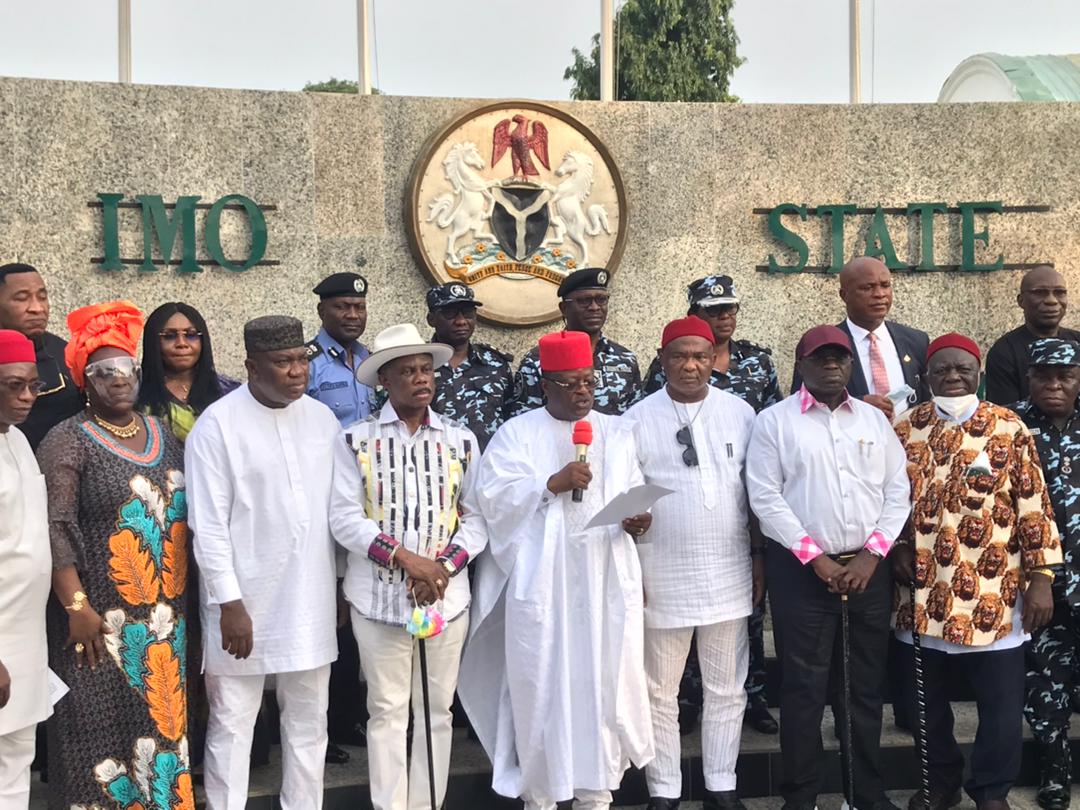
Governors of the South-East states have resolved to maintain a joint security outfit for the code named Ebube Agu (Wonderful Tiger).

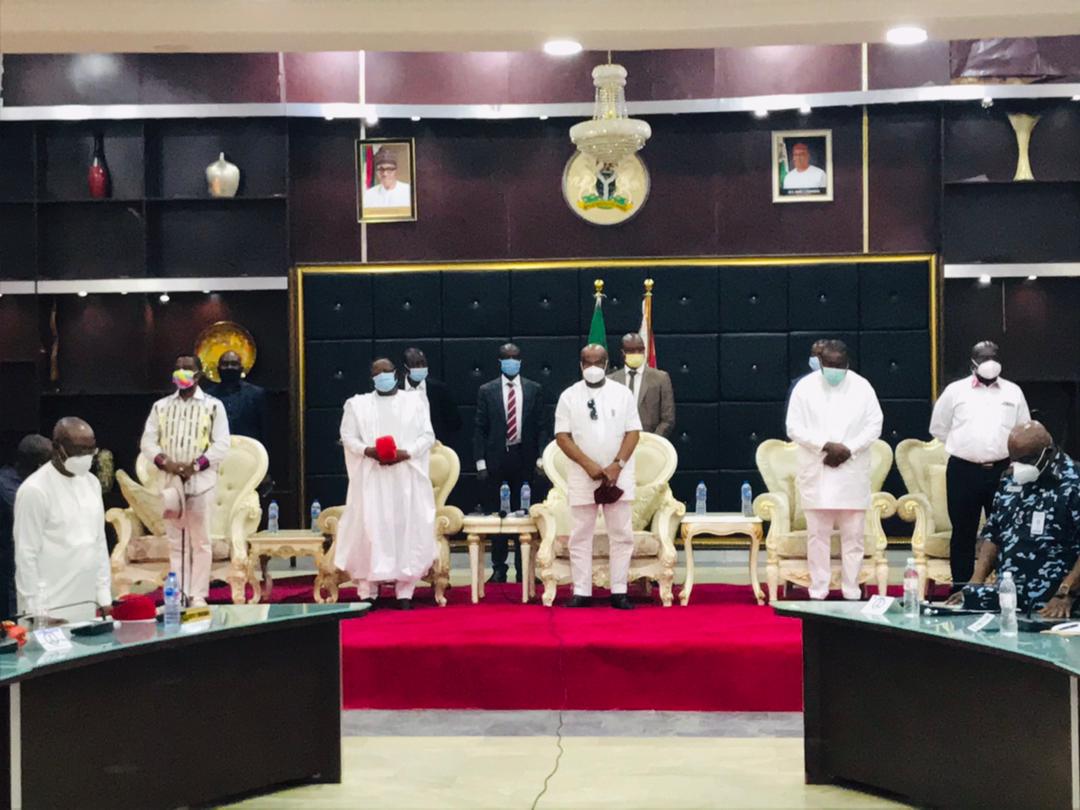
The governors made the resolution in a communique during the first south-east security summit held in Owerri on Sunday.

The communique was presented by Dave Umahi, Chairman of the South-East Governors’ Conference and Ebonyi governor.

The governor’s conference said the joint security outfit would have its headquarters in Enugu to coordinate the vigilance groups in the zone.

[…]

They also resolved to set up a committee comprising security personnel, government officials and other relevant stakeholders to coordinate and monitor the implementation of the joint security platform.

[] They also banned open grazing and urged the security agencies to enforce the ban in the states.

Source: NAN

Comments from LinkedIn Feeds

Comment: Prof. Ndubuisi Ekekwe, well done! You did well with the analysis but I could not stop myself laughing out loud when you said you want to speak to Baba Buhari, this will be a total waste of time, energy, and resources! It is dead on arrival. He has gone down with history on his great and vital achievements…. I am so sorry Prof, na wasted effort… Hold your peace for next person that will seek you… No vex oooo

My Response: I want to be on record to have told him how bad things are. I personally think no one tells him what is happening. I do not want him in 4 years to say ” I was not aware”.