DD
MM
YYYY

PAGES

DD
MM
YYYY

spot_img

PAGES

Home Blog Page 5834

Egypt Gearing Up to Upset the African Fintech Market As Paymob Raises $15m in Series A Round

0

On Thursday, Paymob, an Egyptian digital payment startup, announced it has raised a new $15 million Series A round led by Global Ventures. A15 and FMO, the Dutch entrepreneurial development bank, also participated in the investment.

This brings the total money raised by the startup to $18.5 million having secured $3.5 million that came as its first tranche in July 2020. It is the largest-ever Series A raised by a fintech in Egypt and one of the largest equity rounds in North Africa.

The round also points to a change in the African fintech industry, where Nigeria, Kenya and South Africa have been leading the way.

Founded in 2015 by Alain El Hajj, Islam Shawky and Mostafa El Menessy, Paymob was rated among top 10 of the 83 fintech startups in Egypt in 2020.

The startup helps online and offline merchants accept payments from their customers via several products and solutions.

With its different products and APIs, it enables online and offline businesses to accept and send payments. The merchants can easily integrate Paymob’s payments APIs in their websites or mobile apps to accept payments from their customers using different payment methods including cards, mobile wallets, and cash on delivery.

Nigerian payment startup, Flutterwave, which recently attained unicorn status, is seeking to expand its services to North Africa, where Fawry, Paymob’s country rival, reigns. The move which underscores how ripe and vast the African fintech market is, also points to the fact that Egypt’s fintech startups are yet to catch up with their sub-Saharan Africa counterparts.

Paymob said in a statement that the revenue for its payment acceptance business grew over 5x in 2020, with its technology now being used by over 35,000 local and global merchants including Swvl, LG, Samsonite, and the American University in Cairo. The startup claims to have processed payments worth over $5 billion to date.

Paymob also offers white-label mobile wallet solutions, helping businesses build a digital wallet into their apps, using its technology. The startup said that its mobile wallets infrastructure processes over 85 percent market share of transactions in the Egyptian market. The solution also serves merchants across international markets like Kenya, Pakistan, and Palestine.

With the fresh capital, the company aims to accelerate its expansion to Saudi and other regional markets this year. It will also use the funds to expand its merchant network and further enhance the suite of products.

Islam Shawky, the co-founder and CEO of Paymob, said the latest round will be used to fill abounding digital payment gaps through the acceleration of its services.

“We couldn’t be more excited for Paymob’s next phase of growth; the market opportunity in the region is unprecedented. The large digital payments gap still exists and we are delighted to be working with progressive-thinking regulators to address this,” he said.

“This latest capital raise will accelerate our progress to reducing the digital payments bottleneck. All our existing investors have increased their holdings, and we thank them both for their support and the confidence they have in our business model and track record of execution,” he added.

Aside from Egypt, Paymob is also present in Kenya, Pakistan and Palestine. Shawky said the company has plans to expand into more Sub-Saharan African countries.

Paymob has a perfect combination of high-quality technology, a product customers increasingly cannot do without, and an outstanding management team. Their market opportunity is also huge; Egypt’s transformation to a cashless society is being enabled by the unique products Paymob has built, Basil Moftah, General Partner of Global Ventures, said,

Last year, Fawry became a publicly traded unicorn for the first time, a major boost to the Egyptian fintech ecosystem and is also seen as an inspiration to other startups in Egypt and the North African region.

With investors racing to grab a cut of the African fintech boom, every startup appears to stand a chance for maximum growth. But with Egypt’s startups attracting more investors now, the market is about to get more competitive.

Why Social Media Influencers should be Regulated

0

Nigerians on Twitter would have noticed that the accounts on many Nigerian Twitter “influencers” were recently suspended. The stories surrounding this suspension state that the influencers were paid to obstruct justice by starting an online campaign. These influencers were said to have trended a hashtag as well as topics that will incite public outcry, protests, and demand for the release of Alex Saab, a Venezuelan diplomat, who was arrested and detained in Cape Verde in June 2020 for money laundering allegations. 

Of course, some of these influencers have denied these allegations, some claiming they trended the topic without being paid to do so. Whether these influencers were paid or not, fact remains that this controversial act has revealed how dangerous social media influencers can be if they are not regulated.

You must have noticed that some social media users have a lot of followers even though they do not advertise any products. They are called “influencers” for reasons that are never related to “influencing” people, at least positively. You must have noticed that some of these so-called influencers put up posts that have no positive impacts on their followers’ lives but still, the number of their followers continue to increase.

The time you might see them very active is when there is an “outcry” against an organisation, an individual, or the government. This will make you think that these people truly care about others but if you approach them privately to help you raise a voice for something they cannot gain from, they will ignore you and/or block you. This is to tell you that social media “influencer” is a business outlet and not a humanitarian one.

No one is stopping influencers from making money out of their “business” but lying about it and making money out of people’s expense make their job unacceptable. These people have a large number of followers, who could easily be misled because of the trust they have on the influencers. Because these people believe these influencers look out for them, they are manipulated into performing whatever actions they were directed to do. This was one of the issues with the Alex Saab case, where influencers told their followers to retweet their Alex Saab-related posts to stop oppression. The unsuspecting followers did as they were commanded without questioning the rationale behind the action.

Furthermore, followers see influencers as the voice of reason. They believe the influencers are “omniscient” because they have a large number of followers. So influencers should never be doubted or questioned, especially by people with small numbers of followers. Anyone that challenges the positions or assertions of these influencers is met by uproar, rage, and aggressive reactions/attacks from the influencers’ followers. Today, influencers are like drug lords and their followers are their street fighters, their minions.

The danger of social media influencers can be seen in their abilities to brainwash their followers and release them against their (the influencers’) enemies. They have gradually become so strong that they can raise people against the government, organisations, or private individuals. They have become online terrorists that they are now paid to send their minions to destroy their clients’ enemies. Business owners use them to crush their competitors and politicians employ them to destabilise states and ruin oppositions. They are now the forces to reckon with or to be feared. They are indeed, the online terrorists.

What is most damaging about social media influencers is that most of their followers are gullible youths. Because these influencers want to make money, they feed lies to these young souls, ruining their future. Many young people have been so biased by these influencers that they no longer believe in themselves. Some have lost hope in themselves, while others blame people, organisations, and the government for anything they pass through. Who knows the type of adults these young ones will turn into in the future if care isn’t taken.

There is a need to regulate these influencers and their actions. Some people have discovered the bad eggs amongst them and have stayed away from them. But what about those that still believed in them? How will they be saved from their clutches? Well, Twitter has shown examples of what should be done to bad influencers. This is a step other social media platforms should take. But then, someone has to call the attention of the media police to do the needful. That is where you and I have a role to play.

Southeast Nigeria Unveils “Ebube Agu” Joint Security Outfit And Bans Open Grazing

1

Today is a noticeable day and a turning point on the security nexus of Nigeria. Yes, after Southwest Nigeria passed a vote of no confidence on the Nigerian Police by establishing Amotekun ( “one that looks like a leopard,”), the Southeast has established their own version, Ebube Agu (“magnificent and glorious aura of strength and power to defend and protect one’s territory”). I have not used the relational translation but the axiomatic meaning in ancestral Igbo.

Igbos speak via animals but the English translation must not connote the animals. For example “the man acts like a fox” when translated to Igbo should be “the man acts like a tortoise” because what fox is to English, tortoise is to ancient Igbo. So, if you look for the Igbo name for fox – a cunning character- in the translation, you would be mistaken.

Agu is a symbol of strength and has magnificence in Igbo. When a man kills a tiger, he is saluted and initiated to touch the Ikoro, which produces the most recognizable “sound” in Igbo tradition, only heard during emergencies. .

With Ebube Agu, the Southeast has essentially said: Nigerian Police, we have no confidence in you! The Federal Government of Nigeria should be concerned because Nigeria is dissolving daily!

I pity Mr. Buhari whose tenure these things are happening. I wish I could speak with him because history will not be kind to him! He has failed his nation.

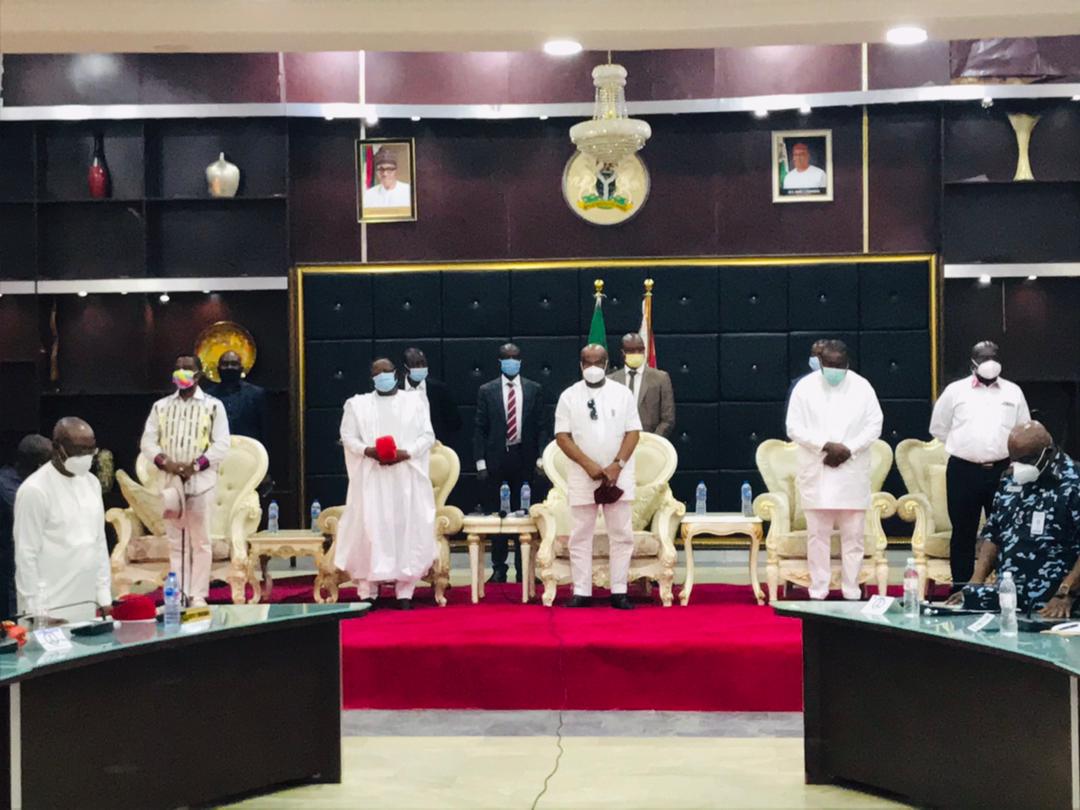
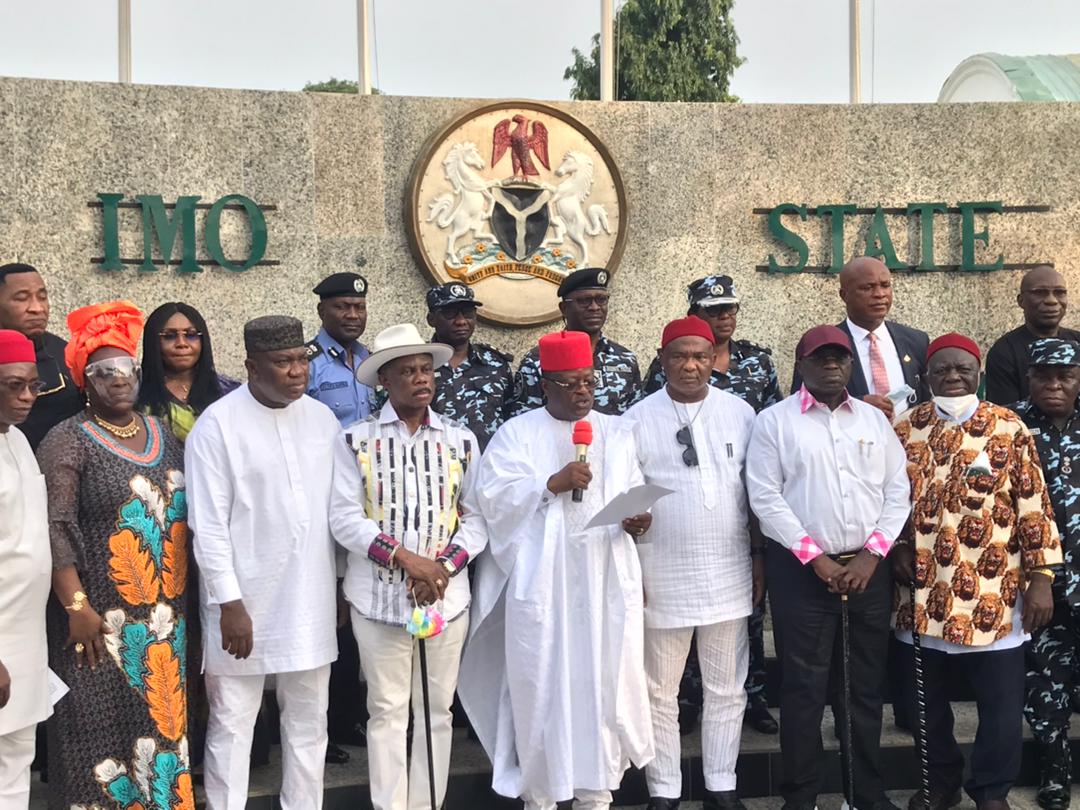
Governors of the South-East states have resolved to maintain a joint security outfit for the code named Ebube Agu (Wonderful Tiger).

The governors made the resolution in a communique during the first south-east security summit held in Owerri on Sunday.

The communique was presented by Dave Umahi, Chairman of the South-East Governors’ Conference and Ebonyi governor.

The governor’s conference said the joint security outfit would have its headquarters in Enugu to coordinate the vigilance groups in the zone.

[…]

They also resolved to set up a committee comprising security personnel, government officials and other relevant stakeholders to coordinate and monitor the implementation of the joint security platform.

[] They also banned open grazing and urged the security agencies to enforce the ban in the states.

Source: NAN

Comments from LinkedIn Feeds

Comment: Prof. Ndubuisi Ekekwe, well done! You did well with the analysis but I could not stop myself laughing out loud when you said you want to speak to Baba Buhari, this will be a total waste of time, energy, and resources! It is dead on arrival. He has gone down with history on his great and vital achievements…. I am so sorry Prof, na wasted effort… Hold your peace for next person that will seek you… No vex oooo

My Response: I want to be on record to have told him how bad things are. I personally think no one tells him what is happening. I do not want him in 4 years to say ” I was not aware”.

The Paused Effervescence of Nigeria’s Development

0

In the early 1960s, Norway wrote that Nigeria was an emerging nation with an extremely pragmatic agricultural program which must be watched, as it could become  a leading powerhouse in global markets. Despite the vagaries of civil war which paused the effervescence, Nigeria began to rise again. The Naira was stronger than the US dollars and airlines were putting travel visas on Nigerian passports with no requirements to visit any embassy.

Men flew from Lagos to watch Liverpool and then reconnected to the United States for the Yankees. Tuskegee University alone had hundreds of Nigerian students on scholarship, paid by the Nigeria people. Because the nation had better promises, well ahead of what America offered then, most returned home.

Factories, companies, etc, were opening up – and civil engineering rose to its pinnacle. Everywhere was a construction site! From Bata to PAN to Michelin, to anything you could imagine, Nigeria was rising to the mountaintop.

Then, we froze and began a descent. In this video, the world saw us as a place for opportunity, not a place looking for liberation. And they came. How can we return back to the beginning where things are MADE IN Nigeria?

Regulatory Evolutions in Nigeria – Way forward for Fintech and Other Tech Sectors

2

On February 1 2020, Lagos State Government (LASG) , riding on the Lagos State Transport Sector Reform Law of 2018, re-enacted the ban of motorcycles, tricycles and others from operating in most parts of Lagos State (the State). While the initiative was termed by LASG as a move to secure the property and lives of people within the State, the ban however led to the fall of major technology companies such as GoKada, Opay, Max.ng etc. who were deepening the capacities of their motorcycle ride-hailing businesses.

Recall that earlier in May 2019, GoKada which was founded by Fahim Saleh, had raised about US$5.3 million in a series A funding round led by Rise Capital. According to the CEO, as captured by TechCrunch, Gokada intended to use the financing to increase its fleet and ride volume. Opay on the other hand, in August 2018, had benefited from a series A and series B funding of US$50 million and US$120 million respectively. According to Opay’s CEO, Zhou Yahui, as captured by Techpoint, Opay’s rides had tripled and the company made over US$10 million in daily revenues after putting the Series A fund to good use.

Similarly, the Central Bank of Nigeria (CBN) announced the re-enactment of the ban of cryptocurrency trading in Nigeria using the official banking system. This move was indeed targeted at start-ups involved in cryptocurrency. CBN in a circular dated 7 February 2021, reiterated that CBN circular of February 5, 2021 did not place any new restrictions on cryptocurrencies but rather all banks in Nigeria had been earlier forbidden from using, holding, trading and/or transacting in cryptocurrencies, through a circular dated 12 January 2018.

In a recent move by Securities and Exchange Commission (SEC), in a circular dated 8 April 2021, SEC noted that all capital market operators (CMOs) involved with online trading platforms that give Nigerians the opportunity to invest in foreign traded equities, should desist and put an end to it. Citing the provisions of Sections 67-70 of the Investments and Securities Act (ISA), 2007 and Rules 414 and 415 of the SEC Rules and Regulations, SEC noted that only foreign securities listed on any Exchange registered in Nigeria may be issued, sold or offered for sale or subscription to the Nigerian public. Again, this move was targeted at the likes of Bamboo, Trove, Chaka etc. It should be noted that Bamboo had raised about US$150,000 in funding since commencing business in 2019 as documented by Crunchbase.

SEC Nigeria

Worthy of mention is the fact that CBN in a recent move, banned all Fintechs and third-party partners from accessing the BVN validation service. This was aptly put in Paystack’s communication to its customers which said “We’ve recently been made aware of a regulatory directive from the primary custodian of Nigeria’s BVN service to all their partners to suspend the provision of the BVN validation service to their third-party partners. In light of this news, we’re hereby informing you that the BVN Resolve service will be temporarily unavailable starting at midnight, April 8”. Given the onerous nature of the KYC requirements for financial institutions, this suggests that Fintechs may be unable to fulfil the KYC requirements imposed on them by the regulators.

The way forward for Fintechs and other techs:

In the light of the recent turn of events occasioned by the regulators in Nigeria, one could clearly see that the biggest challenge to Fintechs and other technology companies in Nigeria is not necessarily access to finance but regulations. While there seems to be a perfect product-market fit for the services churned out by techs, product-regulation fit appears to be largely non-existent. Consequently, the following are recommended:

  1. Increased need for regulatory modelling and forecasting: An examination of the moves made by regulatory authorities reveal that they rely on existing laws and regulations to squash the activities of these tech companies. Seeing that laws already in place cannot be wished away, it is therefore pertinent that techs, as part of their market research efforts, invest in understanding the existing laws that may disrupt their activities, and take steps ahead of the regulatory authorities to ensure that they are better able to withstand any re-enactment or regulatory blow. The result of these would be a “What-if analysis” with respect to the technology regulatory universe in Nigeria.
  2. Increased need for ‘co-opetition’ amongst tech companies: As described by Harvard Business Review (HBR) in its article titled “the rules of co-opetition”, HBR noted that co-opetition is simply the mix of competition and cooperation. Hence, co-opetition is the act of cooperating or collaborating with a competitor to achieve a common goal. For techs, particularly Fintechs, more than ever before, they need to come together in a common front, to engage the regulators either through legal means or roundtable discussions, in a bid to resolve the issues that may be fuelling the activities of the regulators which are eroding their businesses.
  3. Increased need for lobbying and presence of political heavy-weights on their Boards: A clinical look at the outcomes of the recent regulatory quagmire suggests that these may be the result of lobbying by various interest groups whose businesses are being challenged by Fintechs. Thus, it is important that Fintechs respond appropriately by employing the services of political lobbyists who would be able to influence political and regulatory decisions in their favor. This technique has been historically employed in business and proven to be very effective especially in climes like Nigeria. The appointment of political heavy-weights to their Boards would give them leverage to influence the lawmakers to update old laws, and enact new laws that would favor their course.

There are several arguments that suggest that regulation stiffens innovation. As this gradually appears to be the case in Nigeria, there is now a heightened need for Fintechs to approach things differently. Paul Tudor Jones noted that we must adapt, evolve, compete, or die. I expect that these few recommendations put forward would enable the Fintechs to adapt, evolve, and compete but not die.