DD
MM
YYYY

PAGES

DD
MM
YYYY

spot_img

PAGES

Home Blog Page 5839

EU Unveils Plan to Have 20% Semiconductor Production by 2030

0

The European Union is planning to have a large share of the global semiconductor market by the end of the decade. The bloc wants to end dependence on non-European technologies by producing a fifth of the global output of cutting-edge chips.

The plan, named Digital Compass, is designed to set the 27 country bloc on the path of making its first quantum computer in five years.

COVID-19 pandemic-induced strains threw the world of technology into chip shortage, which has seen the auto, smartphone and internet-based technologies shutting down.

Europe has depended on Chinese and American companies for semiconductor supply, and in face of scarcity, the countries have been prioritizing.

“It is our proposed level of ambition that by 2030 the production of cutting-edge and sustainable semiconductors in Europe including processors is at least 20% of world production in value,” a document from the bloc seen by Reuters said.

The plan will be unveiled Tuesday by EU’s Vice President Margrethe Vestager and EU industry chief Thierry Breton.

The plan is geared toward establishing quantum technologies that will help the bloc in developing new medicines and speed up genome sequencing.

“It is our proposed level of ambition that by 2025, Europe will have the first computer with quantum acceleration paving the way for Europe to be at the cutting edge of quantum capabilities by 2030,” the document added.

The document revealed according to Reuters, that the plan is also to help Europe build 10,000 climate-neutral facilities by 2030, helping the bloc to develop cloud infrastructure and the doubling of unicorns, or companies with a $1 billion valuation, in the same period.

It will also aim to cover all European households by a Gigabit network by 2030, with all populated areas covered by 5G.

However, EU member states and the European parliament will need to approve the plan for it to be implemented.

Brussels has been tightening its grip on climate laws, limiting industrial activities. On Monday, some of Europe’s largest industry groups have asked EU lawmakers to change their position on the bloc’s planned carbon border policy, according to emails seen by Reuters.

The move came as European Parliament is set to vote on a report covering EU’s plan to impose carbon costs on imports of polluting goods. The aim is to protect European industry from competitors in countries with lax climate policies, and avoid firms leaving Europe to avoid CO2 (carbon leakage) cost.

Currently, the EU gives industry free CO2 permits to comply with the carbon market, allowing companies to emit a certain amount for free, to protect them from carbon leakage.

The move underlines the seriousness of climate laws within the bloc, emphasizing the need for climate-friendly facilities and automobiles.

But the new EU plan for semiconductors goes beyond climate concerns to economy interest for the European Union.

The European Semiconductor Industry Association (ESIA) announced last week that semiconductor sales reached $3.453 billion in January, an increase of 6.4% versus the same month a year ago. This represents a two percent increase compared to the December 2020 total of $3.370 billion.

But that is just a fraction of the global semiconductor market that is expected to reach $469 billion in 2021, compared to its 2020’s $439.0 billion market value.

Compared to other regions, Europe is the least market in the semiconductor industry. The United States, although it has recorded a drop to 12% since 1992, still leads the industry, followed by China who recorded over $13 billion in market value last year.

With the current drop in global semiconductor production, every region is seeing a reason to up the ante. The EU, driven mainly by climate concerns, AI and other tech developments, is pushing the Digital Compass plan to move from the spectators’ status to competitors in the semiconductor global market by the end of the decade.


Besides The Rumours of Access Bank Acquiring Union Bank Nigeria

4

Note: I have added an update from Union Bank (see below) but since the source has not been deleted, I will leave the piece. More so, the references from both Atlas Mara and Union Bank (at NSE) are older than the new “rumour” . More so, I did take this as rumour and the perspectives are not materially affected in any way.

What is in a rumour? The latest is that Access Bank is acquiring Union Bank Plc Nigeria. Of course when you see the problem the majority shareholder of Union Bank is in, the rumour passes the basic tests: “Atlas Mara, which is owned by Bob Diamond, 69, has about 50 percent stake in Union Bank, and currently seeking to raise fund for his dwindling investments caused by impact of coronavirus.  Since its listing on the London Stock Exchange in 2013, the company has lost over 95 percent of its value, and is now seeking fresh opportunities to shore up its balance sheet.  This has also led to its decision to sell its Tanzania and Rwanda interests to KCB Group Plc of Kenya”

Period, Atlas Mara has to sell assets. But whether Union Bank will be part of the yard sales is something that is not clear.

The rumour apart, the Union Bank’s challenging trajectory is evident. As banks become technology companies that offer banking services, the construct of network effect begins to play a major role in the industry. Just as we cannot have another WhatsApp of value in Lagos, or Twitter in Boston, or Facebook in London, or Google in Toronto, Nigeria cannot have many banks of value by 2025. As we digitize these banks, what I have called the Invertibility Construct and the Construct of Diminishing Free Monetization begin to happen, creating a vicious circle for most smaller banks. Simply, most smaller banks will fade over time as winners-take-all paradigm begins to work. 

Today, if you remove Zenith Bank, GTBank can buy most local banks in Nigeria and still have a change. Those gaps will keep expanding as the banking ecosystem attains a steady state where category-kings become extremely dominant, digitally. It is what it is because this construct – winner-takes-all – works irrespective of the sector, provided everything is moving to the web.

The FUGAZ (First Bank FBH, UBA, GTB, Access and Zenith) will triumph as they are doing at the moment. The digitization of the sector is offering them leverages which the smaller banks do not have: for 2020, “UBA reported growth of 10.8% cent and 28% in gross earnings and profit after tax (PAT) respectively.” In most African countries where UBA operates, it is well ahead on digital therein – and if that is the case, UBA becomes the category-king, and that means, it would capture more value, going forward.

Back to Union Bank, it has to find a working path because as time goes, most small national banks – all boutique services –  will keep losing value as winners-take-all begin to shape the industry. This does not mean that it has to exit, it simply needs to find a category to win. That is what tech firms do, they find a category within a sector, and try to dominate it. The digitizing banking ecosystem is running that playbook through fintechs which find a category. But doing everything when you are small, and lagging, may not be a good idea! Why? You have limited leverageable factors which can compound over time.

Update from Union:

Thank you for your keen and thoughtful analysis of various topical issues pertaining to the financial sector, and the fresh perspective you bring to these discussions. We have come to regard you as a well-respected voice in our industry and beyond.

Your objective, unbiased stance is the reason we are reaching out to provide some clarity concerning your recent article titled ,‘Besides the Rumours of Access Bank Acquiring Union Bank Nigeria’.

We are aware of recent rumours resulting from an article by a blogger who regurgitated an old, misleading news article which has since been debunked.

Please read our statement to the Nigerian Stock Exchange debunking the rumour ( http://www.nse.com.ng/Financial_NewsDocs/32241_UNION_BANK_OF_NIGERIA_PLC%20RESPONSE_TO_ONLINE_PUBLICATI.pdf ) , and Atlas Mara’s statement addressing this issue here ( https://otp.tools.investis.com/clients/uk/atlas_mara1/rns/regulatory-story.aspx?cid=744&newsid=1446833 )

We are sure you will agree that editorial articles/analyses should be based on facts, not rumours and speculations, and as such we hope that you consider updating your article, based on the factual statements referenced above.

Please do not hesitate to contact me should you have questions or require further clarification.

Thank you very much for your time and attention.

Kind regards,

UBA Reports N600bn Gross Earning With N113bn Profit Growth

1

Nigerian banks have kept posting record numbers of profit despite the economic challenges ushered in by the global COVID-19 pandemic.

Pan-African financial institution, United Bank for Africa Plc (UBA), yesterday announced its audited results for the full-year ended December 31, 2020, recording impressive growth across its top and bottom lines.

UBA reported growth of 10.8 per cent and 28 per cent in gross earnings and profit after tax (PAT) respectively.

According to the report, the bank’s gross earnings grew by 10.8 percent to N620.4 billion, compared to N559.8 billion recorded in 2019.

Its profit before tax (PBT) rose by 18.4 per cent to N131.9 billion, from N111.3 billion in 2019 while PAT grew faster by 27.7 per cent to N113.8 billion compared to N89.1 billion recorded in 2019. The bank’s total assets also grew by 37.0 percent to N7.7 trillion for the year under review.

Mr. Tony Elumelu, Chairman of UBA

Operating expenses grew by 10.1 per cent to N249.8 billion, as against N217.2 billion in 2019, well below average inflation rate of 13.2 per cent for the year, thus reflecting the bank’s cost effectiveness.

For shareholders reward, the bank proposed a final dividend of 35 kobo for every ordinary share of 50 kobo. The final dividend, which is subject to the affirmation of the shareholders at its annual general meeting (AGM), will bring the total dividend for the year to 52 kobo as the bank had paid an interim dividend of 17 kobo earlier in the year.

The report further showed that UBA recorded a remarkable 24 per cent growth (to N2.6 trillion) in loans to customers, while customer deposits increased by 48.1 per cent to N5.7 trillion, compared to N3.8 trillion recorded in 2019. This reflected increased customer confidence, enhanced customer experience, successes from the ongoing business transformation programme and the further deepening of its retail banking franchise.

The Group Managing Director/CEO, Mr. Kennedy Uzoka, said the year 2020 was important for UBA Group, as it gained further market share in most of its countries of operation.

“We ended a very challenging year on a reassuring note. The bank recorded double-digit growth in both our top and bottom lines, as gross earnings and after-tax profit grew by 10.8 per cent and 27.7 per cent to N620.4billion and N113.8 billon respectively. Return on equity was 17.2 per cent, even as our cost-to-income ratio moderated to 61.3 per cent.

“Our earnings per share of N3.20 is a 26.8 per cent growth from the preceding year, as we continue to ensure maximum value creation for our highly esteemed shareholders.”

He explained that despite the impact of COVID-19 pandemic globally and across the 23 countries the UBA Group operates in, UBA created N519.0 billion additional loans as it continued to support its customers and their businesses.

“Customer deposits grew 48.1 per cent to N5.7 trillion, driven primarily by additional N1.8 trillion in retail deposits. As a global bank, we remain well capitalized and determined to successfully drive financial inclusion on the continent through our innovative products and vast network. Our capital adequacy and liquidity ratios came in at 22.4 per cent and 44.3 per cent, well above the respective regulatory minimum of 15.0 per cent and 30 per cent,” Uzoka added.

He said the growth has been as a result of the bank’s transformation programme, which has “expanded market share considerably across the geographies where we operate and are consolidating our digital banking leadership in Africa.”

The Group Chief Financial Officer (GCFO), Ugo Nwaghodoh, said the growth was also spurred by interest income.

“The persistent low interest rate environment in 2020 exerted significant downward pressure on margins. Notwithstanding, our interest income for the year grew by 5.7 per cent (to N427.9 billion), driven by 8.2 percent and 7.5 per cent year-on-year growth on interest income on loans and investment securities respectively.

“Our interest expense declined by 8.0 per cent (to N168.4billion) driven largely by a 34.2 per cent decline in interest expense on customer deposits in our Nigerian operations, bringing down the Group’s cost of funds to 2.9 per cent, from 4.0 per cent in 2019,” he said.

Nwaghodoh said the growth in loan book reduced the bank’s NPL ratio.

“We have prudently stepped-up our reserves for loan impairments, hence the 37.4 per cent growth to N22.4billion, implying a 0.9 per cent cost of risk. These reserves provide adequate cover for impairments and should help minimize the need for further reserves in the current year, in view of the improving global operating environment. Our NPL ratio has declined to 4.7 per cent (from 5.3 per cent in 2019), driven by growth in the loan book, robust credit risk monitoring architecture, and payment of past due obligations (PDOs).”

He added that as Nigeria continues to see signs of recovery from the COVID-19 pandemic led by the resumption of economic activities globally, increase in consumer spending, and continued progress on vaccine deployment, UBA is well- positioned for greater synergy across the group.

The Illusion of Leapfrogging – And Africa’s Missing Link

1

Today in a Tekedia Live session, our faculty from Beijing noted one key thing: the success of Alibaba can be partly traced to the fact that China makes things which people want to buy. The small manufacturers provide the depth which Alibaba rides upon. He mentioned Alibaba Village and how the ecommerce powerhouse is putting its brand reputation on small manufacturers even as those manufacturers are making it valuable to China and the world. As he spoke, you could see one thing: when a nation can build, produce or make things, the stars align.

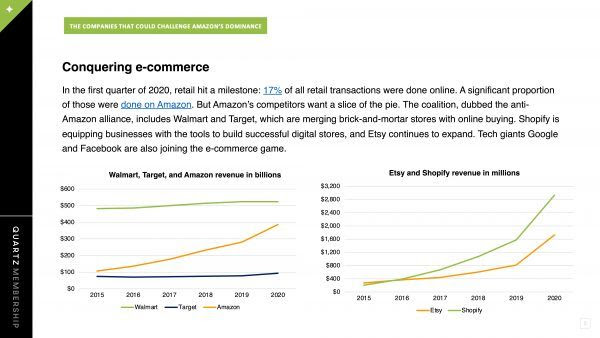
According to Quartz, the US e-commerce experienced 10 years of growth in the first quarter of 2020. Amazon led that redesign after its obsession with customer satisfaction drove innovation such as fast shipping and streamlined ordering, and at the end seemed like a perfect menu for a pandemic economy.

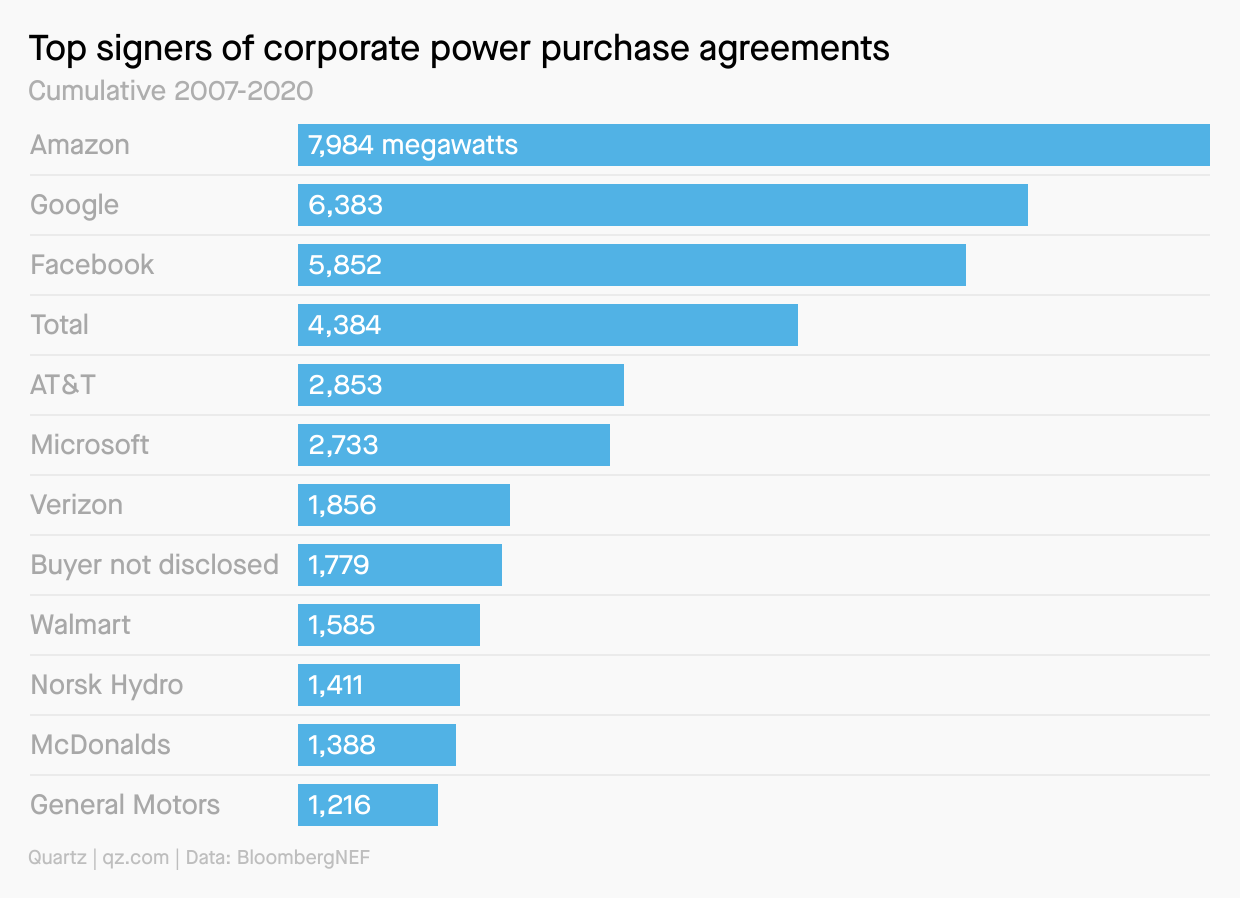
But behind that Amazonian success, you can see many other players. Yes, Amazon holds the title as the top corporate power purchase agreements holder. In other words, those power companies made Amazon better and Amazon made its customers greater. Simply, behind the websites, great things are happening. So, if you just see the shiny website, you may not understand that Amazon is powered by the old economy which must run very well for the new economy to thrive.

Yes, like in China, those makers have to do well for Alibaba to thrive. And in America, the power companies have to execute for Amazon to thrive. You get it: you cannot leapfrog the physics of commerce: readily available and optimized supply chain. The websites of Nigeria, and Africa cannot advance the region unless we still fix that power, water and support makers to make things in our economy.

So, when you see those posts, postulating on how an app could help Africa leapfrog the West, think again. When you download an ambulance finder app, remember that someone needs to have an ambulance in the city before the app offers any value. People, we need to return to the basics – and stop the illusion of leapfrogging.

Dr. Chan explained deeper why Alipay does more transactions than Visa and Mastercard combined. Alipay does $18 trillion while Visa and Mastercard combine for $16 trillion. He explained that a merchant will lose about 2-5% with Visa or Mastercard while Alipay will pick about 0.6%. With that construct, China went ahead of the West on the adoption of digital payment even though Visa has been around for decades before Alipay.

There is nothing ant-like in these numbers. Yes, Alibaba’s affiliate fintech company, Ant Group (of Alipay), does generate more payment volume than Visa & Mastercard combined! Ant does $18 trillion while the American giants bring in $16 trillion. Ant operates primarily in China while Visa and Mastercard run around the world!

If you are in Tekedia Mini-MBA, I challenge you to watch Dr. Chan one-hour session. As he was speaking, our members from a Chinese city provided live insights.