DD
MM
YYYY

PAGES

DD
MM
YYYY

spot_img

PAGES

Home Blog Page 5849

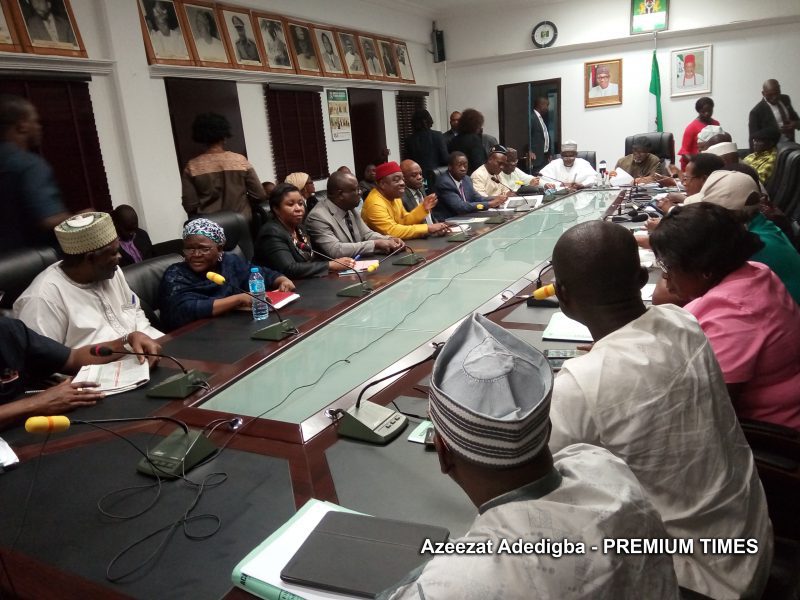
Nigeria’s University Lecturers Threaten to Resume Suspended Strike Over Delays on Salaries

1

I just read a new threat from the Academic Staff Union of Universities (ASUU) informing the federal government of Nigeria that it could resume its suspended 9-month strike if the government does not honour its agreement to pay its members on time. First, the federal government is wrong to have promised what it knew it could not easily do. Secondly, ASUU was naïve to have believed everything in that document.

This is the reality: Nigeria cannot fund our current university system. If you check our national education budget, it is way smaller than what Harvard University spends! In short, Harvard spends close to 3x what Nigeria budgets for the ministry of education, from primary to university levels.

The problem is complicated because the professors are part of the problems. Yes, everyone wants to be a Vice Chancellor and the more schools established, the higher the number of opportunities. So, as politicians mushroom opening new schools (not necessarily for increasing access for students), professors have hailed them. For most politicians, it is simple: locate a university in your local government and be remembered eternally for that achievement. 

And for the professors, that is another opportunity for more VCs, DVCs, and all those administrative positions. So, at the end, we are scaling university bureaucracy even when the main academic and research work suffers.

More than 80% of federal universities which have been started since 2000 could have been colleges within existing university systems, under unified administrations. By the time you run the numbers, and if Nigeria followed that model of administrative efficiency, that nation could be saving billions of naira which will then go into actual learning. Today, what do we have? Bureaucratic systems where a former VC of Kwara State University could buy a bulletproof Toyota at the cost of N74 million as an official car, even when the school borrows N400 million monthly to pay salaries!

For decades, ASUU strikes have not achieved much – and there is no certainty that future strikes can have different outcomes. The problem of ASUU is a mirror of Nigeria’s problems: no accountability and responsibility. Yes, how do you expect a governor to pay your salaries and expect him to allow you to run the school in Nigeria? You want autonomy except financial autonomy. None of this generation of political leaders will hand you the cheque books and relinquish power, strike or no strike!

About two months before he was to leave office, in 2019, as vice-chancellor of Kwara State University, Abdulrasheed Na’Allah wrote to then Kwara State governor, Abdulfatah Ahmed, asking for a N74 million official vehicle; a vehicle he would go away with after he left office. This was despite the institution borrowing almost N400 million monthly to pay salaries, according to a panel that later probed the decision.

The N74 million vehicle was part of the N100 million severance package that the panel indicted the vice-chancellor of going away with under controversial circumstances. The professor was given a chance to defend himself before the panel. He did not.

ASUU Statement

While ASUU as a union and her members as individuals in various branches have remained faithful to this agreement by returning to classes and performing their respective duties, the Federal Government, true to type, has reneged on its part.

“Contrary to FGN affirmation of its commitment to pay all withheld salaries of ASUU members who have not enrolled in the Integrated Personnel and Payroll Information system (IPPIS), three months after the suspension of Strike, thousands of ASUU members across various branch are still being owed salaries.

 “Instead of deploying the University Transparency and Accountability Solution (UTAS) software developed by ASUU, which has been adjudged effective for payment of salaries, some of our members are still being denied their salaries and others are being coerced by agents of the government to register on the repressive IPPIS for payment of salaries.

“The Union ASUU and her members are made to suffer from all the aforementioned attacks by the federal government while the public expects our members, some of who now live on the charity of family members and colleagues for survival to use their personal resources to discharge their duties diligently in the universities.

“These harsh conditions would have terrible consequences on public tertiary education in Nigeria and when push eventually comes to shove, as it definitely will in no distant future, the Nigerian public should accordingly blame the Federal Government for its insincerity.

“Blame the federal government of Nigeria if the universities are shut down again.”

Applying the “Survival of the Fittest” Model in All Aspects of Life

0

When Charles Darwin extended the theory of Survival of the Fittest to explain how nature selects organisms, he was buttressing Herbert Spencer’s adaptability model. Both Darwin and Spencer were talking about evolution and how nature picks only the best amongst the organisms. They revealed that only the organisms that adapt to their environments, irrespective of how unsuitable situations are, can survive and reproduce. This means that plants and animals that refuse to adjust to the changes in nature will die because nature will not change for them. Spencer and Darwin might have focused their theory on reproduction and populating Earth when they projected this theory but they, unknowingly, taught humankind a very crucial life’s lesson.

The theory of Survival of the Fittest (or Natural Selection) is used only in Biology to explain evolution. Our teachers used it then to teach us why desert plants have thorns and waxy leaves. It was also used to explain why fish and birds have streamlined bodies. Closer to this theory is that of competition, which explains why living things compete for available resources. Bring these two theories together and you will realise that what Darwin was saying then is, “fit into your community and sort yourself out or you will lose.”

If you look at how things happen around you, you will understand how the fittest “survive”. By “fittest” I do not mean having “six packs”, bulgy arms, hour-glass figures, or an athlete’s body. “Fittest” here stands for those that understood their societies and adjusted themselves by adopting behaviours and ideologies that are required to survive there. “Fittest” in this sense means “going to Rome and behaving like the Romans”. It connotes being smart enough to understand that people change to fit into societies and not the other way around. It simply tells you not to fight changes but to learn to live with it.

One thing that affects people a lot is insisting that something must be done a certain way because they saw it work in other places. If a cactus decides that because it shares some characteristics with roses (such as having thorns) it is going to have soft sweet-smelling leaves/flowers instead of the hard waxy type, it will never survive in the desert. Of course, it has the option of living in rain forest like any other green plants, but will it be valued when placed beside other plants? This can also apply to many of us, especially those that want what is obtainable in location A to be the same with that of location B. Remember that every society is unique in its own ways. No two communities are exactly the same, thanks to cultural differences.

But let’s look at some things that happen around us today. Darwin said that living things must adapt to their immediate environment or they will not survive. In your place of work, for instance, there are modalities already put in place to determine how, why and when employees will be rewarded or punished. But some employees kick against those processes because they expect their employers to set up modalities like the ones found in other companies. Employees like this become difficult to manage but they end up being sacked. This also applies to those that expect the cultures and practices of the communities they find themselves to change because they are unfavourable to them. Today, Darwin is telling people like this to adapt or face sack.

Of course, no one is saying that, because a person needs to survive, bad societal practices should not be challenged. But it should be understood that “Rome wasn’t built in a day”. However, for you to change misnomers in a community, you have to be its member because the best way to bring changes is from within. Hence, to live and survive in the community, you have to adopt their way of life, understand them, and discover reasons they behave the way they do. Other than that, you will be kicked out before you even make a move.

What is your sachetization strategy in Nigeria? 

0

The unemployment rate in Nigeria closed Q4 2020 at 33.3%, according to the National Bureau of Statistics (NBS). Simply, 23.2 million people remain unemployed. That is like depression! With that level of unemployment, how can you sell your products and services? Yes, the challenge goes beyond having great products. I mean you must find a pricing mechanism which will ensure that people can buy them.

Increasingly, that mechanism must include sachetization. In a struggling economy, think beyond powdered milk, to practically everything, when you hear that word “sachet”!

What is your sachetization strategy?

The core market segment in Africa – middle of the pyramid

This is the age of sachetization in Nigeria irrespective of whatever you are selling. We are doing it in Tekedia Mini-MBA with bands for core courses, review of labs, projects supervision, etc. Having broken all into “sachets”, our members have the freedom to pick as they need. If we had lumped all together, resistance to conversion would mount. Pay attention to your pricing playbook – it is a key factor now to success in Nigeria.

What Is Your Sachetization Playbook in Nigeria?

Challenges Faced by Nigerian Business Women

0

Nigerian women have no problems with setting up businesses but they find it difficult to maintain and grow them. Many of these women prefer establishing their own businesses to searching for jobs. However, these businesses are, in most cases, affected shortly after they were established so that they remain stagnant or are closed down altogether. This is not because those women are lazy to work hard or that they have not been making efforts to keep their businesses afloat. The truth is that many factors remain unfavourable to Nigerian women. Unless those challenges are addressed, women in Nigeria will continue to experience challenges in their businesses.

A lady once recounted how her business closed down shortly after it was established. According to her, she hardly had time to stay in her shop. She said she goes to her shop late (after performing her house chores) and leaves early (to continue from where she stopped in the morning and to take care of the children that just returned from school). She could not employ a shop attendant because it was not part of the agreement she had with her husband before the business was set-up. When it became obvious that she couldn’t combine the business and her duties at home, she closed it down and faced her family.

The story recounted above is almost the same as that of many Nigerian women. Being a woman in Nigeria is already challenging because there are some cultural practices and societal expectations that prevent women from achieving their potential. The business environment is also unfavourable to them because of those practices and expectations. Even though some old traditions are gradually changing, there are many that still linger. Nevertheless, family duties, societal expectations, access to loans, and lack of entrepreneurial skills are some of the major factors affecting Nigerian women’s businesses.

  1. Family Duties: Being a woman in Nigeria automatically makes the person a mother. Even before she bears children, she is expected to act as a mother. A Nigerian woman is a mother to her siblings, nieces, nephews, cousins, mother, mother-in-law, father-in-law, husband, and so on. This would not have been a problem except that she is expected to nurse these people so long as she has breath in her. She will help them to plan their lives and take care of them when they are sick. Responsibilities such as these act as the heavy objects tied to people’s ankles to prevent them from running. It is difficult to run a business with all these responsibilities lined up.
  2. Societal Expectations: Being a woman in Nigeria is equal to taking second place. She is not expected to “compete” with men. She is a “woman” and must remember that always. Women already have their duties mapped out for them by society and they are expected to conform. Those that ignore those duties and choose theirs are treated as anomalies. It is in this case that you hear people asking, “Can this one marry?” “Who will marry this one?” “Can a man control this one?” and other funny but damaging comments. The damaging effect of societal laid down rules for women is that it influences young women into seeing themselves as incapable of achieving much. This hinders their desire to progress or break new grounds in their businesses. They will prefer remaining small-scale business owners to expand and be branded negatively.
  3. Access to Loans: Borrowing a large amount of money from banks requires collateral. In Nigeria, many women have no collaterals to present. The African culture does not allow them the right to inherit properties from their fathers or to own any if they are married. As a result, many Nigerian women have no properties that could serve as collateral for loans and they cannot afford to buy any. This has killed many dreams.
  4. Lack of Entrepreneurial Skills: Because it is believed that women have no business with entrepreneurship, most of them go into businesses without possessing basic entrepreneurial skills. Only a few have gone for training and have taken their businesses to the next level. But many remain where they are, unable to understand why they are not growing. Many women need to be trained in business skills.

There is no gainsaying that empowering women will reduce poverty in the country. A lot of women want to own and manage their businesses but they find it difficult to do that. NGOs and other humanitarian organisations have been making efforts towards women empowerment but their impacts are not fully felt. This is a call for more well-meaning individuals, associations and organisations to come to the aid of women in Nigeria.

Burna Boy, Wizkid, and the Journey to Grammy Awards

0

At the end of the 63rd Recording Academy/Grammy Awards ceremony held in Los Angeles Convention Center, Nigerian artists; Burna Boy won the Best Global Music Album category for his Twice As Tall album while Wizkid won the Best Music Video for his song with Beyonce, Brown Skin Girl, from Lion King: the Gift album.

Burna Boy was nominated alongside Malian Tuareg Desert Rock group Tinariwen, NYC afrobeat band Antibalas, Brazilian-American Bebel Gilberto, and British-Indian sitar player Anoushka Shankar.

The March 14 Grammy Awards, which was held virtually due to COVID-19, became a memorable event for Nigerians who have longed for their favorite artists to win.

The event, which was hosted by South African born Trevor Noah, saw performers separated into five stages to maintain social distancing in accord with COVID-19 safety protocol.

Burna Boy, whose real name is Damini Ogulu was nominated for the first time in 2020 with his album, African Giant, but lost to his fellow African singer, four-time winner, Angelique Kidjo of Benin Republic.

Kidjo dedicated her Grammy to Burna Boy, saying he is among African artists changing the way the continent is perceived.

The Twice AS Tall album scaled the hurdles that limited African Giant, gaining the praise of the Recording Academy who described it as a “masterclass” which has made Burna Boy an international musical force.

“He [Burna Boy] continues to torch limitations, seamlessly blending styles and genres and fearlessly fuelling the fire heating the melting pot of pop, Afrobeat, dancehall, reggae and more,” it said.

The Brown Skin Girl video, which got Wizkid, whose real name is Ayodeji Balogun, his first Grammy award was described by the Recording Academy as “a feast for the fashion-forward and a celebration of Black and brown female beauty everywhere.”

It has been a grass-to-grace journey for both Burna Boy and Wizkid, who have also made their mark in activism.

The 29-year old Port Harcourt-born Burna Boy started in 2011 with his Burn Notice series and came to the limelight in 2012 with the song; Like To Party and Onyeka. In 2013, he added another enticer to his record; Leaving an Impact For Eternity (L.I.F.E) and in 2015, On A Spaceship. All unprecedentedly grew his fanbase and brought him international attention.

In 2017, Burna Boy signed a distribution deal with Warner Music, giving the company rights to distribute his music internationally. The next year, he dropped a banger, an album called Outside, and it changed everything.

American rapper Kanye West had just released a song titled Ye, and there was a rush to stream it. Burna Boy’s Outside album has also a track called Ye, so there was coincidence of fortune as streamers stumbled on Burna Boy’s Ye, shooting it up to record numbers. The Outside album peaked at number three on the Billboard Reggae album chart. Ye exposed him to awards, including Soundcity MVP Awards for Song of the Year and Listener’s Choice and the 2019 Headies award for Song of the Year.

Although he admitted being hurt for not winning the Grammy last year, Burna Boy picked himself up and walked harder for the next edition of the Grammys.

“I know say one day e go better I go carry Grammy, because anything wey better require planning,” he sang after losing to Angelique Kidjo in 2020.

A year after, Burna boy was giving acceptance speech after winning the prestigious award.

“This is a big win for my generation of Africans all over the world. This should also be a lesson to every African out there that no matter where you are, no what you will like to do, you can achieve it,” he said.