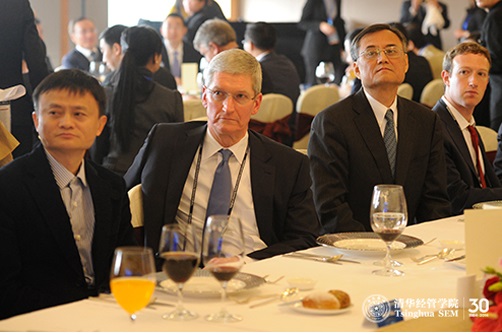
“Apple has every incentive to use their dominant platform position to interfere with how our apps and other apps work, which they regularly do to preference their own,” Mark Zuckerberg, Facebook CEO
Facebook could indeed file an antitrust lawsuit against Apple on its position that Apple is using its dominance in the iOS ecosystem to obliterate flank “competitors” like Facebook. Lol. Of course, there is no need to sympathize with Facebook which has its own “Supreme Court” to ban and unban members as it desires. This is a new age of frenemy and it looks fascinating as each of these ICT utilities fights one another these days.
Tensions are said to be rising between two tech world giants as Facebook contemplates an antitrust lawsuit against Apple, accusing the company of anticompetitive App Store practices, two anonymous sources tell The New York Times. Friction has been building ahead of Apple’s upcoming release of its App Tracking Transparency feature, which will impact user data that fuels Facebook’s digital advertising business. While he didn’t mention Facebook by name, Apple CEO Tim Cook linked the company to rising polarization, violence and recent erosion of trust.
Facebook has issues with Apple, and Google thinks Apple should not be preaching privacy when its servers in China are maintained under the dutiful watch of the Communist Party. Simply, Apple is not fair – it has strong privacy in the US, but it’s the most porous on privacy in China. Largely, there is no core principle guiding Apple. It is simply making business decisions!
So, it is what it is – everyone is doing all things necessary to protect its castle with no purity on any fundamental principle. Yes, harden your moat and run your playbook.
These companies have different business models and they have strong reasons to fight among themselves where necessary. Apple’s products are usually paid as Apple is not built on advertising. However, Google and Facebook derive their corporate lives from ads which are used to subsidize some of their solutions for users. Apple should not think that people “parting” with their data for those free goodies is evil.
The key factor here is balance and that is what Apple should focus on. Yes, there is no need to obliterate Facebook in iOS because users understand one thing: free things are not wholly free. Yahoo gave the world a premium Yahoo email version which ensures you do not see adverts; few paid. Simply, provided the ads are manageable, users will understand.
That does not mean that I am showing sympathy for Facebook as Apple works to clip its data harvesting activities. Yes, Facebook runs its own playbook and Trump is not smiling in Florida.
The independent group that will decide whether former President Donald Trump can return to Facebook is officially taking public comment on the case.
Facebook’s Oversight Board, a group that includes legal experts and human rights advocates, said in an announcement Friday that people and groups with “valuable perspectives” on Trump’s indefinite suspension from the social media platform have until Feb. 8 to weigh in via its online form.
Rotational presidency is NOT Nigeria’s solution since rotating inefficiency is not a solution. The growth key is building healthy intra-competition among states, and scaling productivity systems in communities. I support a revamped and restructured economic federalism so that the principle of comparative advantages will work in Nigeria. Until Nigeria does it, it will not advance!
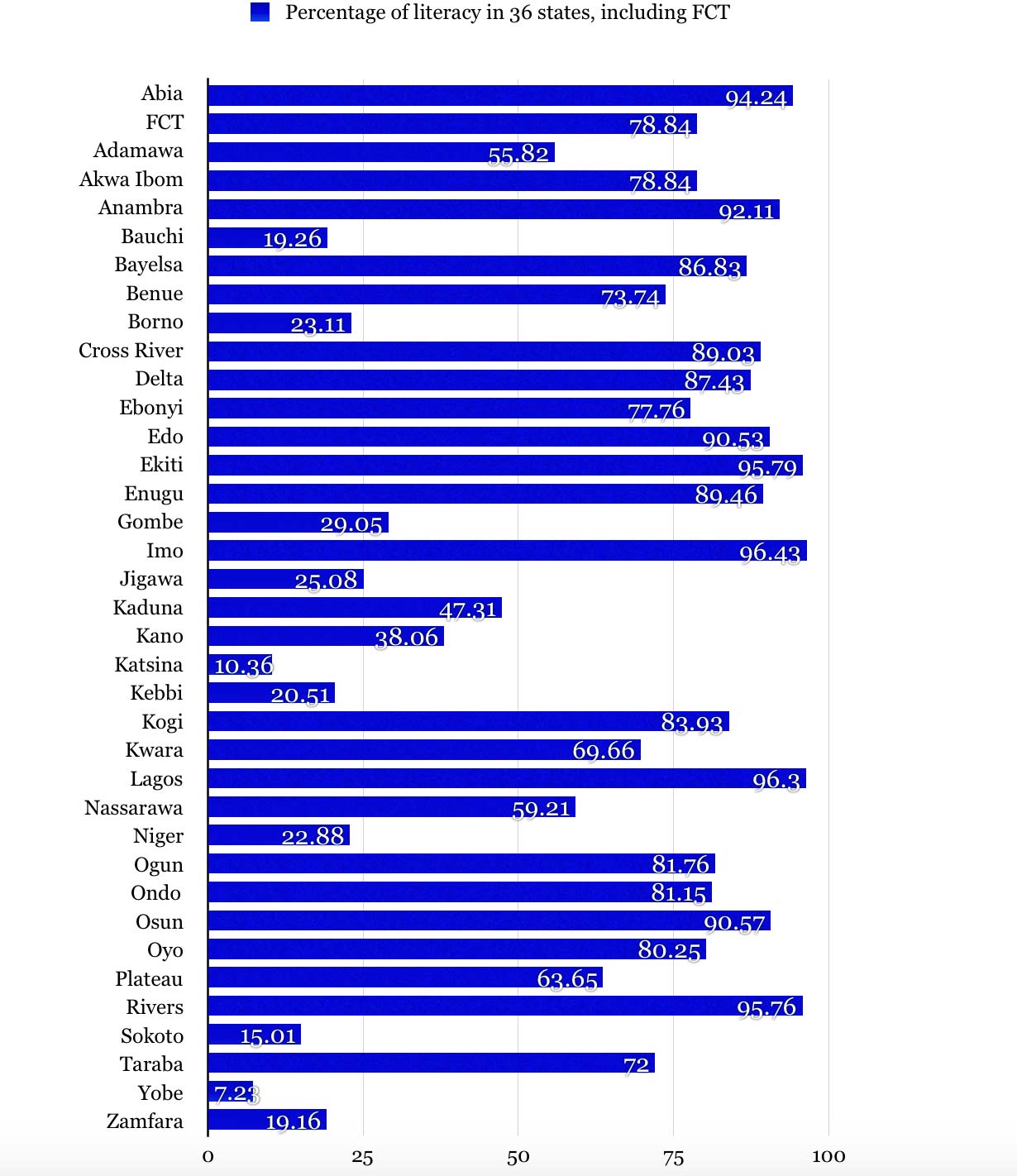
Abia and Yobe states were created on the same day. Both states have been receiving the same Universal Basic Education funds per capita since 1991. After three decades, Abia has a literacy rate of close to 95% while Yobe is below 15% (NBS data).
It is only in Nigeria that such is possible. My point is this: the current economic architecture makes no sense and has to be upgraded!
There needs to be incentives for governors to live and govern in their states instead of camping at Abuja counting monthly allocations. Our Vice President promised this during the 2015 campaign. I hope he can get Mr. President to build a foundation for future Nigeria by fixing this paralysis through federalism. Aba is dying because money is coming from Abuja. Osogbo, the same. Jos, the same. Pick your city!
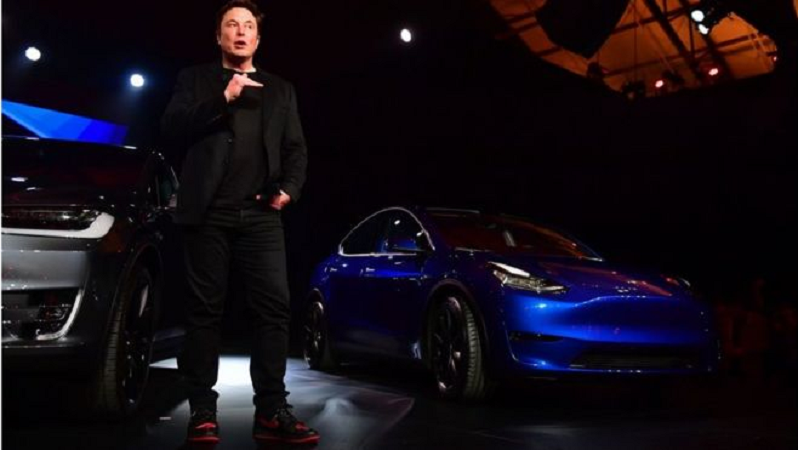
The most profitable unit in Tesla is selling emission credits, not cars. But for the emission credits business to thrive, Tesla has to make cars to earn those credits. Because it makes electric vehicles, it earns credits for not polluting the world. Then, it resells those credits to other car companies which make fossil-fueled cars to stay in compliance.
The Tesla car making business represents the One Oasis in the business while the emission credit unit captures the value through the Double Play strategy.
Eleven states require automakers sell a certain percentage of zero-emissions vehicles by 2025. If they can’t, the automakers have to buy regulatory credits from another automaker that meets those requirements — such as Tesla, which exclusively sells electric cars.
It’s a lucrative business for Tesla — bringing in $3.3 billion over the course of the last five years, nearly half of that in 2020 alone. The $1.6 billion in regulatory credits it received last year far outweighed Tesla’s net income of $721 million — meaning Tesla would have otherwise posted a net loss in 2020.
What is your business One Oasis? Can you build a Double Play strategy around the One Oasis? Think about these as you begin the 2021 Playbook. Watch my video.
In this video, I challenge us to use the One Oasis Strategy and Double Play Strategy to build business models that will ensure that we capture enterprise value even as we create for customers. Skype creates great value for customers but it has struggled to capture most value; so, Skype remains a sojourner, constantly being passed around by buyers and sellers. Do not be like Skype!
You can also add Apple in this league where the iPhone is now the One Oasis and values are captured from many services. The company returned a huge number last quarter.
Apple closed out 2020 with an exclamation mark, logging its most profitable quarter in history thanks to a surge in iPhone sales and soaring demand for laptops and iPads from remote workers. The tech giant racked up $28.76 billion in profit for the period ending Dec. 31, with $111.4 billion in quarterly sales. Previous fears that enthusiasm was waning for the iPhone proved unwarranted as sales jumped by 17%, with Apple’s decision to delay the iPhone 12 release also creating “pent-up demand.”
[In Tekedia Mini-MBA, we discuss One Oasis and Double Play extensively. If you can, join our next edition, starting Feb 8]
It is a new one: China hasovertaken the United States as the world’s top destination for new foreign direct investment . Also, in 2020, China was the only major economy to grow its GDP. Since 2017, foreign direct investment in the U.S. has been slipping. Of course, if you do not allow China to invest in your economy, that is a default expected outcome.
China overtook the U.S. as the world’s top destination for new foreign direct investment last year, as the Covid-19 pandemic amplifies an eastward shift in the center of gravity of the global economy.
New investments by overseas businesses into the U.S., which for decades held the No. 1 spot, fell 49% in 2020, according to U.N. figures released Sunday, as the country struggled to curb the spread of the new coronavirus and economic output slumped.
China, long ranked No. 2, saw direct investments by foreign companies climb 4%, the United Nations Conference on Trade and Development said. Beijing used strict lockdowns to largely contain Covid-19 after the disease first emerged in a central Chinese city, and China’s gross domestic product grew even as most other major economies contracted last year.
But that is not the message: the message is that China is doing today what actually made America great. China hasinvested in infrastructure and deepened its human capital – “China has 60,000 miles of high-speed rail; America ZERO”.
2) China forty years ago consciously adopted the American Model for economic growth–large sustained public investment in infrastructure and human capital. America has largely abandoned these investments and has already declined significantly (See Alden, Failure to Adjust). China has 60,000 miles of high-speed rail; America ZERO. Europe has several thousand miles. Our infrastructure is rotting and extracts an annual “tax” north of $600 BILLION; we don’t spent enough to fill potholes let along build a modern airport or port. China, India, and Europe have all vastly improved their universities and research centers; America’s have declined and shrunk. America once led the world in both infrastructure and human capital–we are now an also-ran. 1993 America was 1st in college completion rate for that cohort, now ranks 19th or lower, nearly last among all developed economies. And now 28th in publicly funded University based research, behind Slovenia!
[…]
The main purchasing power party in China – Middle Class has been growing rapidly after 2018. The huge amount of educated factory workers gives China a competitive advantage among the international competition. Modern infrastructures and stable social environment bringing more and more foreign investment into China. In 2020, Chinese authorities established a new economic model called “The Inner-cycle”. In the future, China will spend more time focusing on a more openly domestic financial market, new technology, and innovation in order to achieve its vision in 2050 – a fully developed country.
Largely, China did two main things:
It invested in infrastructure and that helped it to improve the efficiency of business systems in the country. With that, productivity has improved, making production largely competitive against most competitors.
It invested in core technical education positioning itself as the manufacturing center of the world. Today, China has young people with top modern skills to work in factories.
If Nigeria does these two things and some others I have noted in thisHarvard Business Review article, we will emerge. These constructs are fundamental if you trace the history of modern societies: nations do not rise faster than their abilities to accumulate and utilize knowledge. In other words, if you cannot create new knowledge, and have the capacity to use it, you will fade. But if you do, you will thrive.
Of course, investing in infrastructure and educating the young people require resources. Nigeria has blown its oil resources, and getting into the building phase at this time of limited resources, in the midst of the expanding population, would be challenging. But if there are ways to make those happen, good things will happen. From roads to energy to healthcare systems, Nigeria has to invest in critical infrastructure. Then following the investments with a revamped technical education will offer a new vista for growth and prosperity.
Having quarterly or yearly reports from the national, regional and global think tanks about socioeconomic and political developments in countries has never been a problem. However, the problem lies with the authenticity of the reports. Political leaders and social actors in developing countries are quick to reject some of the reports on credibility issues. The reports have also been rejected on the premise that they were produced in the developed world. Hence, the reports in the clime cannot adequately project the realities in the developing world.
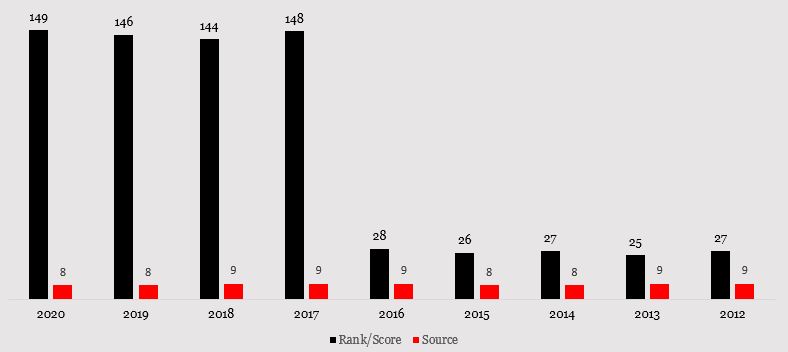
The Transparency International is one of the global think tanks that has consistently produced Global Corruption Perceptions Index. Like other reports or indexes, the GCPI has been criticised and still been doubted by a number of people, organisations and countries in the world. Since 2012, the best position attained by Nigeria was 144 out of over 180 countries [when ranking approach was used]. When score approach was employed, Nigeria only better with 28 points. In both approaches, the country has consistently been positioned as one of the most corrupt countries in the world.
This has continued to receive mixed reactions from the stakeholders in the Nigerian project. Whenever the index is released, the Presidency does not hesitate to pick holes in the index. This year the TI released the latest index, which positions Nigeria as 149th for the 2020 assessment against 146th attained in 2019. This is not augur well for the Presidency as the spokesperson to President Muhammadu Buhari, Garba Shehu notes that “reality is based on verifiable facts and data. And any evidence-based analysis would prove that whether it is by prevention or punitive measures in recoveries and prosecution, this administration would be rising fast up these rankings rather than standing still.
“Organizations should be factual in their analysis and be prepared to rely on inputs outside of sensational media reports and age-old narratives which have not been updated to reflect today’s reality in Nigeria concerning its globally-respected war on corruption.”
Some social commentators and public affairs analysts believe that the outcome meets the reality despite the presidency’s claims. As the presidency queries credibility of the index and research methodology used by the body, in our experience, some citizens on digital sphere and in physical space are also asking about the link between perception and reality. The argument has been that report or index that uses perception to measure reality cannot be credible. These narratives are examined by our analyst using academic and applied lenses. The piece seeks to draw insights from both lenses and pinpoint them within the context of ongoing conversation around acceptability of the index or not.
In academic and applied researches, concepts and constructs are key to better understanding of the problems being addressed by researchers. These should be well delineated within the context of the problems. Perception as a concept has been defined by numerous academic scholars, especially psychologists, sociologists, political scientists and communication specialists. Generally, perception “is the organization, identification, and interpretation of sensory information in order to represent and understand the presented information or environment.” It has also been described as awareness, comprehension or an understanding of something.
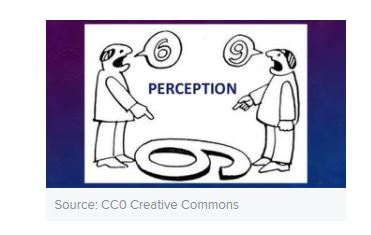
Taking these definitions into the real world, one can say the concept is key to our understanding of people, objects around us and reacting to experiences that emanate from interacting with them consciously or unconsciously. However, to some scholars, perception is not reality. It can only influence consciousness of things [human and objects] around us [see Exhibit 2]. Therefore, outcomes of researches that leveraged perception as a concept need to be interpreted and used with caution.
Exhibit 2: Perception
Theories Behind Perception
Apart from understanding perception conceptually, a research that uses it must also apply propositions or assumptions of theories that align with it. There are many theories of perception. In most cases, cognitive and constructive theories have been used by researchers, at least in the last two decades in the academic community. Cognitive theories have consistently stressed ‘poverty of stimulus’ as a construct that becloud people in understanding reality. In specific terms, the construct denies people opportunity of providing a unique description of the world.
Meanwhile, action-based theories of perception seem to solve this lacuna with the provision of constructs, assumptions and propositions that enable people to see perception from input and output perspectives. This is largely determined by examining interaction with processes that lead to seeing objects or people in positive and negative lenses. In other words, perceptions should start from the general to the specific details of the people or objects.
While defending its methodology, the Transparency International notes that “in order to carry out this quality assurance process, Transparency International reaches out to each one of the institutions providing data in order to verify the methodology used to generate their scores. Since some of the sources are not publicly available, Transparency International also requests permission to publish the rescaled scores from each source alongside the composite CPI score. Transparency International is, however, not permitted to share the original scores given by private sources with the general public.
Each of the sources included in the CPI is standardised to allow for the aggregation into the CPI score. The standardisation converts all the data points to a scale of 0- 100 where a 0 represents the highest level of perceived corruption, and 100 the lowest level of perceived corruption. While most of the underlying CPI sources are also coded in the same direction (with lower scores indicating higher levels of perceived corruption), four sources are scaled the opposite way, i.e. with lower scores denoting lower levels of corruption. For comparability purposes, these four sources are reversed by multiplying every score by -1.”
In this defense, there are issues that need attention. It is clear that the body has closed culture of sources. This is not bad since it is ethical to protect the sources. However, the think tank needs to revisit its methodology. If some sources are expected to be protected, those that do not require the agreement should be used. This is imperative when one looks at the body’s strategic principle and name [The Transparency International], and the insights that emerged from the concept and theories examined earlier. It is also essential that the body considers the outcomes of anti-corruption policies and instruments being used by each economy in its quantification of corruption issues.