DD
MM
YYYY

PAGES

DD
MM
YYYY

spot_img

PAGES

Home Blog Page 5970

Why Central Bank of Nigeria Asked Banks To Close Naira Accounts of Money Transfer Operators

19
Central Bank Governor, Nigeria

In the last few hours, I have received questions on why the Central Bank of Nigeria (CBN) asked banks to close the naira accounts of money transfer operators (IMTOs, international money transfer operators) in Nigeria. As an investor in a new startup, M-Naira, which holds the trademark for mNaira , m-naira and similar, in Nigeria, and which just received licenses to run remittance in US and Canada, this is something of importance to me.

To some of our members at Tekedia, I have asked them to wait for our banking and finance experts like Azeez Lawal to return from the holidays to explain.

But from my understanding, this is what CBN is doing here: in the past, when you wired USD, Euro or any foreign currency from abroad to Nigeria, you were paid in Naira, determined by the CBN official exchange rate. The IMTOs maintained a special purpose naira account to work on that reconciliation between the USD, etc they had received, say in the US and UK. and the naira they have settled in Nigeria.

But under the new CBN policy, where the USD or Euro is paid in the same currency in Nigeria to the recipient, there is practically no need for IMTOs to run a naira account. In other words, they have been disintermediated in the system locally. What happens is this: it is now between CBN and IMTOs offshore offices, and CBN and local banks since one currency is involved. The IMTOs local naira accounts are now redundant and of no value.  (They can of course run the usual current and saving accounts).

This is a clear indication that CBN is committed to this policy: send the money in USD, and your recipient can pick it up in USD or have it deposited into a local USD domiciliary account. As I have noted, this is a good policy: you are essentially increasing the supply of USD in the nation and that would give naira a breathing space. 

The Central Bank of Nigeria has directed the Deposit Money Banks to close all naira accounts of International Money Transfer Operators. It disclosed this on Friday in a circular tilted ‘Receipt of diaspora remittances: Additional operational guidelines 2 addressed to all Deposit Money Banks, Payment Service Providers and International Money Transfer Operators. …

The circular read, “DMBs are to close all naira accounts for IMTOs. This is to ensure that diaspora remittances are received by beneficiaries in foreign currency only (cash and/or transfers to domiciliary accounts of recipients).

“DMBs are permitted to open new opex accounts for the purpose of the IMTO operations, such as salary payments and other operating expenses excluding diaspora remittance receipts.

“DMBs must ensure that proper audit of IMTO accounts is done to forestall further use of naira accounts for diaspora remittances purposes.”

And CBN wants to deal with the operators who continue to pay naira instead of the foreign currency: “However and regrettably, a few operators continue to pay remittances in local currency contrary to regulatory directive. The CBN frowns on this practice.” So, if you close their naira accounts, that “illegal” playbook becomes impossible.

The Central Bank of Nigeria (CBN) Had A Great Week On Policies
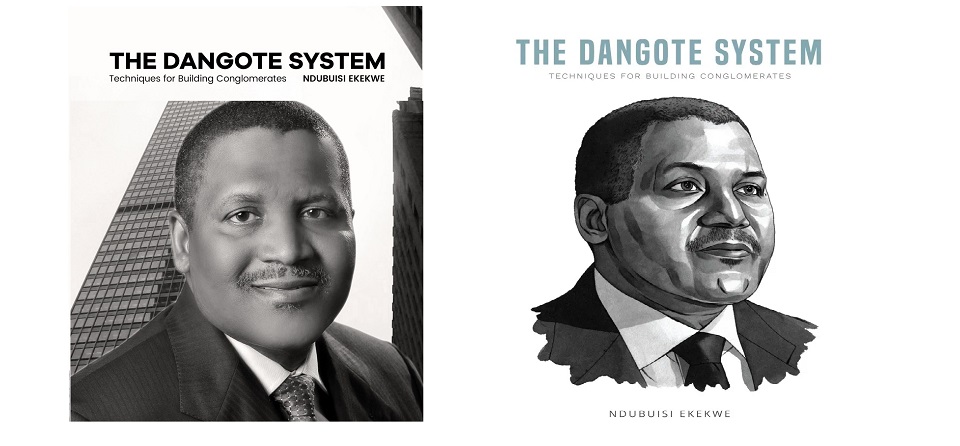
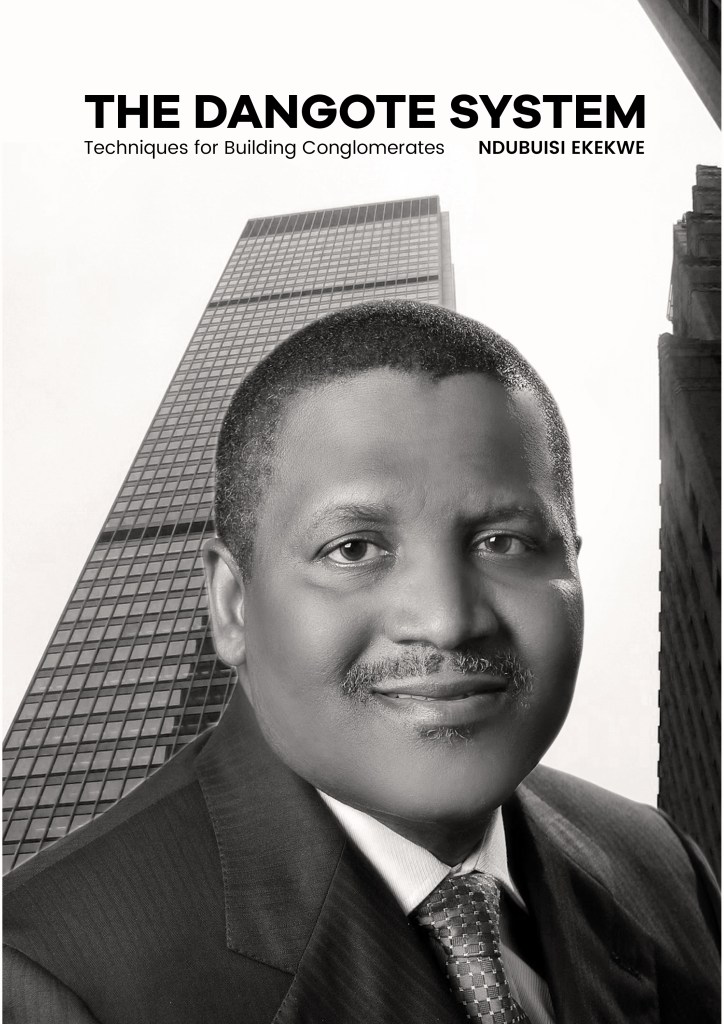
During This break, I Recommend My Book – The Dangote System

0

The critics love it:

This book is a very amazing piece. It presents concise, well thought-out and very clear insights on how to build companies with focus on solving problems not many people can solve and consequently, have government’s attention and support. Thank so much for this Prof. (source)

During this break, I recommend my book – The Dangote System – for you. It is rated E for everyone. Begin reading here.

Free for all Mini-MBA edition 2 participants

Nigeria Needs To Enhance Human Capacity Development to boost Economic Development and Growth

0

By Paul Godwin

Economic Development originated in the Post War period of Reconstruction initiated by the US during the 1949 year inaugural speech, President Harry Truman identified the development of Under-Developed areas as a priority for the West. Economic Development is a term that Economists, Politicians and others have used frequently in the 21st century.

Economic growth and Human Development is a two-way relationship, moreover the first chain consists of Economic growth benefiting Human Development with GNP, specifically GNP increases human development by expenditure from families, government and organizations.

More than half of the people of Nigeria are living in conditions approaching misery, food is inadequate, diseases and Insecurity is ravaging the entire length and breadth with the Economic life primitive and stagnant. Apparently, Humanity possesses the knowledge and skills to relieve the sufferings, that’s if the government and private organizations can fashion out a workable framework to revamp the situation.

Nigeria’s government needs to focus on Human Capital Development and Redistribution that will push for Import Substitution Industrialization emphatically on Comparative advantage, the country has functioned mainly as resource providers to Wealthy industrialized countries thereby affecting the culmination of modernity in our Economy.

We envisage a program of Development based on the concepts of Democratic fair dealings, greater production is the key to prosperity, peace the key to greater production with a wider and rigorous application of Modern Scientific and Technical knowledge. 

More approach needed to be implemented on small Startups in the country which can stimulate incentives that will make Capital available to the citizens, the drive of the World now shift on Digital maximization, best the government could do is to make available frameworks to see to it’s optimal utilization.

Tekedia Mini-MBA Adds Session Labs for Blockchain, Cryptocurrency, Decentralized Finance & Cybersecurity

0

An upcoming new course in Tekedia Mini-MBA – Blockchain, Cryptocurrency & Decentralized Finance – just got better. We are adding a Session Lab on blockchain, cryptocurrency and decentralized finance (DeFi) to enable our members  learn, in real-time, how the techs work.

Bitfxt, BitDeFi and BoundlessPay will coordinate the session for our Institute. Also, Infoprive, a leading cybersecurity startup in Lagos, will also provide a Session Lab on cybersecurity and digital forensics.

Session Labs are new additions in our program designed to give members practical insights on some courses. A Microsoft executive teaches our AI & cloud course; we are also exploring that space. Yes, a Session Lab on AI.

Tekedia Institute aspires to offer the most-practical and -relevant education in business management and leadership development in our region. To register for the next edition, click here.

Why A Ride-Sharing And Delivery Startup Wants To Own A Bank

0

Facebook wants to be your “bank” through the blockchain and alternative money universe. Google wants to be your “bank” by making it possible for you to open a bank account on its platform, abstracting its bank partners which legally have to power everything for compliance. What is happening here is evident: controlling and maintaining demand in the 21st century will go through the path of financial services and money. In other words, if you are part of the network into how someone spends and uses his or her money, you are sure to get the attention of that person. That explains why fintech remains one of the most fascinating sectors in the world of modern venture funding.

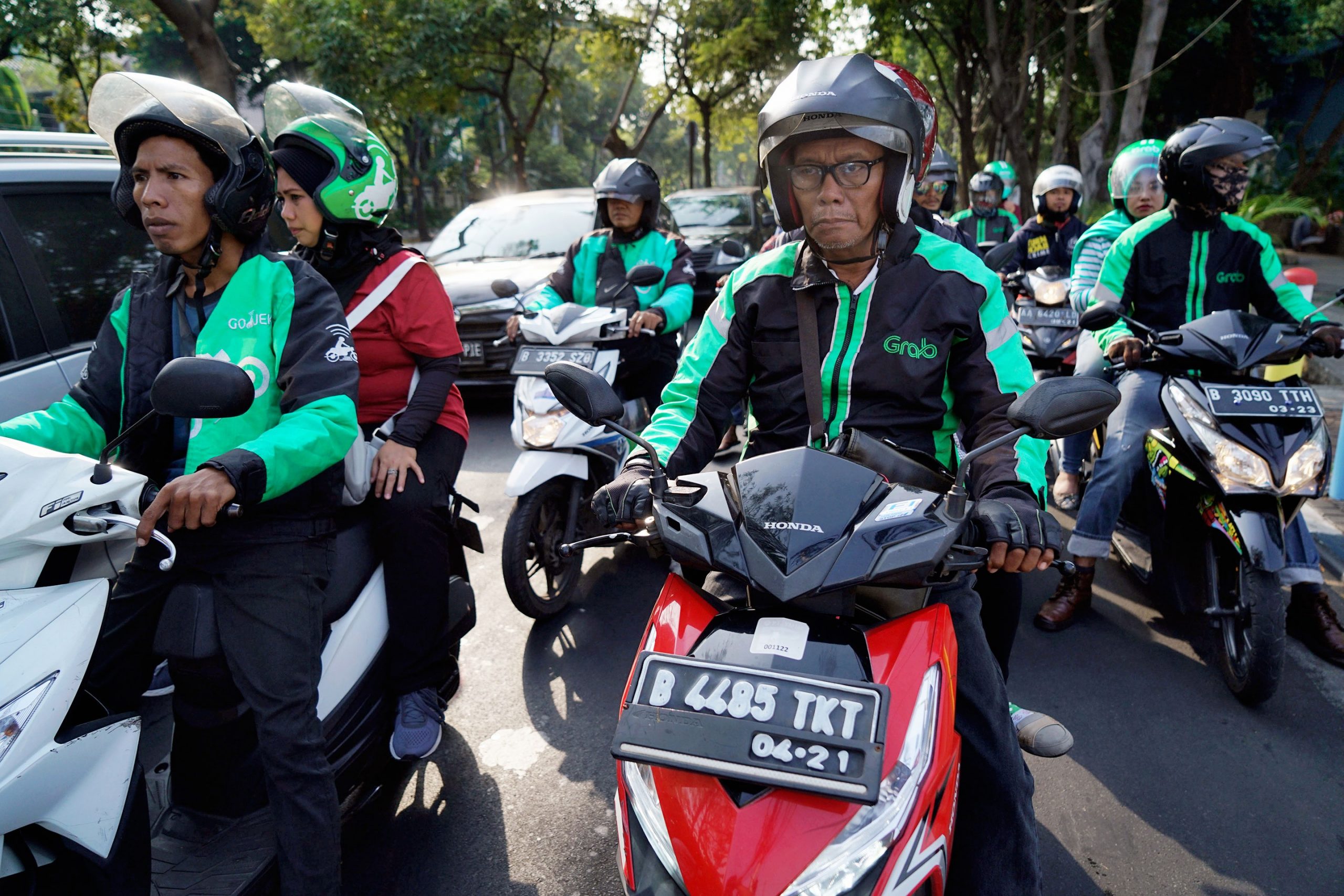
The business of finance is even more fascinating in the emerging world. Yes, one of the biggest frictions remains how to pay and be paid, outside the nexus of cash transactions. That explains why Gojek, which began life as a bike sharing app, wants to co-own a bank. Yes, “Indonesian internet giant Gojek paid about $160 million to increase its stake in PT Bank Jago, making its biggest investment in financial services to date.” The playbook is simple: connect the millions of Gojek users into a banking ecosystem and capture value directly, instead of funneling it into a bank where you get nothing. That is a clear double play strategy.

GoPay, Gojek’s payments and financial services arm, bought almost 1.96 billion shares at 1,150 rupiah apiece, according to a stock exchange filing. The internet firm used call options to acquire its stake, completing the deal at a steep discount to Friday’s close of 3,900 rupiah and paying about 2.25 trillion rupiah ($159.5 million) in total. Combined with an existing stake of 4.14%, the additional investment takes Gojek’s holding in Bank Jago to 22.16%.

The move reflects the company’s ambition of accelerating its forays into financial technology. Gojek — Indonesia’s most valuable startup, backed by Facebook Inc. and PayPal Holdings Inc. — aims to let users open bank accounts with Jago and then manage their finances through its app, according to an emailed statement. GoPay has been trying to extend digital financial services to merchants and drivers since 2017.

Gojek wants to capture more value just as MultiChoice/DStv’s BBNaija which invested in BetKing wanted to capture value in betting. The company had noted that betting sites were capturing more value on its shows, as people bet on contestants being cut. So, by bringing BetKing home, it could make it an official partner and capture more value.

Tomorrow at Tekedia Live, I will lead our live session. During my monologue part, I will discuss Scaling through Partnerships. As I do that, I will illustrate how MultiChoice is executing a winning strategy, and what we can learn from the firm. Also, I will discuss the latest deal where the entertainment giant in Africa acquired 20% of BetKing for $81 million.

Many of our Tekedia members would have understood the strategic play in that acquisition: Double Play Strategy; I will explain at deeper levels. Essentially, the best consumer money-making business in BBNaija is the gambling part in which betters wager who among the housemates would be cut as the show progresses.

These playbooks are about playing at the edges which offer “extra”, as noted in our 2021 Outlook video.