DD
MM
YYYY

PAGES

DD
MM
YYYY

spot_img

PAGES

Home Blog Page 6

Art Basel Embraces the Digital Future as Zero10 Debuts in Switzerland and Eko33 Launches on OpenSea

0

The worlds of fine art and digital technology are converging at an unprecedented pace, and this year’s Art Basel has become a powerful symbol of that transformation. Long regarded as one of the most influential art fairs on the planet.

Art Basel is increasingly opening its doors to digital creators, blockchain-based artworks, and immersive virtual experiences. The latest developments, including Zero10’s Swiss debut and Eko33’s code-based collection launch on OpenSea, highlight how digital art is moving from the fringes of the creative world into the mainstream.

For decades, Art Basel has served as a gathering place for collectors, galleries, artists, and cultural institutions seeking to showcase the most innovative works in contemporary art. While traditional mediums such as painting, sculpture, and photography continue to dominate much of the event, digital art has steadily gained prominence.

This shift reflects broader changes in the art market, where technology is creating entirely new ways to create, distribute, and experience artistic expression.

One of the most anticipated highlights of the event is the Swiss debut of Zero10, a company known for pioneering augmented reality and digital fashion experiences. Zero10 has built a reputation for blending physical and virtual realities, allowing users to interact with digital garments and artworks through smartphones and immersive technologies.

Its appearance at Art Basel signals growing interest in experiences that exist beyond traditional canvases and gallery walls. The significance of Zero10’s participation extends beyond technological novelty. It demonstrates how digital experiences are becoming recognized as legitimate artistic mediums.

Visitors are no longer passive observers but active participants who can engage with artworks in dynamic and personalized ways. As augmented reality technologies continue to mature, artists gain access to entirely new creative tools capable of transforming how stories, emotions, and concepts are communicated.

Alongside Zero10’s debut, digital artist Eko33 is making headlines with the release of a code-based collection on OpenSea. Unlike conventional artworks that rely on physical materials, code-based art uses software and algorithms as the primary creative medium.

In these works, the underlying code becomes an essential part of the artistic process, generating visuals, patterns, and experiences that can evolve over time. The launch on OpenSea, one of the largest marketplaces for blockchain-based digital assets, reflects the continuing maturation of the NFT and digital ownership ecosystem.

Although the NFT market has experienced periods of intense speculation and volatility, the technology continues to offer artists innovative ways to authenticate, monetize, and distribute their creations.

For collectors, blockchain verification provides transparency and provenance that can be difficult to achieve in traditional digital environments. Eko33’s collection also underscores a growing trend toward generative and computational art. Rather than creating a single static image, artists can design systems that produce unique outputs through algorithms and mathematical rules.

This approach challenges traditional definitions of authorship and creativity, encouraging audiences to think about art as an evolving process rather than a fixed object. The presence of both Zero10 and Eko33 at the center of conversations surrounding Art Basel illustrates a broader transformation taking place across the global art industry.

Galleries, collectors, and institutions are increasingly recognizing that digital art is not a temporary trend but a permanent expansion of artistic possibilities. Emerging technologies such as augmented reality, blockchain, artificial intelligence, and generative coding are creating entirely new creative ecosystems that coexist alongside traditional forms of expression.

As Art Basel continues to embrace digital innovation, it is helping shape the future of art itself.

The fair’s willingness to spotlight pioneers such as Zero10 and Eko33 demonstrates that the next chapter of artistic evolution will be defined not only by paint and canvas, but also by code, algorithms, and immersive digital experiences. Art Basel is positioning itself at the forefront of a cultural shift that could redefine how art is created, collected, and experienced for generations to come.

Trump Softens Stance On Anthropic, Says He No Longer Views Company As A Potential National Security Threat

0

U.S. President Donald Trump has signaled a significant shift in his administration’s posture toward AI startup Anthropic, saying he no longer views the company as a potential national security threat after it moved quickly to comply with government demands restricting foreign access to its most advanced models.

The comments, made in an interview with The Axios Show published Friday, offer fresh insight into how the White House is approaching the regulation of frontier artificial intelligence systems and underscore the growing willingness of governments to treat leading AI companies as strategic national assets rather than ordinary technology businesses.

Asked whether he viewed Anthropic or its chief executive, Dario Amodei, as a threat to national security, Trump replied: “Well, not now, but a week ago, maybe.”

The remark follows a dramatic confrontation between the administration and Anthropic over access to the company’s newest AI systems, Fable 5 and Mythos 5, which are regarded as among the most capable models currently available.

The dispute emerged after Trump ordered Anthropic to block foreign nationals from accessing the advanced models, citing national security concerns surrounding frontier AI capabilities. In response, Anthropic last week disabled access to both Fable 5 and Mythos 5 for all users, a move that shocked parts of the technology industry and intensified debate over government intervention in AI development.

Trump suggested the company’s response helped ease White House concerns. According to the Axios interview, the president said Amodei responded to the administration’s export-control directive “very quickly” and “responsibly.”

That indicates that Anthropic’s willingness to cooperate may have prevented a deeper confrontation with federal authorities.

Senior technical staff from Anthropic were reportedly scheduled to meet administration officials earlier this week to discuss the restrictions and broader concerns surrounding access to frontier AI models.

National Security Is Becoming Central to AI Policy

The episode illustrates how rapidly artificial intelligence has moved from a commercial technology issue to a national security concern in Washington. Only a few years ago, debates around AI focused primarily on innovation, productivity, and competition among technology companies.

Today, policymakers see advanced AI systems through the same lens applied to semiconductors, defense technologies, and critical infrastructure.

Anthropic itself has contributed to that shift.

In recent months, Amodei has repeatedly warned that next-generation AI systems pose serious risks to cybersecurity, financial systems, critical infrastructure, and national security. The company has also advocated stronger government oversight of advanced AI development and has argued that frontier models may eventually require safeguards similar to those applied to other strategic technologies.

Ironically, some industry observers argue that those warnings helped create the political environment that led to the administration’s intervention.

Trump Keeps Pressure on the Table

Although Trump’s latest comments were more conciliatory, he stopped short of ruling out further government action. According to Axios, the president did not exclude the possibility of invoking powers under the Defense Production Act (DPA), a Cold War-era law that gives the federal government broad authority to direct private-sector activity in matters deemed critical to national security.

When asked about the possibility, Trump said: “I have the power to use a lot of things.”

He added: “But I’m not sure I have to do that.”

The statement suggests that while the administration may be satisfied with Anthropic’s cooperation for now, it wants to retain leverage over companies developing frontier AI systems. The possibility of using the Defense Production Act against an AI company would represent an extraordinary escalation in government involvement in the sector and could establish a precedent for future intervention.

The issue surfaced during a week in which Trump and other world leaders met technology executives at the G7 summit in France. Amodei was among the AI leaders who participated in discussions with government officials, reflecting the growing influence of AI firms in geopolitical and economic policymaking. The meetings come as countries race to establish leadership in artificial intelligence, a competition increasingly viewed as central to future economic growth, military capability, and technological influence.

Anthropic responded cautiously to Trump’s comments, emphasizing collaboration rather than confrontation.

A company spokesperson said, “We are grateful to the administration for their ongoing partnership in working to get this matter resolved as quickly as possible.”

The spokesperson added: “We remain committed to working alongside them towards our shared goals of protecting critical infrastructure and making sure the U.S. leads in AI.”

AI’s Capital Hunger Forces Tech Giants to Finally Face the Fed as Debt-Fueled Buildouts Reshape Sector Risks

0

For years, megacap technology companies with fortress-like balance sheets could largely tune out the Federal Reserve, treating interest rate cycles as a secondary concern that hit smaller, less profitable rivals far harder. That era is ending. Artificial intelligence is turning once-cash-rich tech leaders into heavy borrowers racing to build out power-hungry data centers, making the sector newly and acutely sensitive to borrowing costs and monetary policy signals.

The shift was on full display this week as investors digested Federal Reserve Chairman Kevin Warsh’s first press conference, where the central bank left the door open to a rate hike later in 2026 amid persistent inflation concerns. The 10-year Treasury yield climbed near 4.45%, and tech stocks felt the pressure. For an industry long valued on future growth rather than current cash flows, higher rates now carry a more immediate sting.

“Tech investors are not as used to looking at rates,” Peter Boockvar, chief investment officer of One Point BFG Wealth Partners, said in an interview. “All of a sudden tech investors need to listen to what Kevin Warsh has to say, they need to start paying attention to what the inflation stats are and how the U.S. Treasury market responds to it.”

The reason is straightforward but profound: the hyperscalers are in the midst of an unprecedented capital expenditure arms race. Amazon, Alphabet, Microsoft, and Meta alone are projected to deploy a combined $750 billion this year on AI infrastructure — an 80% jump from 2025. Much of that spending is being financed through debt, turning companies that once generated mountains of free cash flow into more traditional, capital-intensive businesses.

From Cash Cows to Borrowers

Goldman Sachs recently highlighted that capital expenditure as a percentage of cash flow for big tech is at its highest level since the dot-com bubble era. The bank expects total tech capex this year to approach $920 billion, noting that Wall Street estimates have consistently proven “too conservative” in each of the past three years.

Amazon, forecasting roughly $200 billion in spending, is widely expected to post negative free cash flow. Other giants are similarly tapping debt markets aggressively. Nvidia, Oracle, Amazon, Alphabet, and Meta have each issued tens of billions in bonds recently. OpenAI’s CFO Sarah Friar has cited access to debt markets as one motivation for going public, while bankers for SpaceX, fresh off its record Nasdaq debut, are already preparing investors for a potential $20 billion bond offering.

“It’s underappreciated,” said Jeff Kilburg, CEO of KKM Financial. “There’s an insatiable demand for AI-related funding. Tech leadership is embracing debt. It’s the perfect recipe for these AI folks who feel comfortable in what they want to borrow, and spend.”

This borrowing surge changes how investors must assess the sector. Higher interest rates raise the cost of capital for these massive buildouts and increase the discount rate applied to future cash flows — the very metric that has long justified sky-high valuations for growth stocks.

A New Reality for Tech Valuations

For smaller tech companies, rate sensitivity has always been part of the game. Investors price them on distant profits, so when the “risk-free rate” rises, those future earnings become worth less today. Now the effect is moving upstream to the biggest names.

Jay Woods, chief market strategist at Freedom Capital Markets, cautions against painting the entire sector with one brush. Nvidia, for instance, remains in a strong cash position, with free cash flow surging past $48.5 billion in the latest quarter, up from $26.1 billion a year earlier.

“They still have a deep cash bench, so I don’t think it’s that big of a red flag,” Woods said about Nvidia. “It does give them flexibility.”

Even so, the broader trend is unmistakable. Tech giants are increasingly behaving like old-economy industrials — capital-intensive, reliant on both debt and equity markets, and vulnerable to swings in borrowing costs and commodity prices (especially energy for data centers).

Boockvar frames it as a fundamental evolution.

“Tech investors are learning what it’s like to be an investor in old-economy industrial businesses that are capital intensive. Free cash flow is volatile and access to both debt and equity markets are crucial in order to finance it all,” he said.

Issuing debt can be strategic, preserving liquidity for acquisitions or providing flexibility for long-term projects, but it also introduces new risks if rates keep climbing or credit conditions tighten.

What This Means for Markets and the AI Race

The implications extend beyond individual companies. As mega-cap tech becomes more rate-sensitive, the sector’s role as a market leader could introduce new volatility. Investors who once viewed big tech as a defensive growth haven may need to reassess in an environment where Fed decisions carry heavier weight.

This dynamic also raises questions about the sustainability of the AI buildout. If higher rates meaningfully increase financing costs, some projects could be delayed or scaled back, potentially slowing the pace of AI advancement. At the same time, the race for dominance may force companies to accept higher borrowing costs rather than cede ground to rivals.

Warsh’s signals this week, leaving the door open to hikes amid sticky inflation, served as an early test of this new reality. Tech stocks sold off, yields rose, and the message was that the days of big tech being largely insulated from monetary policy are over.

For an industry that has driven much of the market’s gains in recent years, this transition marks a new chapter. The AI boom is real, but its capital intensity is forcing even the largest players to confront economic fundamentals they could once largely ignore. As Peter Boockvar noted, tech investors now have an entirely new reason to pay close attention to the Federal Reserve — and that attention is unlikely to fade anytime soon.

South Korea’s Tech Boom Bonuses Spark Inflation Warnings as Central Bank Eyes Wage Spillover Risks

0

In a striking sign of how South Korea’s semiconductor surge is reshaping the economy, the Bank of Korea is now closely watching unusually large performance bonuses at major tech firms, warning that these windfalls could fuel broader wage pressures and add to already elevated inflation.

The central bank’s latest analysis, released in a June 17 report, highlights a dual challenge: energy-driven price increases from the Iran war remain the primary inflation driver, but improving income conditions and spreading wage growth could sustain upward pressure even if geopolitical tensions ease. What stands out is the BOK’s specific focus on the “highly exceptional scale” of recent bonuses in the IT sector, particularly at chip giants SK Hynix and Samsung Electronics.“

In particular, because recent IT-sector performance bonuses have been paid on a highly exceptional scale, the possibility that their actual impact could be larger than expected cannot be ruled out,” the BOK said.

Normally, one-off bonuses do not significantly affect demand or inflation because they are not permanent increases in income. But when they reach extraordinary levels, as seen this year, they risk triggering wider wage negotiations and consumption patterns that feed into sustained price pressures. With headline inflation already running above the central bank’s 2% target, projected at 2.7% for the full year, these developments complicate the BOK’s policy balancing act.

Eye-Popping Payouts in the Chip Sector

The bonuses stem directly from the AI-driven boom that has delivered record profits to South Korea’s memory chip makers. SK Hynix, a key supplier of high-bandwidth memory for Nvidia, agreed last September to allocate 10% of operating profits as bonuses. Samsung Electronics workers secured a similar deal after threatening an 18-day strike in May, with 10.5% of semiconductor operating profit earmarked for special chip worker bonuses.

According to union sources cited by Reuters, a memory chip worker with a base salary of 80 million won ($52,400) could receive a total bonus of around 626 million won ($410,000) this year. At SK Hynix, employees stand to earn more than 700 million won ($454,851) if the company hits an annual profit target of 250 trillion won.

These payouts represent life-changing sums for many workers and mark a sharp departure from typical compensation in South Korea’s corporate culture. They also reflect the intense competition for talent in the semiconductor industry, where global demand for AI chips has created a high-stakes environment for employers.

The BOK is already seeing early signs of how these bonuses are flowing back into the economy. Deputy Governor Lee Jiho noted during a June 17 briefing that sales have “increased significantly” in areas like Suwon, home to major Samsung facilities, and in luxury goods sections of department stores.

South Korean media reports paint a vivid picture of heightened high-end consumption in Gyeonggi Province, where Samsung and SK Hynix are headquartered. Luxury sales at a Shinsegae department store branch in the region jumped 53.6% year-on-year in May, with luxury jewelry surging 146.3% and watches rising 85.3%.

Overall store sales grew 19%. This localized spending boom is lifting shares of major department store operators. Lotte Shopping has gained more than 148% year-to-date, Hyundai Department Store is up 120%, and Shinsegae has soared 190% since the start of the year, with much of the recent momentum tied to expectations of sustained luxury demand.

While the central bank views this as a potential channel for demand-side inflation, retailers are celebrating the influx. The bonuses are providing a timely boost to discretionary spending in an economy where consumer sentiment has been uneven amid global uncertainties.

The BOK’s concerns go beyond immediate price pressures. This is because large, concentrated bonuses in the tech sector could encourage wage demands in other industries, creating a spillover effect that amplifies both supply-side (higher labor costs) and demand-side (increased spending) inflation. This is particularly relevant in South Korea, where the semiconductor industry has become an outsized driver of exports and national economic performance.

At the same time, the disparity highlights growing inequality within the workforce. While chip engineers reap massive rewards, workers in other sectors or non-union roles may feel left behind, potentially adding social and wage negotiation tensions.

For monetary policymakers, analysts warn that the situation adds complexity. With inflation already above target, any acceleration in wage growth could limit the BOK’s room to maneuver, especially if global energy prices remain volatile due to the Middle East situation.

South Korea’s experience offers a window into the broader challenges facing export-oriented economies riding the AI wave. Record profits in strategic sectors can supercharge growth and stock markets, but they also risk overheating pockets of the economy and complicating inflation control.

SBF Says He Will Launch a Token After Leaving Prison

0
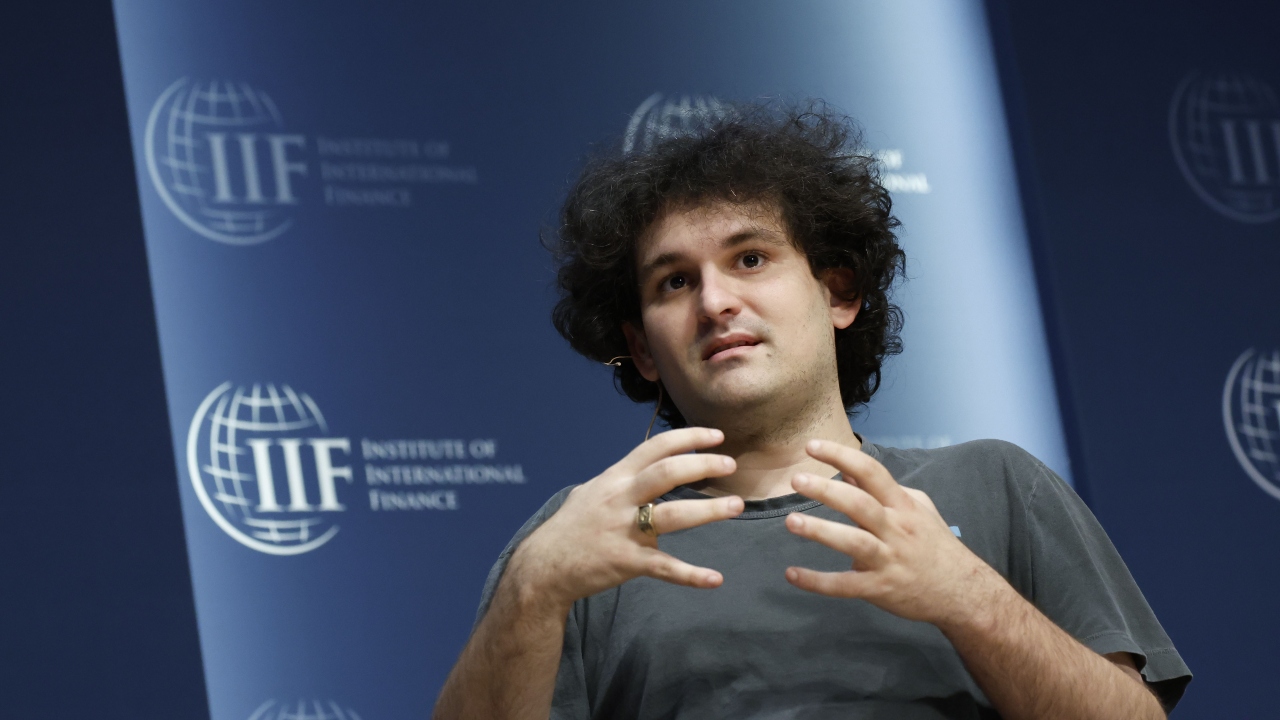
Sam Bankman-Fried

The cryptocurrency industry has never been short on controversy, and few figures have generated as much debate as Sam Bankman-Fried, commonly known as SBF.

After the dramatic collapse of the cryptocurrency exchange FTX in 2022 and his subsequent conviction on fraud-related charges, many assumed that his influence on the digital asset industry had come to an end.

However, reports that SBF allegedly told a fellow prison inmate that he plans to launch a new token once he is released from prison have reignited discussions about his future and the resilience of personal brands in the crypto ecosystem.

The statement, whether serious or casual, highlights a recurring theme in the cryptocurrency sector: the belief that innovation, speculation, and entrepreneurship can continue despite past failures. SBF was once regarded as one of the most influential figures in crypto.

Under his leadership, FTX grew into one of the world’s largest cryptocurrency exchanges, attracting millions of users and securing endorsements from celebrities, athletes, and major investment firms. The company’s collapse erased billions of dollars in customer funds and shook confidence across the digital asset market.

The idea of launching a new token after prison raises significant questions. It demonstrates the enduring appeal of tokenization as a fundraising and community-building mechanism. Unlike traditional businesses that require substantial infrastructure and regulatory approvals, a cryptocurrency token can often be created and distributed relatively quickly.

This accessibility has enabled countless entrepreneurs to enter the market, although it has also contributed to scams, speculative bubbles, and unsustainable projects. Supporters of cryptocurrency may argue that individuals deserve a second chance and that innovation should not be permanently restricted by past mistakes.

Throughout business history, several entrepreneurs have recovered from bankruptcy, legal challenges, or failed ventures to build successful enterprises. From this perspective, SBF’s interest in launching a token could be viewed as an attempt to re-enter an industry he once helped shape.

Critics, see the situation very differently. The collapse of FTX was not merely a failed business experiment; it represented one of the largest financial scandals in modern crypto history.

Many customers lost substantial savings, and trust in centralized crypto platforms suffered a severe blow. For these observers, the notion that SBF could return to the industry and attract support for a new token appears both surprising and troubling.

The broader market reaction would likely depend on several factors, including regulatory developments, investor sentiment, and the specific purpose of any future token. Today’s crypto environment is significantly different from the one that existed during the boom years of 2020 and 2021.

Regulators around the world have increased scrutiny of digital asset projects, demanding greater transparency, consumer protection, and compliance. Any venture associated with a high-profile convicted executive would almost certainly face intense examination from authorities and the public alike.

The crypto industry has repeatedly demonstrated its ability to forgive controversial figures if market participants believe there is an opportunity for profit. History has shown that strong narratives and speculative enthusiasm can sometimes outweigh reputational concerns. Whether that dynamic would apply to SBF remains uncertain.

The reported comment serves as a reminder that cryptocurrency remains an industry defined by reinvention and unpredictability. Whether Sam Bankman-Fried ever launches another token is unknown, but the mere possibility is enough to spark debate about accountability, redemption, and the future direction of digital finance.