DD
MM
YYYY

PAGES

DD
MM
YYYY

spot_img

PAGES

Home Blog Page 6004

The United States’ Alert On Nigeria

2

There is no other way to say it: Nigeria is indeed becoming a challenging place for its citizens. When you have a country where more than 330 kids could be moved on bikes and no one will know, you will get an idea of a messed up country. Visit your local primary or secondary school today. Watch at the end of school closure. See the number of kids. Imagine what it would take to move half of those kids, from one location, for miles, and an alert would not trigger in the law enforcement circuit, you will understand the mess Nigeria has found itself! America is very blunt here: “Crime is endemic throughout Nigeria”. 

Holiday Security Alert:  U.S. Mission Nigeria (December 16, 2020)

Location:  Nigeria

Event:  Holiday Security Alert

The U.S. Embassy in Abuja and Consulate General in Lagos remind U.S. citizens to exercise caution while traveling and residing in Nigeria.  Crime is endemic throughout Nigeria, ranging from petty street crime to carjacking, and crime levels tend to increase during the holidays.  It is prudent to exercise particular caution during the holiday season and at holiday events.

Demonstrations are relatively commonplace in Nigeria and generally affect traffic flow, especially if they progress along major thoroughfares.  Criminal and other elements often infiltrate large gatherings.  Terrorist organizations and individuals inspired by extremist ideology exist throughout Nigeria.  Shopping centers, airports, hotels, clubs, restaurants, places of worship, transportation hubs, street markets, and other public venues frequented by Westerners are common attack targets.

Actions to Take:

  • Be aware of your surroundings.
  • Keep a low profile.
  • Carry proper identification.
  • Stay alert in public places and locations frequented by tourists/Westerners.
  • Review your personal security plans.
  • Use caution when driving at night and avoid walking after dark.
  • Always drive with your windows rolled up and the doors locked.
  • Review and alter travel routes and times to reduce time and place predictability.
  • Avoid large gatherings and protests.
  • Exercise caution if unexpectedly in the vicinity of large gatherings or protests.
  • Monitor local media for updates.
  • Always keep the doors to your residence locked, even when at home.

Tekedia Offers 10% Discount to Customers Paying With Bitcoin (BTC), ETH and LTC

0

We are on a redesign: a learner paid us $140 via Bitcoin two days ago for Tekedia Mini-MBA. After fees, the processor left $138.xx in the wallet. But within 24 hours, that $138.xx has moved to $156. Simply, Bitcoin went up and that receipt followed. 

People, the digital world has so many unknowns, and this decade would be super-amazing. How can somebody pay you “money” that “appreciates and depreciates” at scale? I have done some modelling here; I will give anyone paying with Bitcoin a 10% discount for Tekedia programs. Bear and bull probability is working here. Below are product prices; apply the 10% discount, and checkout with the Coinpayment option. Some Nigerian and African young people are educating me!

This 10% discount offer expires Dec 31 2020.

Our Program Cost

Our Payment Options


Access Bank Unveils SwiftPay, Interswitch Launches Multi-currency Prepaid Card

1

Everyone wants to play in the digital space, and Access Bank will not like to be left behind. Yes, Africa’s largest bank by customer base has unveiled Swiftpay, a digital payment for SMEs. 

Ladies and gentlemen, It gives me great pleasure to announce SWIFTPAY… by Access Bank. A payment acceptance service that we have introduced to support the transition and growth of our business customers.

SWIFTPAY is just a payment link that when hosted on your social media page, you can send to anyone to pay you. It is easy – less than 5 minutes to sign up, convenient, straight through and time savings for everyone. It takes less than 5 minutes to sign up. (from the Bank)

Meanwhile,  Interswitch Group, 20% owned by Visa, has partnered with Kenya’s Credit Bank Plc to launch a multi-currency prepaid card. The card, is aimed at providing consumers with an excellent alternative banking card that allows for safe, secure, and seamless electronic transactions.

Romana Rajput, Country General Manager, Interswitch Kenya, stated at the launch that the partnership is a boost to Interswitch’s issuing business, adding that it is further proof of the company’s leadership position in the financial services industry on the continent. “This is definitely a boost to Interswitch’s issuer-support & third-party processing business. We have been around for a while and we intend to keep entrenching digital payments in East Africa and across Africa as a whole. Now, customers will have access to the prepaid cards without necessarily having a bank account. The card can be funded through mobile money and it is widely accepted by merchants for payments and at the ATMs for withdrawals,” Rajput said.

Mr. Jack Ngare, Credit Bank Director, noted that the product is aimed at increasing financial freedom for the banked, unbanked, and under-banked. “It is our aim to provide our customers with the control and confidence they need to manage their money smartly. Membership of the Visa network will allow the cardholders to use it worldwide for payments and withdrawals, and to transact safely online and at ATMs,” Ngare said. (from press release)

The digital playbook is the future, and everyone is looking for a space on that checkout page. You must pay attention to this redesign. Yes, a learner paid us $140 via Bitcoin two days ago for Tekedia Mini-MBA. After fees, the processor left $138.xx in the wallet. But within 24 hours, that $138.xx has moved to $156. Simply, Bitcoin went up and that receipt followed. 

People, the digital world has so many unknowns, and this decade would be super-amazing. How can somebody pay you “money” that “appreciates and depreciates” at scale? I have done some modelling here; I will give anyone paying with Bitcoin a 10% discount for Tekedia programs. Bear and bull probability is working here. Click here for the product prices; apply the 10% discount, and checkout with the Coinpayment option.

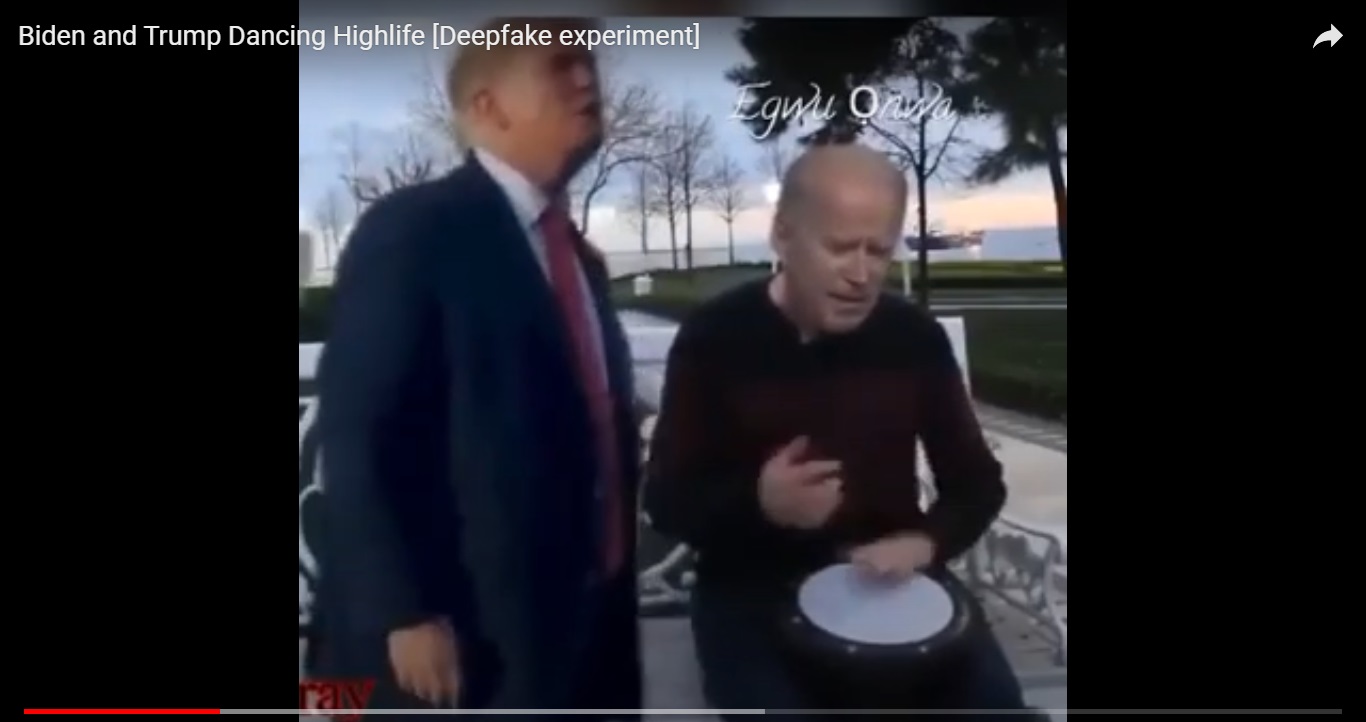
Biden and Trump Dancing Highlife [Deepfake experiment]

0

For research and academic purposes on the power of emerging deep fake computational systems. It turns out that anyone can do this now. It could have cost the guy $40 to do this. Give him $10,000 and a judge will struggle to rule on which is real or fake. But of course, highlife brings the fun to Mazi “Biden” and Mazi “Trump” here. Brace for a stochastic future!

This is actually the type of song for White House. , egwu oma [good music]. egwu di mma si na chukwu [good music comes from God]. umu uwa gee zie nu nti [the world should listen]. Ugo chi mere eze [ only the lord can enthrone to the throne ]

Follow up comment after a LinkedIn question:

Actually, there is a subscription package which you can pay $1,900 for tools to make this. You do not need $10k. Some tech firms offer same on beta as they refine models and collect data. Possibly, they will NOT release it for deepfake but people will use it for that!

The real deal is on editing: why waste $20k to go and re-shoot a movie segment when you can fake that small section? Can you sign artistes on contracts and create a Nollywood movie from software with none ever needed to be physically present? Your look is what you sell, not your time!

AutoX and Zoox Progress in Autonomous Vehicles Brings the Future of Robotaxi Closer

0

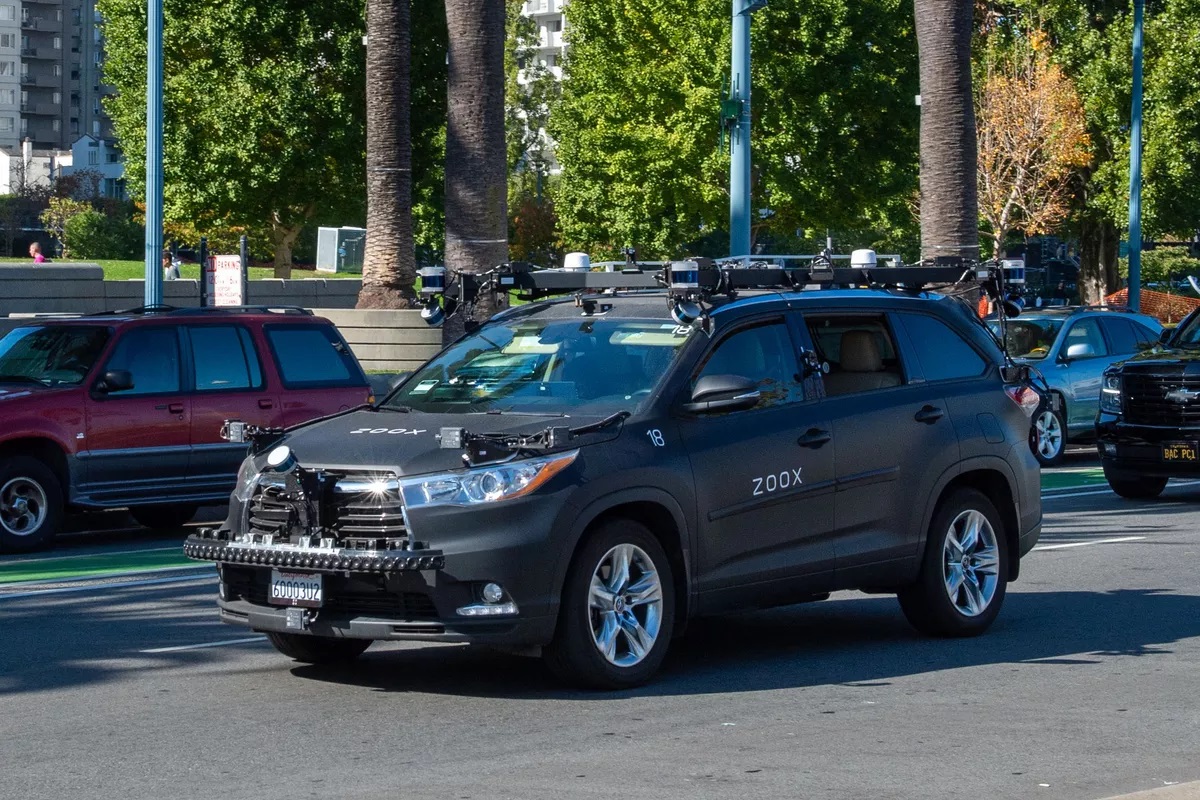
Amazon on Monday debuted its self-driving robotaxi electric vehicle it intends to use for ride-hailing services. This is coming days after AutoX launched the first fully autonomous robotaxi in China.

The driverless car was unveiled by Amazon’s Zoox, a startup it acquired in June as it pushes to attain its goal of running a transport company.

It follows the recent push, masterminded by COVID-19 pandemic, to seek alternatives to manned vehicles.

The pandemic ushered in safety measures around the world that involve social distancing, forcing the ride-hailing industry to shift operation to deliveries or stay out of business.

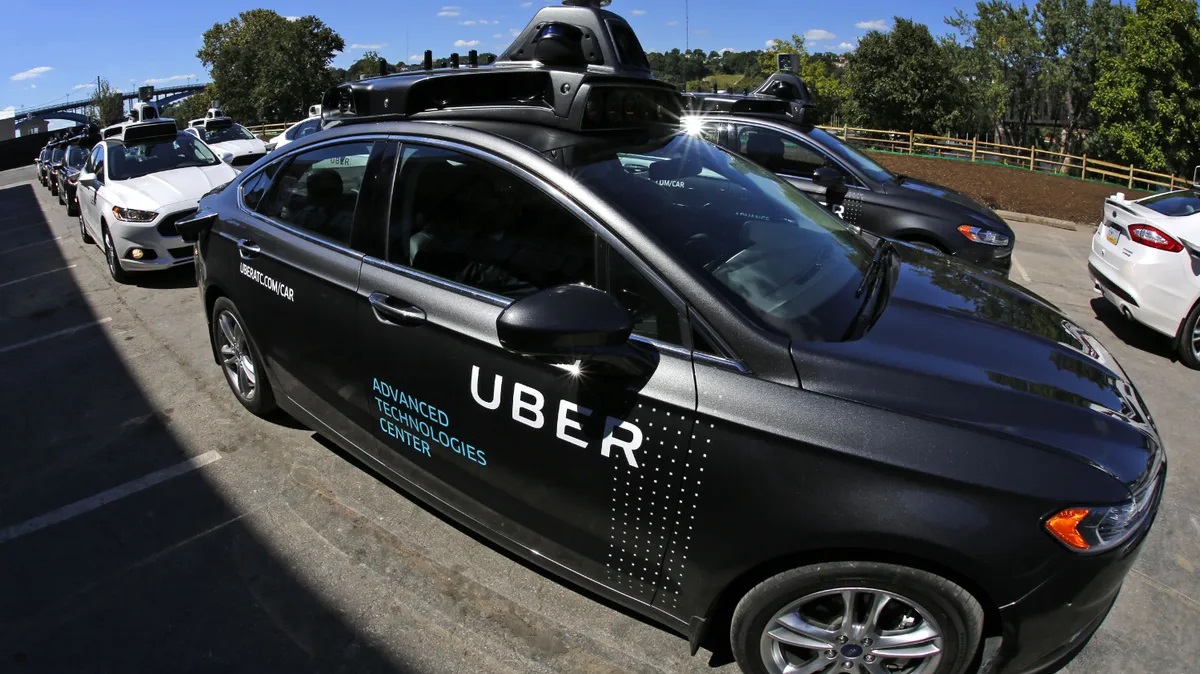
Before now, there have been a lot of regulatory bottlenecks hindering driverless vehicle manufacturers from putting their vehicles on the roads. In 2018, a pedestrian was struck dead by an autonomous vehicle operated by Uber. The cause of the pedestrian’s death, as determined by the National Transportation Safety Board (NTSB) was “inadequate safety culture” and “deficiencies in state and federal regulation,” and it thus fueled the tight approach of regulators on approval of unmanned vehicles.

Apart from the challenge of navigating through the roads, cybersecurity concerns involving the threat of autonomous vehicles (AVs) being hacked heightened the fears of both the NTSB and U.S. lawmakers working on laws that will govern the entire autonomous vehicle ecosystem, and hindered the automakers’ quest for approval.

In East Asia, where China is leading the quest for autonomous vehicles, it has been the same regulatory story as questions about the vehicles navigational capabilities keep regulators in doubt and consequently, stall the push by driverless automakers to get licensed to operate fully autonomous vehicles.
In February, the China’s National Development and Reform Commission and ten other governmental agencies of the Strategies for Innovation and Development of Intelligent Vehicles (the Strategies) released a two-step plan for autonomous vehicle development in China.

The plan includes first, a framework for technological innovation, industrial ecology, infrastructure, regulation, and network security in the autonomous vehicle market; second, the aim to fully establish an ecosystem for AVs from 2035 to 2050.

While the plans offer autonomous vehicles a path to a future in China’s booming auto market, it reels on setbacks emanating from many areas of driverless responsibility. For instance, the Ministry of Transport issued in 2018, the Administrative Rules on Intelligent and Connected Vehicle Road Testing, stipulating that autonomous vehicles are permitted only in designated areas in China for road testing. And there is also a policy of insurance coverage of about $700,000 to cover cases of accidents.

However, despite the regulatory and technological challenges in both AV leading markets, there has been a recent shift indicating progress. The pandemic has emphasized the need for autonomous vehicles now more than before, and it seems to have eased the tightfistedness of regulators on matters of AV concerns.

AutoX’s launch of its robotaxi early this month defied the rule which mandated driverless vehicle operators to have a safety driver on the wheels while testing or using the vehicle around town. It thus underscores advancement in technology and software engineering that could get the authorities to bend the rules.

Zoox on the other hand came in a unique way that distinguishes it from other autonomous vehicles. It’s a carriage-style car, which means that passengers face each other and there’s no space for a driver or passenger seat, because it has no steering wheel.

With space for four passengers, Zoox has the capabilities of bidirectional driving which allows it to change directions without the need to reverse and navigate in compact spaces. It also has an array of cameras, radar and lidar sensors, mounted on all four corners of the car, to eliminate blind spots and give it a 270-degree field of view on the road. The car can travel up to 75 miles per hour and can run up to 16 hours on a single charge. It has airbags for each of the four seats.

With each new autonomous vehicle rolled out, there is a significant tech breakthrough erasing regulatory concerns and filling a tech gap.

While the approval of full commercial operation of autonomous vehicles seems a long shot, the progress so far spells doom for many career drivers in the ride-hailing industry. With the number of companies indicating interest in operating robotaxi growing, cab service is poised to be another victim of robotics.

Alphabet’s Waymo, GM’s Cruise, Uber and Tesla among other emerging companies are all in a mission to deliver approved driverless robotaxis as soon as possible. So the ride-hailing industry is about to witness a shift that will save it some troubles.

In November, Uber and Lyft narrowly survived being shut down in California over the classification of its drivers as independent contractors, thanks to prop.22. Commercial robotaxis means that ridesharing companies using the gig business model will have not to worry anymore about minimum wage and employee benefits.