DD
MM
YYYY

PAGES

DD
MM
YYYY

spot_img

PAGES

Home Blog Page 6024

Put Efforts To Capture Value In Your Business Even As You Serve Customers

0

I have an upcoming article in Harvard Business Review where I made a strong case about the necessity of capturing value in markets. The covid-19 pandemic has taught us one key thing: flawless execution and delivering superior customer experiences will not magically help you to capture value, if you have not carefully articulated a strategy on how to do that. 

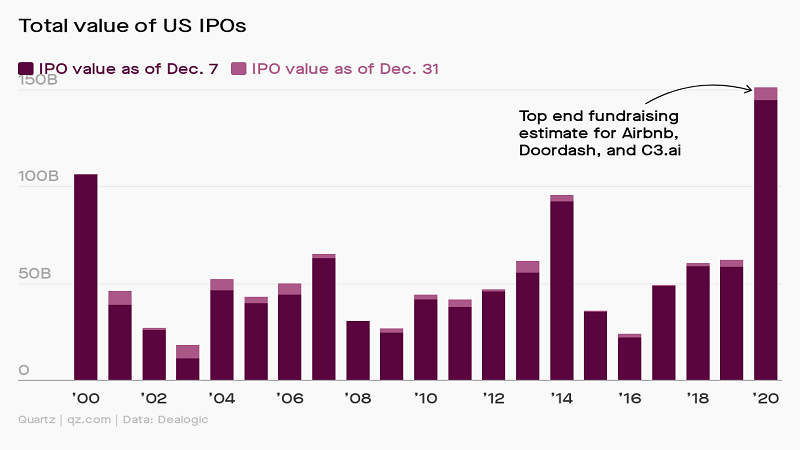
Take this plot: the IPOs of US companies. Who will believe that 2020 is the best IPO year since 2000? These companies are not really the ones working the hardest, but across most metrics, they are the ones which have figured out how to capture value even in the midst of a pandemic.

It is the same redesign in the Nigerian banking sector; they continue to hit record profits even in a dislocated economy. If you think it is easy, you better ask the insurance sector and others why they have not executed a similar playbook.

Think of your Value Capture Strategy; it is not an automatic thing in modern markets.

WhatsApp Introduces Cart Feature to its Business as DoorDash Aims to Raise $3.4bn in IPO

0

From WhatsApp Pay to catalog and now a shopping cart, Facebook is building a huge online market with the instant message apps that are gradually getting all the features of online stores.

The social media behemoth has announced the launch of shopping carts to WhatsApp, a move that came weeks after it introduced catalog to the market side of its instant messaging apps.

“Starting today, we’re excited to bring carts to WhatsApp. Carts are great when messaging businesses that typically sell multiple items at once, like a local restaurant or clothing store. With carts, people can browse a catalog, select multiple products and send the order as one message to the business. This will make it simpler for businesses to keep track of order inquiries, manage requests from customers and close sales,” the company said in a statement.

Just like in other online stores, the cart helps you to reserve items when you visit businesses you plan to order from. You only have to tap the shopping button next to their name, and select the items you want to buy when the catalogue opens, then tap “add to Cart”. You can repeat the process until you get all the products you need. You then can review and edit the contents of the cart before sending it to the business via a WhatsApp message.

Facebook rolled out the WhatsApp cart feature yesterday around the world, signaling preparation for anticipated Christmas season’s business boom.

The introduction of catalogs earlier as a WhatsApp feature, where people can easily see the options available, and companies have the opportunity to organize their chats around specific articles, spurred the need for the cart.

On the other news, DoorDash sets shares in its initial public offering at $102 per share, to raise $3.37 billion, the company announced on Tuesday.

The IPO puts DoorDash’s valuation at around $38 billion, which is more than double of its valuation of $16 billion during a private fundraising round it had in June.

The startup was founded in 2013 and has the backing of Vision Fund, a subsidiary of Japanese tech conglomerate SoftBank Group, venture capital firm Sequoia Capital and sovereign wealth fund Government of Singapore Investment Corp.

It has been a race to survive in the US food delivery market, but surge in demand due to pandemic restrictions spurred growth that UberEats, Grubhub and Postmates have also benefited from.

DoorDash is the largest US food delivery company for restaurants, and has aimed to sell 33 million shares at $90 to $95 per share according to its filing. It had earlier targeted a price range of between $75 and $85. JP Morgan and Goldman Sachs will underwrite the offering.

In a pandemic defying move, the food delivery company joins other Silicon big names like Palantir Technologies Inc and Snowflakes Inc, in issuing blockbuster IPOs.

DoorDash said its Q3 revenue reached $879 million, a significant record compared to the $239 million it recorded in the same period last year. The company also posted a loss of $43 million after reporting its first quarterly profit of $23 million in the second quarter.

Government stimulus packages and hope for vaccines cleared the path for DoorDash and other tech companies’ boosted sales during the last quarters of the year to spike their revenue.

The San Francisco-based company was among the tech companies that have witnessed revenue boom from the pandemic. DoorDash has more than 18 million customers and one million drivers, and has recently expanded beyond food deliveries into groceries, pet food and convenience store items.

DoorDash will trade on the New York Stock Exchange under the ticker “Dash.” The company is poised to become the highest valued food-delivery service when it debuts.

It joins the likes of Airbnb, Wish-parent ContextLogic among others aiming to drive the biggest trading in the NYSE for the month of December.

When I Told Uber To Exit Self-Driving Business in Aug 2018; It Just Did.

0

Finally, Uber is exiting self-driving business. In Aug 2018, I wrote that Uber made a very bad mistake getting into that sector. There is no material leverageable benefit for Uber to be making self-driving cars, purely by looking at the redesigns which mobile internet has brought into the world. The greatest empires of today control demand, Uber was there. Wasting efforts on controlling supply was a mistake.

Of course, Uber has just done the right thing: exiting self-driving car business. It ought to have listened years ago, and saved $billions it put in that unnecessary detour.

Read that Aug 2018 piece again.

Uber Should Exit Self-Driving Business

The Nice Uber Playbook On Selling Its Autonomous Vehicle Unit

0

Uber is selling its self-driving car division to Aurora, and that is a good playbook. While the primary motivation may be finding a path to sustained profitability for the ride-hailing company, the decision is the right call. Uber is an aggregator and aggregators win by controlling demand, not supply. In other words, locking the demand (i.e. riders) will make Uber a natural partner for many self-driving brands in the world. This is a fundamental redesign which mobile internet has brought to business: controlling supply does not take you far if you have no way of controlling demand.

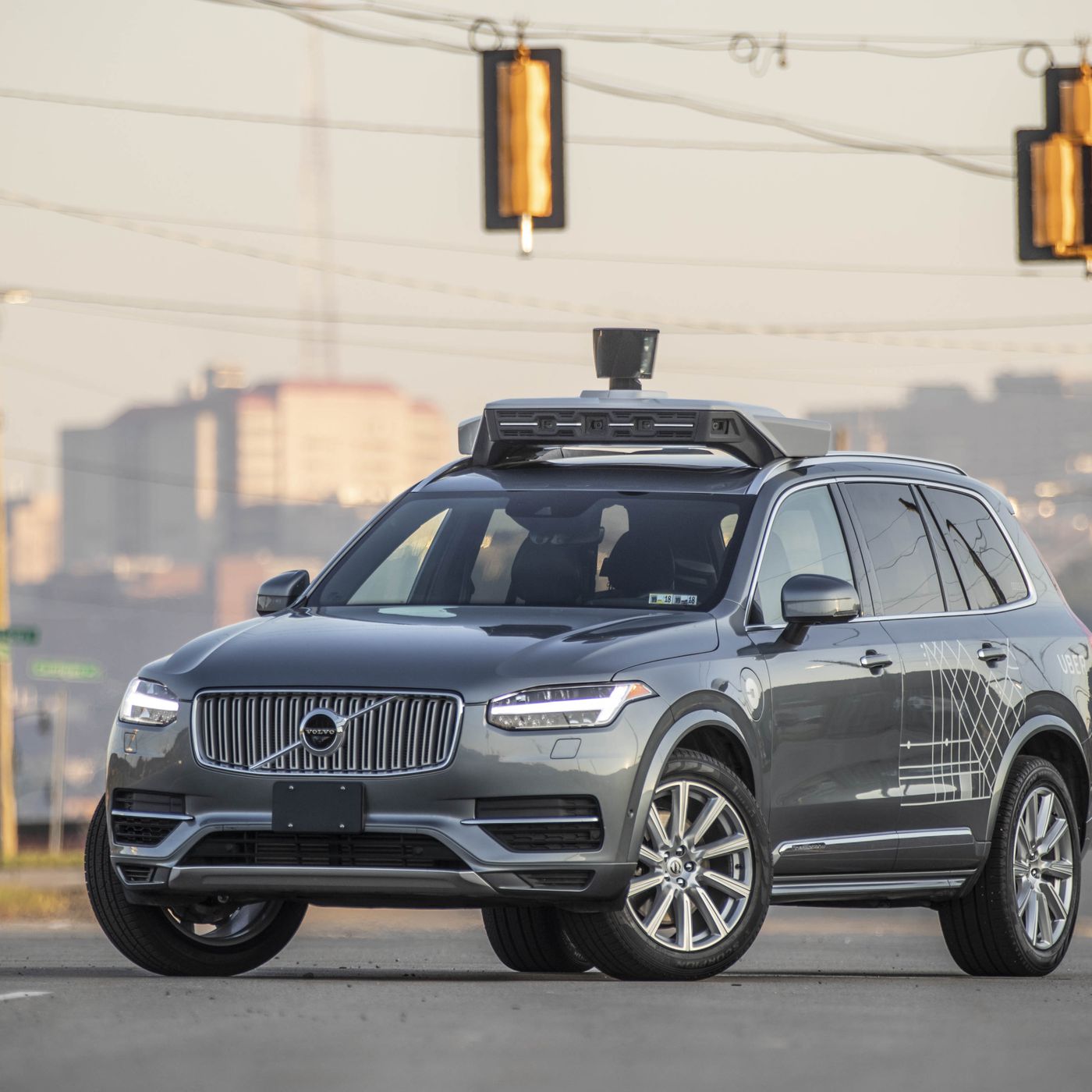
Uber in a surprising move is selling its self-driving car unit, Uber Advanced Technologies Group (ATG), to self-driving car startup Aurora, according to a statement made by the company on Monday.

The ridesharing company said the move would accelerate its goal to achieve “profitability” amidst the setbacks of COVID-19. In an era when autonomous vehicles are becoming a thing, Uber’s move to sell ATG and invest in Aurora has been borne out of a perceived future where driverless vehicles become the new normal.

Last year, ATG raised $1 billion from many investors including Toyota and Softbank at a valuation of $7.25 billion, but its valuation has since plunged.

Reuters reported that Uber is also investing $400 million in Aurora, in a deal that valued Aurora at $10 billion according to sources. Uber will hold about 26% ownership interest in Aurora on a fully diluted basis, according to the company’s filing statement.

See it this way: Uber will not lose much if suddenly autonomous cars become ubiquitous, disintermediating drivers, since the owners of these car firms must still need access to demand. Today, Uber has the demand, and would become a natural partner to any brand that wins. Building and wasting money building that supply offers only a marginal strategic benefit.

In August 2018, I wrote on a piece titled “Ube Should Exit Self-Driving Business” thus: “But Uber made a very poor strategic decision many years ago: getting into self-driving business.  Sure, Uber’s major cost element is drivers, and removing drivers will improve its margins. But that argument does not account for the fact that Uber is not the right company to bring to fruition the generation-shaping technology leap of autonomous vehicles…Because it has the largest platforms, these entities will gladly consider Uber whenever the time arrives”

By pushing R&D heavy lifting work to Aurora Industries, Uber can position itself as a platform for any brand to party with. If Tesla is better, Uber will be there. If Toyota, that is it. Indeed, the worst thing that would happen in the sector is that there would not be drivers. But that does not mean there would not be demand (riders). Today, Uber holds those riders and it easily work with any brand.

And just in case, Uber is investing in Aurora – and that seals a good call: head, it wins; tail, it also survives.

Baba Dey Online: Univasa Develops Ride-hailing App to Help Lagos Yellow Taxis Stay in Business

0
Lagos Yellow Cab

Around the world, the emergence of ride-hailing companies has posed a threat to traditional taxi business. As a result, there is growing apathy between local taxi operators and their app-based counterparts, whose application of technology have given an edge over traditional taxis in the contested markets.

From the U.S. to the UK, local taxi operators have protested over the crippling impact the innovative app-based taxis have on their means of livelihood, as commuters prefer the ease the technology-based model offers.

Nigerian cab operators have also had their full share of the declining patronage, and now they are going digital in a bid to regain their market share.

As part of the effort to achieve this, an ICT firm, Univasa Nigeria Ltd has developed an app to enable local taxis in Lagos to have an online presence where they can be booked like Uber, Bolt and other ride-hailing companies operating in Nigeria.

The Cable reported that the platform was unveiled in an event held on Monday by Univasa Nigeria Ltd, in collaboration with the Lagos State Taxi Drivers and cab Operators Association (LSTDCOA), in Oshodi Lagos at the Association’s headquarters.

The app named “Baba dey online” is available for downloads in the iOS and Android Play stores.

Univasa Chief Executive Officer Ben Adeniyi said it was developed to end the discrimination against local taxis and help them win customers.

“Today, we are officially launching BabaDeyOnline for users to download on iOS and Google Playstore. This innovation will ease the stress of those who visit the taxi parks to order rides. We are leveraging on the perspective of the public to name this #BabaDeyOnline,” he said, adding that the Univasa app will help people to book Lagos taxis from the comfort of their homes.

It marks the second time the approach is being adopted in addressing the disparity that ride-hailing innovation has created in Lagos cab market, but there are a lot of bottlenecks to be cleared for the Baba Dey Online app to be a success.

Unlike app-based cabs, the Lagos yellow taxis operate only through their respective parks, making it difficult for them to operate in the same level with tech-based cabs who have unlimited space to operate in.

The LSTDCOA has 283 parks and 16 branches across Lagos, but yellow taxis are forbidden in estates, airports and many other affluent places in the State, limiting their opportunity even to cash in on the newly developed Baba Dey Online app.

In response to the development, the president of LSTDCOA Omolekan Taiwo said the Lagos State Government needs to accord yellow taxi operators a level playing ground as they move to embrace technology and close the existing gap created by lack of innovation in their operation.

“Univasa taxi apps came onboard at the right time, since technology is now the ultimate; we are ready to embrace Univasa taxi apps for all our drivers and the general public for usage. We are going to bring back all our members that have left the association due to lack of technology-based apps into our folds.

“However, I want to use this medium to appeal to the Lagos State Government through the Ministry of Transportation to give all the taxi app users a level playing grounds by allowing the yellow taxi access into all estates in Lagos State,” he said.

Although besides this, there are other factors that will impact how commuters embrace the yellow taxi app, including trip fares and vehicle conditions, that need to be addressed. Adeniyi said the operators will need to be trained firstly on how to use the app, which functions the same way as Uber and Bolt driver and rider apps. He added that there is ongoing effort to eliminate the stigma that has limited yellow taxis’ operation in the state.

Uber and Bolt became public enemy number one to local taxi operators in Lagos as they eventually became the preferred choice of commuters in the state due to their easy online-booking technology and the leisure they offer. Calls by the taxi union to get the Lagos State Government to ban the ride-hailing companies failed, leaving it with no option than to embrace the technology that has kept Uber and Bolt winning.

In response to the LSTDCOA’s SOS call, the state government had in March, through the Ministry of Transportation, launched the Eko Cab app, in a bid to digitalize local taxi operations in the state and place them in parity with their online-based rivals.

There has been so far, insignificant success from the move, underlining the fact that it requires more than apps to accelerate digital transport systems and emphasizing the need for stakeholders to step in and fill the innovative gap.

Univasa’s Baba Dey Online app may be what the Lagos yellow taxis need to stay in business, but it will take much more than the app’s launch to make it work.