DD
MM
YYYY

PAGES

DD
MM
YYYY

spot_img

PAGES

Home Blog Page 6031

Tencent to Invest in Udemy as the Online Institute Plans IPO

0

Tencent Holdings Ltd is leading other investors in a funding round that puts the value of the online education startup Udemy Inc. at more than $3 billion, Bloomberg reported, citing sources.

The development is coming at a time when Udemy is contemplating pursuing an initial public offering, according to people familiar with the matter.

It is not clear how much Tencent is investing in the San Francisco-based startup, but Udemy said on Wednesday that it has raised $50 million in a round to put the company’s value at $3.25 billion before the new round of investment.

According to regulatory filing in Delaware, Udemy is looking to raise $100 million in new funding. It is not established if the new round of funding lives up to the expectation.

However, Tencent’s involvement in the fundraising underscores its liberty where its Chinese counterparts are under restriction. Except for its super app, WeChat, which recently came under the US radar, Tecent has more to worry about in China than in the United States.

In the US, Huawei is banned while TikTok is fighting to stay in business. Outside the US, they are operating under serious scrutiny from other governments, under pressure from Washington, and lack the freedom to invest in American companies.

Last year, the Committee on Foreign Investment in the United States (CFIUS), a US government panel that reviews deals for potential national security risks, revisited ByteDance acquisition of Musical.ly (TikTok) in 2017.

The review ushered in a new wave of scrutiny that spurred Washington to issue the 45 days divestment ultimatum to the short video app. But it also became contagious, touching WeChat, which has become popular among Americans.

The CFIU had unanimously recommended that president Trump take the action in order to “protect US users from exploitation of their personal data.”

Nevertheless, it was a sequel of Huawei’s ordeal extended to both WeChat and TikTok, although with a peck of lifeline – the court rulings stopping the US government from forcing a sale. The Chinese telecom giant, unlike its Chinese siblings, has had it hard from the Trump administration’s national security punchline, and it is barely surviving.

While Huawei and TikTok’s parent company, ByteDance, battled to stay alive, Tecent was roaming around the world with enviable freedom, investing in whatever it deems fit.

Beyond its core gaming and social media empire, Tencent invests in China and increasingly outside it, grooming upstarts in everything from supplying fresh vegetables to building electric vehicles. Tencent has investment in a range of US companies, including Epic games, Reddit, Warner Music Group Corp. and Activision Blizzard, the report said.

In the era of COVID-19, when virtual life has become the new normal, Tencent saw an investment opportunity in online studies. As the pandemic shut conventional schools, Udemy, Coursera, Hubspot etc became top destination for students, opening an array of investments that Tencent is cashing in on.

Udemy Chief Executive Officer Gregg Coccari said the pandemic generated “five years of worth of growth in five months” for Udemy consumer business.

Udemy, like Coursera, offers professional, technical and personal development courses, as well as an array of classes like cybersecurity and guitar. Data from its website said it has enrolled 35 million in more than 130,000 online courses.

In China, Tecent is pushing its in-house learning platform through competition with online learning platforms TAL Education Group, ByteDance and NetEase while investing in startups such as Yuanfudao and VIPKid offering after-school tutoring.

Tencent’s investment in Udemy represents a larger interest in online education outside China. According to Bloomberg, Tecent’s largest investors include Naspers Ltd., the South African parent company of Prosus, which is also an Udemy backer. With the new round of funds, Udemy, which was earlier in the year valued at $2 billion, will become one of the most valuable education technologies in the world.

While the new round of funding puts Udemy closer to IPO, the educational institute said there is no set date yet.

“We’re of course preparing the company for that eventuality if the board so Chooses, we haven’t taken any steps,” Coccari said.

He added that Udemy has millions of dollars and there have been inquiries from blank-check companies, which allow a business to public through a merger rather than an IPO, but no decision has been taken yet.

“It was all inbound interest, nothing that we were chasing at all. The board will consider any kind of options that we have in the future,” Coccari said.
The Central Bank of Nigeria (CBN) Has Failed The Naira!

13
Nigeria Naira US Dollar

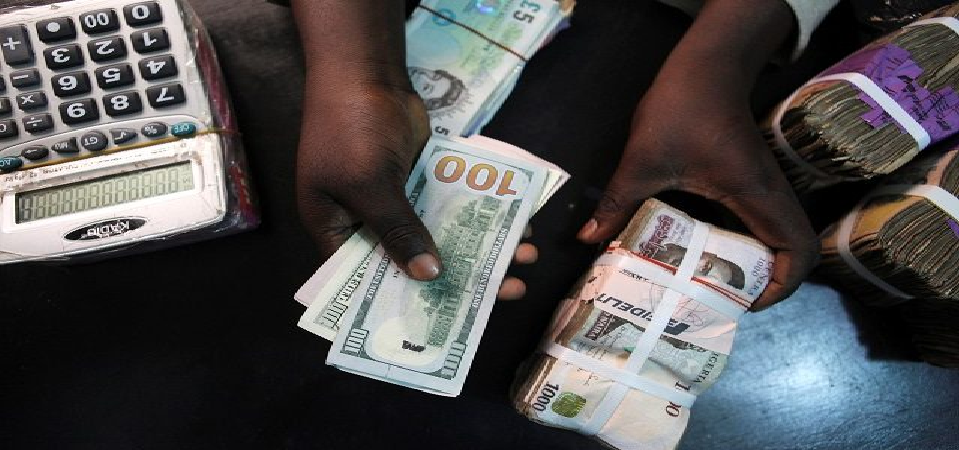
It is very painful: the Central Bank of Nigeria has failed the naira. This Bloomberg piece explains it all. Since 2017, the naira has been unlucky, not because of crude oil prices, but due to unhinged experimentations. You export something, CBN pays you N385 per dollar but when you want to import, you have to source it in the black market at N460. How can a business operate like that?

“How do you tell an exporter to export and you are giving him 386 per dollar? Is that fair to the exporter?” said Muda Yusuf, director general for Lagos chamber of Commerce and Industry.

So, when CBN put one of those thoughtless rules, everyone left the formal channel for exports and with that, pressure mounted on the Naira sending it close to N500 per dollar. I am happy they have backtracked.

Do we  test these policies in economic models before pushing them out? A secondary school economics student would have picked holes in some of these policies.

Nigeria’s central bank has backtracked on a rule that banned companies from sourcing imports from third parties other than manufacturers after the naira extended losses in the black market due to rising demand.

A circular by the regulator to banks this week explained that importers can open bills of collection in favor of agents and third parties to import goods, a softening of restrictions introduced in August.

The directive forced importers to redirect their dollar demand to the parallel market, resulting in a weakening of the local unit to a three-month low of 480 naira to the dollar on Friday. The naira traded at 385.50 to the greenback on the importer and exporter window as of 4:22 p.m. in Lagos, with the spot rate at 383.

Sliding Further

Insufficient dollar supply pressures the naira to weakest in three months

The widening gap in the official and parallel is rates is being fueled by individuals and companies diverting export proceeds and their remittances away from approved channels. The central bank has said banks should report any exporter caught in the act.

“How do you tell an exporter to export and you are giving him 386 per dollar? Is that fair to the exporter?” said Muda Yusuf, director general for Lagos chamber of Commerce and Industry.

There is a need to allow the foreign-exchange market to function properly to attract more inflows of foreign exchange to avoid transactions being driven underground, Yusuf said.

The previous central bank directive hurt businesses, Bala Idris, import manager for snacks and cereal-maker Nasco Group said. It led to his firm cutting production capacity and reducing working hours by 10% due to increase in the local prices of raw materials after it was unable to import.

The central bank has to allow for a more flexible and practical exchange rate to improve liquidity, Idris said. Authorities should allow the naira to change hands at 450 to 480 per dollar because “that will motivate exporters to bring all their inflow into the market for genuine importers.”

Source: Bloomberg

The Biggest Problem in Nigeria – The Gyration of Naira is Now A National Security Threat

The Legends of Pioneering Entrepreneurs

1

Nothing is really boring in the world of business. What is boring is lack of pioneering entrepreneurs who can unlock new ordinances in markets. Just think of the insurance sector in Nigeria, and you will wish when it would have something like the new generation bank inflection point which happened in the early 1990s. Yes, a time when a new domain of innovation will make insurance amazing. Banks were boring until the new generation banks came and turned them around.

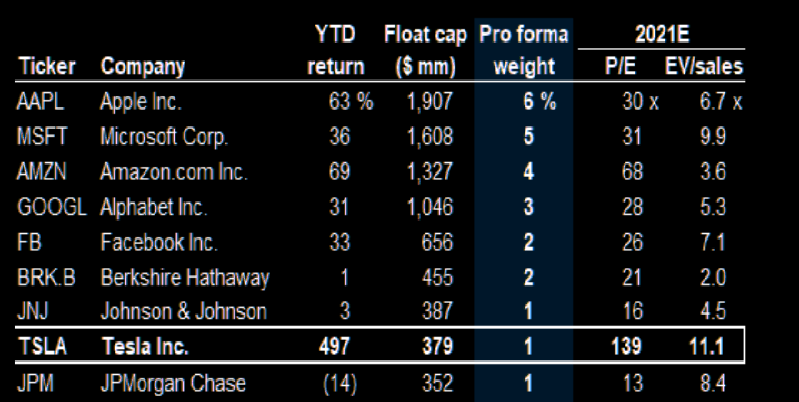
That takes me to the global automobile sector. Today, the founder of Tesla, Elon Musk, could buy Porsche, Ferrari, Renault, Peugeot, Aston Martin and Fiat with the portion of Tesla he controls; I did not say Tesla could afford. I meant, Elon’s portion could buy off these companies! Note: these EU cars have rallied close to 100% recently. 

Today, Tesla belongs to the legends, 8th in the league.

  • Market caps 
  • TSLA $473bn
  • Volkswagen $80bn
  • Daimler $60bn
  • BMW $47bn
  • Ferrari $35bn
  • Fiat $20bn
  • Porsche $17bn
  • PSA $17bn
  • Renault $9bn
  • Global:
  • Toyota $197bn
  • GM $61bn
  • Ford $35bn

The Size Of The Opportunities

Create a Perception Layer in Your Business

1

Perception Layer examines the nexus of taking customers to a new dimension of market relationship; Apple offers a very good example.  If you receive N50,000 into your fintech wallet, you expect it to take a small part of that money (say N900). But if your bank does it, you will get annoyed and complain. That perception is the genius in fintechs as they have created a new layer, making it clear that you cannot get that service for free. It was that construct that made Paystack to be valued more than FCMB, Wema Bank and Unity Bank combined. 

The new generation banks did the same thing to the old generation banks, in Nigeria, in the 1990s when they introduced COT (commission on turnover). In COT, you are charged a fee whenever you withdraw money from your bank account. The new banks were able to condition the minds of customers that COT was necessary to offer their superior and faster services. Yes, the integrated banking system which made banking services agnostic of the specific branch where the account was opened changed the minds of customers; COT was a fair tradeoff for customers. Largely, an introduction of a new basis of competition, orthogonal to the status quo, opened a new revenue vista at scale.

Simply, customers are open to pay for things. But it comes down to your ability to create a perception layer in their minds through superior service. Until you do that, your ability to capture extra value will remain muted.

We Have Some Graduations Coming Next Week: Congrats, WeForGood Team

0

At the Tekedia Institute, we have more than a dozen companies co-creating and co-learning through our facilitation on their innovation and growth processes. We begin the process by sending the management a questionnaire. They complete it and return, and using that insight gathered, we design a course for that company. Then, we run courses, videos, assignments with the company’s staff and partners, focusing at the core on why they came to us.

This is an evolving new model of education: co-learning with staff and partners alongside. They are the experts on what they do, but we are thought-leaders on the frameworks and models. We infuse our constructs and deepen their perspectives and capabilities. Ask for our brochure on this service

We call this Symphonic Innovation:  innovation that is not domain-specific, but is anchored on a unified and harmonious approach in the deployment of business processes to accelerate productivity gains and cushion competitiveness. It is the most impactful of our mission in the Institute, and one that has put the 7 degrees I have earned in life, across different fields into a greater use. Simply, I understand many things through that variety in education.

Next week, one of those firms, we can share publicly, will graduate dozens of its partners. We want to wish We For Good members and its founder  Temitayo Ade-Peters abundance in the future of doing good. A Texas-based based firm is also graduating its members on African insights; we wish them open doors in Africa.

Learn more about Tekedia Mini-MBA for Corporates here https://school.tekedia.com/course/corporates/