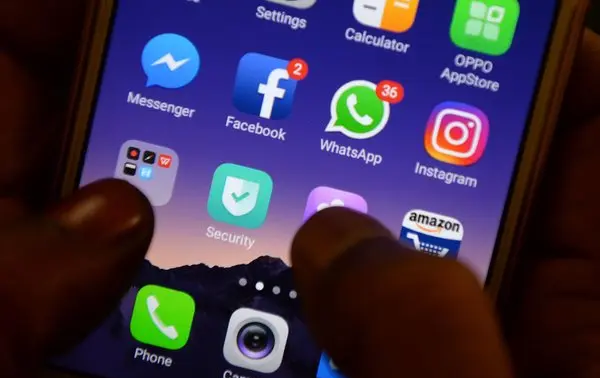
A new payment era begins and a new order out of the beautiful America. Yes, the Indian government has approved WhatsApp Pay, a secure payment system used in making money transfers on the WhatsApp platform, the company announced.
The Indian government has approved WhatsApp Pay, a secure payment system used in making money transfers on the WhatsApp platform, the company announced.
“Starting today, people across India will be able to send money through WhatsApp. This secure payments experience makes transferring money just as easy as sending a message,” WhatsApp said in a blog post. “People can safely send money to a family member or share the cost of good from a distance without having to exchange cash in person or going to a local bank.”
The payment feature was designed in partnership with the National Payments Corporation of India (NPCI) using the Unified Payment Interface (UPI), an India-first, real-time payment system that enables transactions with over 160 supported banks, according to a statement from WhatsApp.
The instant message app explained that it is necessary to have a bank account and debit card in India to use the WhatsApp Pay feature, which can be downloaded in the Google and Apple stores.
This an asymmetric perturbation in emerging market payment systems. Expect the valuation of most paytech startups to drop in India. Simply, if you belong to a planet, you cannot compete against that planet. Facebook’s WhatsApp is a planet and most payment startups in India will struggle.
With Brazil done, India done, I expect Nigeria next in the next coming months. It is a convergence: pick the main countries in each of these continents and then, out of them, unify the ecosystems. Hail the king social, hail a new feather – payment. Mark Zuckerberg begins a new ascension with what he has always wanted: moving money in emerging markets. He is largely close to become the modern operating system.
Mark Zuckerberg is now sitting on the throne: he has the moat with scale, and has taken the castle. It is going as predicted in 2018.
Google Tez will likely lead the person-to-merchant segment while WhatsApp would take the person-to-person. Each would continue to find how to enter each other’s territories.
The challenge for Nigerian banks would emerge if people begin to warehouse their funds within the WhatsApp and Tez wallets to avoid moving them into their bank accounts. This is important as Nigerians pay fees when they withdraw their funds in their bank accounts [remember the stamp duty on digital transfers]. So, reducing that bank exposure would be strategic for many merchants. If WhatsApp and Google Tez provide the platforms to do banking with the big fees charged by banks, many would go for them.




 Online unlocks sales opportunities