DD
MM
YYYY

PAGES

DD
MM
YYYY

spot_img

PAGES

Home Blog Page 6041

Africa Missing as Asia, Europe and North America Grab their Share of $802bn EV Economy

0

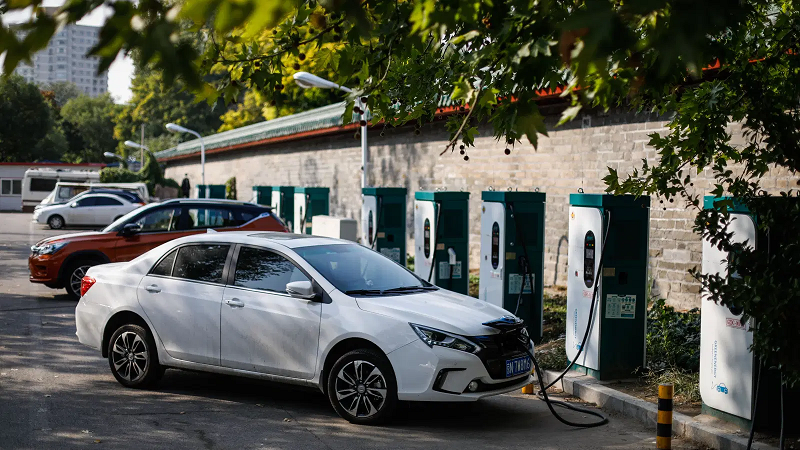
As environmentalists continue the push for carbon-free environments, vehicle manufacturers have been responding by delving into environmental friendly electric vehicles production.

But as the push garners momentum, countries and companies, scattered across continents, are moving faster than others, not only to secure the environment, but also to secure their share from the $802 billion emerging market.

Nidec, a Japanese automaker is planning to set up a 200 billion yen ($1.9 billion) Electric Vehicle (EV) factory in Serbia.

The Nikkei news tabloid reported that Nidec founder, Shigenobu Nagamori wants a 35% market share for energy-saving electric motor technology known as e-axle or e-drive by 2030. The technology is expected to yield $30 billion growth a year, and make electric vehicles more affordable.

The factory is expected to deliver annual production of between 200,000 and 300,000 units when it opens in 2023, according to Nikkei.
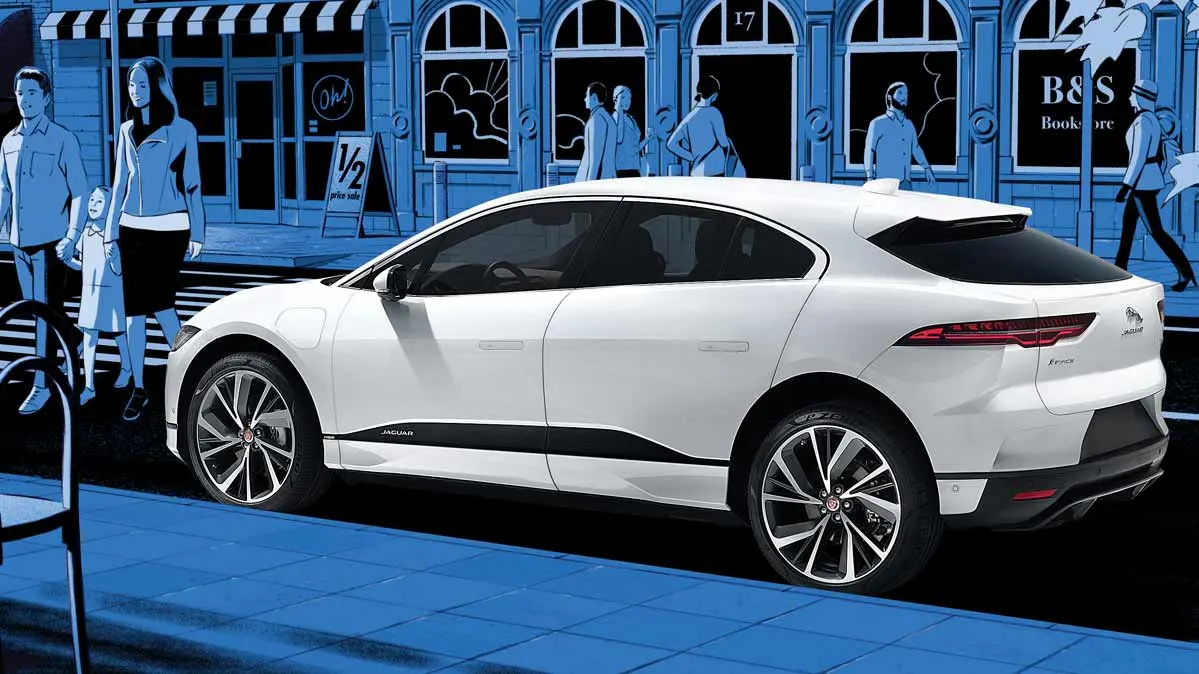
The International Council on Clean Transportation in Washington said carbon dioxide from vehicles accounts for 17% of global carbon dioxide emissions. A situation which has in recent times, spurred the push for electric vehicles.

However, Europe and Asia have become top destinations for EV carmakers seeking market shares.

In 2019, leading EV manufacturer, Tesla, unveiled its Shanghai China plant, with a 250,000 production target in the South Asian country. China has become a huge market for New Energy Vehicle (NEV), and the American company is poised to take advantage of it.

In 2018, 1.3 million NEV were sold in China, coupled with Chinese government’s incentives, it opened ways for further interest. The Chinese government introduced a purchase tax exemption to encourage consumers to embrace EVs coming from plants in China.

General Motors (GM) is another American company winning big in the Chinese market. In August, Tesla and GM sold nearly a total 27,000 cars. Tesla sold 11,000 of its made-in-China Model 3 sedans while GM sold 15, 000 of its micro EVs.

There has been consecutive month-on-month increase since January to affirm the endearing progress of the American EV companies in China that others in Europe are planning to step into the Chinese market. So far, Tesla has over 69,178 deliveries of vehicles from its Shanghai factory this year, despite the strains of COVID-19.

Volkswagen is planning to launch almost 70 new electric vehicles in the next 10 years, which will yield 22 million cars. The German company said the projected number of vehicles will be built in its different electric platforms, which includes a plant it is planning to establish in China.

The plant, which is to be situated in Shanghai’s Anting town, will have the output capacity of 300,000 units per year, with an investment cost of 17 billion yuan ($2.5bn).

Volkswagen’s German rival, BMW, is preparing to export its electric iX3 model, produced at a joint venture plant in Shenyang, China, to Europe.

With its giant market size, China is home to over 86 electric vehicle companies.

While China seems to be the ultimate destination for EVs for now, Nidec’s move to Serbia, and Tesla’s recent plan to establish plants in Europe, following move to export vehicles from China to Europe, underscores the struggle of big players in the industry to grab larger shares in the market that its future appears to be hanging in Asia and Europe.

The German government has begun to follow the steps of China by introducing subsidies up to 9,000 euros for buyers of electric cars, including Tesla’s Model 3. The incentive is part of the government’s larger plan to attract electric vehicle manufacturers as the call for cleaner energy gets louder.

While the United States boasts of Tesla and some other upcoming EV manufacturers, its taxes and cost of production have spooked carmakers from Europe and Asia.

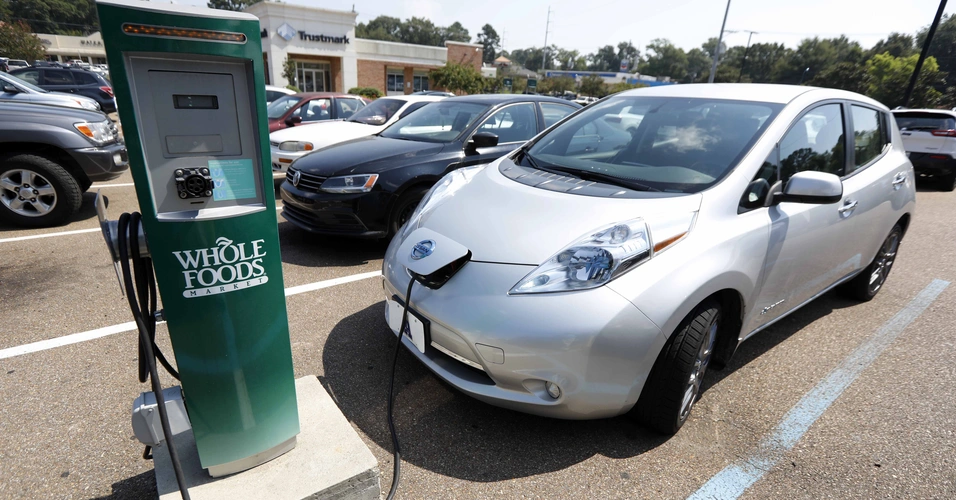
Unfortunately, in the electric vehicle market, Africa is not heard of. Infrastructural deficiencies, such as poor electricity is a deterrent for consumers. Also, the continent is running a non-tech-based economy that has no regard for the quest for a carbon-dioxide-free environment.
Nigeria, Africa’s largest economy has a 90% oil-based GDP, and has been kicking against every attempt to eliminate combustible vehicles.

As the number of electric vehicles increases around the world, the economic impact increases too. So far, Asia and Europe are leading the pace of the environmental friendly industry that is fast changing the tide in the energy ecosystem.

The global electric vehicle market was valued at $162.34 billion in 2019, and is projected to reach $802.81 by 2027, according to data from Allied Market Research.

Asia-pacific is the highest revenue contributor accounting for $84.84 billion in 2019, and is expected to reach $357.81 billion in 2027. North America is expected to have revenue of $194.20 billion by 2027.

The AMR said Asia-pacific and Europe had a combined 78% share in 2019, with former accounting for 52.3% share. North America and Asia are expected to see improved Compound Annual Growth Rates (CAGRs) of 27.5% and 25.3% respectively. The cumulative of these segments was 40.1% in 2019, and it is anticipated to reach 51.0% in 2027.

There is expectation of increased market share in Europe due to government policies supporting environmental calls to phase out combustible vehicles. Countries like France have already set a 2050 target for total elimination of vehicle emission.
The PDT of Online Content Business

1

In any online content business, two things are very critical: quality and focus. That is so as supply remains unbounded which means to monetize anything, only things of value sell. Usually, things of monetizable value on the web have elements of quality and seem niche.  Yes, personalized, differentiated and targeted (PDT) contents will find ways into the purses of customers because in this world, most things are already free. Where you cannot get the P, ensure at least that you have the D and T covered before putting a paywall on that content.

Content, to an extent, is commoditized. If you can find a free tutorial on Youtube or Khan Academy, why buy a subscription to an edtech platform that offers the same solution? The commodification of education is good for end-users and is often why startups have a freemium model as a customer acquisition strategy. To convert free users into paying subscribers, edtech startups need to offer differentiated and targeted content.

The Course Hero and Mystery Science deals show us that edtech businesses are hungry for personalized, targeted content. Course Hero’s acquisition of Symbolab was essentially a deal for more than a decade’s worth of data that captured which math questions students found hardest.

Just think about it, if you are looking for something online, you will see many options once you search on Google. Because of that abundance, you want to narrow to the specific one which meets your niche needs. Any product which can do that at high quality, defined under your context, makes the cut. This becomes exceedingly necessary when you plan to put a paywall in that online venture. Aggregators have aggregated the free contents and users have access to them, and to get them to pay for something related, a new level of value must be activated.

Under the aggregation construct, the companies that control the value are not usually the ones that created them. Google News and Facebook control news distribution in Nigeria than Guardian, ThisDay and others. Because the MNCs tech firms “own” the audience and the customers, the advertisers focus on them, hoping to reach the readers through them. Just like that, the news creators have been systematically sidelined as they earn lesser and lesser from their works. But the aggregators like Facebook and Google smile to the bank. The reason why this happens is because of the abundance which Internet makes possible. Everyone has access to more users but that does not correlate to more revenue because the money goes to people that can help simplify the experiences to the users who will not prefer to be visiting all the news site to get any information they want. They go to Google and search and then Google takes them to the website in Nigeria with the information. Advertisers understand the value created is now with Google which simplifies that process.

It is very possible that anything you are offering has a free version somewhere. The implication is that your capacity to meet specific niche needs, at high quality, is what people are paying for. It is hopeless pursuing a paid product vision online without a strategy of creating a differentiated product at high quality.

2020 Career Week Day 2

7

Notes: only the first 100 will be on Zoom. Others will connect via YouTube Live here. You can leave comments below and the moderator will still pick them. Links for Live Sessions Tue | 12 noon – 1pm  WAT| Nurturing Innovators & Career Planning – Nnenna Jacob-Ogogo – Tekedia Live | Zoom link Tue | 7pm – 8pm […]

To access this post, you must purchase Tekedia Mini-MBA (Feb 9 – May 2, 2026) | $170 or N120,000.

Meaning of “Freedom of Speech” to an Average Nigerian

0

In Nigeria, freedom of speech means different things to different people. But the most accepted meaning of the concept is, “allow me to say whatever it is that I have to say.” This does not imply that what the person is about to say is the truth or that it is healthy. It does not imply that the person’s speech will not destroy another person, or even a state. It does not imply that his message will not mislead others. All he cared about is that he should be free to express himself.

That aside, I noticed many unfavourable things about the way Nigerians exercise their freedom of speech. The first one is the “shut-up-let-me-say-something” approach. Don’t be too fast to say that the leaders are the ones that do this. Many of us, if not all, are guilty of this. We find people like this in all walks of life. Some people believe they have the sole authority to talk and hence, nobody else should do that. To this group of people, everybody else should be their listeners while they exercise the right to free expression.

The next approach is the “believe-what-I-say-or-you-face-the-mob” attitude. Just like the first approach, the people here see themselves as the authority and so every other person must swallow whatever is thrown their way. To them, their words are authority in themselves and so must never be challenged or questioned. These ones are easily found on social media and among some activists. Ndi Igbo kwenu! If you know, you know.

The third approach is the “you-must-not-speak-against-the-crowd” behaviour. I tested this hypothesis during the #ENDSARS protest and the ensuing violence and marvelled at how strong this approach is. Mark you, there is freedom of speech, but this approach and its adopters insist that your freedom of speech must be submitted to them. Hence, if you won’t join the crowd, then keep quiet so that you don’t get hurt. It is quite pathetic, anyway. A lot of people have lost their voices because they got swallowed up in the mob. This approach is the best for the manipulators of “herd-mentality”.

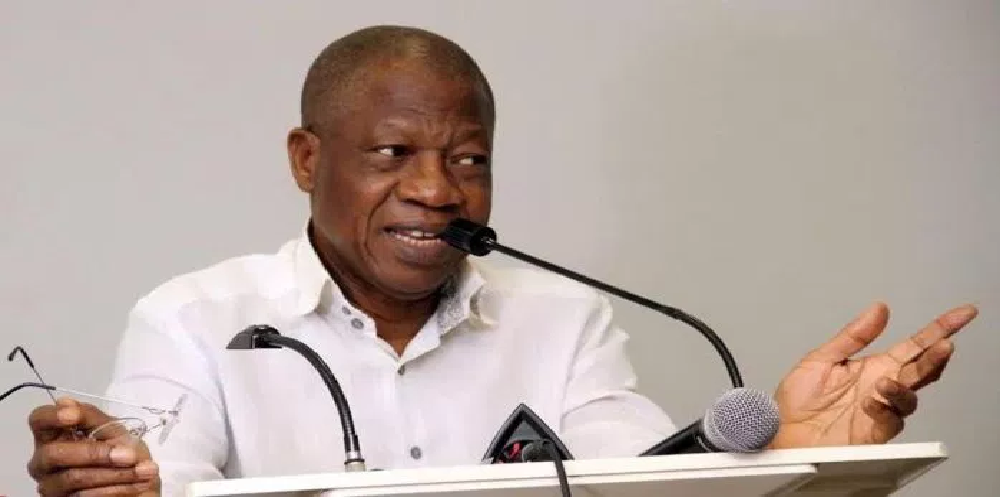
Lai Mohammed, Nigeria’s minister of information

Then, there is the approach used by those who do not really know the limit of “freedom of speech”. In this group, there are several sub-categories, which might not be discussed here. But I believe that those of us that practice them will locate ourselves and work on them. Now, among the sub-categories here, we have the “I-have-the-right-to-insult-you”, “I-am-free-to-slander”, and “I-can-spread-false-information” sub-approaches. These subgroups cut across different ages, genders, educational qualifications, races and what have you. The only group that is not captured here is the emotionally intelligent.

Honestly, this last major approach is the main message of this essay. The thing is becoming unbearable. People come out to spread lies against individuals and organisations and expect that nothing should be done about that. When the victim raises his voice to debunk the lies, he is told that “there is no smoke without fire”. If he takes it up legally, he would be told that he is being “too dramatic”. For reasons unknown, Nigerians derive joy in seeing others weep.

What about those that spread false information? Does freedom of speech includes spreading unverifiable information? Many people, including me, are victims of false information. A lot of people have been attacked and killed because of this. People have lost their jobs and sources of livelihood to this. And guess what, nobody is saying anything about it because it is considered normal in Nigeria.

The one of insulting people is already a norm in Naija. I mean, insult seems to be the current palm oil with which we eat words. When a person has a different view from yours, instead of tabling his argument, he will start and end with terms such as “oponu”, “imbecile”, “fool”, “dummy”, “idiot”, “werey”…please, fill in the rest. But you know what, a lot of people expect you to accept it. I mean, people think it is normal to call people names during arguments. I don’t know who to blame here because we, the English teachers, always made sure students understand how to be logical in their arguments without insulting their opponents. So where do these people learn how to throw insults without making senses?

I once said that Nigerians are not ready for freedom of speech and people reacted in ways that supported the claim. No one is trying to gag you, but you need to talk to yourself. There is no way you should expect everyone to see things your way because your views will definitely be limited to your own experiences. If the next person has something different to say, kindly listen and learn from it. But if your aim is to influence, then look for facts that will support your argument. Unknown to many people, being “oppressive” in exercising freedom of speech shows them in the negative. No one with valid points loses his cool.

But all in all, freedom of speech is not what many Nigerians think it is. It is time for us to go back to the drawing board and relearn how to express ourselves in the public. If your idea is not constructive, please keep it to yourself. And please remember, everyone has the right to contribute towards the betterment of the society.

Transsion Holdings (Tecno, Infinix, itel) Makes Part of Tekedia Mini-MBA Case Study Handbook

0

I invite you to plan to send your team members to Tekedia Mini-MBA. We will begin a new edition on Feb 8, 2021. Early registration has since started. Our goal is to nurture innovators and project champions. We are adding empirical learning in our program with case studies. Transsion Holdings, the makers of Tecno, Itel and Infinix, makes part of our case study handbook; the case is ready.

Innovators are learning at Tekedia Institute Institute. Register today and join.

Code Program
MINI Tekedia Mini-MBA costs US$140 (N50,000 naira) per person.
MINR Add extra (optional) $30 or N10,000 if you want us to review and provide feedback on your labs.
MINF Annual Package (includes 3 editions of MINI and optional 2 certificate courses) – $280 or N100,000.


These are some samples of companies and brands. Our goal is to hit 200