There are two options: rise to the mountaintop or fade into the valley. That is how the stock of Jumia will be as it reports quarterly earnings tomorrow in New York. I will be looking for three things: revenue growth, path to profitability and containment of burn rate. If Jumia delivers on those, the alpha moment will come. But if it fails, it would be ugly.
I hope it delivers because Jumia has added a GREAT mission on its double play strategy: open the logistics infrastructure to 3rd party players: “Put together, Jumia’s logistics arm has been exclusively available to vendors on its marketplace—until now. The company is opening up its logistics services to third party users across 11 countries in Africa”. The implication is huge: Jumia wants to carry other ecommerce companies on its back, for profit, of course. Do not take that playbook for granted because if the friction of logistics is eliminated, for some small ecommerce operators, they will scale.
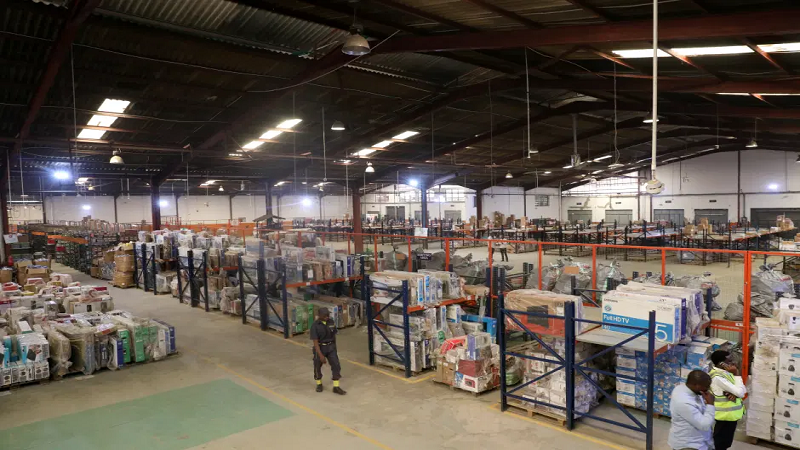
After eight years of iteration, Jumia’s delivery arm now consists of a network of over 300 courier partners and proprietary technology for tracking optimal delivery routes, inventory, and payments. It also includes over 110,000 sq. meters of warehouse space across the continent as well as a vast network of drop-off and pick-up stations that offer the company a wider offline presence. Fifteen months ago, Jumia partnered with Vivo Energy (owner of Engen and Shell-branded petrol stations across Africa) to set up pick-up stations at Vivo’s over 2,000 fuel station outlets.
Put together, Jumia’s logistics arm has been exclusively available to vendors on its marketplace—until now. The company is opening up its logistics services to third party users across 11 countries in Africa.
It’s a move that sees Jumia instantly become one of the biggest players in e-commerce logistics space across the continent. The company is also likely betting on quickly gaining traction by winning potential customers through its years of experience in logistics, from product handling to last mile delivery.
Logistics, adding gaming in JumiaPay, and JumiaPay itself, are components of the puzzle Jumia is working on as it looks for a path to sustained profitability. Tomorrow will determine how far it is on that trajectory.
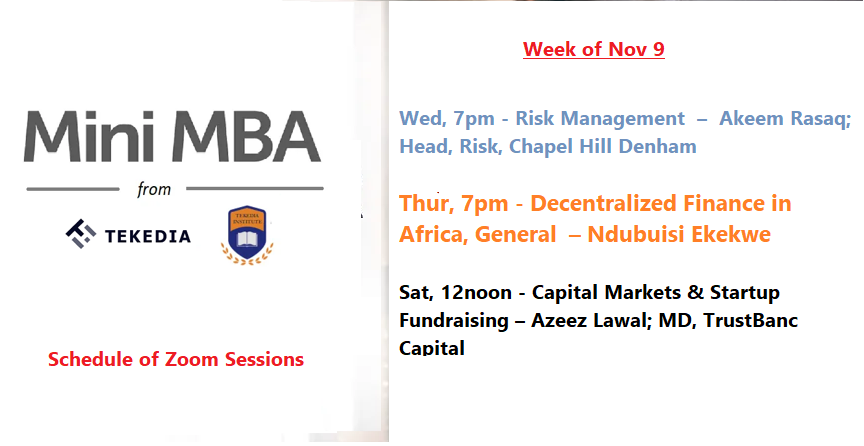
This is the schedule for this week’s Tekedia Mini-MBA Live zoom sessions. We will have three Faculty members; zoom links in the Board.
Wed | 7pm-8pm | Risk Management – Akeem Rasaq, BSc, MRM, MScFE Head of Risk Management, Chapel Hill Denham
Thursday | 7pm-8pm | Decentralized Finance in Africa, General – Prof. Ndubuisi Ekekwe, Lead Faculty, Tekedia Institute
Saturday | 12noon -1 pm | Capital Markets & Startup Fundraising – Azeez Lawal, Managing Director, TrustBanc Capital
As always everything is recorded for members who cannot attend the optional Live sessions. Have a profitable week ahead. Our next edition registration is ongoing.
Crime is a normal feature of social life. It is essential to note that crimes cannot be ended at once because crimes did not start suddenly. This has been one of the reasons for having crime prevention strategies, which range from laws to community services imposed on offenders. When laws are factored as crime prevention strategies, government wants people to know that committing crimes associated with the laws are grave sins against expected societal morality.
Despite this, crimes keep occurring every day. Over the years, social scientists and political researchers have not relent in investigating possible connection between crimes increase and crisis times. There are several global crises of which the most common and relatable one is economic and financial crises. Terrorism is also a global crisis as Nigeria and Syria and some other countries in the world has experienced terrorism. The current crisis in the world today is the health coronavirus crisis, which has killed thousands of people in the world. Crimes are usually much of a crisis because the country experiences instability and this affects the masses.
Crimes and Crises No Borders
In our experience, it is clear that crimes do not respect borders, whether during crisis times or not. No country is adequately immune against crimes during challenging times. We have seen how crimes keep evolving in developed countries as the world battling the ongoing coronavirus health crisis. Information has it that Venezuela (84.36), Papua New Guinea (80.04), South Africa (77.29), Afghanistan (76.97), Honduras (76.65), Trinidad and Tobago (72.43), Brazil (68.31), Guyana (68.15), El Salvador (67.84) and Syria (67.42) are the countries with highest crimes as at June, 2020.
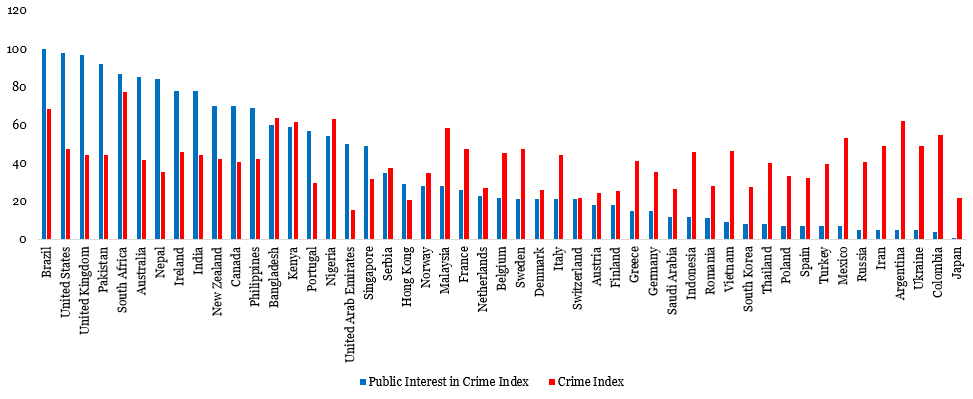
In spite of the United States of America’s clean position (47.7 out of 100 score), the country is still witnessing high rate of murder and other criminal cases. Though, information reveals that the country is getting it right in some areas of her crime control and prevention. Our analysis of the public interest in crimes in 2020 and crime index in 50 countries indicates that one unit of crime index facilitates nationals’ interest in crime by 31.9% [see Exhibit 1]. Looking at the 50 countries, there are mixed results regarding the degree of seeking knowledge about crime through the Internet. It is obvious that citizens’ interest in understanding crime through the Internet searches is higher than the crime index. On the other hand, the interest is lower in some countries [see Exhibit 1].
Exhibit 1: Public Interest in Crime [January-November, 2020] versus Crime Indexes in 2020
Source: World Population Review, 2020; Infoprations Analysis, 2020
Factors Induced Crimes
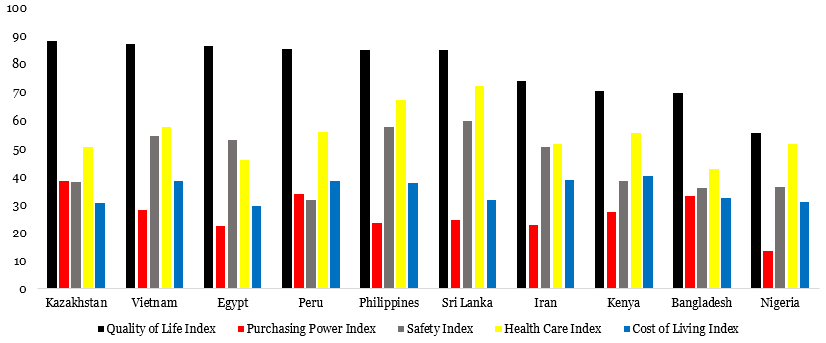
Research has shown that countries like Venezuela where there is corruption, economic war, hyper inflation and economic mismanagement, 96% of people live in poverty and 70% live in extreme poverty. Papua New Guinea is known for inequality, an increased rate of unemployment, which has resulted in poverty. In South Africa, crime researcher Eld red de Klerk concluded that poverty and poor service delivery directly impacts crime. Over the years, these three countries have been on record of countries with most crimes in the world as a result of a major factor which is poverty.
Thus, our analyst notes that the main cause of crimes can be linked to poverty [the state at which one lacks basic needs and amenities or finances to cater for oneself]. Unemployment is the second major reason for crimes which is also linked to poverty. It is crucial to note that being employed and underpaid equates to unemployment because in the long run, people may not find it worthy to take a certain job that adds little or no value to them except for people who live in extreme poverty. The unfair judicial system is also a cause of crime in the sense that those who do not serve justice become hostile and often engage in crime. The intake of hard drugs increases the crime rate because it allows one to do what they might not have done on a neutral ground. Other causes of crimes globally include illiteracy, religion, racism, peer pressure and so many more.
Exhibit 2: Indexes Driving Factors that Induced Crimes
Source: Numbeo, 2020; Infoprations Analysis, 2020
Preventing Crimes During Crises
Crimes can however be prevented by enlightening the masses of the disadvantages and consequences of crime before and ahead of crisis situations. This goes a very long way in curbing crimes in society. Laws made and not enforced are as useless as not having the laws. It is therefore very crucial that the law enforcement agencies ensure that these laws are not just made but enforced. Enforcement of the laws becomes more imperative during crises than before crises. This is hinged with the fact that people tend to commit crime more during challenging times, using disorderliness in the society and rationalised their behaviour within the context of opportunism.
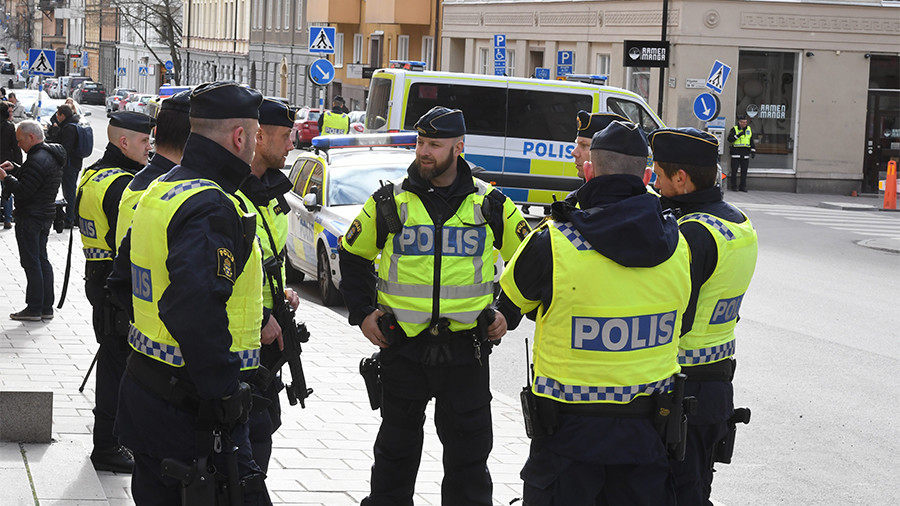
Reformation of the police force cannot be over emphasized. Apparently, in Nigeria and some countries like the United States of America, police brutality seems to be the order of the day, thereby leaving a lot of people harmed during crises.
Once people are living the way they ought to, less people will be interested in committing crimes. Education is very important in this present day and lack of education has never brought any positive impact. Hoodlums are most illiterates with no plans for their life.
Where there is a health crisis like the ongoing coronavirus, it is important that that good healthcare system is provided. Installation of public surveillance cameras as this will reduce to some extent those that want to engage in crimes because they are conscious of the fact that they are being watched.
Good People, Tekedia Institute is working on many books as we work to redesign the architecture of business education in Africa. This year, we are confident that more people will graduate from our program than any business training institution in continental Africa.
A new book is titled “Seizing Our Singularity Future”. This book is coming from our course titled “Exponential Technologies and Singularity” which was taught by experts from Transdisciplinary Agora for Future Discussions, Inc (TAFFD), Georgia, USA:
Edward Hudgins, PhD
Chogwu Abdul, PhD
Gennady Stolyarov II
Brent Ellman
Here is the cover design of the book; it would be out in the next coming weeks.
Notes: Welcome back after the Career Week Tekedia LIVE Wed | 7pm-8pm | Risk Management – Akeem Rasaq, Head of Risk Management, Chapel Hill Denham | Zoom link Thursday | 7pm-8pm | Decentralized Finance in Africa, General – Franklin Peters (CEO, Bitfxt); Ndubuisi Ekekwe | Zoom Link Saturday | 12noon -1 pm | Capital Markets […]