DD
MM
YYYY

PAGES

DD
MM
YYYY

spot_img

PAGES

Home Blog Page 6062

Notes from my Transsion Holdings Case Study

0

So, I spent this week writing a case study on Transsion Holdings, how they became a billion dollar business, and how they’ve been able to extract monetary value from a region that is extremely price sensitive, cares more about essential products (60% of household income is spent on food), and has taken more businesses under than the Titanic.

This note is a short snippet of what I learned from that project.

Let’s begin.

Innovate around your Market

There are two big fallacies about investing, or doing business in the Nigerian and by extension the African market:

One is that Africa is the next one billion. This is partly true, and partly false. Partly true in the sense that yes there is a market opportunity here (not for every product though), and partly false in the sense that if you do not understand and innovate around this market, it could quickly turn from the next 1billion, to the next 1billion lost.

If you’re trying to invest or build a business in Nigeria, and you come in here with the “this model worked in San Francisco, Berlin, Beijing, and even Johannesburg” gait, the results you will command will so surprise you, you’ll think the guys that did your market research were deliberately trying to sabotage you.

If you want to succeed in this market, you need to design a new playbook that’s built around understanding and innovating around this market. What you did in Silicon Valley will not work here. I repeat what you did in Silicon Valley will not work here.

Transsion’s glocalization strategy built around creating products that are meaningful to local markets has paid off extremely well, US$11 billion well as at the time of writing this article.

The second fallacy about doing business in Nigeria is that there are 200 million people in Nigeria, and that’s a huge market opportunity.

I’ll be frank with you, regardless of what you sell, your total addressable market is nowhere near 200million, and depending on what you sell, your total addressable market may not even be up to 100,000 users. There are a good number of trendy startups in Lagos whose total addressable market is nowhere close to 100,000 users, because although they have a meaningful solution, the number of people who both find value in their product, and can afford it are not as many as you think.

Get in at the right time, and ride the waves

Africa is behind. This isn’t supposed to be an insult, it’s a strategy. What is already normal and common place in the West is still likely nascent here. What too many people try to do is try and copy what worked there and try to blindly replicate it here.

As much as copying and pasting (with some modifications) can work, pasting at the right time is extremely key.

Interswitch got into the market at the right time, has built a solid moat (Nigeria practically runs on Interswitch), and started the push for a cash less society.

Transsion got into the market at the right time, has built a solid moat (that 40.6% market share in the African smartphone space isn’t child’s play), and has instigated the smartphone push in Nigeria.

There are opportunities in this market, but you need to know the right time to get in, and explore the market. A time will come when electric cars will be mainstream in Nigeria, but if you try to start that now (a market where even buying brand-new cars is an extremely niche market), you will sell your trouser. Literally.

Guard your Brand with all Diligence

When Transsion started in Nigeria with Tecno feature phones, we called them “Chinko” phones. If you’re into brand strategy, Transsion is a very good example of how a business can transform its brand from being known as a “Chinko” phone, and every other negative thing associated with being a Chinese brand to become the go-to mobile phone purchase for more than 40% of the people in an extremely price sensitive market.

Focus on the Essentials

Focus on what’s important. Leave your Silicon Valley playbook at the door. I repeat leave your Silicon Valley playbook at the door. From the onset, Transsion’s design challenge has been simple; how do we create products that are valuable to our users at the cheapest price as possible.

This is why Transsion products always carry specs they know are important to their users, and leave the remaining buzzword specs at the door. Don’t expect wireless charging, a 120Hz refresh rate screen, and any other advanced and really unnecessary smartphone spec in any of their products anytime soon. Those kinds of specs are nice to haves, expensive to execute, and buzzy. Definitely not Transsion’s style.

That’s what innovation really is. Making things simple. In this market, innovation isn’t about high tech buzzwords like AI, VR, and IoT, it’s about creating products that are meaningful to a good number of people, and that are either affordable to your users, or designed in such a way they pay for them without even knowing. Any other thing is wasting your time.

Become Omnipresent.

If you live in Lagos, Abuja, or Port Harcourt, and you haven’t seen a Tecno, Infinix or Itel banner or advert, I can guess your house address.

You probably live in a remote cave in some faraway place where there is no internet connectivity, no banking system, and maybe even the Gospel of Jesus Christ hasn’t gotten to. Unless you operate primarily in the B2B vertical, if you want to scale a business in Nigeria, people need to see you.

Nigeria has an audio money culture; what we don’t see doesn’t exist.

In my 23 years of being a Nigerian, I have never seen an Innoson Motors advert. A good number of Nigerians do not know that someone somewhere in the east is manufacturing made in Nigerian cars. I don’t blame them, Innoson Motors operates primarily in the B2B sector, and based on the present spending power of the majority of Nigerians, I do not see that changing anytime soon.

If you operate in the B2C sector, the more people see you, the better it is for your business, and the better it is for your brand. And you should definitely not play with your brand.

Conclusion

Transsion Holdings is the perfect model for foreign businesses trying to invest and do business in the Nigerian and by extension African market.

Transsion’s strategy is built and designed around understanding their market, and building products that are valuable and affordable enough for the majority of people in their market segment.

That strategy of taking what you used in the West and trying to paste it here without any serious modifications will not work. I repeat it will not work.

The Nigerian market is a price sensitive market, innovation isn’t AI, VR or IoT here, it has a totally different meaning. You’ve got to learn to think outside the box and create products that a majority of users can both find meaning in, and that they consider to be affordable. Any other thing is not advisable.

A Medical Doctor To Speak In Tekedia Career Week

0

He trained as a medical doctor, the most noble of professions. He works to improve organizational productivity and staff performance through his practice.  As a  performance specialist, he optimizes career velocity ratio, helping people to accelerate  their ascension into leadership. Dr. Fatai Olajobi, a Tekedia Institute Faculty, will be teaching during Tekedia Career Week which begins on Monday.

This career week is not designed for finding jobs. Rather, it is structured to transform workers, professionals, founders and entrepreneurs into business leaders and champions of innovation in their companies. Join Dr. Olajobi from Monday.

Tekedia offers an innovation management 12-week program, optimized for business execution and growth, with digital operational overlay. It runs 100% online. The theme is Innovation, Growth & Digital Execution – Techniques for Building Category-King Companies. All contents are self-paced, recorded and archived which means participants do not have to be at any scheduled time to consume contents.

It is a sector- and firm-agnostic management program comprising videos, flash cases, challenge assignments, labs, written materials, webinars, etc by a global faculty coordinated by Prof Ndubuisi Ekekwe. Join here.

Digital Board for 2020 Tekedia Career Week


Amazon, Apple, Google and Facebook Beat Expectations in Q3 Earnings

0
These firms on the radar

The Q3 performance reports of big tech companies show they keep defying the pandemic to record growth beyond expectations.

On Friday after the bell, Google’s parent company, Alphabet announced it generated revenues of $46.2 billion and per-share profit of $16.40 off the back of net income of $112.2 billion.

“We had a strong quarter, consistent with the broader online environment. It’s also a testament to the deep investments we’ve in AI and other technologies, to deliver services that people turn for help, in moments big and small,” said Sundar Pichai, Alphabet and Google CEO.

The earnings have exceeded analysts’ expectations. Analysts had expected Alphabet to earn $11.21 per share, from revenues of $42.88 billion according to Yahoo Finance. And there were other estimates, targeting $11.37 in per-share income off revenue of $42.84 billion.

The company’s shares instantly rose around 8.5% after its earnings beat.

Breaking it down.

YouTube revenue rose to $5.0 billion, from $3.8 billion in Q3 2019, defying analysts’ projection of $4.52 billion for Q3 2020.

Google Cloud added $3.44 billion revenue to its $2.4 billion in the Q3 of 2019. The Google Cloud collection of cloud computing, productivity software, and other enterprise services generated $3.0 billion in the second quarter of this year. Analysts’ projection had been that Google Cloud would generate $3.31 billion in total revenue during this quarter.

Alphabet’s skunkworks division and other bets struggled in their revenue generation, bringing in only $178 million. The collection of efforts from these companies lost $1.1 billion in Q3.

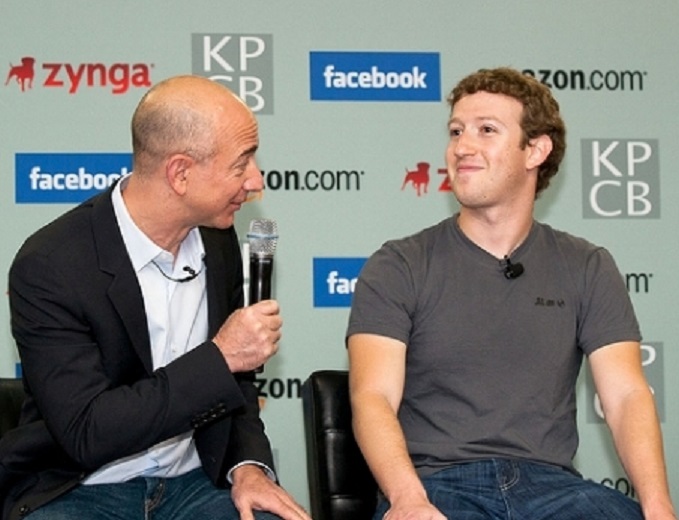
Founders of Facebook and Amazon

TechCrunch reported that the loss was higher than the year-ago operating deficit of $941 million for other bets, which implies that financial issues remain. It noted that Alphabet doesn’t intend for Other Bets to generate positive net income. But to see it torch north of $1 billion in operating profit is still somewhat surprising.

While Google revenue made up 99.66% of the company’s total revenues for the Q3, Alphabet generated net cash from operations of $17.0 billion in the reference quarter, resulting in free cash flow of $116.6 billion.

“Total revenues of $46.2 billion in the third quarter reflect broad based growth led by an increase in advertiser spend in Search and YouTube as well as continued strength in Google Cloud and Play. We remain focused on making the right investments to support long term sustainable values,” said Ruth Porat, CFO of Alphabet and Google.

For other members of the big tech, the story was the same for the same quarter apart from Facebook.

Apple earnings also exceeded analysts’ expectations, but Facebook recorded a slight decline in its daily and monthly active users in the US and Canada.

Apple posted $64.7 billion compared to the $63.7 billion Wall Street predicted, and $0.73 earnings per share compared to projected $0.70. The iPhone maker reported all-time-high revenue in Services and Mac, but was down 20% year-over-year on iPhone sales.

CEO of Google

Facebook’s net profit rose 29% year-over-year to $7.8 billion despite the drop in the number of users. The social media giant reported a slight decline in its daily and monthly active users in the US and Canada. However, net profit rose 29% year-over-year to $7.8 billion despite rising costs, partly because of a one-time tax benefit that reduced the $800 billion company’s effective tax rate to 4% for Q3.

Amazon’s profit, boosted by pandemic sales surge, tripled its earnings to 37%. The e-commerce giant’s revenue hit $96.15 billion, beating analysts’ expectations. Its net income increased to $6.3 billion in the Q3, beating the $2.1 billion net income of 2019. Amazon’s Cloud Services, Amazon Web Services, reported net sales of $11.6 billion for the quarter, a 29% year-over-year increase.

The tech industry has continued to show resilience in the face of most devastating economic turmoil in recent time.

Career Week Day 1

0

Morning Session Zoom Link Evening Session Zoom Link   Mon | 12 noon – 1pm WAT | Nurturing Innovators & Career Planning – Precious Ajoonu – Tekedia Live | Zoom link Mon | 7pm – 8pm WAT | Nurturing Innovators & Career Planning – Dr Akanimo Odon – Tekedia Live | Zoom link   Tue […]

This post is only available to members.

The Rumoured Apple Search And Frontal Attack On Google

1

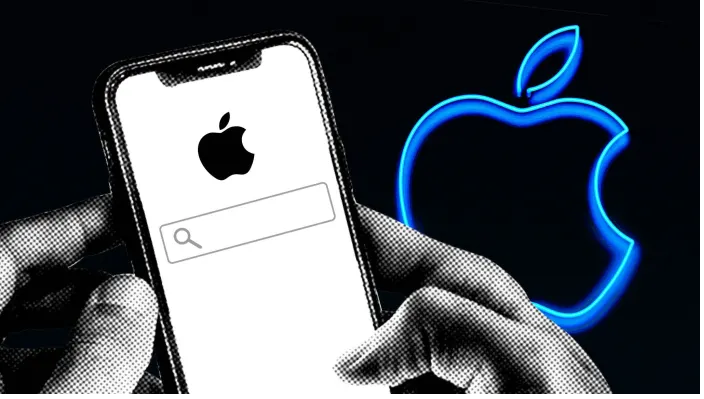
Apple is rumoured to be going after the jewel of Google by launching a search engine. If Apple follows through, preferring to lose about 20% of its annual profit which Google pays it, it would be a new dawn in frenemy confrontation in big tech. But Apple may not have an option with the U.S. government suing Google for paying companies like Apple for positioning Google search in browsers (like Apple’s Safari) and other gateways.

Largely, Apple does not see that payment to survive the court case, and if it does not have an alternative, it may miss that money even as it serves Google since many Apple users will end up using Google search, the industry best. So, the best plan would be to build a search in-house as the future looks like the one where that annual transfer from Google may not be coming.

Apple has a growing interest in search technology and might even be working on a product to compete with Google, according to The Financial Times.

The most visible change is the fact that in iOS 14, Apple is now showing its own results when you type queries in the home screen. In addition, there seems to be an increase in activity from Apple’s web crawler.

There may be more of an opportunity here as the U.S. Justice Department has sued Google over what it claims are anticompetitive behaviors around search. However, this doesn’t necessarily mean Apple and Google will soon be going head-to-head in search — it could just be a sign that Apple’s Siri voice assistant is getting more search queries. (TechCrunch newsletter)

Google controls 80% of the U.S. search market.  The government noted that Google pays “mobile-phone manufacturers, carriers and browsers, like Apple Inc.’s Safari, to maintain Google as their preset, default search engine”. Apple generates about 20% of its profit from such payments from Google. If you look at it carefully, this is a circle: Google pays Apple, Google gets funds from advertisers, and sends some to Apple, provided Apple does not allow another company into the party. Apple is happy since it is guaranteed a solid inflow. Government thinks that is illegal. Now, with that Apple-Google arrangement on shaky grounds, Apple wants to bail out by building its own search product. That is an attack on Google’s one oasis.

Why Google Investors Should Celebrate US Government Lawsuit Against Google