DD
MM
YYYY

PAGES

DD
MM
YYYY

spot_img

PAGES

Home Blog Page 6065

The Case Study of Interswitch – Tekedia Institute

1

Interswitch became a category-king by creating a new basis of competition in the Nigerian financial sector. It went beyond the immediate needs and expectations of customers to their perceptions. As that happened, it seeded leverageable factors, and in the process unlocked values for citizens and firms in the digital payment sector. A pioneer and an industry leader, Interswitch became a new modern architecture for the Nigerian economy. While they are competitors today, Nigeria runs on Interswitch, and is arguably one of the most important companies in the nation.

Interswitch is an Africa-focused integrated digital payments and commerce company that facilitates the electronic circulation of money as well as the exchange of value between individuals and organisations on a timely and consistent basis.

The company started operations in 2002 as a transaction switching and electronic payments processing company that builds and manages payment infrastructure as well as deliver innovative payment products and transactional services throughout the African continent.

In a new case, Tekedia Institute with Maro Elias, looks at what we can learn from this company. What was the motivation that in the “early 2000s, Mitchell Elegbe, Interswitch Founder, had a moment. He had been trying to use an ATM machine in Scotland to withdraw funds when the machine seized his card. Although it was a moment of despair, it was also a light bulb moment for him. That moment crystallized a vision to build an electronic payment system in Nigeria, and in the process gave Nigeria its first indigenous unicorn.”

The case will be available from Feb 8 when Tekedia Mini-MBA edition 4 begins. We are introducing cases in our program to make it more empirical with deeper analytical rigours.

Tekedia Academic Programs


Why Google Investors Should Celebrate US Government Lawsuit Against Google

1

The U.S. government has sued Google (yes, Alphabet, the parent of Google), setting up a battle on the future of web search and digital advertising. The government articulated its position that Google has allegedly broken antitrust laws by undercutting competitors to remain the gatekeeper and the number one ICT utility of the 21st century in the domains of web search and digital advertising. Google controls 80% of the U.S. search market.  The government noted that Google pays “mobile-phone manufacturers, carriers and browsers, like Apple Inc.’s Safari, to maintain Google as their preset, default search engine”.

The Justice Department has sued Google for allegedly breaking antitrust laws as it undercut competitors to maintain its status as gatekeeper for internet search and advertising. The department says the Alphabet-owned company, which controls at least 80% of search, pays “mobile-phone manufacturers, carriers and browsers, like Apple Inc.’s Safari, to maintain Google as their preset, default search engine,” according to The Wall Street Journal. The suit is the biggest U.S. challenge to a tech company over its dominance in two decades.

This is a very solid case despite what many journalists are writing. Some see this case as overly weak but I see it differently. The government is essentially saying that Google could have been a brilliant technology company, winning on search through innovations, triggering a virtuoso circle of positive continuum which platforms enjoy, but besides that, there is another element, and that element is not evidently legal.

That element is that Google pays companies like Apple, Firefox, etc to make Google their default search engine on their browsers. By doing that, other small competitors are denied opportunities to ever be known since Google is the “best” search today and by paying these companies, no competitor will ever have a chance since they are locked out in the gateways to the users. Simply, Google won on technology innovation but is using these exclusive default agreements to keep competitors out! And the government thinks that is not evidently right.

 “Google, no doubt, is more powerful and omnipresent today than it was in 2004. And its deals make it difficult for competing search engines to break in. But it’s interesting that, in this situation, the DOJ focused on the rent payer vs. rent-seekers like Apple. With some credibly, Google could argue that it has no choice but to pay. Just look at the history”

Yet, you may argue why should Google be penalized if it has to pay Apple to be the default search on Safari, the Apple browser. Yes, the power is really with Apple, not Google. Apple generates about 20% of its profit from such payments from Google. If you look at it carefully, this is a circle: Google pays Apple, Google gets funds from advertisers, and sends some to Apple, provided Apple does not allow another company into the party. Apple is happy since it is guaranteed a solid inflow. Government thinks that is illegal.

Google search is the default search engine in Safari and for Siri on iPhone and iPad devices. According to the Journal, that has been a major source of revenue for both companies. In 2018, for example, Google is said to have paid Apple upwards of $9 billion to maintain the arrangement.

Although neither company has confirmed how much the deal is actually worth, the lawsuit indicates that it accounts for between 15% and 20% of Apple’s annual profits. That suggests payments of as much as $11 billion.

Of course, paying to be displayed better in a shelf should not be illegal. Unfortunately, in the digital space with winner-takes-all, some things which are harmless in the physical space may not be harmless in the digital space. This is the heart of the inversibility construct.

A few years ago, I was in Casablanca and rode in the same car with the CEO of DuckDuckGo, a search engine  that “emphasizes protecting searchers’ privacy and avoiding the filter bubble of personalized search results”. I asked him how he would get over the challenges for people to know DuckDuckGo  since all the major gateways have been prepaid by Google. He focused on the strong privacy which his product offers, and hoping that over time people will align for it. In reality, it is a tough order. Why?

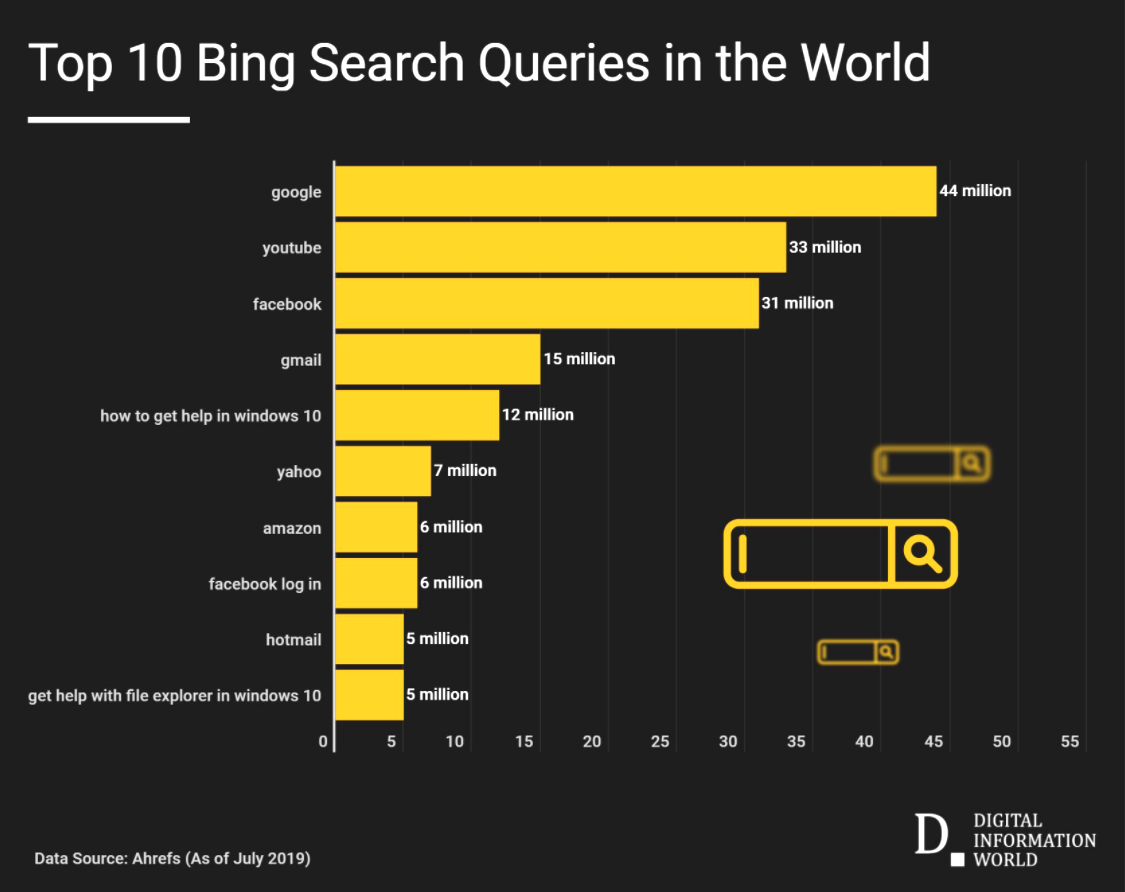
The only product line in the world which is guaranteed non-default Google search but another search (Bing) is Windows systems, including laptops and desktops. Unfortunately, for those who are not in the party of Google, the number one search term on Bing is Google. What does that mean? Once people get their Windows systems up and running, and launch Internet Explorer with Bing default search, they use Bing search to look for Google, and once that setup is done, Bing is history on that machine. 

So, Google should not worry – the government may be helping it on one thing: stop funding Apple’s 20% profit and discontinue wasting money paying others. Yes, Google does not need to be paying anyone because most will converge back to its product irrespective of the default search on the browsers, provided its search remains the best. This may not make the government happy as if it bans Google from paying for this self-positioning, it will not hurt the company that much.

Yes, Google will save the money it is shipping to these companies and still get nearly everything it is getting now. Google is the category-king and everyone knows about it.  So, this suit should be good for investors: it will cure Google’s bad habit of wasting money where it is not necessary. That should happen irrespective of the legal winner or loser!

You see, I have not noted who will win this suit. The fact is this: it does not matter. There would only be one major search engine in the world due to the network effect phenomenon. It is irrelevant whether that company is under Alphabet or a separate company. Yes, over time, if cut-out, that branch will grow to dominate the search if it is the best product.

If you decide to break Facebook apart, one part will grow and dominate others. This is possible because of the positive continuum of network effect where the biggest keeps getting bigger and also better. I explained that in a recent piece in the Harvard Business Review. You can regulate Facebook but another company will come to take over its position because in this sector, it is winner-takes-all. Yes, the best wins.  Why? The scalable advantage improves with lower marginal cost.

Tekedia Mini-MBA 4th Edition Early Registration Begins

0

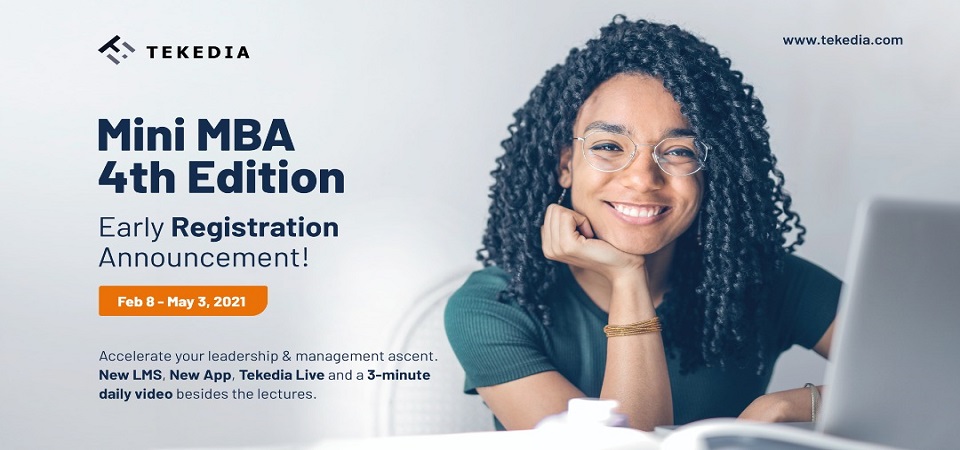
Tekedia Mini-MBA 4th Edition (Feb 8 – May 3, 2021) Early Registration Announcement: This is an early registration call due to popular demand. Our community members want to just pay now they have the money. So, we are opening registration ahead of schedule. Go ahead and register; and ask our team to give you access to Africa’s Sankofa Innovation and The Dangote System books immediately.

This edition comes with full business case studies, concept notes and investment briefs. I have been writing, examining African businesses and chronicling my perspectives on them. It would be an experience – better, richer and more impactful.

Accelerate your leadership & management ascent. Accelerate your leadership & management ascent. New LMS, new App, Tekedia Live and a 3-minute daily video BESIDES the lectures. Click our last edition here.


Tekedia Mini-MBA Program & Cost

Tekedia offers an innovation management 12-week program, optimized for business execution and growth, with digital operational overlay. It runs 100% online. The theme is Innovation, Growth & Digital Execution – Techniques for Building Category-King Companies. All contents are self-paced, recorded and archived which means participants do not have to be at any scheduled time to consume contents.

It is a sector- and firm-agnostic management program comprising videos, flash cases, challenge assignments, labs, written materials, webinars, etc by a global faculty coordinated by Prof Ndubuisi Ekekwe.

Code Program
MINI Tekedia Mini-MBA costs US$140 (N50,000 naira) per person.
MINR Add extra (optional) $30 or N10,000 if you want us to review and provide feedback on your labs.
MINF Annual Package (includes 3 editions of MINI and 2 Capstones) – $280 or N100,000
Add extra (optional) $60 or N20,000 for each certificate specialty course. You must have attended, begun, or about attending Tekedia Mini-MBA to qualify. The following Certificate tracks are available:

The Certificate program is completely capstone-based. Tekedia capstone is a research paper or a case study exploring a topic, market, sector or a company. Tekedia Institute supervises the work.

NB: We have incentives (free books, Facyber.com cybersecurity courses, etc) for early registrants.

  • Contact: tekedia@fasmicro.com

Payment: Pay via any of these means and inform us via email

Note: The Edition 4 program page is coming – this is just an early registration announcement due to demand. Our community members want to ensure they do not spend the funds on other things. For edition 3, see this page. For testimonials on our program, visit the testimonial page.

Tekedia Academic Programs

Selected Testimonials from Tekedia Mini-MBA Participants

Tekedia Business Cases

2

Help me document and build the largest database of business cases on African companies and brands. We are already working on Andela, Paystack, Tenecee, BBNaija, M-KOPA, Cellulant, Ashesi University Ghana, Copia, etc. Provided you understand business, we have case samples which will help you and under our guidance, you will make it happen.

Tekedia Institute is building a library of short business cases, concept notes and investment briefs. We are looking for business strategists and analysts who can look at companies, and make sense of what they are doing. And then, in words, produce documents for our learners at Tekedia Mini-MBA. We hope to have dozens of short business cases, concept notes and investment briefs, with deep focus on African companies (and selected global ones). All documents must be sourced from publicly available information.

Each work is not expected to exceed 10 pages. We have a sample if you want to take a look. As we begin planning for edition 4 of Tekedia Mini-MBA in Feb 2021 (register here), this playbook will become a critical part of our learning process. By the end of 2021, Tekedia Institute expects to have 200 documents in our library.

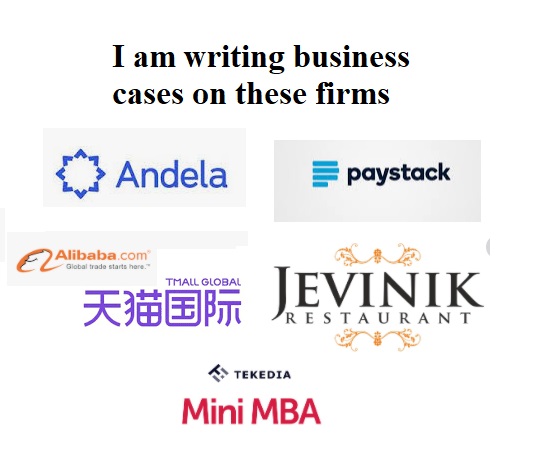
Personally, I am writing a case study on Paystack, Andela, Alibaba TMALL and Jevinik. If you want to support this community service of Tekedia Mini-MBA and contribute, please email tekedia@fasmicro.com . We have some samples to share with you as you get started. You can write on a company (eg Jumia) or a product or brand under a company (eg JumiaPay).

We are concluding Tekedia Mini-MBA for 2020 (sure, Dec 3!). Year 2021 editions would be super-awesome as we are working to introduce 200 business cases, concept notes and investment briefs on African companies as part of Tekedia Institute’s library. Let’s hear from you because we want you to be part of this collection of cases and notes. It would help many of our young people to advance.

Tekedia Academic Programs

Unanswered Questions Surrounding Lekki Toll Gate Shooting: A Call for Clarification

2

Only the people that didn’t hear it on that Tuesday, 10 October, 2020, were able to sleep. I have young relatives in Lagos but my fear was for all the young people at Lekki Toll Gate that night. I was wondering about the state of their lives. I was crying because I felt I could have stopped them. I blamed myself for not being able to make those young ones go home and still blamed the Lagos State government for the curfew. I was hysteric.

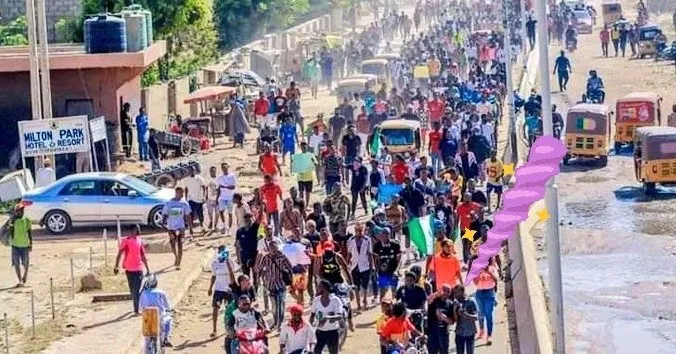
The history of the #ENDSARS protest that birthed #LekkiMassacre or #LekkiGenocide is not a hidden one. The protest started well but ended chaotic. It started peacefully but ended in violence. I believe if the youths had taken a better strategy towards actualising their demands from the government, thea country wouldn’t be passing through what it is experiencing right now. But then, so many questions have risen from the Tuesday night shooting and they are demanding for answers. Hopefully, the answers to these questions will help to restore peace and normalcy.

I am not sure of the exact day #ENDSARS protest began but I know it started as a call for action on Twitter. Shortly after these calls began to heat up, a video footage showing SARS officials kicking a man out of his car and driving off with the car went viral. This footage, be it coincidental or intentional, sparked off the already heated up agitation against SARS. However, the decision for a peaceful walk to demand for the dissolution of the outfit was decided and it took off on Friday 9 October, 2020 (not certain anyway). But on Sunday 11 October, 2020, barely three days into the protest, the President, Muhammadu Buhari, asked for the disbandment of SARS. This was done immediately by the Inspector General of Police, Mohammed Adamu. That day was filled with jubilation because the youths have been able “to win the battle”.

One would have expected that the protest will be disbanded and youths returned to their homes but they seemed to have other agenda. To be honest with you, this is where the confusion started. Youths stayed back and made further demands, one of which was the speedy implementation of disbandment of SARS, persecution of corrupt officials and so on. When the NPF announced its plan to institutionalise Special Weapon and Tactics (SWAT), all hell was let loose.
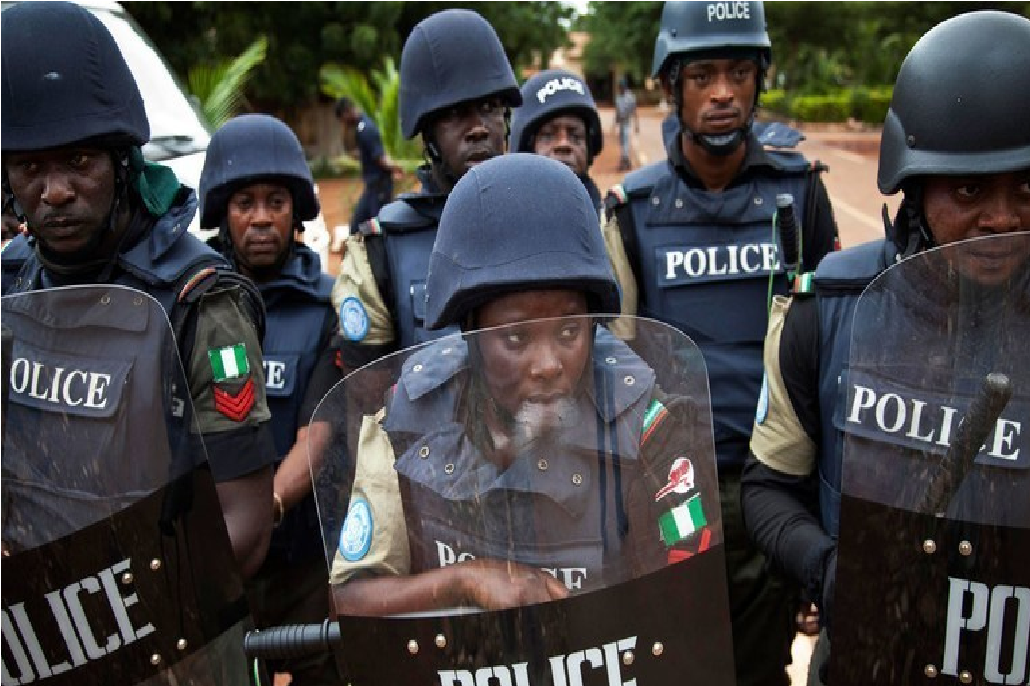
The result of this latest announcement was that youths started organising themselves in different parts of the country to carry out peaceful protests to demand for the end of SARS, which has already happened, and other items in their agenda. Soon, thugs “hired by the government” began to attack protesters for reasons best known to them. But instead of discouraging these young men and women from coming out to the streets, the attacks made them more determined to go on. They used social media platforms to encourage and spur themselves into action. They had no leader and so they heard several voices speaking different things and one thing at the same time. The only common message the youths heard was to come out and protest. What exactly they will protest for they are not sure. Hence, they began to demand for good governance without saying exactly the aspect of government policies that didn’t favour them. The protest became disorganised.

Since the second phase of this protest started, there were no efforts to reach out to and dialogue with top government officials by the youths because they, the youths, said they don’t want a “leader” from amongst them. They were afraid that the leader they chose would be compromised. They wanted the “government” to be fast with implementing their demands but they didn’t know that they were saying one million different things at the same time. No one could talk to them except those that accepted to leave things the way they were. Hence, the youths became the proverbial lamb that had no guide.

The end result of the protest is that thugs and miscreants began to operate amongst them, as expected. From complaints laid by people, these miscreants made some parts of Lagos unbearable for the residents. If protesters block a part of the road, thugs would block the other part. As protesters chant #ENDSARS at their own place, the miscreants extorted money from motorists at the own corner. By the end, it became nightmarish for the residents of Lagos.

But that notwithstanding, what happened at Lekki Toll Gate on that dark Tuesday is still a mystery to a lot of people. It is a mystery because it is unheard of that the government will send armed men to shoot and kill unarmed peaceful protesters without provocation. It is truly unbelievable that such a thing will happen in a country like Nigeria. But then, you never can tell because anything can happen.

But a lot of questions beg for answers concerning that night. Several photos of people killed that night have surfaced but each of them has been debunked as fake. Even the alerts for people missing after the shooting were later deleted or debunked. Some came back to say that the person has been found. So I ask, in a country where people cannot quarrel peacefully without the picture and video being uploaded into the internet, how come we are yet to get authentic pictures of the dead victims? What are the names of the dead? Who were they? Of course, there is an explanation for this. It is possible that the shooting scattered the protesters and so they couldn’t stay back to take pictures. But why didn’t the ambulance meet the corpses?

I got more confused when I saw a video, where one of the unharmed victims of that night granted an interview to a television house. In that video, the interviewee said that people were falling in great numbers as the military shot at them and that their bodies were being handed over to the soldiers as they died. I don’t know how this sounds but it raised a lot of questions that beg for answers. First of all, how did the protesters manage to stay put when they heard gunshots? I mean, with all the things happening around them, including the darkness since the streetlights were off, why didn’t they run when the soldiers started shooting? Why didn’t their reflex action be to run for their dear life? Apart from that, there was darkness, right? So how did the interviewee see people falling in great numbers and how did they, the protesters being shot at, hand over the corpses to the military? I honestly don’t understand, especially considering that there were no reports of dried blood scattered all over the floor. I mean, shouldn’t that place look like an abattoir?

I don’t want to talk about the issues relating to government officials mobilising thugs in broad daylight when they know people will video them and send them online. Why would they want to do that? Who were those officials? What was their motive? Who hired them? Who is this “government” that uses thugs?

I really don’t understand what is happening. It is time for the government officials to start talking and hence quell the tension. It is time for our president to address us, even if it is in writing. We need peace but we need to know that we are safe. We need to be sure that we can sleep and wake up without the fear of being lynched. We want a safe working country. But it’s high time our elected officers started making sense of things that have no meaning. Lekki Toll Gate shooting needs to be explained without mincing words. We need evidence. We need to know how it happened, if it happened and why it happened. We don’t want information from unverified sources again.