DD
MM
YYYY

PAGES

DD
MM
YYYY

spot_img

PAGES

Home Blog Page 6123

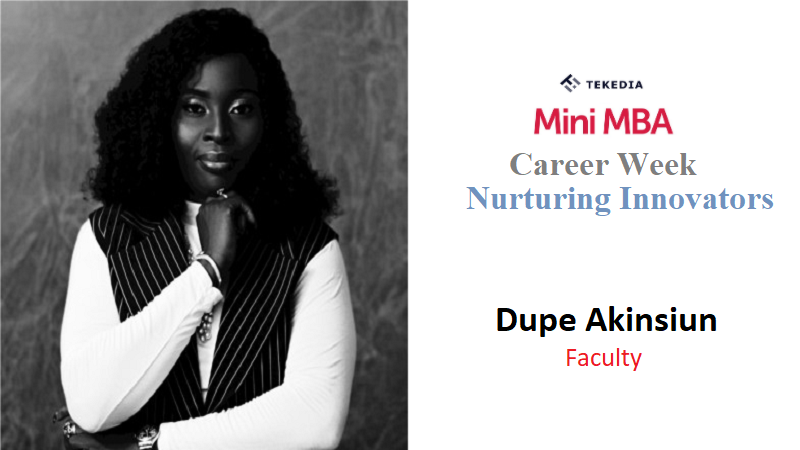
A Global HR Leader Will Teach During Tekedia Mini-MBA Career Week

0

She is a Certified Leadership & Behavioural expert, and heads the Leadership & Culture Center of Expertise (CoE) in one of the finest companies in the world, Coca Cola HBC. As a strategic HR Business Partner, she covers nine countries. Her experiences cut across  management consulting, financial Services, pharmaceutical, and FMCG. She seeks to “equip emerging leaders with the knowledge, skills and abilities required to excel in life and in their respective careers”.

Dupe  Akinsiun, a Tekedia Institute Faculty, will TEACH during Tekedia Mini-MBA Career Week  (Nov 2-6, 2020) on Career Planning within the theme Nurturing Innovators.   This career week is not designed for finding jobs. Rather, it is structured to TRANSFORM workers, founders & entrepreneurs into business leaders and champions of innovation in their companies.

Join Dupe and our Global Faculty, and accelerate your leadership and general management ascent.

https://www.tekedia.com/tekedia-mini-mba-2020-career-week-full-schedule-with-faculty/


Easy Solar Raises $5 Million to Expand Cleaner Energy Distribution in West Africa

0

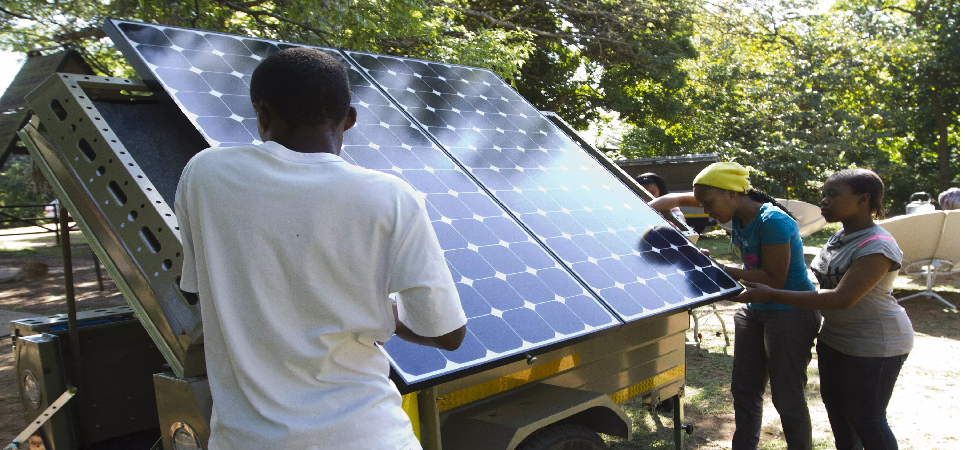
Easy Solar announced the closing of a $5m round of funding, to scale operations in West Africa including a $3 million Series A Equity round led by global impact investor Acumen and FMO, the Dutch entrepreneurial development bank, in addition to a $2m debt facility from investment platform Trine.

Easy Solar provides energy solutions ranging from small lanterns for lightning and mobile charging, to pico solar home systems with appliances like TVs and fans, including KW sized systems designed for residential, commercial, and industrial users. The energy company has overtime, established an extensive distribution network and high volume of prior credit data. Easy Solar now offers more than solar, it serves other services such as clean cooking devices and pay-as-go smartphones.

Earlier, investment platform Trine, had invested $2 million in the solar company, and now FMO Ventures said the electricity deficiency in West Africa and the need for cleaner energy has spurred it to close the deal.

“Off-grid energy companies play a critical role in delivering clean, affordable, reliable energy without the need for grid infrastructure. Sierra Leone’s low electrification rates combined with limited alternatives for clean energy make Easy Solar’s business model highly relevant,” Marieke Roestenberg, FMO venture program manager said.

“The company has a strong and dedicated founding the team, which has managed to grow the company substantially during the past years. FMO’s funding allows the company to continue this expansion, both inside and outside Sierra Leone,” he added.

The deal places Sierra Leone and Liberia in a position to enjoy stable electricity supply. Easy Solar is an innovative distribution company making energy and financial services affordable and accessible for those with limited access to power in the two countries.

The vast majority of people in Sierra Leone and Liberia are off-grid, both countries are low income with electrification rates below 20%. Consequently, the funding will enable Easy Solar to expand cleaner energy distribution between the West African countries.

Acumen said Easy Solar has defied the odds of low income to expand electrification to Liberia, and they are thrilled to become part of the progress.

“Acumen is thrilled to support Easy Solar’s growth in markets that are too often overlooked. Despite low mobile-money penetration and a high concentration of low-income customers, Easy Solar has made pay-as-you-go solar accessible to Sierra Leoneans and now Liberians,” said Megan Curran, West African director of Acumen.

The CEO of Easy Solar Alexandre Tourre said the company will continue to learn from local markets as it aims to expand in West Africa.

“While further expansion in West Africa is on the horizon with this funding, we remain committed to our vision of going deep into the markets we operate in. we will continue to improve the reach of our brand and distribution networks in Liberia and Sierra Leone – where we operate the country’s largest direct retail network – and leverage it to offer additional products and services to our customers, directly or through strategic partnership.

“We’re also very excited to have brought such experienced and committed investors to the table as we continue with the scaling up of our C&I activities to answer the growing energy needs of offices, farms, factories, schools, hospitals, etc. across West Africa, with the same commitment to quality, ease of use and affordability,” he said.

Since 2016 when Easy Solar was founded, it has provided renewable energy to over 450,000 people, thereby providing over 600 jobs. The solar energy company has established a transformative energy network to serve the underserved to the last mile. The progress thus serves as a complement to Solarize which has been expanding in East Africa.

The African continent has been making tremendous progress in partnership with investors in the cleaner energy ecosystem. There has been increasing input from solar energy since the 2018’s record of 1.6% power generated from renewable energy. The African Development Bank’s Africa Renewable Energy Fund (AREF), has also been providing finance across Sub-Saharan Africa for innovations geared toward renewable-energy-based power generation.

The BBNaija and Why Showmax is a Promise for Multichoice (DStv, GOtV)

1

I am doing very poorly on Twitter. I have struggled on how to write in stanzas with short codes over having space to develop my thought processes. So, that thing is not working. Yet, when I mentioned that BBNaija winner would get a free pass on Tekedia Mini-MBA, the Twitter nation took up that tweet and made it the most popular I had ever written there. Then, I started looking at what was happening. Ladies and gentlemen, BBNaija is a potent brand in Nigeria.

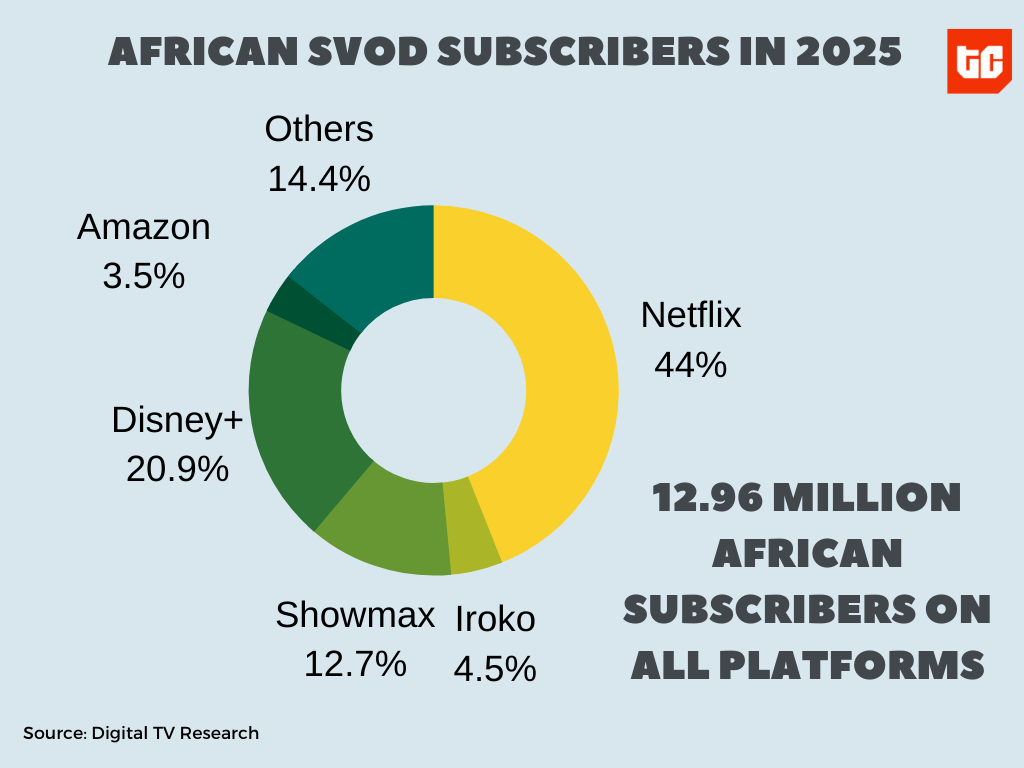
With BBNaija, Showmax has a future online and that means MultiChoice has a potential moat to hold on to some customers from Netflix. BBNaija is the most popular show in Africa right now and if you have it on your online streaming platform, you have something of value. If they clean it up a little (yet to watch BBNaija though; many have noted that it could be crazy for families), they could win more markets, beyond Africa to the Caribbean and North America.

Source: Techcabal

So, if European football holds the world of DStv and BBNaija keeps the online video streaming going for Showmax, MultiChoice may not be as imperiled by Netflix as most are predicting. Bundle the two – DStv’s Football and Showmax’s BBNaija – and you have a new basis of competition in the market.

Like The Bachelor and The Bachelorette which ABC runs in the US, Big Brother Naija (BBNaija) may soon get  Big Sister Naija (SisNaija). And say in three years, open BBNaija and SisNaija supermarkets in selected major Nigerian cities, under a partnership to milk the brand equity. The possibilities are huge.

Source: Techcabal

That Netflix, MultiChoice (DStv, GOtv) Partnership in Africa

6

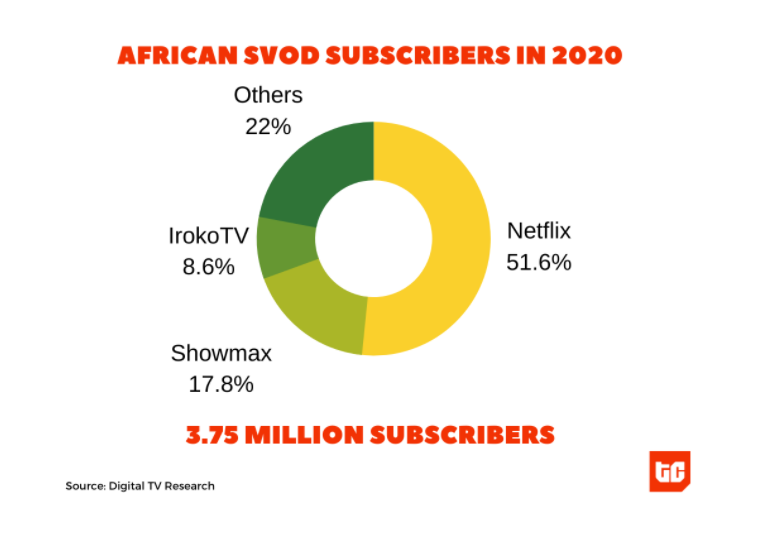
After five years, in Africa, Netflix has 1.4 million users. MultiChoice has about 20 million customers and certainly has deeper roots in the continent. To grow that business, Netflix has moved into licensing local movies and commissioning new ones. Yet, the double whammy where people who do not have a lot of disposable income must first pay for Netflix subscriptions, and then find money to pay for the internet broadband services to binge, makes everything complicated. For MultiChoice, through its satellite TV services, all you need is to pay for the subscription and that does it. So, right at the beginning, Netflix has a new layer on its pricing which has to be managed in Africa. Unfortunately, that layer – the mobile internet – is not within its control.

Netflix is testing if viewers will buy the mobile-only service at N1 200 (about R45) a month, well below the N2 900 it’s been charging for its most basic account. With over 100 million Nigerians living on less than R32/day, it could still be a stretch. …

The offer is still costlier than the equivalent of N250/month charged by Iroko, a streaming platform that has the largest online catalogue of Nigerian “Nollywood” content, including long-running hit comedy Jenifa’s Diary.

For the same broadband cost, the iROKOtv pricing did not work well in Africa. The company had noted that Africa would not be part of its immediate future.

It should not come as a surprise to anyone: selling video streaming products in Africa is a hard business. It is a double whammy for most potential customers: pay subscription fees and then cover the broadband costs. So, it was not entirely unexpected when iROTOtv announced that it was refocusing out of Africa: “Over the next week, IROKO will be defocusing our Africa growth efforts and we will revert to focusing on higher ARPU customers in North America and Western Europe. Even after pushing incredibly hard in Africa for the last 5 years, our international business represents 80% of our revenue today…” This is really a smart move as now the company can focus where it can earn U.S. dollars; I made that case a few days ago when I explained how Nollywood producers are focusing on international markets.

But interestingly, DSTv, owned by MultiChoice, is a distributor for Netflix in Africa which means if you check carefully, this battle is muted. I have called it the unification as MultiChoice closes the flanks, taxing its competitors because it has the pipe to the pockets of Africans. But Netflix is happy with it because it is selling a digital product which has a fairly low marginal cost. Provided there is something coming in as revenue from that DStv deal, it would be fine. And over time, the users will get used to its products and could then go straight to the web and subscribe, disintermediating DStv. 

In June 2020, I wrote, “The weakest link in MultiChoice’s DStv business is defending itself from Netflix. Netflix was picking some of its best customers in South Africa. Also, because Netflix was not under the high voltage searchlight DStv was subjected as a local operating company, by regulators, the cost was not optimized to compete against  the global juggernaut which does not need to open many African locations to do business in the continent. No matter how you look at it, DStv was going to struggle for years to manage the problems from Netflix.” Then, magically, there was a truce and Netflix chose DStv as a distributor. That was wisdom as Disney+ and Amazon Prime were coming after it; the distraction in Africa was not evidently necessary.

Everyone could actually win right now but what happens as mobile internet becomes cheaper would be different. I see DStv waking up one day, in 2022, to decide to part ways with Netflix. Yes, that will come after a clear realization that it has simply used its channels to promote the services of its major future competitor. The future of Netflix in Africa is the web. Whatever it is doing with DStv now is to take care of the marketing budget towards driving higher penetration of the brand in the continent! This is a typical fish bait acquisition construct.

The Fish Bait Acquisition Construct

The Place of Faith-Based Organizations in the Attainment of the SDGs in Nigeria

0

September 25th, 2020 marks the 5th anniversary of the introduction of the Sustainable Development Goals by world leaders. The change in nomenclature of the goals which transmuted from the Millennium Development Goals after it was observed that the attainment of the goals for the millennium targets did not materialize. With 5 years already spent, countries of the world, especially those in the developing world, have a decade more to achieve the goals. However, records, observations and perceptions in Nigeria showed that there is more to do if some of the global goals are to be attained by the set target year. What then are the obstacles to be fixed if the global goals are to be attained in the country by 2030?

Experts have identified different issues that the country needs to address before the targets of the goals could be met in the next one decade. In an interview granted by an SDG advocate, Nurah Jimoh, one of the major reasons why the country may not achieve the goals is the country’s leadership’s non-commitment to the achievement of the goals. In other words, the leadership has not been able to walk the talk as far as the goals are concerned. This is coupled with selective attention paid to some of the goals at the expense of the others. This implies that achieving all goals might not be possible.

In addition to the issues of selective attention, another review reveals, is lack of planning and coordination between businesses, academic settings and other concerned stakeholders. If this is considered alongside lack of concrete and specific plans, it could be said that the odds are high against the attainment of the goals by the deadline set for the goals’ achievement. This is aided by low research on the progress of the achievement of the goals from the ivory towers.

Awareness among the populace about the Sustainable Development Goals is low. For instance, a study conducted in Osogbo, southwest Nigeria indicated that the people for whom the goals are meant are not even aware about any of the goals. Of the 404 respondents sampled, a larger percentage of the respondents stated that they were not aware of the global goals (See Exhibit below).
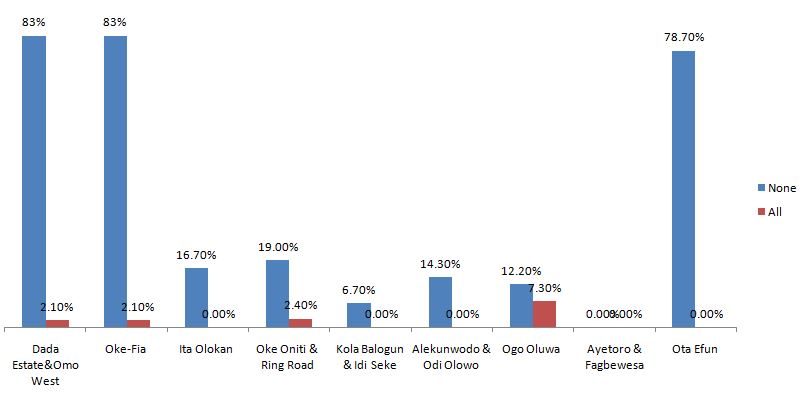
 Level of Awareness of the SDGs among Residents of Osogbo, Osun State, Nigeria (Source: Adebiyi, 2019)

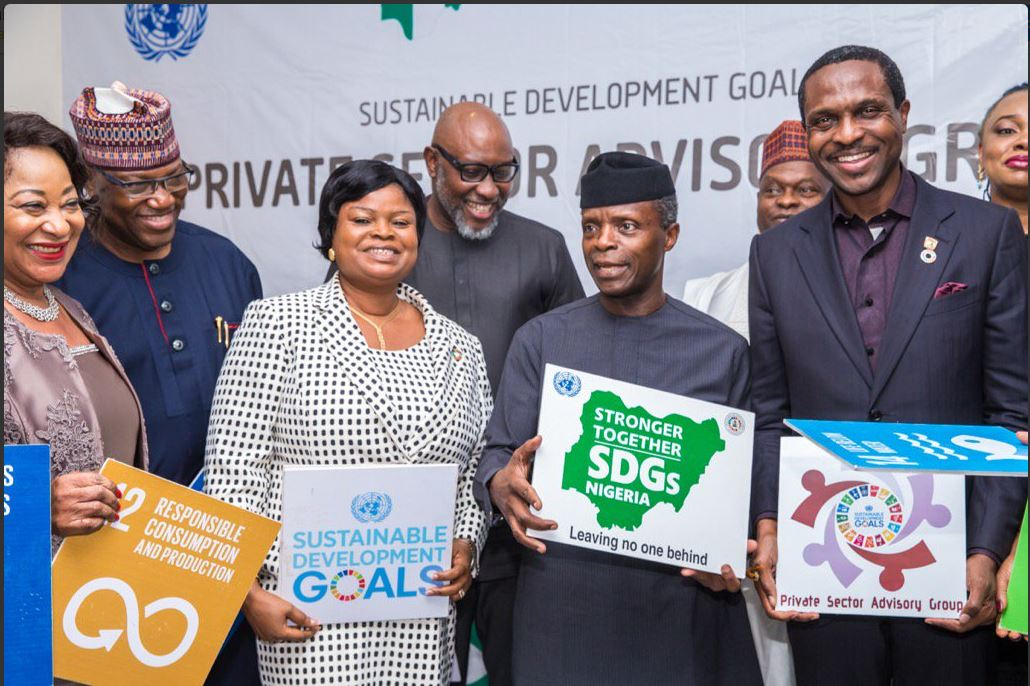
In all of these, what roles are faith-based organizations expected to play in fast tracking the attainment of the SDGs within the stipulated time? As organizations that are closer to the people, the faith based organizations have critical roles to play in achieving the global goals. Owning the global goals at the community level is critical.  The religious organizations could assist in opening the eyes of the community to the importance of the global goals by opening up conversations, raising awareness and mobilizing the adherents of the faith towards the actualization of the goals.

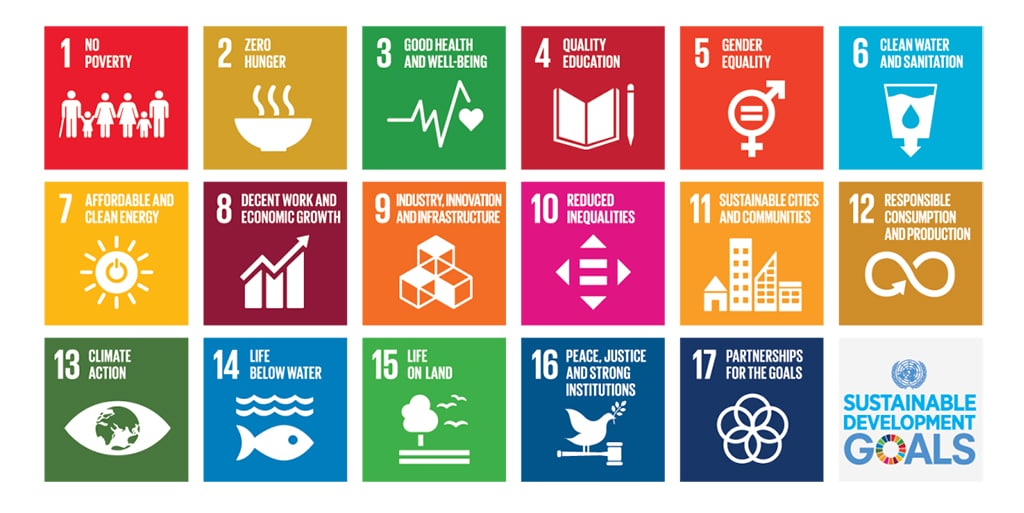
One major faith based organisation that illustrates the idea espoused above is Nasrullahi-l-Fathi Society Worldwide, a Muslim organization with members located across the world. The youth wing of the society had its first edition of a summit dedicated to the Sustainable Development Goals. With the theme “Factivism”, drawn from the United Nations’ theme for 2020, the programme paraded a number of speakers and panellists who are advocates of the SDGs across religious lines.

The keynote given by the Minister of Communication and Digital Economy, Dr. Ali Isa Pantami, laid the foundation for the programme. Focusing on Young People’s Role in Driving Digital Trends to Achieving SDGs, the minister, represented by Dr. Dahiru Abubakar, Head of Operations, National Information Technology Development Agency (NITDA), emphasized the need to involve the youths in the attainment of the global goals. He identified the Nigerian youths’ digital nativity, boundless energies and innovative traits as key features that make them indispensable in the country’s quest to achieve the goals. He then identified different Federal Government’s efforts aimed at ensuring the youths are empowered to contribute meaningfully to the development of the country on a sustainable basis. He charged the youths to invest more in skills acquisition, digital innovation and entrepreneurship. He advised the youths to also embrace mentorship and extensive reading as ways of improving themselves in the task of driving the attainment of the SDGs.
Before the keynote, a session with the title Unleashing the Full Potentials of Youth -Going Extra Mile to Achieve SDG during and Post COVID 19 crisis was facilitated by Mrs Aderinsola Adio-Adepoju, Founder, I-Train Africa. She preached personality development as one of the major ways for youths to unleash their potentials. She encouraged the teeming audience to adopt SWOT analysis of their personalities so that they could fit it in to push the goals.

In the first panellist session titled Examining and Localising the Sustainable Development Goals; Inception, Opportunities, Experiences and Future Challenges, the two panellists, Rasheed Adebiyi of the Department of Mass Communication and Hammed Kayode Alabi, Executive Director, Kayode Alabi Leadership and Career Initiative agreed that though there are areas the country has done well in the movement towards the achievements of the goals, there are still more to be done in some other areas. For instance, the panellists stated that Nigeria has been able to capture its efforts in infant mortality reduction, increase in literacy rate and access to clean water. Yet, they identified shortcomings such as the need to actively involve the young people in the drive towards more success in attaining the goals. This, according to the panellists could be achieved through creating general studies courses on Sustainable Development Goals in the Nigerian tertiary education curriculum. This would go a long way in creating awareness and providing information about how the youths could tap the opportunities presented by the global goals. Adebiyi advocated for a national strategy to coordinate the attainment of the SDGs.

The first panellist session was followed by a technical workshop session on volunteerism. The session was handled by Mrs Sarah Anlade Dantosho, the Executive Director of Sarahtrishpany Limited, Abuja. She highlighted the different types of volunteerism, its purpose and the qualities of a volunteer.  She harps on the need for participants to start their volunteerism from the local in order to grow experience, learn the dynamics and system needed for future international commitments. She concluded by emphasizing that volunteerism is an integral part of attaining the SDGs.

The summit was out to a close with the second and final panel session. The session which focused on Accelerating the Achievement of the SDGs: Critical Entry Points for Muslim Youth had Ismail Sogbade, co-founder Strategy Innovations Hub  and Aderinsola Adio-Adepoju, Founder I Train Africa on board. Both panellists advocated for personal development first before venturing into community development. While Aderinsola Adio-Adepoju stated that environmental scanning, identifying problems and opportunities are important to addressing global problems. Sogbade advised self development and acquisition of both hard and soft skills to be able to push for the global goals.

Faith based organizations have important roles to play if the global goals have to be attained in the next ten years. The roles are far beyond the talks such as the one we had reported. It must extend to increasing awareness and partnership with other organisations to advocate for a sustainable world.