


DD
MM
YYYY

PAGES

DD
MM
YYYY

spot_img

PAGES

Home Blog Page 6129

Etiquette Blunders Committed on Social Media

0

There is this screenshot of WhatsApp chats between a youngster and an older person that just went viral. This older person was supposedly approached by her friend’s younger sister to help the youngster. But things turned sour for this younger person when she/he started the conversation with “Hey” and then addressed the lady by her first name, Dewumi. He/she also committed more blunders by using abbreviations and failing to get clues from Dewumi that she is yet to greet her properly. Well, it is certain that the youngster has lost his/her chance of obtaining favour from Dewumi all because she/he committed etiquette blunders.

This experience by Dewumi is not peculiar to her; most of us must have experienced it at one point or another. I face it a lot with my younger cousins, students and ex-students. Sometimes I ignore them but at other times I call them out. But I realised that the majority of them do not really understand why their actions were considered ill-mannered.

There are three major etiquette blunders people commit on social media. The first one is the use of shortened form of words, that is, abbreviations. Since the coming of GSM, many teachers encounter students writing their exams with shortened forms of words. Of course we don’t waste time in marking them wrong when we see this, but they need to understand that abbreviations, and even contractions, should not be used in formal and semi-formal communications. And when communicating with an elder, except if the person is very close to the writer, abbreviations are discouraged. You don’t expect the person you’re writing to, to sit back and wonder what “fyn” or “tym” stands for. People that don’t have time to read those abbreviation-filled messages will just ignore them or call the writer to order. But in most cases, they see the writers as disrespectful and hence begin to keep them at arm’s length.

The second blunder a lot of us commit is in the way we greet recipients. You needed to open a conversation with someone that isn’t your peer and you started with “hey”, “how are you”, “hello dear”, “am dear”, “pm dear”, you name it, and you expected the person to respond in like manner or what? I don’t know what happened to our traditional “good morning”, “good afternoon” and the rest of them but we need to bring them into social media communication. Even if you don’t want to add ma/sir, at least, use our traditional greeting patterns, they are more respectful and encompassing. I don’t know about any other culture, but in Nigeria, we carried our tradition into the virtual world. If you can’t greet someone “hey” or “how far” in real life, please don’t do it on social media.

The third mistake we make, regarding social media etiquette, is starting off with pidgin, or being the first person to introduce pidgin into the conversation/writing. I know pidgin is gradually turning into our lingua franca in Nigeria, but it is still regarded as the language of the lower class. For that, it is not expected of you to be the first to introduce pidgin in a communication event, where the other participant is older or of higher status. Sometimes I tell people that even if the other person introduced pidgin, be sure that it is an invitation for you to speak pidgin too. I sometimes code-switch with pidgin with younger people but I don’t always invite them to reply with pidgin. If they do so, I revert back to English almost immediately. So, if the other participant in the communication event is good with the use of the English language, kindly stick to English until you have developed a deeper relationship that can allow the use of another language. Don’t give that person a chance to see you as ill-mannered because of your chosen language.

Kindly understand that I am not insisting that English is the only language you can use to communicate in social media. But in a situation where you are not sure of the language the other person uses, please kick off with English and wait for a sure invitation to use another language. However, if you are sure that the person only communicates with, say, Hausa (this is common amongst the tribe anyway), feel free to start the conversation with Hausa. But, never start with pidgin under any circumstances.

I don’t need to go into people hiding behind their phones to throw insults at their elders as is seen in social media platforms like Facebook and Twitter. The reason is because this essay isn’t about those ones. Here, the focus is on platforms such as WhatsApp and Telegram, where the writer communicates one on one with the receiver. There is no hiding behind our phones in this case and there is no using phoney names to mask our identity. In this case, the person you are trying to relate with knows you or knows about you; so the impact of your mistake will hit back on you immensely.

The Labour’s Missing Strike

0

Ayuba Wabba, the President of the Nigeria Labour Congress (NLC) seems to be the most important person in Nigeria now. Did you see the promises from the National Assembly? Did you see how the governors are panicking? Even the presidency is confused. Yet, it is a tough call. I admire Labour but it has yet to choose the most important fight: demanding free and fair elections by shutting down Nigeria after the circus called federal elections. 

If they begin to do that, seasonal strikes may not be necessary. In engineering, we have what we call root cause analysis – ‘a systematic process for identifying “root causes” of problems or events and an approach for responding to them’. Yes, the bottom of all paralyses in Nigeria is how we choose our leaders, and Labour has not found a call to demand electoral improvements at scale!

In the next coming hours, Mr Wabba will get a document with some signatures. In three months, Labour will issue a warning press release: those agreements have not been implemented, and we plan to begin a strike soon. The last I checked, university teachers are still protesting over agreements signed with Obasanjo Administration, a government which ended in 2007. Politicians are smart – they keep shifting the goalposts, knowing that they would be gone when you wake up.

Labour, demand for real reforms on electoral systems, and you will get better outcomes!  Of course, I support Labour any day even though I do not support this particular proposed strike. Fixing the root cause of Nigeria’s problem – electoral mess – is the missing strike in Labour’s calendar of strikes. It has to make it a priority!

First, I support NLC because if you look at data, Nigerian workers are getting poorer seasonally due to rising inflation, currency deterioration, etc, which are worsening faster than pay increments. Yet, the root causes of these paralyses are what Labour is protesting against. If we remove fuel subsidy (killing the institutionalized corruption along), Labour will benefit. More so, if we get electricity to the point where pricing is at parity and evidently reflective, investors will come to fix our electricity supply industry.

Indeed, we need to get Labour to understand that the government’s call on prices of petrol and electricity is necessary to structurally improve Nigeria. We have been trying subsidies on electricity and petrol since 1960, with nothing to show. Labour needs to allow this new experiment for at least two years.

Labour needs to strike for real electoral reforms, and many Nigerians will join them. They do not need to strike for any particular election to avoid tarnishing their non-partisan and neutrality philosophy. They just need to push for reforms because all the problems in Labour today are tied to the quality of our political leadership. If Nigeria can attract its best in politics, Labour will not have to be speaking via strikes.

The Challenge Ahead in Nigeria with Labour’s Planned Protest

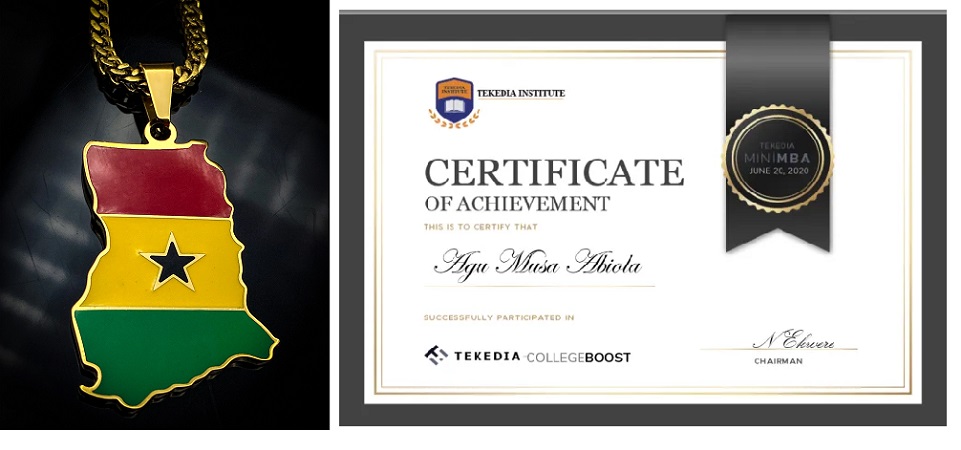
Tekedia CollegeBoost To Support A Leading College in Ghana

0

CollegeBoost is a management innovation program which is structured to help post-secondary education students master the mechanics of markets and management systems. Tekedia CollegeBoost mirrors Tekedia Mini-MBA, but it is more streamlined, requiring shorter time for completion. It is open for schools, alumni groups, students unions, etc. It has two components:

  • The Innovation of Firms (Part A): 4 weeks
  • The Wealth in Nations (Part B): 4 weeks

Institutions in Ghana, Cameroon and broad CEMAC region should connect with Tekedia Institute Regional Partner, Amzill , led by Fadilah Tchoumba.

Tekedia Institute offers the following programs:

  • Tekedia Mini-MBA for individuals, company sponsored or personally funded.
  • Tekedia Mini-MBA for Corporates, for institutions.
  • Tekedia Mini-MBA for Governments, for governments.
  • CollegeBoost for schools.

For full Tekedia programs, click here.

Week 8 Session

2

Notes: We have started approving topics for the Certificate programs’ capstones. Tekedia LIVE  Wed | 7pm-8pm | Business Process & Leadership – Ayodeji Oyebola, Saint Mary’s | Zoom link Fri | 7pm-8pm | HealthTech – Enoh John, CEO, Lafiya TeleHealth | Zoom Link Saturday | 11am – 12noon | Survival Fund Grant & General  – Echa, Segla, Ekekwe […]

This post is only available to members.

Week 5 Session

0

Notes: None Tekedia LIVE Wed | 7pm-8pm | Business Process & Leadership – Ayodeji Oyebola, Saint Mary’s | Zoom link Fri | 7pm-8pm | HealthTech – Enoh John, CEO, Lafiya TeleHealth | Zoom Link Saturday | 11am – 12noon | Survival Fund Grant & General  – Echa, Segla, Ekekwe | Zoom Link *all time WAT Week Theme: Logistics […]

This post is only available to members.