DD
MM
YYYY

PAGES

DD
MM
YYYY

spot_img

PAGES

Home Blog Page 6142

Taxation of Digital Activities in Nigeria: A Panacea for Generating Revenue

0

The importance of Technology in the 21st century cannot be overemphasized. The whole world has now become a global village through Information Communication Technology. Our traditional methods of doing many things are now digitalized. Today, we have Digital Currency such as Bitcoin, online markets such as Jumia where buying and selling take place without physical presence, banking transactions are not excluded from digitalization as you can now bank safely on your mobile phone from the comfort of your bed room. All it requires is to have an Android phone and Data to experience the above, hence the need for our various Revenue laws to be in tandem with the current situations.

The Economy of many countries of the world has become Digital Economy and Nigeria is not left out. In 2018, the Nigerian Investment Promotion Commission put it that Nigerian digital economy is expected to generate $88 billion and create three million jobs by the end of 2021[i].

However, it was practically impossible for Nigeria to tax the enormous income that the digital economy was generating, hence the enactment of Finance Act 2019 which amended various tax laws in Nigeria. This has brought the country into group of countries with taxation of digital activities.

Formerly, the general rule under the Nigerian tax laws for taxing income of foreign companies in a given jurisdiction is by establishing that the entity has a taxable presence or has a permanent establishment (PE) in Nigeria. This is based on the provision of the section 13 of the Companies Income Tax Act, 2007.

It has been aptly argued from some quarters, that  the above position is not in tune with the current advancement in Digital Activities and that the reality remains that in Digital Economy, companies can make money without a significant physical presence, and, no significant means or very little tax for the government. It can be humbly submitted that a lot of revenue would be lost without taxing the digital economy.

In view of the challenges faced by the Tax Authorities in taxing foreign enterprises without Permanent Establishment in Nigeria, the Finance Act 2019 amended various sections of the Companies Income Tax Act 2007 to wit: Foreign companies with Significant Economic Presence ( SEP). SEP is a principle initiated by Organisation for Economic Cooperation and Development (OECD) to finding last solution to this tax solution known as Base Erosion and Profit Shifting (BEPS) a form of corporate tax planning strategy used by multinationals to shift profits from higher – tax jurisdiction to lower- tax jurisdictions, thus eroding the tax base of the higher- tax jurisdiction and it is a form of tax avoidance which thrives on the gaps and mismatch between different tax system.

Furthermore, Value Added Tax Act has equally been amended by the Finance Act, 2019 in section 46 to widening the scope of Value Added Tax to include intangible goods such as digital products and services rendered online to persons in Nigeria irrespective of the resident status of the service provider. FIRS Circular on the Implementation of the Value Added Tax Provisions in the Finance Act 2019 issued out on the 29th April 2020 has clarifies the definition of goods and services in the Act. As it relates to goods, the Circular provides that VAT is chargeable on goods which include property (tangible or intangible)…while in relation to services, the Circular indicates that VAT is chargeable on services:..is rendered remotely, online, or by other virtual means to Nigerian residents of persons in Nigeria. The Circular equally made it mandatory for Non Residents Companies to register for VAT.

Also, Stamp Duties Act has been amended by the Finance Act in section 89 to include payment of Stamp duties on Electronic Documents. To this writer, this is in tune with the provision of Evidence Act, 2011 on admissibility of Electronic in court.

CONCLUSION

The taxation of Digital Activities in Nigeria through the enactment of Finance Act, 2019 is a right step taken in the right time. Revenue generation for the government has increased tremendously and this would the government the leeway to provide social amenities for the betterment of the citizens.


[i] Ogochukwu Isiadinso and Emmanuel Omoju, ‘’Nigerian: Taxation of Nigeria’s Digital Economy: Challenges and Prospects” Mondaq(30 May 2019)< www.mondaq.com/nigeria/tax-authorities/810276/taxation-of-nigeria39s-digital-economy-challenges-and-prospects >  accessed  Tuesday, September 22, 2020.

ii International Collaboration to End Tax  Avoidance< www.oecd.org/tax/beps/>

iii OLANIWUN AJAYI  MAY 2020|NEWS LETTER. FIRS CIRCULAR ON THE IMPLEMENTATION OF THE VALUE ADDED TAX PROVISIONS IN THE FINANCE ACT 2O19. Available at www.olaniwunajayi.net

Timothy Olamide writes from the Faculty of Law and can be reached via olaniyitimothyolamide@gmail.com

Junior vacancy in Nigeria – Project Management – Power Start-up.

0

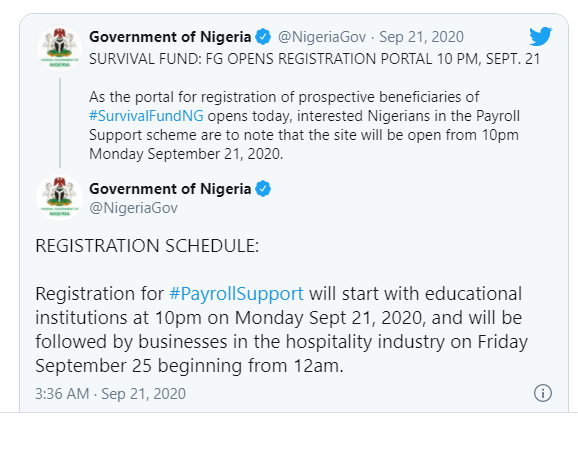
A LinkedIn contact reached out to me about a vacancy. She is looking for a position in Nigeria to work in a start-up project in the ‘Power’ sector and asked me if I could recommend anyone. I thought it might be a good idea to share the opportunity with my Tekedia and my LinkedIn communities.

The position title is ‘Project Coordinator’ though the recruiter stresses that this is a ‘junior’ role.

The client has existing operations in UK, Egypt and South Africa.

The candidate needs to have Minimum 5 years experience in Nigeria in the Power Industry with Power Plant/Power Generation. Also knowledge of Project Management

I have no information on remuneration beyond a comment from the recruiter that:  ‘Whatever the candidate is earning right now, they will offer a better pay’.

I cannot provide any additional information and will not be servicing any comments added to this contribution/post. Anybody curious to find out more should reach out to the recruiter directly .through the link below.

Thanks John

https://www.linkedin.com/in/padmini-tiwari-01ba2aa2/


Application Link for the Federal Govt of Nigeria’s N75 Billion MSME Survival Fund

92

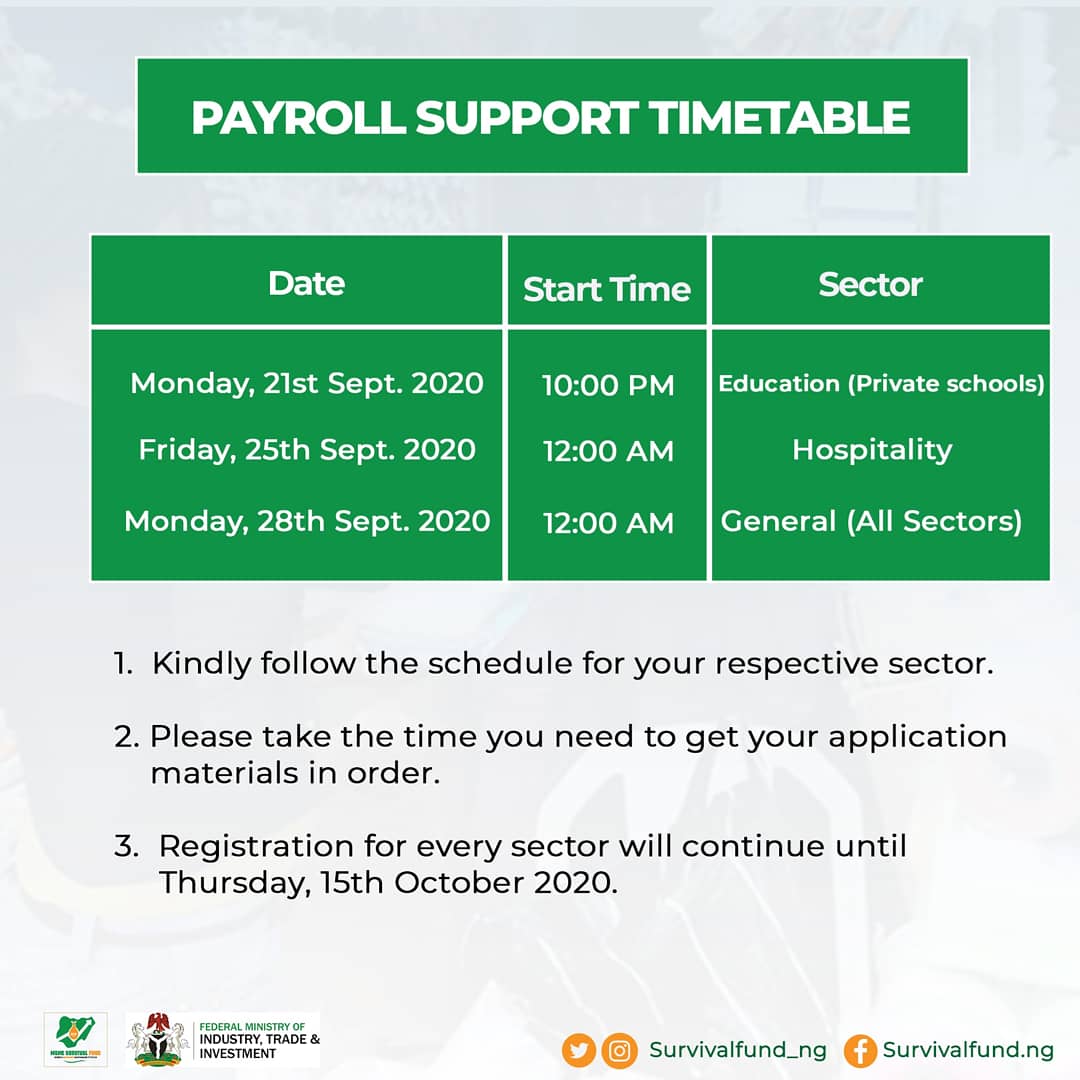
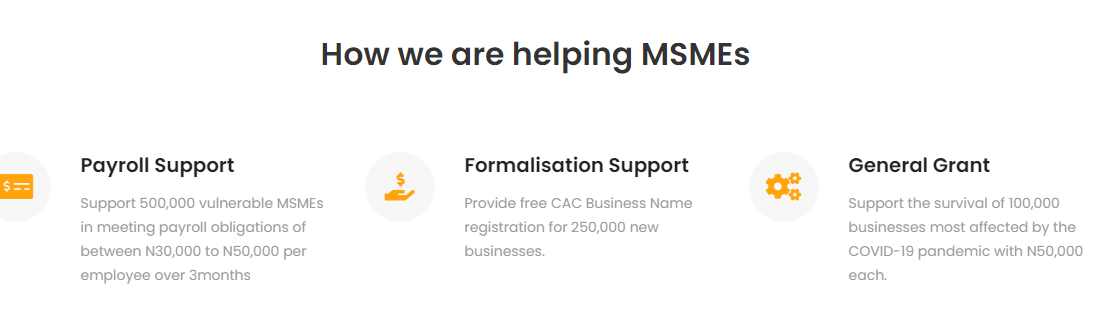
The Federal Government of Nigeria has released instructions on how to access the N75 billion Micro, Small and Medium Enterprises (MSME) Survival Fund. The program took effect from September 21, 2020. This fund is part of the N2.3 trillion stimulus package of the Nigerian Economic Sustainability Plan.

Here is the link; please apply. It is your money and do not wait. Part of this is structured as a grant which means you may not have to pay for it (that can change though).  Also check this link.

Good luck. If you are attending Tekedia Mini-MBA, we will get an expert to provide guidance on this next week.


Towards 9Mobile Upcoming Playbook And MVQ

0

Now that 9Mobile is back on the news, I want to refer everyone to this piece. It is more about strategy than pricing and quality. Simply, even as you pursue quality, you cannot out-price your customers. Data does not lie: as of June 2020, MTN had 79 million subscribers; Glo and Airtel followed at roughly 52 million each. 9Mobile had only 12 million, down more than at least 8 million from its peak. Simply, that pricing is not doing it, and the company has to revisit many things including the concept of MVQ.

The deal is this: the construct of quality has no meaning until the price of the product is put into considerations. I always ask entrepreneurs to build for the Minimum Viable Quality (MVQ) bounded by the product target price which market will respond. You can build rockets to fly around the world: that is an engineering possibility. But does that make a business sense if no one can afford it? Ask the makers of Concorde for answers.

That brings me to Glo and 9Mobile (nee Etisalat NG) services: Glo continues to grow with its highly affordable service while 9Mobile struggles even with better service but at higher cost. I am not saying that you do not have to pursue the best possible quality you can. My point is that any quality metric without a price construct is meaningless.

September 28 Nationwide Strike Puts Nigerian Government in a Dilemma of Economic Troubles

0

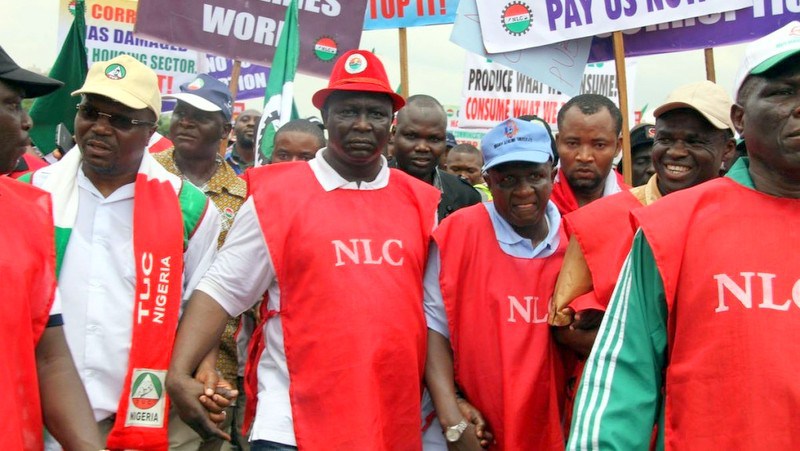
Nigerian labor and trade organizations have been mobilizing its members and the entire labor and trade ecosystem in Nigeria, for a nationwide strike action aimed at forcing the federal government to reverse the recently increased petroleum pump price and electricity tariff.

The Nigeria Labour Congress (NLC), on Tuesday announced the decision of its Central Working Committee (CWC), to commence a nationwide indefinite strike and mass protest from September 28, after it was approved by its National Executive Council (NEC).

The CWC had last week Wednesday issued a two-weeks ultimatum to the federal government, its NEC has now ordered the 36 NLC state’s councils and the Federal Capital Territory (FCT) to prepare for the showdown.

NLC’s president, Ayuba Wabba on Monday, after the organization’s NEC meeting held in Abuja, called on the federal government to heed the warning and save the country from the industrial action, as there would be no going back unless the increased fuel and electricity prices are rescinded. He also gave reasons why the NLC is not going to renege on the planned nationwide strike.

“The National Executive Council of the Nigeria Labour Congress comprising members of the National Administrative Council, president and General Secretary of members of the affiliate unions and our state council chairpersons and secretaries of the 36 states and FCT met today (Monday) and resolved as follows:

“NEC resolved to reject in its entirety the issue of hike in electricity tariffs by almost 100 percent as well as the fuel price increase in the name of full deregulation. This decision is premised on the fact that these twin decisions of government including the increase of VAT by 7.5 percent, numerous charges being charged by commercial banks on depositors without any explanations will further impoverish Nigerian workers and citizens, including their families.

“Therefore, this increase coming in the midst of the COVID-19 pandemic is not only ill-timed, but it is also counterproductive. NEC also observed that the privatization of the electricity sub-sector seven years down the line has not yielded any positive result.

“Whereas the entire privatization process, the entire sector was sold at about N400 billion, we are also surprised that government within the last four years injected N1.5 trillion over and above the amount that accrued from this important.

“Therefore, NEC came to the conclusion that the entire privatization process has failed and the electricity hike is actually a process of continuous exploitation of Nigerians.

“On the issue of the refineries and also the increase in the pump price of PMS… whether it’s in the name of full deregulation or subsidy removal, what is obvious is that it is fuel price hike and this has further eroded the gains of the N30,000 minimum wage because it has spiral effects which include the high costs of food and services and the reduction in the purchasing power of ordinary Nigerians.

“In light of all these, NEC thought that the issue of deregulation would be a continuous exploitation if it is import-driven.

“While demanding that our three refineries should be made to work optimally and then, it would benefit Nigerians, NEC also concluded that government has business in doing business because the primary purpose of governance is about the security and welfare of the people and if in other countries, they are working optimally for the benefit of the people, Nigeria cannot be an exception.

“In the light of these, NEC decided to endorse the two week ultimatum given to the federal government to reverse those obnoxious decisions and also pronounce that the action proposed by the Central Working Committee is hereby endorsed by the NEC that 28th of September should be the date that those decisions should be challenged by the Nigerian workers, our civil society allies and other labor countries,” Wabba concluded.

In solidarity, the TUC said it has moved its mobilization strategies to be in par with September 28. The president of the congress, Quadri Olaleye said the ultimatum it gave to the federal government, which expires in September 22, has been moved forward to September 28. He appealed to Nigerians, “especially those in the informal sector to bear with us while the industrial action lasts.”

Some of the reasons raised by TUC are the poor minimum wage, which about eight states are yet to implement, and the government’s inability to fulfill its promise to build refineries. Moreover, the present administration had said in 2014, before it was elected, that there is nothing like fuel subsidy, accusing the past administration of using the words to embezzle public funds. Therefore, the TUC said it’s unacceptable for Buhari’s administration to increase pump price based on fuel subsidy removal.

However, while there is overwhelming support from the general public for the scheduled strike action, the impact on the already fragile economy could not be ignored. The Nigerian government was forced to prematurely lift the coronavirus induced lockdown as it was close to crippling the economy.

Consequently, the economic figures have been rising and falling against Nigeria’s economy. With public debt increasing, unemployment rate has risen to 27.1% for the second quarter of 2020, inflation is at 12.56% and GDP growth rate, year-on-year is at -6.1%. With these numbers and more indicating that Nigeria is up for a rough ride, shutting the economy down once again through nationwide strike will be the enabler it needs to fall into recession.

However, reversing the price hike decisions comes with a huge price that the government evidently cannot afford to pay now. With the public debt at N31 trillion, borrowing to fund fuel and electricity subsidies will have an impact as devastating as the strike. Against this backdrop, the federal government has a tough decision to make before September 28.