DD
MM
YYYY

PAGES

DD
MM
YYYY

spot_img

PAGES

Home Blog Page 6153

Nigeria Dribbles MultiChoice (DStv, GOtv) As SilverbirdTV Picks To Broadcast English Premiership

19

It came from nowhere: market forces are working, not sub-par regulations. Yes, Silverbird Television has signed on to broadcast selected live English Premier League matches over the course of the 2020 – 2021 season. This deal was agreed with Integral, the current free-to-air rights holder for the Premier League matches in Nigeria. Sure, it is just one match per week. But that is an innovator dilemma’s moment for DStv and GOtv. If Integral drops one more for NTA, then you have two matches per week. Then, give AIT one, you have three matches, and just like that, equilibrium is attained and katakata will bust for DStv.

I have also been informed that TStv is coming back as it would key into this Integral license. It looks like a good playbook but we will see how it would all play out. My call is that MutiChoice has a really big problem on its hands. I expect pay per view to be available in the next coming months because its moat has been cracked and Integral is going for the castle. Game on, lovers of sports.

Press Release

One of Nigeria’s most entertaining TV stations, Silverbird Television has signed on to broadcast one live English Premier League match per week over the course of the 2020 – 2021 season. This deal was agreed with Integral, the current free-to-air rights holder for the Premier League matches in Nigeria.

Integral secured its rights in a sub-license deal from the Infront Sports & Media agency, the substantive rights holder for free-to-air distribution rights in Sub-Saharan Africa.

Integral currently has a similar deal with national broadcaster, NTA and will now be adding Silverbird TV as an additional broadcaster partner. Silverbird will air one of the 3pm fixtures each Saturday on its free-to-air channel while it will also show a handful of Premier League produced magazine programmes weekly. STV can be viewed terrestrially on StarTimes Channel 109 and UHF 23.

Abimbola Ilo, the managing director of Integral said “We are once again pleased to be bringing the excitement of the English Premier League closer to its fans in Nigeria. Silverbird is an entertaining television station watched by millions of Nigerians and it’s only right that the most entertaining football league in the world is added to its roster. With the Premier League’s popularity in Nigeria, this is yet another opportunity for its passionate fans to get exciting up to date content on free-to-air TV”

Bola Salako, the Chief Operating Officer of Silverbird Communications added: “We at Silverbird are excited at the opportunity to avail our numerous viewers across Nigeria with select premium football matches from the most exciting league in the world – The English Premier League. Silverbird Television is primarily a family entertainment-oriented channel, and it is quintessential for us to ensure that our viewers get the best of every appropriate programming genre. Sports is a major part of our content offering and football in particular as the acclaimed ‘king of sports’ holds particular appeal to a large section of our target demographic. And with the new Premier League season on the horizon we are looking forward to team up with Integral on this exciting new project of bringing premium sporting content to mass numbers of Nigerian viewers.”

Nigeria’s Cashless Policy Under Threat As the Face-off Between Telcos and Banks Over USSD Charges Deepens

1

The faceoff between Nigerian banks and telcos over the Unstructured Supplementary Service Data (USSD) is threatening to disrupt cashless transactions in Nigeria.

Telcos are threatening to withdraw the USSD services if the banks don’t live up to their payments obligations. The inter-industry disagreement dated back to October 2019 when MTN sent messages to its subscribers informing them they will henceforth be charged for using the USSD.

Further notification from the telco then explained that there would be N4.00 charge per 20-second session access to USSD services. In reaction to the news, Subscribers rejected the newly introduced charges through a loud backlash that got the attention of the Minister of Communication and Digital Economy, Dr. Isa Pantami.

The Minister therefore directed the Nigeria Communication Commission (NCC) to investigate the matter for necessary action. However, before the investigation was concluded, the Association of Licensed Telecom Operators in Nigeria (ALTON) forwarded a letter to Dr. Pantami, explaining the genesis of the disagreement and why the telcos decided to introduce the charges.

ALTON wrote: “As key enablers of driving the full digitalization of the economy, it is important that we refer the Honourable Minister to the recent public outcry with respect to the proposed introduction of USSD charges for financial services delivered through the Unstructured Supplementary Service Data (USSD) channel which has unfortunately pitched our members against the financial services sector.

“Given our members’ commitment to being transparent in all dealings with their customers, we wish to provide clarity on the issues surrounding USSD access and the associated charges as follows:

“Prior to 2014, the USSD channel was only used for balance enquiries and direct airtime refills on the networks of telecommunication service providers. This was subsequently followed by indirect airtime refills by banks who increasingly became a medium through which telecommunication consumers recharged their lines.

“USSD services are delivered over the Stand-Alone Dedicated Control Channel (SDCCH) which is also the channel our members use for voice call-set up, SMS set-up and delivery. This channel is used for the exchange of signaling messages between the mobile device and the network base station, and congestion on this channel is measured on a monthly basis by the NCC.

“As telecommunication services and infrastructure became more accessible in the country, the banks identified the USSD channel as a cost efficient way of delivering financial services to their customers. The banks subsequently applied for and were granted USSD short codes to deliver financial services to bank customers by the NCC.

“At the nascent stage of USSD development for the financial services sector, the billing mode adopted by our members was to charge the telecommunications service consumer directly, which is referred to as end-user billing. Following complaints by our customers with regard to disappearing/illegal airtime deductions, there was a consensus with the banks to implement corporate billing where the banks absorbed the costs associated with deploying USSD platforms for financial services.

“We state that the rates paid by the banks to our members following the change to corporate billing, averaged as low as 0.85k per 20 second session to as high as N2 per 20 second session depending on the transaction volumes generated by the banks. The banks however in turn charged their customers for the same services between the range of N10-N50 depending on the bank and the service accessed by their customers.

“Consequently, rather than open new banking locations and deploying more ATMs, the banks increasingly used the USSD platform to provide a bouquet of services not initially contemplated by our members, which included account balance enquiries, fund transfers, account opening for tier one customers and other services unique to each bank’s portfolio of services. The banks also used this channel to grow significant revenues running into billions of naira in view of the large disparity between the cost charged by our members and the charge imposed by the banks on their customers.

“These new services continued to place a strain on our members’ network resources which resulted in our continued and further investments to ensure that the SDCCH channel was dimensioned to handle the increased traffic as a result of the new banking services being deployed on it. Services provided by the banks constitute a minimum of 90% of the total traffic on the USSD channels of our members.”

It was based on this explanation that the telcos are threatening to withdraw the USSD services, alleging that the banks are ripping them off. Mobile network operators in Nigeria attempted to initiate their own end-user billing because the banks are not paying them for the services. Every Nigerian bank has its own unique USSD service code, and according to the telcos, they charge bank users for every transaction powered by Unstructured supplement service data. Attempts by the central bank governor, Godwin Emefiele, to settle the dispute between the banks and telcos was futile.

“The banks are the people who give this business to telecom companies and I leave the banks and the telecom companies to engage,” he said then.

But Dr. Pantami, at the conclusion of his investigation into the matter directed telcos not to proceed with their plan to charge subscribers since the banks are deducting the charges from customers accounts. The telcos agreed to comply with the directive on one condition; the banks must pay the outstanding N17 billion debt which accrued since 2019, and must agree to pay subsequent charges in due time.

Prof. Umar Danbatta, Executive Vice Chairman of the NCC also confirmed that the banks are N17 billion indebted to telcos. Vanguard reported that Danbatta promised to work out modalities with the Communication Minister and stakeholders at the bank for the payment. But it appears to be taking too long and stakeholders in the telecom industry are running out of patience since the USSD transactions were not halted.

Moreover, it is coming at a time when Nigeria is pushing its cashless policy to the embrace of the public. About 40 million users are said to onboard the USSD, executing over N230 billion worth of transactions monthly. COVID-19 pandemic instigated a surge in the volume of online-based bank transactions. NIBSS reported a record of 9,519,214 volume of mobile transactions in May 2020 alone.

The withdrawal of the USSD service channel will mean Nigeria going back to square one, ruining every gain the cashless policy has made so far.

The banks had in October last year promised to support the government’s efforts to implement its cashless policy in partnership with telcos. A statement issued by the Body of Bank CEOs said: “That the banks are determined to pursue the National Financial Inclusion Strategy of the government and will continue to advocate that telcos identify wholeheartedly with this laudable initiative and implement transparent and low pricing model in the use of USSD access codes.”

It has been 11 months since the regulators waded into the issue, it is not clear why the banks are not willing to pay mobile network operators for the use of USSD channel, what is clear is that telecom operators are not going back on fighting for the payments from the banks, including the outstanding N17 billion, as they have already debited the money from depositors accounts.

ALTON Chairman, Engr. Gbenga Adebayo said the telcos accept NCC’s verdict that allows banks to execute charges on USSD transactions, but the banks must live up to their responsibility of paying their debt to mobile network operators as and when due.

“We are pleased about the reversal of previous determination by the NCC which will now provide us an opportunity to come up with a fair payment method for the USSD channels and we look forward to robust engagement with all the stakeholders. We had said it would amount to double-charging and the fairness is for the banks to pay the operators for using their USSD channels for providing the services to their customers, as the banks charge their customers a premium for this service,” he said.

This is the Age of Zenith Bank Nigeria

1

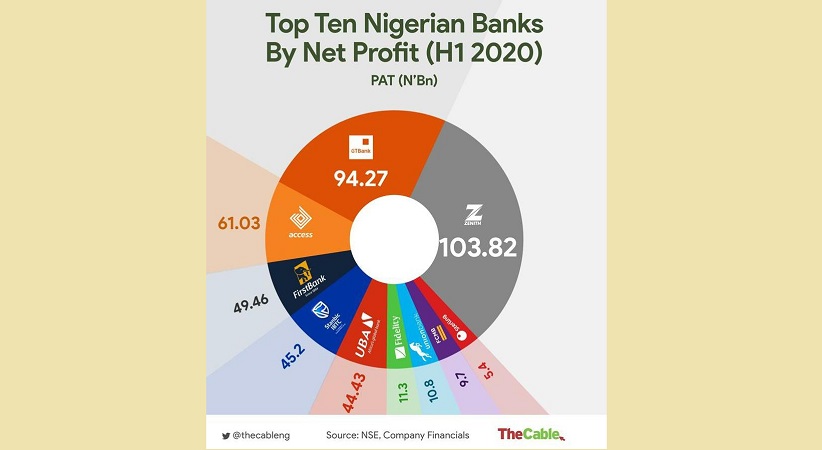
Many decades ago, First Bank captured most of the values in the Nigerian banking sector. Then, FBN served as a “central bank”, clearing cheques for other banks. That was before the Central Bank of Nigeria journeyed out of Lagos at scale. Then, Diamond Bank came with its technology, picking mammoth profitability along the line. GTBank took over with its ability to serve formal sector professionals, harvesting the best in the broad middle class. But in 2017-2018, GTBank suffered severe technology paralysis as its tech was just failing. It has since recovered but that opening moved many to Zenith. (You can also add the own-goals!). People, this is the age of Zenith.  Today, Zenith Bank is the category king of the Nigerian banking sector.

On LinkedIn – Follow and Hashtag 3 for Opportunities

0

I do get many requests here for referrals – many, from local and international organizations. So, to engage our community, every Wednesday, I will do what I will call Follow & Hashtag 3. Simply, (1) Follow me here (2) Hashtag 3 of your top specialties or skills below.

At the moment, a friend in the U.S. is looking for a CEO for a tech startup in Nigeria. The person must have capacity to grow the business. They are already in Lekki, Lagos but they need growth. Sector is healthcare.

Another friend in Dubai wants an experienced Digital Marketing Manager to drive a well funded tech company in West Africa. Experience on enterprise marketing required.

Tekedia Institute wants to build a Learning Management System on WordPress for Tekedia Mini-MBA (our members asked for it, we’ve listened). We are looking for proposals. This solution will be hosted at school.tekedia.com when completed.

Now, follow Ndubuisi Ekekwe and hashtag your 3 top skills below.

The Need for Immediate Training of Civil Servants on Value Creation

0

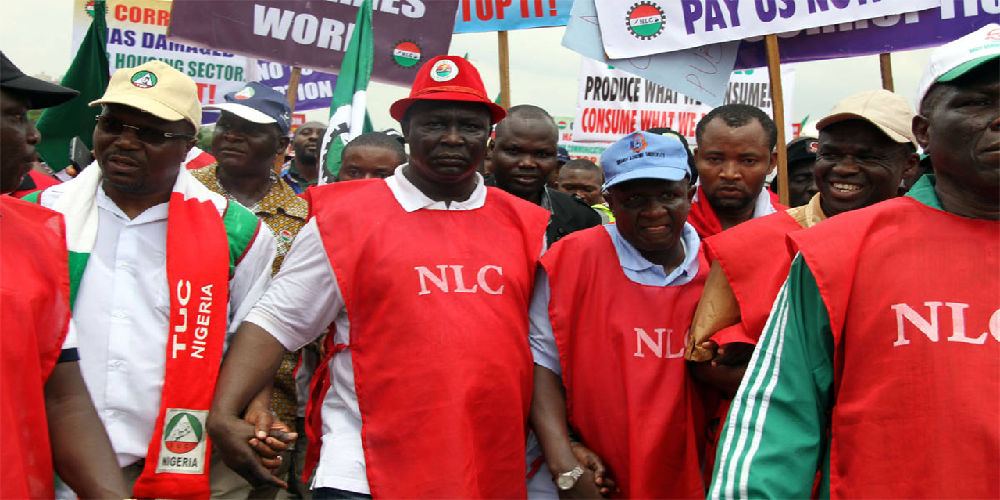
The House of Representatives is doing something that will make Nigerian civil servants smile in no distant time. Oh no, they are not increasing workers’ salaries. But they are making a move towards giving workers the legal right to have other sources of income.

According to the Punch newspaper of 6th September, 2020, the House of Representatives is amending the Code of Conduct Bureau and Tribunal Act to allow civil servants to “own and run other private businesses apart from farming”. Punch reveals that this amendment proposal was submitted since last year and that it was sponsored by Awaji-Inombek Abiante, the lawmaker representing Adoni/Opobo/Nkoro Federal Constituency in Rivers State.

The lawmaker proposed the amendment of this bill to allow civil servants to own businesses because he believed that it was unfair to prevent them from engaging in commercial activities. He argued that civil servants that have ideas and skills that could improve the socio-economic situation of the country, were barred from selling their ideas because of this existing law. He also said that civil servants have already been breaching this law because they engage in petty businesses. He further asserts that preventing civil servants from being enterprising affects the country gravely. However, this bill has passed its second reading.

The first time I heard about this latest development, I was so happy. The person that sent the link to the news page to me knew that I desire that civil servants should be allowed to legally have other sources of income. So when this person saw this news, she didn’t waste time breaking it to me. But after the euphoria of the news dissipated, I asked myself if civil servants can actually own and run businesses.

From what we all know, many civil servants have petty businesses they run. For instance, some of them go to their offices with clothes, jewellery and other accessories to sell. Some have shops, where they go when they close from work. Many go into farming, though not usually for commercial purposes. Some turned their cars into taxies. The businesses civil servants go into are too numerous to be mentioned. But then, most of them are not sustainable. Some start up their business today and close it tomorrow. Some maintain theirs but the business neither goes up nor down. So, will changing, or rather, amending this law make any changes? Well, your guess is as good as mine.

Maybe a lot of things should be done before civil servants are thrown to compete with professional entrepreneurs out there. Releasing them into the business world is equal to exposing them to be swallowed up by professional business men and women, who will wait for them to come out with their salaries so that they (the business people) will collect the money from them and send them back home. It is true that civil servants are already breaching the existing Code of Conduct Bureau and Tribunal Act, as observed by Abiante, but their businesses are not sustainable.

I stand for this amendment, but let civil servants be prepared beforehand. Of course, it is not compulsory for every worker to own and run a business, but the majority will be tempted to do so. This then requires that training on entrepreneurship be organised for civil servants as soon as possible. I did not say that the government should organise this training for them, but they need to give the go ahead for it to happen. Private individuals can use this opportunity to prepare civil servants for the future. Who knows, maybe this amended bill will become effective before the end of the year. So there is no time to waste.