
DD
MM
YYYY

PAGES

DD
MM
YYYY

spot_img

PAGES

Home Blog Page 6172

SPECIAL REPORT: Appointing Vice Chancellors for Nigerian Oldest Universities: Questions of Federal Character and Gender Imbalance

2
University of Ibadan, a federal university

For a number of years, the University of Ibadan, the University of Nigeria, the University of Lagos, the University of Benin, the University of Calabar, the Ahmadu Bello University, Obafemi Awolowo and University of Maiduguri have been in existence. From various sources, these universities have placed and still placing Nigeria on the global academic community in terms of producing quality graduates and researches.

Like other universities in the world, these universities have experienced and still passing through a lot of difficulties in their quest of realising mission and vision of 21 century universities, expected to have dynamic resources and ensure equal opportunity for everyone irrespective of socioeconomic and gender status. In spite of this, information indicates that appointment of vice chancellors for these universities and the newly established universities has been in favour of male academics more than female academics. Apart from the gender imbalance, available information also shows that vice chancellors have been appointed mostly from the state and region where the Universities are located.

On different fora, leaders of some of the Universities established after the 9 oldest Universities have debunked allegation of total disregard for the Federal Character Commission Principles in the appointment and promotion of staff. To some Public Affairs Analysts, Nigerian universities will remain local as long as regionalization and gender imbalance continue to characterised appointment of vice chancellors and employment.

“In the past things were different. For instance, the first vice-chancellor of UNILAG was Prof. Eni Njoku (1962-65). He was non-Yoruba. There was also Prof. B. Kwaku Adadevoh (1978-80), non-Yoruba. There was Prof. Dike, an Igbo, who was UI’s VC. Then, the first indigenous ABU administrator, Prof. Audu, was a northern Christian. Prof. Akinkugbe, from Ondo State, was ABU’s VC (1978-1979).”

Our Data and Measures

To put the discourse into a new perspective, our analyst examined demographics of the past and current [excluding those in acting capacity] vice chancellors of the oldest University in Nigeria. Emphasis was on their gender and state of origins. Out of the 9 Universities, comprehensive data were only found for 6 Universities. Efforts to get the details of the past Vice Chancellors ta the University of Maiduguri, the University of Benin and the University of Calabar were not successful throughout our two months of mining the needed data.

These Universities do not have the list of the past VCs like other Universities. Attempt to get data for the state of origins of Professors Oleka K. Udeala, Chimere Ikoku and Herbert C. Kodlilinye, past VCs of the University of Nigeria, on the Internet was equally not successful because their profiles do not include the data. Out 6 past Vice Chancellors found for the University of Maiduguri, Professor Ibrahim Abubakar Njodi, Professor J. D Amin and Professor Mohammad Nur Alkali hail from Gombe, Adamawa and Yobe respectively. We did not find data that establish state of origin of Professors Aliyu Shugaba, Mala Daura and Abubakar Mustapha. Professor Zana Akpagu hails from Cross River State and found as one of the past Vice Chancellors of the University of Calabar. We did not discover data that indicate state of origin of Professor James Epoke, another past Vice Chancellor of the University.

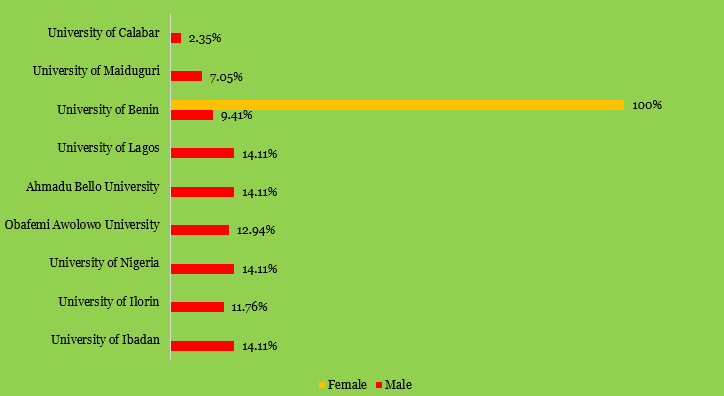
For the 9 Universities, our analyst found that 85 professors have led the University [some are still leading the Universities]. Looking at the number from a gender perspective, all the professors were/are male [see Exhibit 1]. Professors Grace Alele-Williams and Lilian Salami as past and current Vice Chancellor of the University of Benin are only substantiative female VCs.

Emerging Insights

Available data reveal that the University of Ibadan, the University of Lagos and the Ahmadu Bello University have had 12 substantive Vice Chancellors. With 11, 10, 9 and 8 Vice Chancellors, the Obafemi Awolowo University, the University of Ilorin, the University of Nigeria and the University of Benin respectively, followed the University of Ibadan, the University of Lagos and the Ahmadu Bello University. Available data also establish that the University of Maiduguri and the University of Calabar have had 6 and 2 Vice Chancellors respectively.

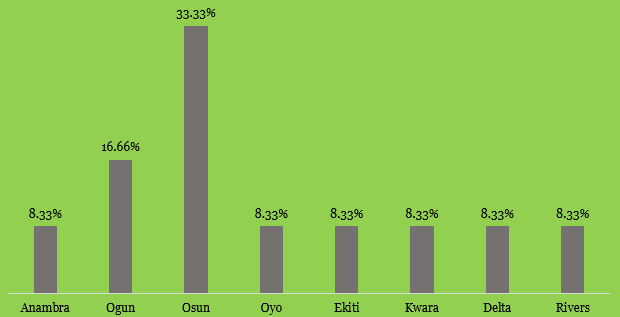
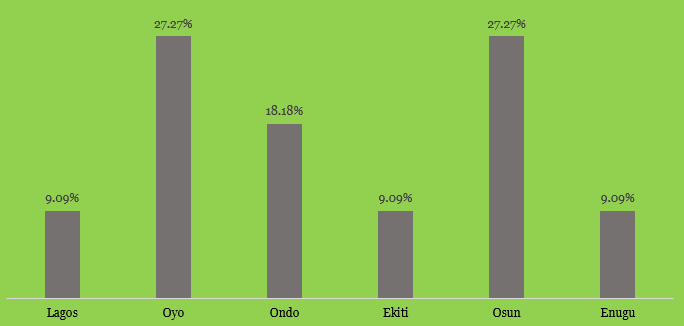
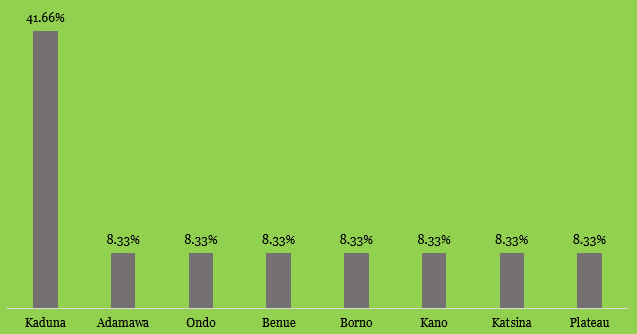
Over the years of appointing Vice Chancellors of the University of Ibadan, Professors from Osun state have been appointed more than others in the South-West region, where the University is located. Professors from Ogun state are trailing those from the state. This insight is not quite different in Obafemi Awolowo University. Professors from Oyo and Osun states tied in terms of occupying the position in the last few years. At Ahmadu Bello University, Professors from Kaduna state have held the position more than others in the North-West region. Professors from the South-West region, especially Ogun and Ekiti states, have been appointed more as Vice Chancellors of the University of Lagos than those from other states in the region. In a twist of regionalization of the appointment of the Vice Chancellors, Professors for the position at the University of Ilorin have largely been from Kwara state, a state in the North-Central region and Ogun state, a state from the South-West region. Anambra and Enugu states born Professors have been Vice Chancellors of the University of Nigeria than other Professors from South-East region, where the institution is situated.  The University of Benin has been led by Professors from Edo and Delta states more than other states in the South-South region.

Exhibit 1: Percent of Vice-Chancellors by Gender
Source: Universities’ Websites, 2020; Others, 2020; Infoprations Analysis, 2020

Exhibit 2: Past Vice Chancellors of University of Ibadan by State
Source: University of Ibadan’s Website, 2020; Infoprations Analysis, 2020

Exhibit 3: Past Vice Chancellors of Obafemi Awolowo University by State
Source: Obafemi Awolowo University’s Website, 2020; Others, 2020; Infoprations Analysis, 2020

Exhibit 4: Past Vice Chancellors of Ahmadu Bello University by State
Source: Ahmadu Bello University’s Website, 2020; Others, 2020; Infoprations Analysis, 2020

Exhibit 5: Past Vice Chancellors of University of Lagos by State
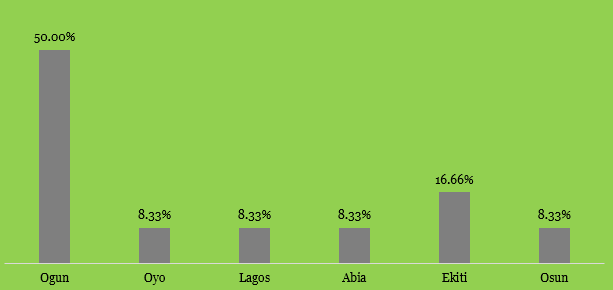
Source: University of Lagos’ Website, 2020; Others, 2020; Infoprations Analysis, 2020

Exhibit 6: Past Vice Chancellors of University of Ilorin by State
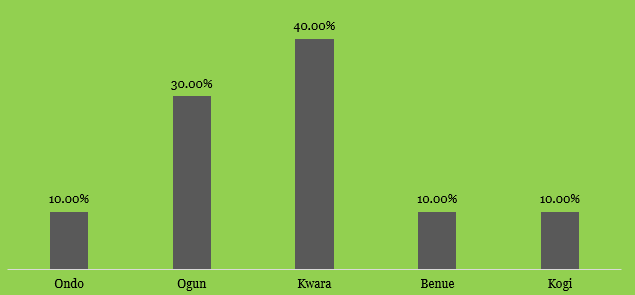
Source: University of Ilorin’s Website, 2020; Others, 2020; Infoprations Analysis, 2020

Exhibit 7: Past Vice Chancellors of University of Nigeria by State
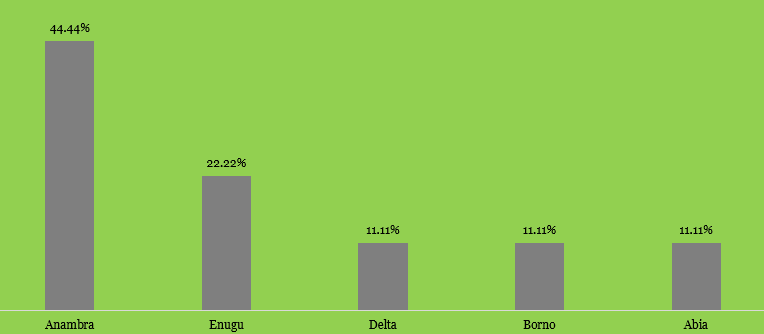
Source: University of Nigeria’s Website, 2020; Others, 2020; Infoprations Analysis, 2020

Exhibit 8: Past Vice Chancellors of University of Benin by State
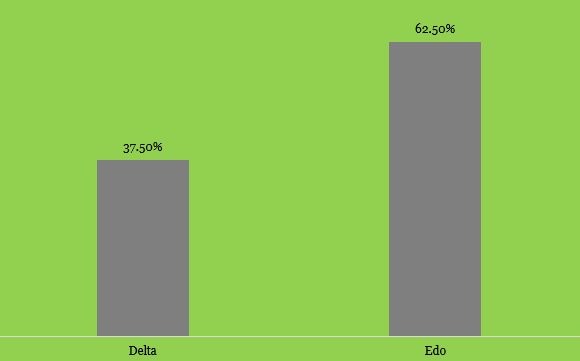
Source: University of Benin’s Website, 2020; Others, 2020; Infoprations Analysis, 2020

Implications and What Needs to Be Addressed

Based on the emerging insights, our analyst notes that the need to question the efficacy of the Federal Character Commission Principles and gender policy is now. It is obvious that the principles and policy remain rhetorical statements and document after many years of formulation and initiation. The difficulty in having female Vice Chancellors in the Nigerian universities has been attributed to inadequate numbers of qualified women, patriarchy, domestic and family demands, socio-cultural beliefs that leadership is the prerogative of men, lack of encouragement and support, lack of leadership skills and poor mentorship, among other factors.

In our earlier analysis, it has been noted that the wording of vacancy advertisement for the Vice Chancellor position is giving male professors edge over female professors. This needs to be addressed in subsequent advertisements. Masculine-words should be downplayed while calling for submission of applications. Appointment of the new Vice Chancellors mostly from the ranks of formers deputy vice chancellors and deans is also putting female professors at disadvantage because only a minority of female professors occupy the positions [DVCs and Deans]. From the present insights, it is difficult to accept that Nigeria is fostering national unity, cohesion and promote a sense of belonging among all Nigerians working in the Universities.

Pump Price Hike: Nigerians Are Yet to Understand the Implications of Fuel Subsidy Removal

0

The increase of petroleum pump price to N151.56 has resulted in uproar. There was wide condemnation of the increase by Nigerians following the announcement by the Pipelines and Product Marketing Company (PPMC), a subsidiary of the Nigerian National Petroleum Commission (NNPC), on Wednesday.

The PPMC’s, D.O Abalaka announced the increment through a statement which reads: “Please be informed that a new product price adjustment has been effected on our payment platform.

“To this end, the price of Premium Motor Spirit (PMS) is now one hundred and fifty one naira, fifty-six kobo (N151.56k) per liter. This takes effect from September 2, 2020.”

Upon the news, Nigerians took to social media to register their displeasure over the development.

“Misroad & mishap of a government we have, not minding the rippling effect on the citizenry, we can’t call this insensitivity again, this is just pure Evil!” Engr. Segun Akande wrote on Twitter. “How do you expect citizens to live with these erroneous eroding steps, when government is deliberately inflicting excruciating pain on its people? We need God’s intervention, this government is callous.”

“Oh God, have mercy on us, the masses, the government continues to increase prices of essentials; petrol, power, taxes, salary remain static for those that are working, majority are jobless, no income for many, oh God have mercy on us,” Modupe Lawal said.

They were among the many voices that called out the federal government for the fuel price hike. Others shared video clips of the 2012 national protest, instigated by former President Goodluck Jonathan’s attempt to remove the petrol subsidy then. They said that the most glaring message in the video clips is that many of the protesters are in government today.

Though some members of the Nigerian House of Representatives have waded into the matter, ordering PPMC to halt the implementation of the new pump price, the reversal seems unlikely.

In a statement on Wednesday, the Minority Leader of the House Ndudi said the pump price increment is unacceptable as it would result in further hardship for Nigerians.

“The increase is unacceptable as it will result in an increase in the already high cost of consumer goods and services, and worsen the current economic hardship being suffered by Nigerians,” he said, adding that “the minority caucus in the House of Representatives rejects the announced increase in the pump price of fuel.”

Consequently, the Minority Caucus ordered PPMC to immediately rescind its announcement and revert to the former price.

In solidarity with Nigerians, the Nigerian Labour Congress (NLC), who led the protest back in 2012, rejected the price hike. The president, Comrade Ayuba Wabba said the Federal Government is taking Nigerians for granted by inflicting more hardship on them in the face of a global health crisis.

“It is like Nigerians are being taken for a ride, the increase in price of petroleum is like adding insult to injury. The increase in price of petroleum has happened now more than three times in three months, only yesterday (September 1) they hiked the tariff of electricity. And to compound it they also reduced the interest rate of savings which affects mostly the poor and the vulnerable,” he said.

While the reactions of both the House’s Minority Caucus and the NLC are being applauded by many, it shows that most Nigerians are yet to understand the implication of fuel subsidy removal.

In March, the NNPC GMD, Mele Kyari announced that fuel subsidy has been totally removed and there is no going back to it.

“There is no fuel subsidy anymore in Nigeria. It is zero subsidy forever,” he said. “There would be no resort to either fuel subsidy or under-recovery of any nature. NNPC will play in the petroleum marketplace, just like another marketer in the space.”

The removal of the fuel subsidy means that the Federal Government will no longer pay for Nigerians to buy PMS at a cheaper rate, they will now have to buy according to global oil prices. It’s a reality many failed to grasp immediately due to the downturn in the oil market.

Back in March, there was a massive decline in oil prices due to COVID-19 pandemic, so that the government had to reduce fuel price from N143 to N125, and subsequently reduced it to N123.50 in April. Therefore, the impact of the subsidy removal wasn’t immediately felt. However, as economies began to open, oil demands increased accordingly, forcing Nigerian petroleum marketers to increase the pump price.

Today, the Brent Crude is $44.56, which is a significant growth from the past decline and a big trouble for Nigerians. Alas, many are oblivious of the bitter reality of rising crude prices, which means that they will continue to buy fuel at higher cost as long Nigerian refineries are not working and the government is not paying to subsidize the cost.

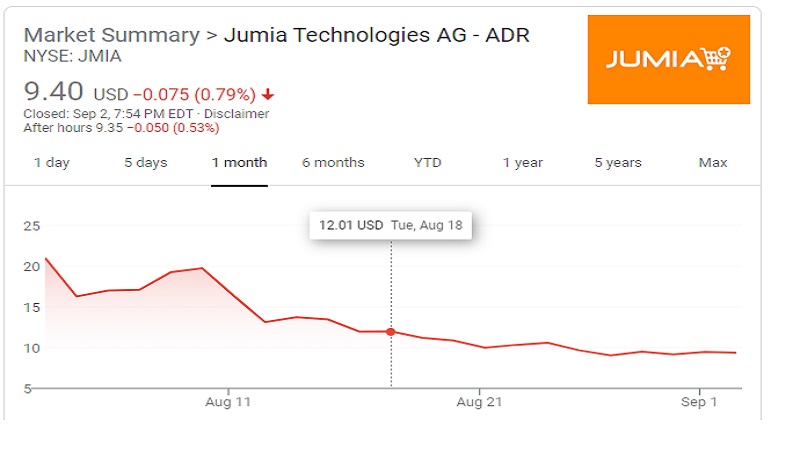
Jumia’s Facebook Problem

1

According to Facebook, “Facebook Shops is a mobile-first shopping experience where businesses can easily create an online store on Facebook and Instagram for free. Shops let you choose which of your items you want to feature, merchandise with product collections and tell your brand story with customizable fonts and colors. In Facebook Shops, you’ll be able to connect with customers through WhatsApp, Messenger or Instagram Direct to answer questions, offer support and more”.

If you look carefully, that is what Jumia does. Simply, Jumia has a big Facebook Inc (Messenger, Instagram, and Facebook) problem just as movie theaters have YouTube problems in Africa. Provided these dominant ICT utilities are expanding, companies like Jumia will be left to do the hard jobs as women wigs, clothes and other easy things thrive on Facebook. Facebook has the demand and could run a quasi-marketplace better than any company in the world right now.

In this videocast, I discuss the future of e-commerce in Africa and why the sector is still anyone’s game to win despite the presence of key competitors. The loss-making sector demands someone with capital to boost logistics and accelerate scale to make money. Today’s leaders are not doing that yet, and can be easily disrupted and displaced. But there are challenges in competing in this sector because the environment and the fundamentals are toxic with largely no infrastructure to key in. The business competitive factor is not the internet or website but logistics. Winning this sector to become a category-king will be settled by a company that can invest, at scale, in logistics to serve more cities and countries.

The Message from Canaanland

2

“Can you imagine anyone bringing a coronavirus patient to me and I won’t lay hands on him? Will I wear gloves to lay hands on them? I will lay hands on them; breathe into them; embrace them. What you carry is eternal life, it’s not human life. You should know that,” Bishop Oyedepo, Winners Chapel

This quote reminds me of what my grandmother told me years ago in the village. I was just made a prefect in secondary school, and suddenly was vested with power to “punish” junior students. But as I was rejoicing at this new power which my school had vested in me, I met a group of young men who had gone on a revenge mission. Someone had gone into our local stream, and killed the fish therein. I asked her, “the elders have said that these fishes must not be killed because they belong to the gods. Why must it be humans that would fight for these gods after someone who became a born again Christian was testing the potency of these gods?”

First thing, she asked to see my notebooks to be sure I was doing well in school (she was not literate to read but she could decipher progress by looking at “goods” and “bads”). Then the education: 

The gods do not own the fishes and there are really no gods in Tantuta (the local stream). What happens is this: the stream is shallow and does not flow very well. If you allow people to fish on it, you will destroy the main source of drinking water for families in this village. By adding “gods”, elders scare people from attempting to destroy the water ecosystem.  The tradition is clear: if people cannot be drowned in the water body, no one can fish on it because it does not have capacity to clean itself for family use after perturbations necessitated during fishing.

Simply, it is not everything that we need to test: if someone has Covid-19, do not go close without a mask. Yes, there is no reason to find out why not!   I know you are not a bishop!

Comment on LinkedIn Feed

Comment: At least 100 evangelical pastors have died in Bolivia because of the Covid-19, also a popular Cameroon pastor, Frankline Ndifor, died of COVID-19 following his prayers that hundreds of his supporters cured of the coronavirus, the funny aspect was that after his death, hundreds of his followers believed that the pastor is not dead, but he is rather on a spiritual retreat with God and will return soon, in which they started singing and praying for his resurrection until Cameroon police used force to gain access to his residence. We shouldn’t get brainwashed by any religious leader either imaams or pastors even traditionalists we should always apply wisdom to whatever they say.

My Response: Actually, I wrote in parables. My point is not on the pastors and imans. Of course, I respect pastors because I am a teacher of the Gospel, a Scripture Union kid, brother Area pastor in RCCG, mother a preacher in Methodist, etc. Like I explained (in the blog), the man who wanted to kill the fish in the village stream might have confused a sermon. Here, Bishop can do this, and be fine. The challenge is that someone can actually try it because he heard it from Bishop. That is my concern. It is not every info that leaders can share with followers because some are unprepared to use them!


Reasons to Avoid Self Comparisons

1

Anytime somebody complains about unfavourable situations in his life, or feels weighed down by circumstances around him, he is told to look around so he could see people that are worse off. People believe that the only way, or rather, the best way to show gratitude or to become content is by seeing those they are better than. But if you really look at this philosophy, you will come to agree that it does not help as people think. I will explain this later.

Another ideology and behaviour that we should avoid is comparing ourselves with more successful people. Sometimes, we feel that placing ourselves side by side with persons that are more successful than us will spur us on. Well, this is possible. In fact, it helps. But then, if it is not well thought out and handled, it will cause more problems.

The first negative effect of comparing ourselves with people is that we lose focus. A good example of this can be seen when athletes run 100 meters dash. In this type of race, every athlete has his own lane, which must be maintained till the end of the game. In order to maintain this lane, athletes have to focus only on the finishing line. Should any of them look beside him or withdraw his eyes from the finishing line to look at those before or behind him, he is bound to run into another person’s lane. Apart from facing disqualification, an athlete that jumps out of his lane is likely going to crash into a fellow runner. This is the same thing with every aspect of life. Focusing on people instead of the goal can distract us. Of course we need people to motivate us with their life’s stories and achievements, but that should not be our main spur. Likewise, we don’t have to focus on those behind us to be grateful for what we have and how far we have gone because it will draw us back or make us fall. You will see the best way to do this if you stay with me.

If we keep our gaze on people that we are better than, we will think that we have “arrived”. We will believe that we are ok with what we have achieved because we will think that we have achieved so much. We will not be bothered with finding ways to improve on ourselves. We will actually become that proverbial one-eyed man that is the king in the land of the blind. But guess what, when we find ourselves outside our comfort zones, we will get lost.

If a person focuses his attention on people he believes are more successful than him, he is going to experience a lot of negative emotions. Bet me, such a person will encounter despair, frustration, anger, anxiety, hatred, jealousy, envy, you name it. Some may find themselves in an unhealthy competition with the object of their attention. Others may believe they don’t need to worry themselves any longer because they can never measure up. There may be the risk of developing inferiority complex or desiring to terminate our “oppressor”. By the end of the day, it will pay nothing good to compare ourselves with others.

The big question now is who should we compare ourselves with?

A lot of people may ask you, “Must you compare yourself with someone?” Well, naturally, you will want to measure your progress, and the only way to do it is by comparison. If you don’t compare, you won’t know the differences. You may continue to make the same mistakes or remain stagnant if you don’t measure your progress. But then, you don’t need to look outside when measuring your progress and achievements. Just look within you and the answer will stare you back in the face.

The best person to compare yourself with is you. Like the athletes, we all have our own lanes and finishing lines. That someone is better or worse than us should not be our concern, sort of. Yes, we need successful people that can pull us up, but we don’t have to measure our progress using their yardsticks because they have theirs while we have ours. All we need to do to see how far we have gone is to compare our present selves with who we were in the past. We just have to look into our lives to see how we have been moving up or going down. If we see that we have made progress from who we were in the past, then we should express our gratitude to God and to those that helped us through. However, if we have been stagnant or moving backwards, we should then trace the reason for this and work on it. There is no way comparing ourselves with other people can bring on this milestone.

Note that I am not saying that we should ignore the successful and the yet-to-be successful people around us. Neither am I saying that we shouldn’t allow their success to motivate us. I am only saying that we should not use them as yardsticks to measure our progress.