DD
MM
YYYY

PAGES

DD
MM
YYYY

spot_img

PAGES

Home Blog Page 6225

WeForGood Partners Tekedia Institute To Train WFG Fellows [Apply for Grants]

0

WeForGood International works with leading global and local institutions like the UN, World Bank, banks, etc to advance communities through support of entrepreneurial and non-profit missions . Temitayo Ade-Peters is the CEO of WeForGood (WFG).  Last year, it made total grants close to $300,000 to its fellows, with $10,000-$20,000 grant typical. For this year, WeForGood has moved its training to Tekedia Mini-MBA Corporate which focuses on corporate training. Only Fellows who have gone through the Tekedia customized  Mini-MBA program for WeForGood can qualify. For more, visit WeForGood application form  and apply for consideration as a WFG fellow.

This training focuses on the WFG Sustainable Solutions Africa Project. The project is a blended fellowship and accelerator programme to promote skills for sustainable development, specifically for reducing unemployment and poverty alleviation on the continent. The initiative targets youths who have developed skills with which they create opportunities for themselves and others. WFG empowers start-ups and social entrepreneurs who run for-profit and not-for-profit businesses addressing one or more areas of the SDGs to amplify their impact through training, coaching and access to financial support.

WeForGood is a community that brings people and organisations together to act on causes they care about, employing technology as an enabler for effective citizenship, collaboration and participation in fulfilment of the Sustainable Development Goals, and for the overall wellbeing of communities. The aim of the community is to equip the everyday individual to go beyond ‘talk’ and take purposeful action. The platform connects and enables people with similar passion to turn their passion into power, and make collective impact.

Tekedia Mini-MBA Corporate is a customized version of the general Tekedia Mini-MBA designed for institutions by sector, phase of growth and organizational structure. It focuses on the same core theme of innovation, growth and digital execution.

Is Buratai Blaming Nigerians for his Inability to Contain Insurgency?

0
Nigeria army boss

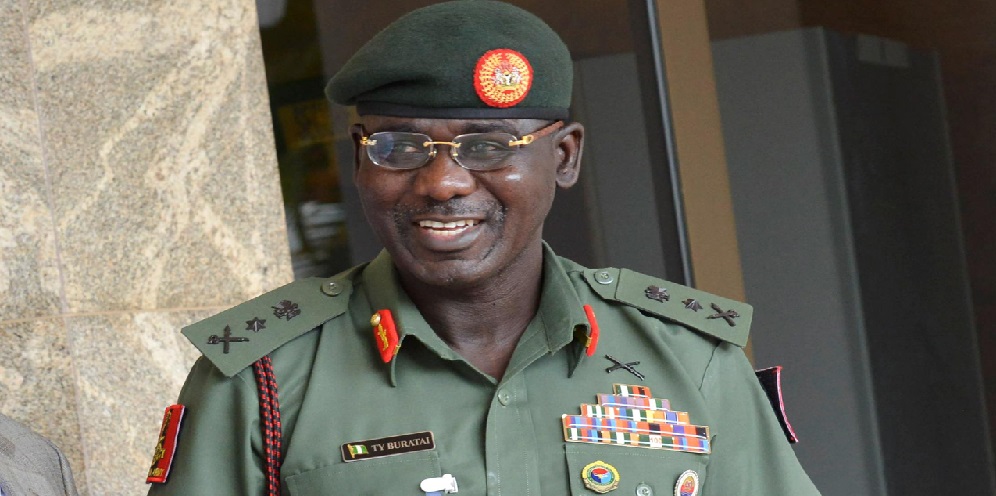
Tukur Buratai, the Nigeria Chief of Army Staff, has indirectly blamed Nigerians for the inability of the military and police force to contain terrorism, banditry, kidnapping and so on. He made this accusation on Monday 20 July, 2020, when he visited the President to give him updates on national security matters. Buratai told journalists that it is up to Nigerians to decide on whether they want insecurity to end or not.

Buratai said “If Nigerians want it to end today, I can assure you it will end today if everybody joins hands because these bandits are not outside Nigeria. They are not from foreign land.” Furthermore, he said, “Like I said, if we want it to end, the totality of the people’s effort must be put into it to see that insecurity in this country is reduced to the barest minimum.”

I don’t know exactly who these “Nigerians” the Chief of Army Staff is referring to, but I hope it is not the common man that wants to move around the country freely. From what he said, people that don’t live in Nigeria will think that we are enjoying the high rate of insecurity in the country. People are losing their lives and properties daily. Farms have turned into settlements for these people. Villages have been sacked. And many Nigerians have become refugees in their own country. So who exactly is Buratai blaming for the incapability of the people we trusted to fight insecurity? Or is he saying Nigerians should find weapons and join the battlefield?

It is possible that the army chief is indirectly telling Nigerians that they are harbouring these people and shielding them from security personnel. It is possible that he believes that these villagers that are killed in their numbers know where these men hide but wouldn’t divulge the information. It is also possible that he believed Nigerians willingly allowed their children to be recruited by these bandits and insurgents.

If the army chief is blaming us for aiding and abetting insecurities in this country, I believe they have those that gather information for them. Shouldn’t he have gone for that? He also made mention of the army setting up surveillance for these bandits; isn’t that for finding who these people are and where they hide? If they are having problems locating these insurgents and their hideouts, he should say so, so that whistleblowers will do their jobs.

Another possibility is that Buratai may not be blaming ordinary Nigerians but the elites, especially the political ones. It is possible that he is indirectly telling us that certain people are frustrating his works. We have seen videos of Nigerian soldiers complaining about lack of weapons with which to fight insurgency. We have heard of probes concerning the misappropriation of funds meant for the purchase of weapons. We have also heard that corruption thrives among the top military officials and elites. Of course we don’t need to talk about politicians and public servants. So could it then be that Buratai is asking these groups of people to say “yes” so that insurgency will end?

I truly don’t know who is delaying the containment of insecurity in this country but that person or persons need to be contained immediately. People that have seen these bandits said that they are ordinary civilians with guns. We have heard that these people are no match for our military men, so what is actually the problem? Imagine untrained men ambushing and killing many trained military men; or even engaging our soldiers in duels and winning. This just comes to tell you that something is seriously wrong somewhere. And honestly, unless that hole is blocked and the thing that causes it is removed, insecurity will overwhelm us in the nearest future.

We need to encourage our Chief of Army Staff to do more in his battle against insurgency. We shall ask him not to relent in his efforts towards protecting the lives and properties of Nigerians. As for whether Nigerians wanted the insurgency to end, we say a big “YES, we want insecurity to end today”. As for where those people are hiding, let us tell him to start from our farms. We are tired of being captives in our own country.

A Senator Replies: “How Can Nigeria Stabilize the Naira?”

2

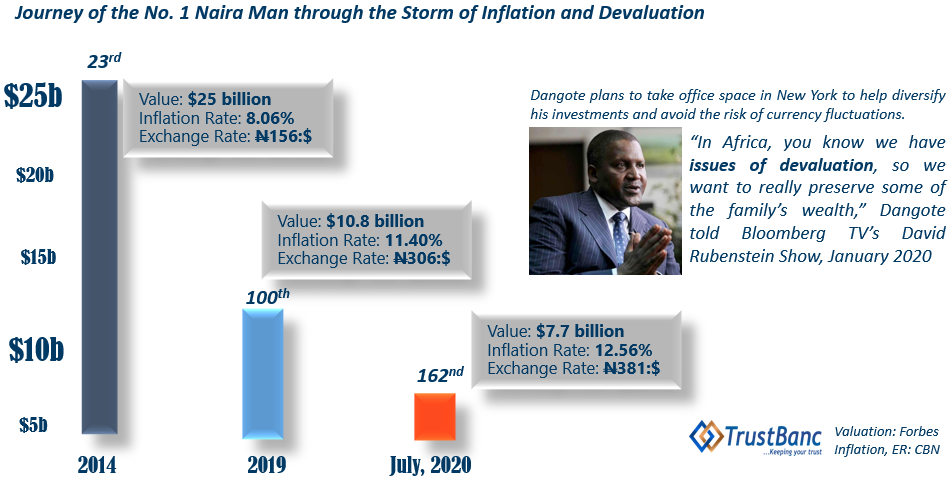
Good People, after the piece which took our national challenge home, after I explained, using Aliko Dangote,  on how Nigerians are getting poorer, one of our Senators responded with a question, “How Can Nigeria Stabilize the Naira?” I was in the National Assembly late last year and made my points. I have sent the slides to the Distinguished Senator. Of course no one is saying that there is a magic wand to fix Nigeria’s problems.

Yet, we all agree that we cannot get to the mountaintop overnight, as the effects of today are largely related to the negligence of many years ago. And fixing Nigeria would mean freezing those negligence elements.The universities are still on strike! Typically, after long strikes, virus or no virus, most students do not return, and Nigeria does not seem to care on the economic impacts of these strikes. 

Nigeria will not rise solely from Abuja but from what Kano, Lagos, Onitsha and other cities can do with the help from Abuja. I will send a formal Brief to the Senator but I did also send this piece I wrote in Harvard Business Review on African development and the case study of China. There is abundance in Nigeria; we need to unlock it. Then, Naira will feel good.

As robotics and AI advance, most countries will keep their production processes at home, eliminating the need for cheaper labor abroad. In this redesign, Africa’s competitor is not China; robots and AI are the real competitors. Africa can no longer depend on global manufacturing to become industrialized, nor can it simply mimic China’s policies. But if Africa educates its citizens, integrates effectively on trade and currency, and improves intra-African trade, its industries can compete at least to serve its local markets. Where that happens, Africa can attain industrialization faster by scaling indigenous innovations and utilizing AI as enablers.

The Vice President’s Ease of Doing Business and Aliko Dangote’s Wealth

A CFA CharterHolder To Teach Accounting in Tekedia Mini-MBA

0

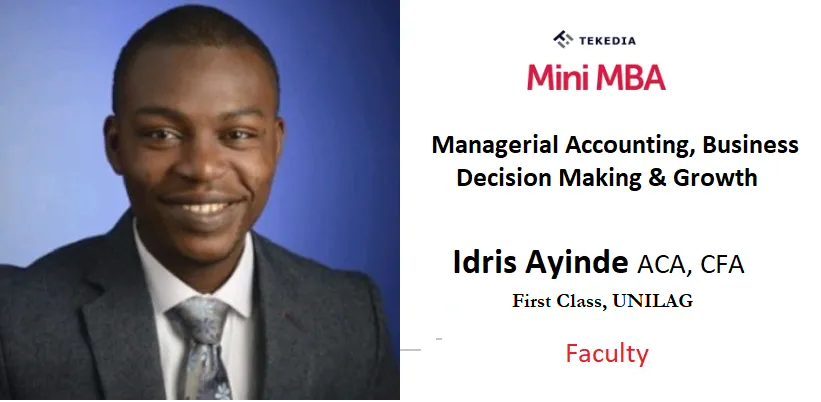
He is a young man and amazingly brilliant. He graduated with First Class from University of Lagos and holds the prestigious CFA charter. A chartered accountant, he has worked in three of the Big 4. Call him one of his nation’s very best! 

Idris Ayinde teaches Managerial Accounting, Business Decision Making and Growth in Tekedia Mini-MBA. He has broken those complex accounting things and common people like us can understand. Our goal in this session is to empower our community to understand how deeper insights on accounting ratios, and other elements, could make them better decision makers and growth makers. In other words, when they use what Idris has put in his lectures, innovation happens, execution becomes easier, and growth takes place.

At Tekedia Institute, we are nurturing innovators with glocal leaders in business, technology and markets. Join us and attend Idris class and his Live session.

https://www.tekedia.com/mini-mba-3/

Facebook Labels Trump’s Post As Zuckerberg Bows to Pressure

0

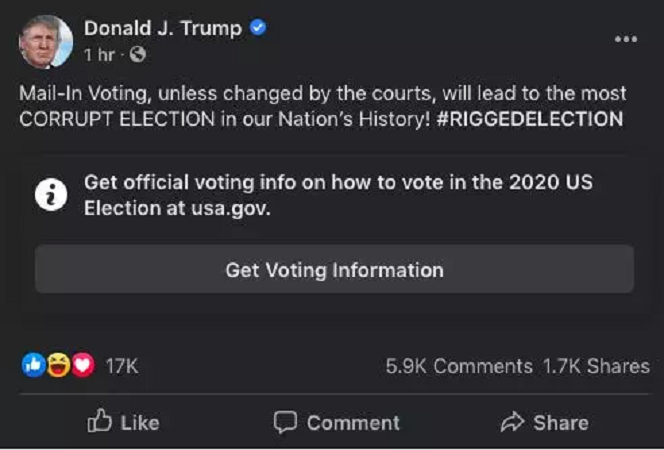
Facebook on Tuesday added a label to a post made by president Trump, which alleges that mail-in voting is riddled with fraud.

“Mail-in voting, unless changed by the courts, will lead to the most CORRUPT ELECTION in our Nation’s History! #RIGGEDELECTION,” Trump posted.

This marks the first time the social media giant is labeling Trump’s post for fact-checking. It added a label to the post prompting Facebook users to get accurate information about voting on usa.gov site.

Facebook has been at the helm of social media disinformation controversy, having allowed a horde of false information from politicians, especially the right wing, to thrive on the platform for long.

Advocacy group had last month launched a campaign to stop companies from advertising on Facebook as a way of getting the Silicon Valley giant to check cyberbullying, false information and racial abuse.

The campaign succeeded in getting many ad buyers, including Coca Cola, to pull out of Facebook for the month of July, causing the platform to lose a fortune and call for dialogue.

As the US election nears, calls to hold social media platforms responsible about information they allow have not been louder. Facebook said last month it will work to tame political disinformation on the platform by creating Voting Information Center.

“We are creating a Voting Information Center to share authoritative information on how and when you can vote, including voter registration, voting by mail and early voting.

“During a pandemic when people may be afraid of going to polls, sharing authoritative information on voting by mail will be especially important. We’ll be showing the Voting Information Center at the top of the Facebook and Instagram apps over the coming months,” Zuckerberg said.

Trump has made the list of political figures whose posts were labeled by Facebook since the announcement was made last month, including democratic presidential candidate Joe Biden. But then, the development has questioned Zuckerberg’s earlier stand on fact-checking social media posts.

In May, when Twitter labeled Trump’s tweet over mail-in voting misinformation, Zuckerberg said it wasn’t right because social media platforms should be acting as “an arbiter of truth,” and he would not do that on Facebook.

His comment appeared to have fueled Trump’s anger over the incident, that he intensified his threat to shut down Twitter. He even quoted Zuckerberg in his attempt to smear Twitter.

Zuckerberg’s sudden turnaround is believed to have stemmed from the pressure from advocacy groups. More and more companies are joining the boycott Facebook movement as the company and the groups failed to reach a consensus via meetings.

“Many of the changes we’re announcing today come directly from feedback from the civil rights community and reflect months of work with our civil rights auditors,” Zuckerberg admitted in a post last month.

Part of the changes announced include labeling posts made by politicians that Facebook would let up previously.

“A handful of times a year, we leave up content that would otherwise violate our policies if the public interest value outweighs the risk of harm. Often, seeing speech from politicians is in the public interest, and in the same way that news outlets will report what a politician says, we think people should be able to see it for themselves on our platforms.

“We will soon start labeling some of the content we leave up because it is deemed newsworthy, so people can know when this is the case. We’ll allow people to share this content to condemn it, just like we do with other problematic content, because this is an important part of how we discuss what’s acceptable in our society – but we’ll add a prompt to tell people that the content they’re sharing may violate our policies,” he added.

The CEO said Facebook is investing heavily in both AI systems and human review teams so hate speech is being removed before they are reported. He said a study from the EU showed that the company now acts faster and removes a greater percent of hate speech than other major internet platforms including YouTube and Twitter.