DD
MM
YYYY

PAGES

DD
MM
YYYY

spot_img

PAGES

Home Blog Page 6238

Should Our Children Sit for 2020 WAEC or Not?

15

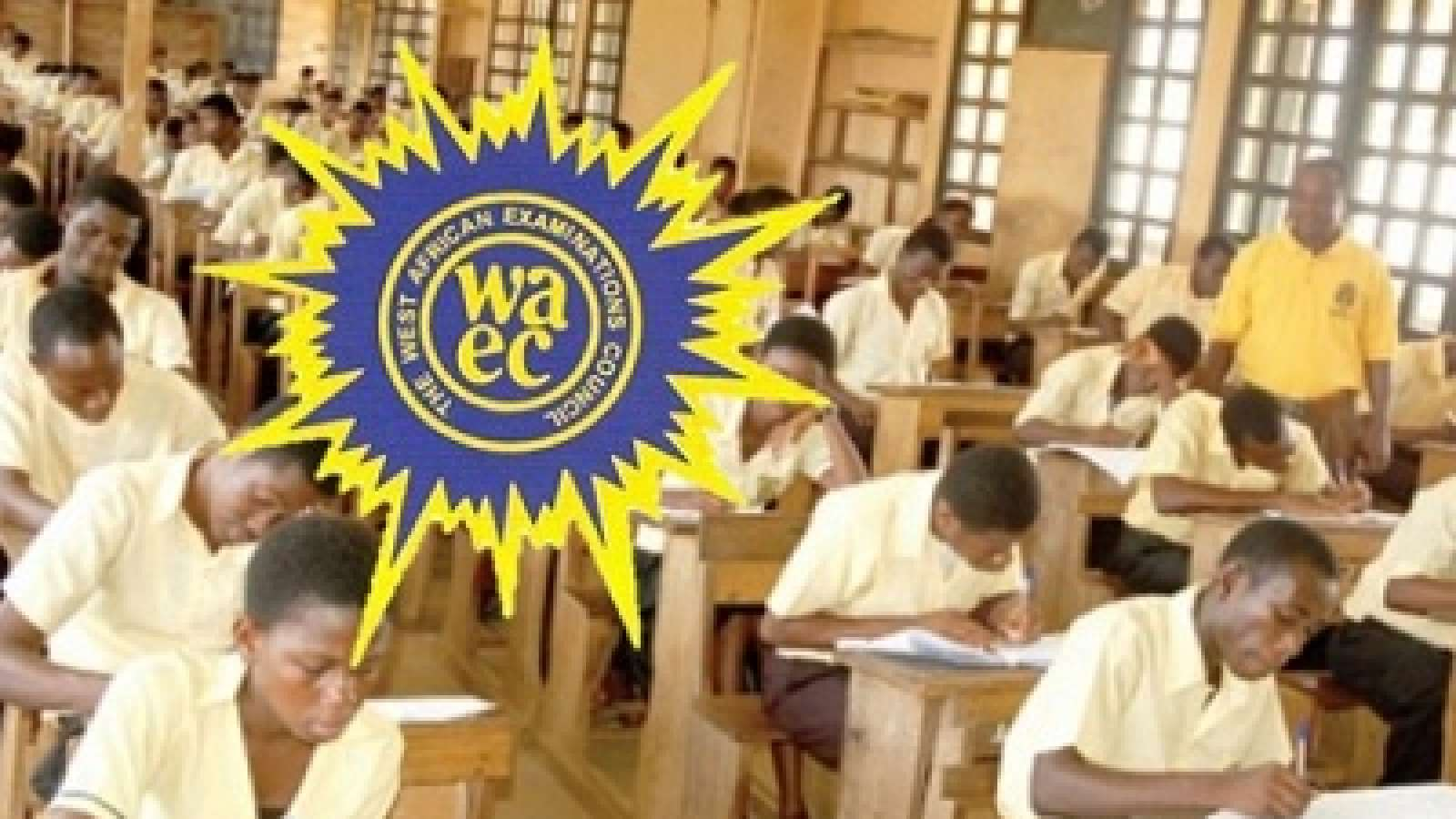
Nigeria was thrown into confusion on Wednesday, 8th July, 2020, when the Minister of Education, Adamu Adamu, announced the suspension of the reopening of schools. The Minister further stated that Nigerian students will not participate in the West African Senior School Certificate Examination (WASSCE) that was scheduled to start on 4th August and end on 5th September, 2020. Adamu Adamu passed the information to Nigerians after the Federal Executive Council (FEC) meeting on that day.

Nigerians were surprised about this sudden change in the reopening of schools because it came barely a week after that same federal government (FG) announced the approval for gradual schools resumption. The sudden u-turn of the FG made it look like there is no synergy between the different sectors of the government.

The sudden change in the decision of the FG to reopen schools not only disorganised schools administrators, students, parents and teachers, who were putting things in place for resumption, but also made it obvious that Nigerian students will miss the 2020 WASSCE. In fact, the Minister of Education revealed that Nigerian students will not be allowed to participate in the exam, claiming that WAEC is not in a position to determine when Nigerian schools will reopen. This is true anyway, considering that WAEC is just an exam body and not the FG.

But then, it seems that the FG did not consider the effect the suspension of school reopening will have on SS 3 students. This is because the Minister did not state whether the students, who have registered for 2020 WASSCE, will be refunded or allowed to defer their exams. However, it is obvious that these students will miss out in the exam because the Minister further said that it is better for Nigerian students to lose an academic year than to be exposed to the virus.

It may be easier for a Minister, who may not understand how difficult it is for many parents to raise the WASSCE registration fee, to freely imply that the money paid for the exam has gone down the drain. Even though the Minister meant well, it is still important that he feels the impact of his decision on the parties concerned. Hopefully, he understood the fact that Nigeria is not in a position to decide on when WASSCE will be written because Nigeria is just one of the five countries that participate in this exam.

Well, as Nigerians wait fervently for WAEC to react to the decision of the FG, it may be worthy to review situations that warranted the suspension of school reopening and the prevention of students from writing WASSCE.

The statement of the Minister of Education, which says that it is better for Nigerian students to repeat an academic session than to be exposed to the virus, was not made out of malice. In as much as this decision can cost Nigerian parents their hard earned money as well as deny the children a chance to sit for an exam they have prepared for, the Minister was not out of place with showing concern for the students. However, like most Nigerians have postulated, some of these children that we are talking about are already helping their parents to sell things in the open market. Their parents have also exposed themselves by going out and mingling with people. Remember that Edo and Ondo gubernatorial elections are on the way and these parents will still go out to vote. All I am trying to say here is that maybe these children would have learnt how to protect themselves from the virus.

Another good point raised by Nigerians regarding this issue is that social distancing has never been an issue with writing WAEC examinations because the exam body has already been practicing that before the pandemic. Remember that in setting up a hall for WAEC exam, a row does not contain more than six desks. I could remember that if a standard classroom is to be used as an exam hall, it should not contain more than 30 desks. So, there is no need to fear that the students will contract COVID-19 as a result of not practicing social distancing in the exam hall.

The only challenge I am seeing with the reopening of schools is that visitors will be allowed into school compounds and this could expose students, especially those in boarding schools, to the virus. This is where the school authority and the government will work hand in hand to provide those facilities that will help to check the spread of the virus. Maybe why FG is suspending reopening of schools is because the government has not provided those devices that government-owned schools will use. If that is the case, I think those in charge should come out and address the public properly rather than giving flimsy excuses about waiting till it is safe. So what if corona decides to stay with us for the next few years and the vaccine is not found, will our children continue to wait like this before they sit for WAEC?

All the same, if the FG remains adamant about stopping the students from sitting for WASSCE, it has to consider doing any of the following:

a. Ensuring that all the students that paid for the exam are refunded fully. This will then mean that students will wait and write only NECO and NABTEB, which are Nigerian owned exam bodies.

b. Making it optional for those that wouldn’t mind taking the risk of coming out to write the exam. I’m putting this here because I know a lot of good private schools that will ensure that all the guidelines given by Nigeria Centre for Disease Control (NCDC) were followed to the letter. It will, therefore, be unfair for these schools to miss out because government-owned schools are unprepared. So let government give chance for those that are ready to partake in the exam and those that cannot, will be refunded.

c. Liaising with WAEC to provide some of the needed equipment for checking COVID-19. Of course, I don’t see any reason why WAEC will not provide protective gears for their candidates and invigilators. Let it be their own contribution towards fighting the virus.

No one knows the decision WAEC will make soon concerning this suspension and other related issues. But we hope it will favour our children. However, the Minister of Education needs to go back and re-deliberate on how to keep our education system alive as we battle this monster.
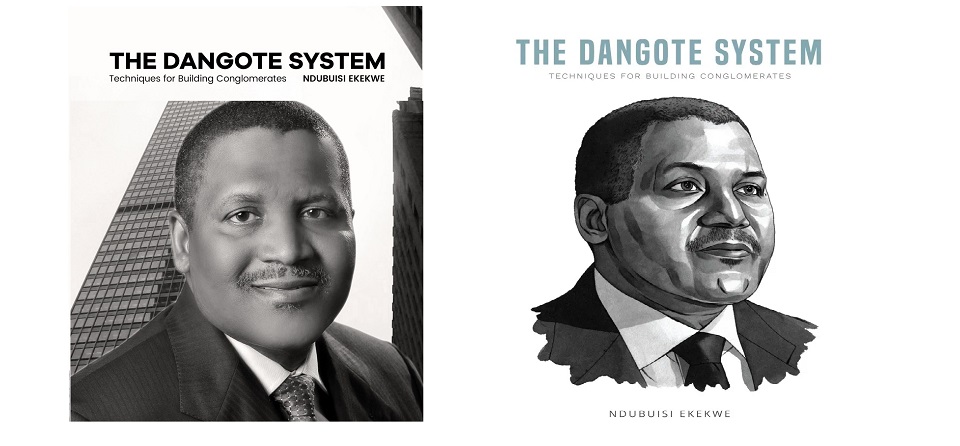
The Dangote System – A New Book, Coming July 22

7

My new book, “The Dangote System: Techniques for Building Conglomerates”, is arriving in July 2020.  The book focuses on Aliko Dangote’s business and what we can learn from his System. Yes, how a trader, who started like others, became the most important man in African business sphere, and in the process controlling one of the largest industrialized conglomerates in the world.

The book is exclusive for participants of Tekedia Mini-MBA edition  2 (catch up here, began June 22) and 3 (REGISTER, begins Aug 10).


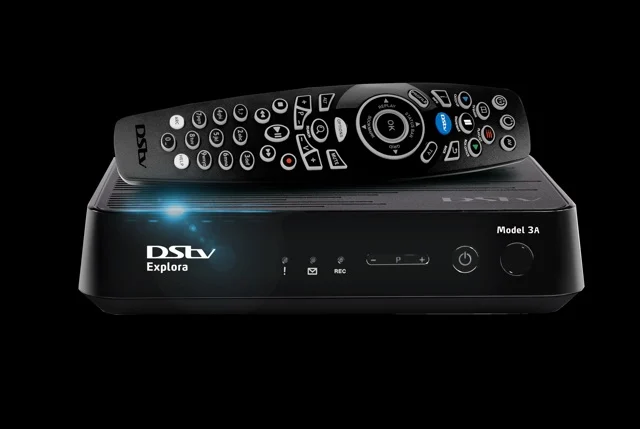
Live Sport Comparison: MultiChoice Showmax Pro vs. DStv Premium 

0

Multichoice-owned online streaming service Showmax is launching a new service, Showmax Pro, which bundles the existing entertainment service with music channels, news, and live sport streaming from SuperSport

DStv Premium is the #1 entertainment destination, with more movies, TV shows and sports than you can handle – and several ways to view them all. With 135+ TV channels and 95+ audio channels, it’s the best package DStv has to offer.

The live comparison is shown below.

Showmax Pro vs DStv Premium – Live Sport
Content Showmax Pro DStv Premium
Football Premier League, Serie A, PSL, and La Liga. Premier League, Serie A, PSL, La Liga, EFL Championship, Liga Inglesa, Taça FA
Rugby None None
Motorsport None Formula 1, Formula 2, IndyCar, NASCAR, Formula Um
Tennis None None
Golf None PGA
Cricket None English Test Series
Other IAAF Athletics, pro boxing, major international marathons.* IAAF Athletics, pro boxing, major international marathons, WWE, Virtual Tour de France, UFC, WorldRX Esports.


Nvidia Overtakes Intel As U.S. Most Valuable Chipmaker

0
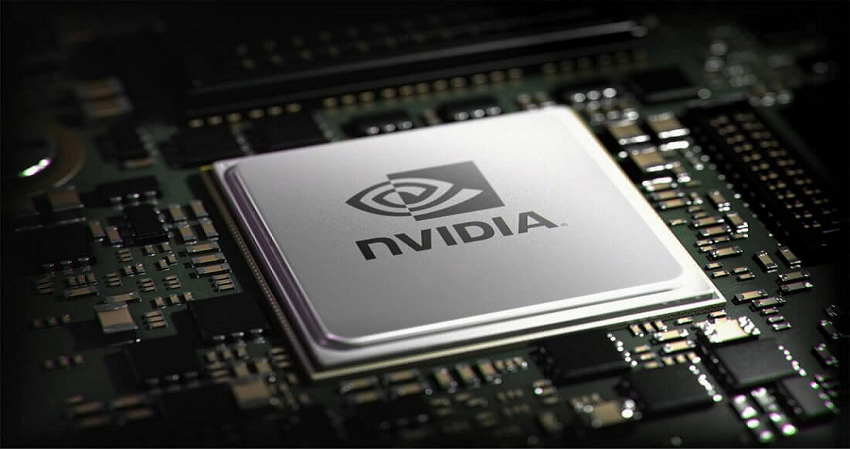
Nvidia chip

In a surprising development in the US semiconductor industry, Nvidia has beaten Intel to become the most valuable chipmaker in the United States for the first time.

The company’s shares rose 2.3% on Wednesday to a record $404, to push its market capitalization to $248 billion, $2 billion above Intel’s $246 billion value, according to Reuters.

US chipmakers have suffered a hit following the emergence of COVID-19 that resulted in the S&P low on March 23. But Intel was coming out of it coldly while Nvidia has enjoyed a relative growth that has put it ahead.

Intel’s stock has lost almost 3% in 2020; Nvidia’s witnessed a 68% growth. The growth has been attributed to the evolution of remote work by investors who believe that the coronavirus pandemic will continue to spur Nvidia’s datacenter business to fast growth.

Datacenters have boosted Nvidia’s performance in Wall Street ever since it moved concentration from chip making to automobiles, artificial intelligence and datacenters. Unlike Nvidia, Intel has been fully focused on PC processors and servers, failing to diversify its business. Even an attempt in mobile phone production failed.

Global competition in the semiconductor industry has also contributed to the failings of Intel. As the Chinese government pushed to cut its dependence on US made chips by pumping billions into manufacturing of semiconductors, the market capitalization of Intel began to fall below South Korea’s Samsung Electronics and Taiwan Semiconductor Manufacturing Co.

Reuters said that despite the stock rise of Nvidia, its sales remain a fraction of Intel’s. But analysts on average see Ndivia’s revenue rising 34% in its current fiscal year to $14.6 billion, while they expect Intel’s revenue to increase 2.5% to $73.8 billion.

Intel’s woes are even getting compounded as Apple announced it is divorcing Intel’s chip. Apple said it will henceforth make use of its own chips in its Mac computers in favor of Intel’s Silicon.

The different strategies embraced by Intel and Nvidia are yielding different results. Intel lost its title as the most dominant chipmaker in Silicon Valley, while Nvidia took advantage of the situation. Moreover, the odds appear to be in favor of Nvidia.

“What’s notable about Nvidia is that the graphics chips it sells for AI projects weren’t originally designed for that purpose. Still investors clearly believe that Nvidia, which also provides chips for gaming and for servers that run in corporate data centers, has lots of room to grow,” said Nick Wingfield.

Intel has been trying to formulate an AI strategy that included the $1.7 billion acquisition of fellow chipmaker Altera and autonomous vehicle technology developer MobileEye, which it acquired for $15.3 billion. But the strategies appear not bright enough to attract the commendation of Wall Street.

Other matters have paved the way for AMD to find a place in the competition. The company has adopted a strategy that relies on emulating CUDA and adoption of its ROCm platform.

Extremetech noted however, that the performance situation of ROCm continues to favor Nvidia, with AMD’s GPUs generally slower than their Team Green counterparts. Given that AMD is effectively performing code translation, that’s not too surprising.

Meanwhile, Intel is still fighting to establish itself in these new markets. The company’s server-side business has done excellently well in recent years, though not enough to catch the attention of Wall Street. Intel bought Havana Labs last year and effectively relaunched some of its AI efforts from scratch, though they have not started to yield fruitful results.

Intel’s CPU-centric efforts have focused on integrating capabilities like AVX-512 and bfloat16 into its CPUs, the latter of which debuted in top-end server CPUs this year with the launch of Cooper Lake.

On the other hand, AMD has focused most of its efforts on the CPU side of the equation for now, while Nvidia has had the scientific side of the business largely to itself. Extremetech noted further that there may be changes in the future, with AMD talking about its CDNA compute architecture, but it’s not surprising to see Nvidia in this position.

What if it was Julius? AfCFTA Deferred over Covid 19 Highlights the Achilles heel on African Integration

1
What if it was Julius?  AfCFTA Deferred over Covid 19 Highlights the Achilles heel on African Integration
 
I ask the question “what if it was Julius?” for a number of reasons. First is South African, and arguably a youth. Second, he is very much into politics having been the ANC youth leader – albeit a firebrand that fell out of favour with the establishment. I will return to these points later.
 

At 39 years of age,  Julius Sello Malema (born 3 March 1981) is a South African politician who is a Member of Parliament.  Having previously served as President of the African National Congress Youth League from 2008 to 2012, Malema is now the President and Commander-in-Chief of the Economic Freedom Fighters, a South African political party, which he founded in July 2013.

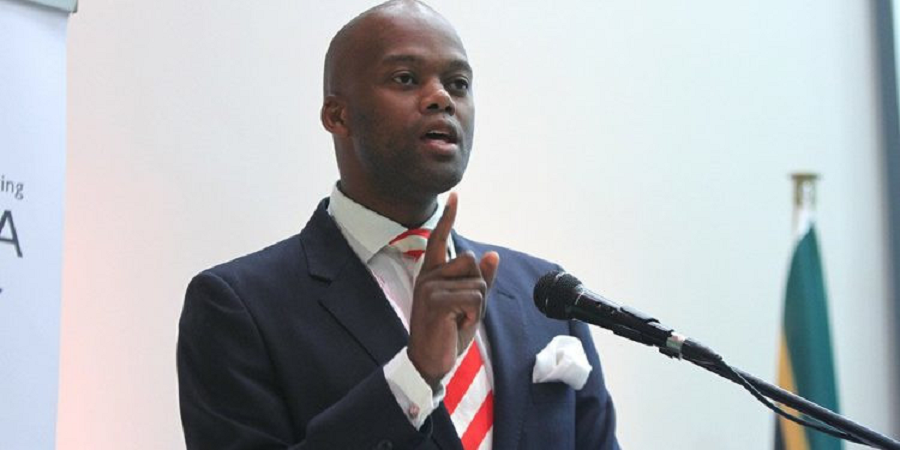
Unlike Julius, Wamkele Mene who is in his early 40s, was elected Secretary General of the African Continental Free Trade Area Secretariat in February 2020. AfCFTA is arguably the world’s largest free trade area.

He differs from Julius in a number of ways.

Wamkele Mene holds a Bachelor of Arts (Law) degree from Rhodes University in South Africa, a Master of Arts in International Studies & Diplomacy (with specialization in International Economics) from the School of Oriental & African Studies (SOAS), University of London and a LL.M. (Master of Laws) in Banking Law & Financial Regulation from the Law Department of the London School of Economics & Political Science (LSE). He has also lectured internationally on international trade law, international investment law and international business law.  

Let’s take a step back for a moment, the AfCFTA agreement was adopted and opened for signature on 21 March 2018 in Kigali the Rwanda capital. The AfCFTA came into force on 30 May 2019. The agreement seeks to cut tariffs within the bloc, boost trade, eliminate border barriers and create the world’s largest free trade area. 

However, progress seems to have been marred and the political will of actors put to the test – just look at the jostling between Egypt and Nigeria for an African representation to the WTO.  

My view is that AfCFTA seems to have contracted its own virus by allowing Covid19 stall progress. Should the 1 July 2020 implementation have been deferred to 2021? How many political campaigns carried on globally in the pandemic? Would Julius have deferred the new African reality? Your guess is as good as mine.

While African Integrationists are still “dulling” on #AfCFTA, votes are being cast elsewhere. A case of self-inflicted marginalisation?
Hear what Wamkele had to say about deferring AfCFTA: