

If you see not subscribed, just login here https://www.tekedia.com/wp-login.php https://www.youtube.com/watch?v=uvpF_q_1cbI Notes Tekedia LIVE: This is the link to join July 18 (Saturday) at 11am Lagos – click here We have posted Dr Odigie’s summary material here. We have launched Tekedia Mini-MBA LIVE which runs live sessions; see table below: We have published guidelines for the Certificate program […]
My First[Bank] Journey: The First Letter

Exactly 13 years ago as a young graduate of FirstBank, I wrote the letter below to the management in protests of a deduction to our – new hires – salaries.
……………………………………………………………………………………………………………………………..
“It was with delight that many of we inductees greeted the pay increase by FirstBank. This was because many of us had come into the bank as just a stepping-stone to better things. The training we received at the Learning Centre however convinced us otherwise. Coupled with the 60% promised pay increase, we then began to see FirstBank as a beacon. We began to re-evaluate our plans and many stopped looking at the Tuesday Guardian vacancies, building their hopes, plans and aspirations around the bank.
But now, our hopes have been shattered!
There’s a saying that says, “If you pay peanuts, only monkeys will work for you!” Well, it seems FirstBank really likes monkeys. I wonder what those of us who are not monkeys will do.
We were paid a sum of eighty-nine thousand, seven hundred and twenty five naira (N89,725) for the month of June (inline with the promised 60% increase) which even then wasn’t at par with what our colleagues in other successful banks were getting. But considering that it was FirstBank, many of us felt that we could live with it. However, it is with great surprise and dismay that we realize that FirstBanks’ version of reviving and competing in this new age is to revise salaries downward while all others are revising upwards! We have now been informed that our June salary was overpaid to the sum of N33,000 (meaning that our salaries are a paltry N56,725). Sixteen thousand, five hundred naira (N16,500) will therefore be deducted from our July and August salaries (meaning that we’ll be going home with about N40,000!).
It is my earnest belief that this decision is very ill-advised. If FirstBank does not need our services, we should be duly informed instead of tricks like this being played on us. There’s an uproar among the ranks of inductees (things have been bought, plans have been made, and friends & family have been told with joy), and I wonder; if we new staff who are supposed to be a major part of FirstBanks’ drive to reposition itself in the new-age feel so demotivated, what sort of service are we then supposed to render when we’re constantly scanning the ad pages?
If FirstBank is truly the first, it should show in all areas including that of remuneration. The new-generation banks are not paying so much because they’re doing well. Instead, they do so well because they pay their staff well so that they can live comfortably, raise their heads among their peers with pride and face their jobs without considering alternatives. Indeed, that should be FirstBanks’ target, but perhaps, it has a better strategy.
Again, I urge management to reconsider this decision because it is not in the best interests of the bank both short-term and long-term, as productivity will drop – before the axe drops! I believe that the right decision will be taken.
Thank you.
BEECROFT John O.
SN21211, Class Governor, Inductee Training Programme (May)”
My Response on OPay “Hindsight” Perspectives

Sure, my OPay piece was tough with some people writing that it is easier to criticize in “hindsight”. First, I do not criticize companies; I share perspectives on companies. If you take it personally, you will simply make your day harder. Many called me today to confirm if I was the person that wrote the Jumia piece. Lol. In response, I shared three more articles where I noted a few months ago that Jumia would rise with its new strategy. Since the Jumia double play redesign, I have come to admire the business. Yes, on a total volume of customers, JumiaPay is one of the biggest fintech companies in Africa!
For OPay, I wrote in Nov 2019, making it clear that it has “no future” unless it changes its model:
“Let me say it here: if OPay’s playbook is to “tax” Nigerians this way, it has no future. It has been proven that Nigerians like FREE things. If you try to ask them to pay, they move in exodus. Yes, provided it is free, you are the best service provider. Any playbook that depends on attracting users with freebies and expecting a paid conversion without a new level of product evolution will fail in Nigeria. So, OPay, you can burn your $50 million war chest, and the day that money runs out, all the users will look for the next deal in town. There is nothing like lock-in in Nigeria because the hardest thing is to get a Nigerian to spend money!”
Yet, this is not to say that I get everything right. If you read me and think everything would be 100% correct, you will be disappointed. Here, I just want visitors to our community to know that we did not start today. Over time, we have come to understand what works in Africa, and we continue to share perspectives to help the ecosystem.
In our Tekedia Mini-MBA LIVE on Saturday, a big time European CEO who signed up to understand African market better, challenged one word I used in a business model. ( I have this habit of branding my insights. Think of One Oasis, Double Play, etc.) By the time we were done, I was able to browse through the 53-page class note, and concluded that my word was confusing. I proposed a new word and the class approved it. One word, and I had to update the class note. We are all co-learning here.
Jumia, Africa’s Ecommerce Pioneer With Fintech Double Play, Doubles in Wall Street
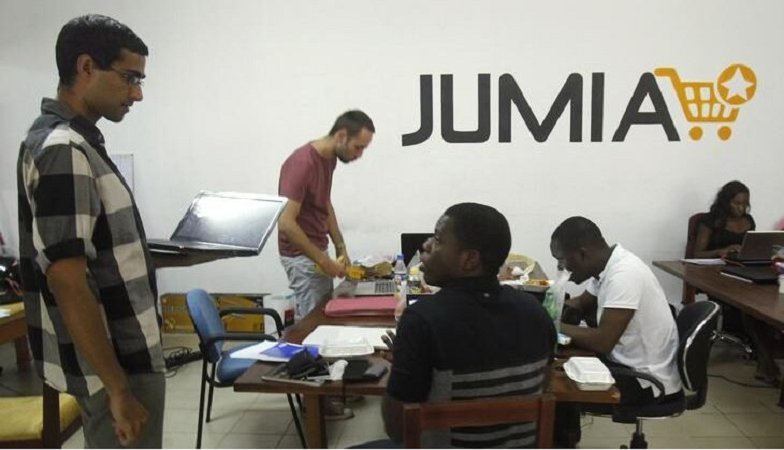
I have written so much about Jumia when it was a pure ecommerce company. I never liked the business model then. But when Jumia changed and added payment, I became a fan. My change of heart was supported by data: the world has not seen any successful ecommerce company without double play. In other words, you cannot make money just by doing ecommerce, especially in emerging economies. Rather, you add something on that ecommerce, and use the transaction volume which comes from ecommerce to make money from something else. Alibaba became better with Alipay, its paytech unit. India’s Flipkart depended on PhonePe to become a better company. Even Amazon relied on AWS to find favour before Wall Street.
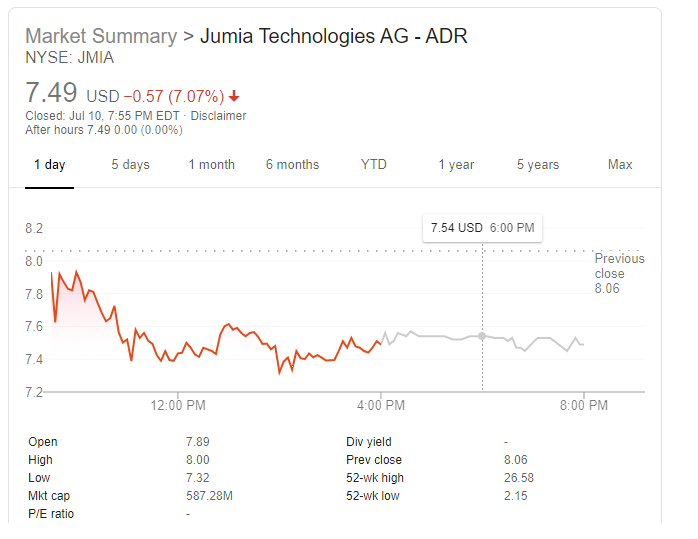
Jumia has gone paytech and today is one of the largest fintech companies in Africa with more than 6 million users. Wall Street has noticed and its stock is rebounding. In the last 3 months, it has doubled its market cap, and the trajectory looks positive.
Jumia has dramatically underperformed the market since its August IPO at $14.50 a share. The Africa-focused e-commerce company has struggled with fraud allegations on its platform and thin margins in some of its markets. However, Jumia’s revenue is still growing at a respectable pace, and the company has a convincing plan to turn things around over the long term.
To boost margins, management has divested from less profitable markets such as Rwanda, Cameroon, and Tanzania to focus on larger markets like Egypt, Nigeria, and South Africa, where consumers have larger purchasing powers and better access to the internet.
Internet access is a big driver of online retail adoption, and Jumia is well-positioned to benefit from several promising projects aimed at getting more Africans online.
American tech giant Facebook has partnered with several top telecom companies to build a 23,000-mile subsea internet cable called 2Africa to link 16 African countries to Europe and the Middle East. The connection is expected to go live by 2023 or 2024 and dramatically reduce bandwidth costs and improve internet speeds and access on the continent — three massive enablers for Jumia’s revenue growth.
Jumia reported first-quarter earnings on May 13, and the results show resilience amid the COVID-19 pandemic. Annual active customers grew by 51% to 6.4 million, while marketplace revenue grew 22% to 19.1 million euros ($21.48 million).
Comment on LinkedIn Feed
My responses to some comments
#1…It is important that those who have different views on Jumia are not seen as bad people. Before Jumia, there were Kalahari, Mocality, etc and all ended up in bankruptcy. People were simply telling Jumia one thing: ecommerce as a solo focus has never worked anywhere in the world.
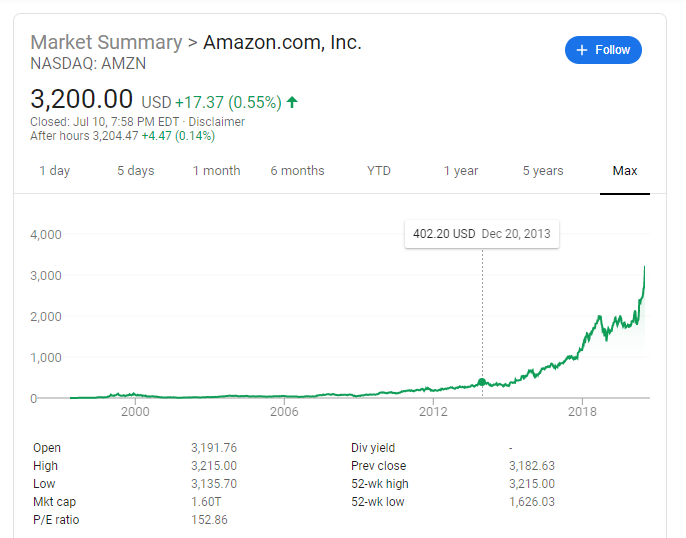
Amazon was a lousy company before AWS and without AWS, Amazon may not be worth half of its current value. The good news is that Jumia is listening and adding those things people told it. For years, analysts wrote the same thing people wrote about Jumia on Amazon. Amazon responded by bringing a double play in AWS.
Amazon ecommerce changed retail. But AWS changed global technology forever.
Between 1994 to 2006 when AWS launched, Amazon stock was FLAT. It was when investors saw AWS impact in 2008 that its stock began to rise. When you write Amazon without that double play context, your readers may not see the big picture. Jumia as a pure play ecommerce has no future but with JumiaPay it is promising.
#2: To know those plays, I will go to things that would improve marginal cost since that is a huge determinant of scaling. Marginal cost = transaction cost + distribution cost. When a play adds payment, you reduce transaction cost. But the distribution cost is all atom (i.e all meatspace friction) which becomes harder when there is no national postal service. So, any 3rd play would be all players coming together to build a national postal network. If they do that, ecommerce will pick up in Africa. Unfortunately, no investor will give any company that type of money.
Apple Supplier, Foxconn, to Set Up $1 Billion Factory in India As Tech Exodus Looms in China
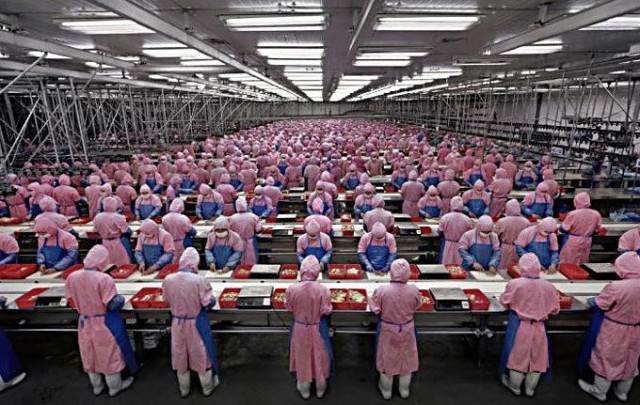
As the trade war between the United States and China escalates, companies are beginning to look for a safe alternative from the economic tussle in other countries. Apple is reportedly planning to invest $1 billion to expand a factory in southern India, where Foxconn, a Taiwanese contract manufacturer assembles iphones for Apple.
A source told Reuters that “there is a strong request from Apple to its clients to move part of the iphone production out of China.” According to the source, Foxconn’s planned investment in the Sriperumbur plant, where Apple’s iphone XR is made some 50 km west of Chennai, will take place over the course of three years.
Foxconn is expected to add some 6,000 jobs at the Sriperumbur plant in Tamil Nadu state under the plan, according to one of the two sources who spoke Reuters on anonymity.
Taipen-based Foxconn also makes smartphones for China’s Xiaomi Corp, where it operates a separate plant in the southern Indian state of Andhra Pradesh.
India is becoming a darling destination for manufacturers of mobile phone not only because of the US and China trade conflict, but because it offers cheap production cost with a large demographic of consumers.
Apple accounts for about 1% of smartphones sales in India, the world’s second-biggest smartphone market. But the cost of iphones, which is induced by taxes and shipment costs from China, has made Apple devices sacred in India.
Foxconn believes that moving production to India will ease the cost of Apple products and enable more sales. Neil Shah of Hong Kong-based tech researcher Counterpoint said the move will not only make Apple iphones cheaper, it will help the company to export from India.
“With India’s labor cheaper compared with China, and the gradual expansion of its supplier base here, Apple will be able to use the country as an export hub,” he said.
India’s Prime Minister Narenda Modi has been on a “make in India” campaign as part of his efforts to encourage electronics manufacturing in the country.
Last month, India launched a $6.65 billion plan that offers incentives to smartphones makers to establish in the country. The likes of Foxconn and other electronics companies moving to establish plants in India seems to be the best kind of news to the Prime Minister as it would create jobs to upset the country’s employment deficit.
It is becoming a global movement as the call to boycott China increases. The reasons have been piling up, victimizing not only companies of Chinese origin, but others with manufacturing plants in China.
Apart from its trade war with the US, China has been caught up in other controversies that are likely to jeopardize its economic growth, as many nations are now
Playing cautiously in their relationship with the South Asian country.
The boycott movement has been driven by factors bordering on political conflicts, the trade war, 5G infrastructure security concerns and COVID-19 pandemic.
The recent annexation of Hong Kong has aggravated the situation, making many other countries part of the controversy.
The Sino-India border tension came lately to escalate China’s political controversies to involve India. The border conflict between the two countries claimed no fewer than 20 Indian soldiers’ lives. Indian is seeking retaliation through economic retribution involving shunning Chinese goods and services, including tech and social media companies like TikTok.
COVID-19 outbreak also created a dysfunction that has impacted Chinese global supply chain and disrupted its economy. China is no longer a low wage, low regulation emerging economy. The labor cost in China has risen significantly, shifting the attention of companies looking for cheap labor to India and some other Asian countries.
Samsung ended its Chinese mobile phone production in September 2019 due to rising cost of labor, opening the way for other companies to seek refuge outside China.
Apart from having India as a destination, Apple is also considering a move to Vietnam where it intends to set a hardware production plant. A trial in Vietnam is reportedly selected to commence later in the year.
Microsoft is also working to push its hardware production out of China to other Asian countries. China has been its base of hardware manufacturing until now.
Google has asked a manufacturing partner in Thailand to prepare production lines for its smart home products. TikTok is also working to move its headquarters from China in order to distance itself from controversies.
It appears that China is gradually losing its position as the world’s leading electronics manufacturer, and India is positioning itself to be the next hub.