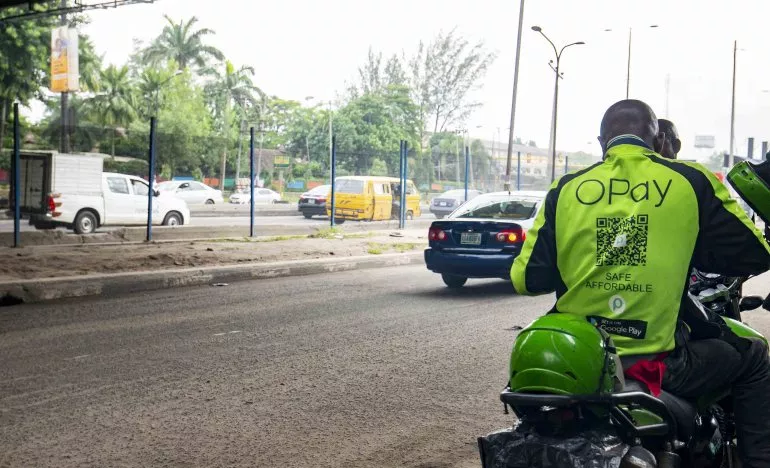
OPay other businesses fail. It is a lesson for entrepreneurs in Nigeria: you cannot grow faster than the environment, in multiples. And most times, more money does not solve your problems. Nigeria cannot be growth-hacked in the way Beijing, London, New York and other areas can. Our gestation period to profitability is legendary and one of the longest in the world. Uber may not make money in Nigeria for a decade. Bolt, the same. Jumia makes that evident. Andela offers a lab. Unless you have a strategy, tons of money makes no difference. (OPay touched nearly $200M venture funds.) I have watched rich people in Nigeria, they have one playbook: go slow, find a path to profitability, and stay the course.
If you do those flashy things (yes, one million Facebook likes, top ten local ranking in Alexa, etc), you will burn. More so, as OPay goes into ecommerce, it needs to slow down and not try to grow faster than Nigeria: Nigeria is a slow-po country and no marketing gimmicks will change that. The hardest job in life is finding jobs for people where there are no jobs. The second is making sales to people who have no money!
“We can confirm that some of our businesses units including the ride-hailing services, ORide, OCar as well as our logistics services OExpress will be put on pause. This is largely due to the harsh business conditions which have affected many Nigerian companies, including ours, during this COVID-19 pandemic, the lockdown, and government ban.
“Globally, ride-sharing businesses have been heavily impacted by the pandemic. But several months ago, foreseeing this issue, OPay had already taken preemptive steps to restructure our business focus away from rides. It is worthy to note that this final restructuring has minimal impact on OPay as a whole business.
“It is important to clarify that ride-sharing had always been only one part, and not a major part of OPay’s diversified business in Nigeria. In fact, OPay had been investing more and seeing accelerated growth in its commitment to Nigeria’s financial and technology inclusion.
“During the pandemic, we have seen continued demand for our offline mobile money agency, and online digital payment, which remain the core of our business.
“From January to April 2020 for example, we witnessed a 44% growth of offline and online transaction value even in the midst of pandemic and lockdown. This is a testament to the high demand for flexible and easy financial services by Nigerians. OPay remains one of the most well-funded and profitable mobile money platforms in Nigeria, and we will continue to do more for our customers.
“Lastly, OPay will continue to invest in and grow in the eCommerce space, aligning its customer and eCommerce units which will continue to operate and grow. We believe a financial platform coupled with goods’ platform will form the future of Nigeria’s technology development.”
Comment on LinkedIn feed
Comment #1 I think the banning of commercial bikes in Lagos largely contributed to this aka Government Policy. A fast food restaurant owner told me that when Bikes where banned back in February, sales from Ofood plummeted as much as 60% even before the lockdown. I suspect this was a result of the fact many people used the app for Oride, then would be cross-sold on Ofood and the rest. Since no more ORide, less people on the app and so less people use other functionalities. Like they say, out of sight is out of mind!
My Response: It is part of the business – nothing is constant in Nigeria. No excuses. Ask those who invested in drones only for it to be “banned”. If Ariaria, Kano or Osogbo man or woman tells you the somersault they encounter, you will agree that banning bikes is not an excuse. I have a man whose 7 trucks got trapped. They went legally to Togo to send goods for a MNC but on their ways back, Nigeria banned entrance of trucks with no notice. Have you checked those who got license for processing rice what happened?
Comment #2: Sir but can you hedge against such policy somersaults? Was it really about sales and the environment not being ready or about a policy somersault? Could those vetted the idea have seen this as a distinct possibility such as to terminate the concept? When the external affects your entire value proposition in ways that it’s impossibly to predict then only lesson to be learned that an entrepreneur should have a witch’s eye. In 2000s, I recall the crises that occurred to many traders in the East when government introduced 100% duty inspection. Many could not afford duties imposed and I recall a few who over traded literally went under. But some survived so I get the point. The business model, positioning and organizational attributes have an impact in recovering from such somersaults.
I have been on a ideation phase of an idea and the work of idea to concept, concept to viability and sustainability is no joke. Serious environmental scanning and not over stating market opportunity/potential and cash flows are critical. Understanding costs structures also critical. Many lessons to learn on the journey
My Response: My principle is to model that Nigeria has only about 30 million “people”. That is a very pessimistic model. It gives me room to navigate. https://www.tekedia.com/the-precious-30-million-nigerians/ Another strategy is to become a parallel entrepreneur: be in many things and forget Harvard preaching of core competency and domain focus. If you visit one of the owners of a bank in Nigeria, his office has 27 companies with the bank as one. While we know these rich guys for their banks, they are super-diversified that one policy change will affect one business while benefiting another. There is no govt policy in Nigeria that will not help one of the firms and at the end, everything is neutralized and wealth is preserved.