DD
MM
YYYY

PAGES

DD
MM
YYYY

spot_img

PAGES

Home Blog Page 6280

The Vice President’s Statement on “Large and Expensive Government” in Nigeria

3

“We are by this notice telling all those importing contraband products to stop doing so. We know where you are. And if you do not stop this nefarious activity, we will come after you in two weeks”. You might have seen this type of notice in a newspaper, sponsored by a government agency in Nigeria. Whenever I see such, I chuckle that a Director General who has the power to take immediate action is wasting taxpayers money on newspaper advertisements, creating an illusion of doing his/her work.

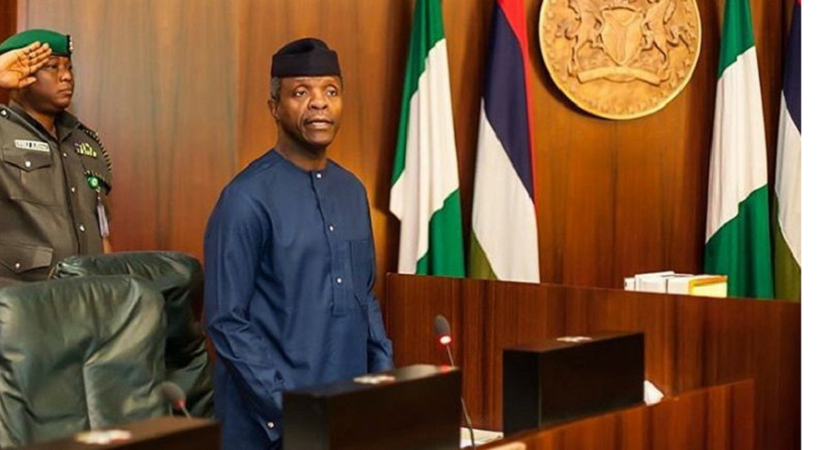
That takes me  to Vice President Prof Yemi Osinbajo’s statement that Nigeria is running a large and expensive government. The question has been “who can fix it?” We know the problem – and we are looking for solutions. Like I keep saying, if President Buhari was never elected a president, he would have been the best president ever in the Nigerian history! Yes, many of us would have said, had he been given the opportunity, he would have fixed this and that. But here we are, talking over the problems instead of  fixing them. Mr. Vice President, your party controls the House, the Senate and the Presidency, you can fix the “large and expensive government” problem.

“There is no question that we are dealing with large and expensive government, but as you know, given the current constitutional structure, those who would have to vote to reduce (the size of) government, especially to become part-time legislators, are the very legislators themselves,” Mr Osinbajo was quoted to have said.

“So, you can imagine that we may not get very much traction if they are asked to vote themselves, as it were, out of their current relatively decent circumstances.

“So, I think there is a need for a national debate on this question and there is a need for us to ensure that we are not wasting the kind of resources that we ought to use for development on overheads. At the moment, our overheads are almost 70 per cent of revenues, so there is no question at all that we must reduce the size of government.”

According to him, “the problem was a major driving factor for the government’s decision to revisit the Steve Oronsaye report on public service reforms”.

He said: “Part of what you would see in the Economic Sustainability Plan also and several of the other initiatives is trying to go, to some extent, to what was recommended in the (Steve) Oransaye Report, to collapse a few of the agencies to become a bit more efficient and make government much more efficient with whatever it has.”

The Endless War: Are China and The United States Bound for Interdependency?

2
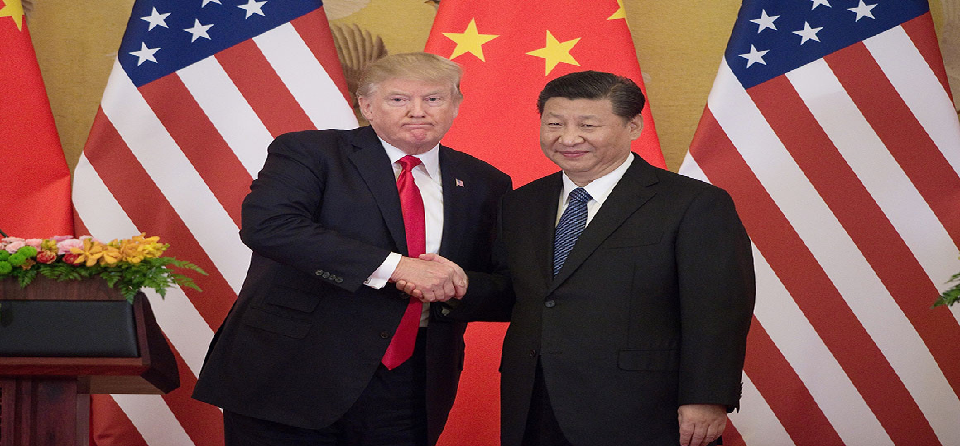
China and US leaders

Well, esteemed readers, you’ve already heard about China and the United States’ ongoing trade war. It’s an economic conflict borne of rising protectionism between two nations that are hashing it out for the winning spot in the first trade-based Royal Rumble of the 21st century. So, I needn’t bore you with the basics on that one. Whether you agree with the underlying principles or not, the trade war has done one good thing; it has shone the limelight on the notion that the U.S. needs to reduce its dependency on Chinese manufacturing for strategic goods. And, in 2020, as COVID-19 struck the global stage, politicians realized that we really do need to act ? so now they’re vowing to do so.

But I have to ask… do you think we can actually change anything? Because I’m starting to believe that President Donald Trump’s administration and its hunger for dominance is admirable but decidedly moronic. It seems to me that the baseline principles, understanding, and demands of the current administration reveal a fundamental issue in the higher echelons of the United States: it is stuck in a world, pre-1960s, where a country produces a product and ships directly to another.

Get with The Times and Get Global, Trump!

In the 60s, we saw the introduction of containerized shipping, and then the provision of the Internet for public use in the 90s. These two advancements made a massive difference to the supply chain, revolutionizing systems, and unlocking access to a wider world. One that features a complex and sophisticated web of global manufacturers providing goods and services interdependently, not independently. Unfortunately, Donald’s trumpets sound loudest for an archaic system that once served a purpose in the evolution of the global supply chain but is now outdated and past its use-by-date.

We can talk about making America “great again,” and we can listen to the current president’s warped view of global trade. We can guzzle down the “it’s them or us” claptrap that is firing up the underbelly of U.S. industry, and we can cry as much as we like for the loss of domestic business. But the fact of the matter remains, the lines that fuel the flames of the debate, “made in America” and “made in China,” mean the very same thing: “Made on Earth.” Today’s global economy is one of diversity, where cross-border collaboration and unity stand tall, and it is not a place for the division and segregation that the U.S.-China trade war, courtesy of Trump’s administration, endorses.

Admirable Aims, Reticent Reason

The current administration isn’t completely backward with trade, though, and has already publicly announced that the U.S. needs a group of Asian nations that could group together to supply them, as well as the rest of the world, with essential goods. And the president himself told a reporter that, if he severs the relationship with China, it’ll save $500 billion; so, if you put two and two together, you can clearly see how this would work. But there’s a problem. Although the United States has successfully pulled small elements of the tech supply chain away from China’s hold, it’s a massive task, trying to restructure the entire network.

The view from government officials in the Asia Pacific region, where manufacturing is on the rise, is overwhelmingly negative and suggests that the American dream of simply dismantling the current status quo to suit political ambitions is just a far-off fantasy. And they certainly can’t attempt to untangle the web in a world where businesses are struggling to survive, courtesy of COVID-19.

Sort of Leaving China Behind

However, the pandemic itself is, in some ways, pushing things in the direction that the Trump administration would like. How? By rapidly speeding up a change that was already underway ? a slow and steady withdrawal of lower-value manufacturing from China’s grasp by many nations, as a consequence of the Eastern powerhouses rising wages and production costs. That natural transition by some of the world’s biggest businesses was apolitical, and wholly economically fuelled, as it should be.

The conscious uncoupling between China and other countries for certain products is something that had to happen, and I believe that China knew it all along. As their volume of export and economic power grew exponentially, they were always going to be forced to, let’s say, “westernize” the workplace standards and regulations across the nation to maintain client relations, pricing them out of some manufacturing gigs.

Nope, Not Really!

Even if we all unanimously agree to pull out from China tomorrow, it just wouldn’t make sense to do so. The cost of production has risen slightly, and there are political tensions between the nation and its Western counterpart, but whatever we say or do, it will remain unmatched as a manufacturing hub, and no other country will ever have as many skilled workers at its disposal. And even if there is a lot of pressure from a government or administration or a more economically prudent solution, the development of global industry and supply chains is usually determined by market forces and profitability for businesses. The Chinese domestic market is immense and multiplying ? it’s a no-brainer for organizations to maintain their ties, and contrary to economic law to sever them.

But let’s be real for a moment… even if the West does rinse its hands of Chinese manufacturers on the face of things, the next best options are scattered throughout Southeast Asia ? a region that thrives only because of China    ’s rise to manufacturing dominance. So, in truth, wherever the United States looks, China is waiting to lend a helping hand.

The NCC-FIRS MOU And Nigeria’s 20th Century Problem

2

The Nigerian Communications Commission (NCC) and the Federal Inland Revenue Service (FIRS) do not believe that telecom companies in Nigeria are remitting the correct amount of VAT (value added tax). It is a financial optical illusion: the mobile density is increasing, mobile penetration is going higher but VAT has remained largely flat. Government has relied on the telecom operators to self-report these tax elements. Interestingly, the government does not believe those numbers but at the same time cannot challenge them in the courts. So, what is the way out? Install a good “malware” in the servers of the telecoms to help you track, calculate and report accruable VATs for the government in real time.

Yes, Nigeria is trying to get over its 20th century problem: ability to organize its systems to have the ability to collect taxes in full and accurately, at least in this sector. An MOU has been signed between NCC and FIRS to “ensure the tax agency ascertain accuracy and completeness of value added tax (VAT) elements and other taxes payable in the transactions of telecoms operators. With the MoU, the FIRS will be able to integrate an application programming interface (API) technology solution with the systems of telecom Operators for independent verification of the amount of VAT that should be paid by mobile network operators (MNO) rather than relying entirely on the Operators’ books of accounts.”

Now, can you copy me? Affirmative, tune to Channel “more money in vault”. Because with this legal “malware”, the government could essentially generate the balance sheets and profit & loss statements for the telcos before their accountants begin work! But thou shall not judge because in Nigeria everyone is a victim. You pay VAT, yet you must run a local government of your own, providing your power, security, water, etc.  Yet, the government needs resources to have any chance of helping you. The game continues in Naija.

In line with its inter-agency collaboration, the Nigerian Communications Commission (NCC) has signed a Memorandum of Understanding (MoU) with the Federal Inland Revenue Service (FIRS) to ensure the tax agency ascertain accuracy and completeness of value added tax (VAT) elements and other taxes payable in the transactions of telecoms operators.

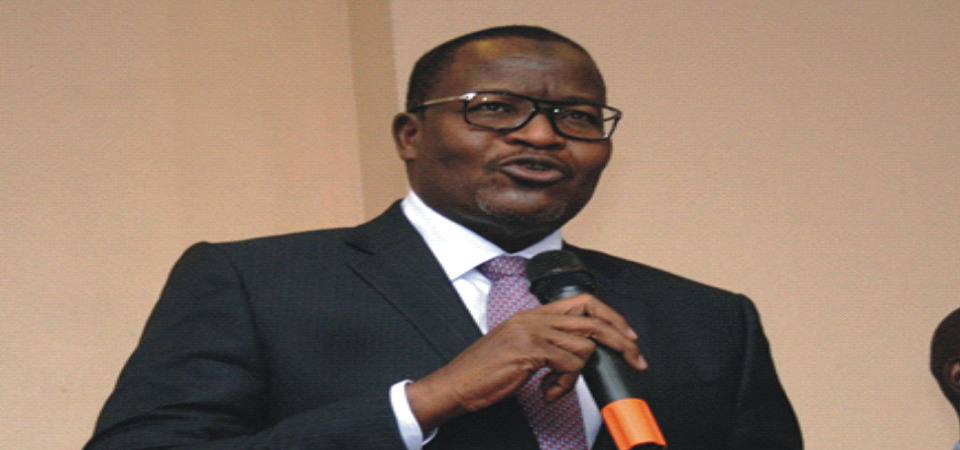
With the MoU, the FIRS will be able to integrate an application programming interface (API) technology solution with the systems of telecom Operators for independent verification of the amount of VAT that should be paid by mobile network operators (MNO) rather than relying entirely on the Operators’ books of accounts. Speaking during the MoU signing ceremony in Abuja on Tuesday, the Executive Vice Chairman of NCC, Prof. Umar Danbatta, said that diligence and appropriate due processes were undertaken to conclude the MoU, as the Commission took its time to understand the import of the MoU.

Ndubuisi Ekekwe To Speak In World Innovations Forum Switzerland

0

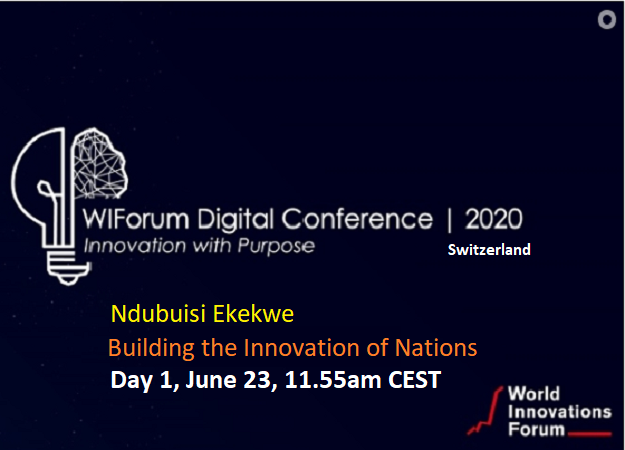
I will speak in the World Innovations Forum next week in Switzerland. Of course, the pandemic has made this event virtual. This speech will focus on national development and how innovation drives the acceleration of human well-being.


Ndubuisi Ekekwe

Founder & Chairman of FASMICRO Group

Session Title: Building the Innovation of Nations
Date & Time: Day 1 Tuesday, June 23rd @ 10:55 AM WAT

World Innovations Forum Digital | 2020 – Speakers


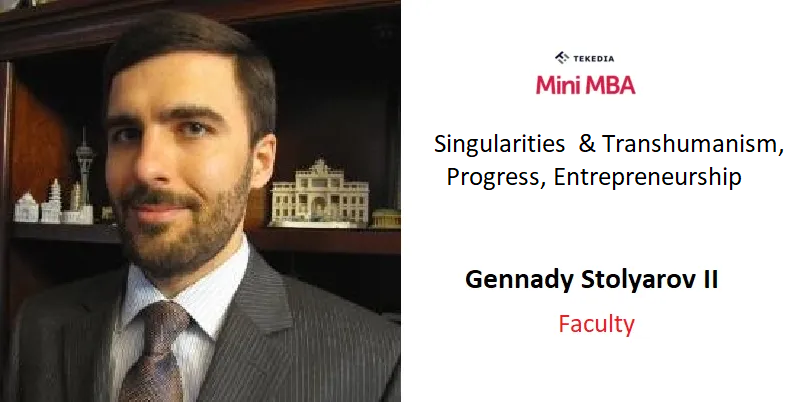
Tekedia Mini-MBA Faculty Shares His Session Outline on Singularities and Entrepreneurship

0

Gennady Stolyarov II,  an American libertarian and transhumanist author known for his book “Death is Wrong”, graduated from college with triple majors in economics, German, and mathematics.  He is the Chairman of the  U.S. Transhumanist Party. He just shared the outline of his session in Tekedia Mini-MBA.

Read below…

I have been working past midnight during the past week to deliver a new online course sequence in collaboration with the Transdisciplinary Agora for Future Discussions (TAFFDs) to contribute to the Tekedia Institute Mini-MBA course program, based in Nigeria. This is an opportunity to teach about 50 African business students about transhumanism, the concept of Technological Singularity (or Singularities, in my view), entrepreneurship, progress, and how to cultivate the faculties of awareness and techno-optimism in a rapidly changing world.

My course contribution includes 10 pre-recorded videos, written content, and interactive case studies where I will personally read and respond to student answers to questions designed to provoke thought about a future that will differ vastly from the past and present.

Here is an outline of the 10 lessons that I will be teaching for this course:

Singularities and Transhumanism

  1. Technological Singularities: An Overview
  2. Transhumanism as the Logical Extrapolation of Humanism
  3. Artificial Intelligence and the Future of Free Markets
  4. Transformation of Life and Work in the Transhuman Era

Progress

  1. Progress: Creation and Maintenance
  2. Unstructured Leisure and Progress
  3. Individual Empowerment through Emerging Technologies: Virtual Tools for a Better Physical World
  4. Benefits of Accelerating Technological Progress for Human Well-Being

Entrepreneurship

  1. Israel Kirzner’s Views on Entrepreneurship and Applications to the Age of Accelerating Technological Advancement
  2. Entrepreneurial Opportunities in Emerging Technologies

I am excited by the interest that students and instructors in Africa are showing in these ideas. It is my impression that Africa is undergoing its own Age of Enlightenment right now, and this shows in the attitudes of many who seek to introduce, cultivate, and spread knowledge of the vast possibilities that the technological future holds. I would be honored for my work to help the next generation of African entrepreneurs and business leaders to become our partners in building the Transhuman Era for all humankind.


Source: Personal Facebook