DD
MM
YYYY

PAGES

DD
MM
YYYY

spot_img

PAGES

Home Blog Page 6408

Combating the Deluge of Fake News, Misinformation and Disinformation in Crisis Situations

0

Fake news has been a phenomenon that seems to have come to stay with humanity especially in recent times when the platforms to spread and disseminate are becoming more common. They come promoting misconception, misinformation or risky behaviour among the people. Sometimes events and situations give room for the merchants of fake news to up their games in disseminating such to achieve their aims which varies from scoring to cheaper political goals to achieving confusion and stoking chaos. It was first said to have become a more common commodity with the US presidential elections in 2015. In Nigeria, it equally became a weapon for political parties in the last general elections in 2019 with its attendant implications of fear, confusion, violence and others.

After politics, another area of life that fake news seemed to plagued much is the health sector. This became noticeable during outbreaks such as Ebola, SARS and the ongoing Coronavirus pandemic. As a matter of fact, the Director General of the  World Health Organisation, Tedros Adhanom Ghebreyesus once declared that “ Fake news spread faster and more easily than this virus and is just as dangerous.” In the ongoing battle against COVD 19, the fight against fake news is as important as the war against the virus itself. The WHO has equally declared the dissemination of false or fake information as infodemic which according to the organisation is a twin brother of the pandemic – “we are not just fighting an epidemic; we’re fighting an infodemic.” The WHO declared.

The incidence of infodemic is a global phenomenon. It is no respecter of the socio-political status of the countries of the world, fake and false information seems to have pervaded the globe leveraging on the existing online platforms which are used globally. From the US to New Zealand, China to Australia, Nigeria to Haiti, the phenomenon seems to be on the same mission to reverse any gain, no matter how little, that health workers who are battling the novel virus appear to have made. Such information undermines medical advice, proffer fake cures, incite panic and to score cheap political points. This is as experienced and observed in Nigeria.

Identifying the Infodemic,  Sources, Features and Intents

Fake news comes in different sizes and shapes. The merchants of fake and untrue information spread it for different purposes. For a continued battle against fake news and information, there is a need to identify the types, the sources, features and the intent. This will be the focus of the piece using Nigeria as a case.

Fake news or information can come in different formats depending on the intent of the manufacturers. It could be misconception, misinformation, risky behaviour, mistrust and speculation. Misconception occurs when there is error in thinking with respect to the cause of the disease. For example, propagating other causes apart from the identified cause such as pointing to the installation of 5G mast as the source of the disease.  Misinformation is giving wrong information on what is happening. For example, reporting higher figures than what the battling institution has released. Misinformation might not be deliberate. When such becomes a deliberate action, then it becomes disinformation. Risky behaviour is information that increases people’s involvement in what may increase the risk of the disease or cause more harm than good. The common belief that the virus cannot survive in a hot and humid atmosphere is a good example. Mistrust is spreading information that increases the level of distrust in government. A good example was the prevalent belief that COVID 19 was a smokescreen for the government to justify some spending as there was no virus in Nigeria then. Speculation deals with  false information that speculates solutions to the disease. The current furore generated on whether Chloroquine can cure the disease. 

Identifying the type of fake information is important as knowing the source. This is more important as more and more people show their belief in fake and baseless information regardless of the level of their education. Simply put, no matter the level of a person’s education, no one is immuned from falling victims of false or fake information.  In Nigeria, people who are now referred to as the fifth estate of the realm are involved in spreading fake and unsubstantiated news and information. They are social media influencers whose followership across social media platforms is in millions. For example, Kemi Olunloyo is one of such in the Nigerian Twitter space. It was on her account that  President Muhammadu Buhari’s sickness and persistent cough after his Chief of Staff, Abba Kyari, was said to have tested positive to Coronavirus broke. Her Black Thursday tweet alleging a top cabinet member in Aso Rock had died also went viral. Nothing substantial came out of such false alarm.

Partisans too also trade in fake information. They do that obviously to score political points or to undermine the efforts of the government they oppose in tackling the virus. The fake story of the son of former vice president Atiku Abubakar’s reckless behaviour after testing positive to Coronavirus. It was said that he ignored the government’s directive on self isolation and went partying and clubbing when he knew he was positive.

Apart from individuals and partisans, even the mainstream media also help in the spread of fake news. The Punch newspaper once reported the Center for Disease Control has said that people with beards should shave in order to be safe from Coronavirus. Fact Check later showed that the picture used was not in any way related to the prevention of the virus. The Nation and Tribune newspapers were also caught in the web when they relied on a widely circulated WhatsApp message to publish a story on the six missing Ejigbo returnees from the isolation centre in Osun State. The story was later pulled down from the newspaper’s website after the government debunked it. Some people argued that the pressure to be the first to publish is because of the sense of gatekeeping of the mainstream newspaper.

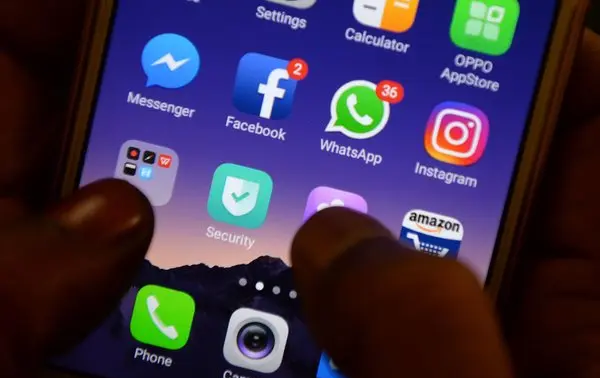
The sources of fake stories are important but they are not as critical as the people who assist such stories to spread. To be factual, it is becoming confusing to identify what is false and what is not in the midst of the array of information available on COVID 19. This is even more cumbersome as peddlers of fake information are becoming more sophisticated and are bent on proving the credibility of their unsubstantiated spins. Of all social media, Facebook and WhatsApp are recognized as mediums used by fake information merchants to spread their ‘‘news’’. These two platforms have a combination of text, videos, audio facilities that make people to be more vulnerable to receiving and spreading false information. This is aided by a heightened sense of need for information. This is because in crisis situations people need to fill their need for information. Fake information also spread because of the long existing distrust in government data and information. Government combating mechanisms are sometimes too slow for a prompt response. For long, there has always been an ‘‘official figure’’ as against an ‘‘unofficial source’’ and people tend to believe their unofficial sources. Therefore, people receive and share information by their aunties or uncles that claim some expertise in medicine or related discipline. Some even claim they have access to government sources. Research has established that in every social relationship, there are opinion leaders and opinion followers. Thus, it is easy for opinion followers to spread fake and unsubstantiated information received from their opinion leaders. This gives room for all sorts of misinformation and conspiracy theories. This puts the blame on individuals who may not be sources but assist fake news to spread widely like a wildfire.

Checking the menace of the information scourge

Sources have said that social media platforms that have served as channels of spreading fake information have made attempts to curb the spread of misinformation through their platforms. For instance, Facebook was reported to have clamped down on online Coronavirus rumours. Google flooded search results with growing pandemic with government alerts and removed YouTube videos urging people not to get treated. Twitter too highlighted official reports about what people should do when showing symptoms of Coronavirus. Whatsapp too has a limited number of forwarded messages. However, the menace of fake information has not greatly been curbed. Analysis shows that individuals who shared fake information have not made the fight easier. A source claim “people are sharing rumours, fake stories and half-truths about COVID 19 with each other” across platforms.

This gives a room for media literacy. What then does a person do to determine if a piece of information received from WhatsApp, either individuals or groups, should be shared or not? One, individuals should verify, verify and verify before sharing any piece of information. In doing that, it is said that one should determine the currency (timeliness of the information) of the piece before sharing. Two, people should determine the relevance (importance of the information to their needs) before forwarding or sharing. Three, the authority (the source of the information) should first be confirmed before the information is broadcast to contacts. Four, accuracy ( the reliability and truthfulness of the information) should as well be considered. Five, the purpose (the reason the information exists) should also be queried before forwarding the information to others.

In this period of the global pandemic and beyond, ensuring the people of the world stay sane is everybody’s duty. People are urged to do due diligence before forwarding messages they receive to others. Just like the pandemic itself, curbing the menace of fake and  misinformation is a matter of how diligent individuals are before sharing received messages.
Presidential Speech on Lockdown, and the Challenge of Staying at Home in Nigeria

0

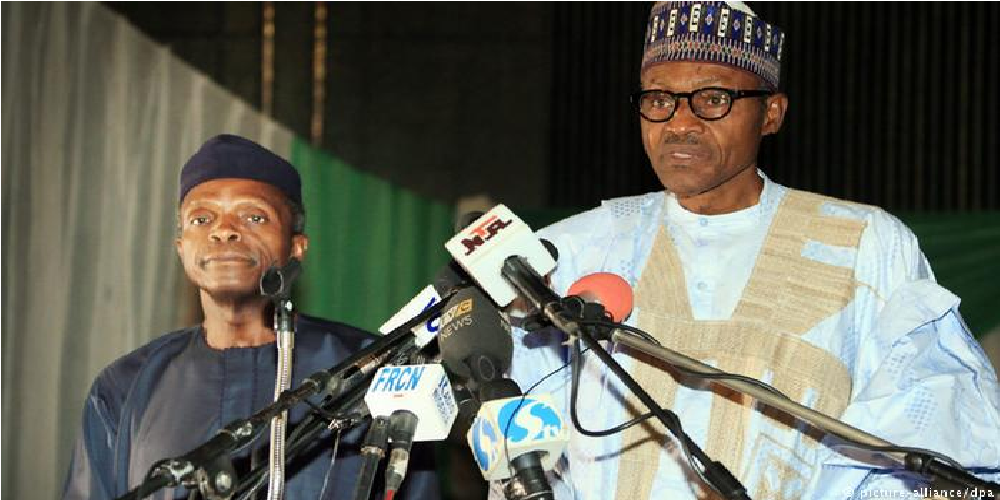
President Muhammadu Buhari wholeheartedly thanks all Nigerians for their patience, resolve and strong determination to defeat the coronavirus disease (COVID-19) outbreak.

He, however, asked Nigerians to exercise more patience and stay at home as the battle continues.

The President said:

“We realize that today, there will be sons and daughters unable to visit their parents, and elders that are isolated from young ones. And there will be those who live day-to-day, eating as they earn, who face real and present suffering.

“No elected government could ask more of the citizens of the country that elected them than today we ask of you. But we must ask you – once more – to observe restrictions on movement where they are in place, and follow the instructions of our scientists and medical advisers: stay home, wash your hands, save lives.

“The freedoms we ask you to willingly forsake today will only last as long as our scientific advisers declare they are necessary. But they are essential – world over – to halt and defeat the spread of this virus.

“For those who suffer most egregiously, the Government has announced multiple measures to assist: 70,000 tonnes of grain is being released from the National Strategic Grain Reserves for distribution to those in most need; distribution of small cash payments are also being made, and will continue to be made by the federal government in the states and local government areas.

“We ask you to listen and follow public announcements via the mass media for instructions as to how to receive this government support – and learn of more public assistance in the coming days.

“All that the Government is asking you to endure is because nowhere in the world today is there any known way of defeating this pandemic. There is no vaccine. And that means there are choices to be made: between continuing as usual, or accepting the restrictions even when they come with unintended consequences.

“But at this darkest hour, it remains our duty to offer you the full and unvarnished truth: This is a global pandemic. 210 countries and territories across the globe are affected. We cannot expect others to come to our assistance. No one is coming to defeat this virus for us.

“Instead, the defeat of the virus in our country will be in our hands, alone. We cannot wait for others. We can only depend on ourselves now. And so we must – and we will – end this outbreak ourselves as Nigerians, together”.

The challenge following this statement has been the federal government’s inability to live up to expectation in making food provision for the stay-at-home. Though there have been some intervention measures like the N20,000 cash distribution to poorest Nigerians. The palliative has been marred by inconsistencies that the National Assembly had to summon the Minister of Finance.

On Saturday last week, the national assembly had faulted the method of dispatch of the fund. The Ministry of Humanitarian Affairs has been tasked with the distribution of the fund and other provisions. The Ministry has embarked on cash handout to individuals, which has been widely condemned.

The Finance Minister Mrs. Zainab Ahmed said the majority of the beneficiaries are unbanked and there is no other way to send them the money except through cash.

However, Senate President Ahmed Lawan said the method is questionable and needs to be redefined.

“I think time has come for us to redefine the implementation of the Social Intervention Programme, probably going out to communities to give them N20,000 per person might not be the best way to go. It is still an effort, but I think we need a better approach that will be more efficient,” Lawan said.

The cash distribution method has been criticized, and the entire programme accused of nepotism and corruption even though the Minister of Humanitarian Affairs, Mrs. Maryam Uwais, said they used community leaders to identify the most vulnerable households who deserve the money.

Other measures include the strategic distribution of grain across the 36 states of Nigeria. But that is yet to take effect even though Nigerians are two weeks into the lockdown and it certainly appears that it will be extended as the cases of coronavirus keeps increasing.

There are so far, 318 confirmed cases and 10 deaths, and many contacts are yet to be traced.

The most affected state in Nigeria, Lagos, has failed to provide it residents with food to enable them stay at home. Consequently, many have been forced to leave home looking for food.

President Buhari said there will be more palliatives through the Social Intervention Programme, but the concern lies on whether the provision and sharing formula will be efficient enough to reach everyone in need.

How Covid-19 Is Disrupting Airbnb’s Business Model.

0

When a tree falls in the forest when no one is there, does it make noise? Yes it does, no it does not make noise. The two responses are actually correct depending on the person that is responding.

To a forest or an agricultural expert, he will answer that the tree that fell makes great sounds. That just because no one is there does not mean it did not cause great vibrations, panics and scare other rodents away.

To a non-expert, his response will be, it does not make a sound simply because nobody is there to listen to it.

 That is the exact occurrence of the coronavirus pandemic. To people that don’t know the impact of this virus, they will claim that things will be normal again and in a short while. To others, who have an economic lens and entrepreneurial lens, they will say the world has not seen this kind of economic catastrophe before.

Strive Masiyiwa in his article on his Facebook page pointed out five problems this global recession will cause to the world and how we should respond. They are; restarting our economies, getting children back to schools, food security, creating jobs again and addressing other neglected diseases.

In this article, we shall see how the Airbnb business model was disrupted by covid-19 and how they can pivot with some exceptional ideas.

 The Areas of Disruption by Covid-19

In my article on how the coronavirus disrupted the ride hailing business model, I explained the disruption based on the architecture of the business. The same pattern I will apply to show how Airbnb was affected and disrupted. Let’s get started.

 The Guest Component

The Uber for hospitality ecosystem works by bringing the hosts and guests together in order to create value for both parties. The guest is the one that will book an accommodation to stay in the host’s lodge. The problems created by the covid-19 pandemic to this component are;

  1. Guests are strangers that come into a city. Now that the hospitality, tourism and airline industry are halted, it means there is a decline in demand for Airbnb lodge.
  2. The social distancing is one of the directives of the pandemic experts. That means, stranger cant be accepted to stay in a community being that they can be threat to the health of the people in that community, if they are carriers of covid-19.

 If there is no guest in the business model of the Airbnb, that means the demand side of the business is zero.

The Host Component

How can there be supply when the demand for lodging is zero. In this case, supply is superfluous since the hosts depend on their properties listed on Airbnb for livelihood.

The host component part of the model is disrupted these ways;

  1. Fear of welcoming strangers because the coronavirus can be transmitted from one person to another.
  2. The government has even ordered the closure of the tourism sector and other businesses. The stay at home order is actually staying out of business for others.

 Now that the supply side of the architecture of the model is also affected, what should we do? What about the technological component? Let’s say if this is still valid in the equation of Airbnb.

 The Technology Component

Mobile Application technology is the technology that brings together the host and the guest. These are how the tech component of the business is affected;

  1. There is no listing of lodges by Airbnb hosts on the App.
  2. There is cancellation of bookings by Airbnb management.
  3. There is no new booking  by the Airbnb community.

 At this stage, there won’t be an increase in the number of downloads of the applications because it virtually has lost time value.

 What can we do with this disruption? Here are my suggestions for a successful pivoting of the Airbnb model.

Pivoting the Airbnb Model or be Overtaken

Peter Druck is always correct that marketing and innovation make money, others are cost. This has become more valid in this coronavirus pandemic than ever. Every business will either pivot or innovate in order to be sustainable in the new economy. Here is what I think Airbnb should do;

 The Real Estate Sector Pivoting

Airbnb is actually in the hospitality industry which is related to the real estate industry. What I think will be a successful pivoting for the business is pivoting to the real estate industry. The reason is simply because they have experience in a related industry. Brain Chesky and his management should use their wealth of entrepreneurial experience to innovate in the real estate business.

 The e-real Estate Sector Pivoting

I have come to believe that the digital revolution has replicated everything that is tangible and intangible or digital forms.  Some of the examples are shop and e-commerce, book and e-book etc. In the same vein, we have real estate and e-estate. E-real estate is the buying of space (properties) on the internet in the form of domain names and hosting.

It will be wise for Airbnb to pivot into this industry since it is also a tech company that is solving lodging problems.

With proper innovations of the business and pivoting, the business will continue to thrive.

 We need to change the way we see things. Now, let’s think of new ways we can do business in the new economy that will emerge after the coronavirus pandemic; only then will our survival be guaranteed.

Thank You, Good People – He Got A Promotion

0

This is to thank the community for your strong intellectual response to support our small community service on impacting practical knowledge to our people. Many write about challenges in our schools; here,  I write to note that there are many ways we can harness the capabilities of our professionals to elevate our graduates. From MNCs to our startups, many answered our call for guest faculty. My team is working on finalizing everything (we still need more hands, click to learn more). I want to quickly thank all. Also, many schools have reached out on how to integrate our programs into their curricula. We do not know how that will work since we do not claim any accreditation! 

But as that develops, I want to share this testimony from one of our current participants (edition 1 of Tekedia Mini-MBA). I spoke with him – a new GM in an amazing company. We can prepare a new generation of young leaders right here. I am confident that our June 22 edition will be better across all metrics.

“Sir, I am overjoyed. I just received a promotion. On Thursday, I sent to my CEO a Covid-19 Continuity Plan, using the template you made available in Tekedia mini-MBA class. Early today, management asked me to present it via video. Ten minutes ago, I received an email from Head Admin that management wants me to execute that template, and they also promoted me. I am also getting a refund for my personal investment on this training. I want to say thank you to all the faculty for this service.”

Seeking Guest Lecturers for Tekedia Mini-MBA Program


Covid-19: An Apocalypse Could Be Brewing in Nigeria

2

In a previous rticle, I explained how the emergence of the coronavirus pandemic and its attendant problems on the social and economic lives of Nigerians is a sort of karma in Nigeria.

Now, I am afraid it could be more serious than that.

I sense that except there is an alteration of the current sequence of events, an apocalypse is brewing in Nigeria.

Beyond the detected covid-19 cases in people who traveled into the country from abroad, it is now an established fact that there is rampant local transmission of the virus in Nigeria. Also, due to the current lock-down, a lot of Nigerians are seriously suffering, crime is increasing and a lot of law-abiding citizens are resorting to self-help to protect themselves.

It is from these two inferences that I postulate that Nigeria could be heading for serious calamity.

On the 10th of April, 2020, 3 new covid19 cases were reported in Daura, Katsina state. The 3 new cases are the wife and two children of the first reported case in Katsina. Daura like most areas in Nigeria has a population that is predominantly uneducated, ill-informed and poverty-stricken.

In areas like this, transmission can occur very quickly and in secrecy.

Within a location such as Daura, health coverage is very limited and a comprehensive covid19 test that effectively covers the whole population is virtually impossible considering the horrible Nigerian healthcare system. You can bet Daura has much more covid19 cases than the official confirmations.

Let’s call this phenomenon the Daura factor.

For clarity, let us define the Daura factor as ‘’covid19 spreading fast in an unpredictable manner and shrouded in secrecy due to poor healthcare system and poor human, technological and infrastructural development’’.

Recently, 3 covid19 cases detected in Lagos state were transferred to Ogun state. This was due to the reason that they are resident in Sango Otta, a big town in Ogun state that borders Lagos. The implication is that the coronavirus is now in Sango Otta and transmission is inevitably ongoing.

Sango otta might be more developed than Daura but it is reasonable to say that the Daura factor is currently playing out in Ogun state.

The first confirmed covid19 death in Delta state is an instructive story.

The concerned individual had underlying health issues and had visited Lagos two weeks before. He got sick and was admitted to a private hospital situated within a residential building. The assumption at this time was that it was a non-covid19 sickness. Later, the sickness got out of hand and he was transferred to a public hospital. Shortly after his specimen was taken, he passed away. His test result however came back positive with the coronavirus.

Imagine the number of people that would have unknowingly contacted the virus through this man, both directly and indirectly. The Daura factor is currently playing out in Delta state.

A patient arrived at Lagos University Teaching Hospital’s emergency unit on the 2nd of April, 2020 complaining of malaise, tremors and fever. On admission, the patient did not disclose the fact that he returned from Holland two weeks before where he went for follow-up treatment after a renal transplant. The patient died the following day. A test conducted on the deceased body revealed he had coronavirus.

You can bet many local transmissions has occurred through this man. The Daura factor is playing out in Lagos state.

According to the Nigeria Centre for Disease Control (NCDC), as at 12th of April, 2020, there are 323 confirmed covid19 cases in Nigeria. It would be reasonable to say the unconfirmed cases in Nigeria are in thousands, if not tens of thousands right now.

In line with global response aimed at curtailing the coronavirus pandemic, the Nigerian government has ordered residents of Abuja, Lagos and Ogun state to stay at home for 14 days lasting till 13th of April, 2020. Many state governments have equally taken the cue.

While this approach is commendable, its copy and paste nature can simply not work in Nigeria like it would in saner climes with structured systems and responsible/competent government.

Many residents in Lagos and Ogun state are no longer sleeping at night due to a sharp increase in crimes perpetrated by hoodlums and hungry youths.

More than half of the Nigerian population live under extreme poverty and a huge segment of the working population live from hand to mouth on a daily basis. It is impossible to ask this huge disadvantaged population to stay home for 14 days without expecting big trouble.

I saw a video on Twitter showing the Awori area of Agege where a crowd of men with cutlass and other weapons came out in the night to act as vigilantes in order to protect their community.

A twitter handle @_opyzle with the name Omoluabi reported on the 12th of April, 2020 that there is a serious robbery going on at Abule-Ijoko in Ogun state.

Kate Henshaw, a Nigerian celebrity, reported on Twitter that a lady went to buy stuff at Lekki phase 1 and that boys/guys were lined up on the road saying they were hungry and begging for food.

That is the brink on which those boys/guys can turn to crime very soon.

A twitter handle @iamMotola with the name Tola posted some pictures of himself and others keeping guard at night with the caption – ‘’Haven’t slept in like 5 days straight…rather die protecting my family than to be killed in my sleep’’.

What Tola doesn’t know is that he is equally acquiring a new skill in violence and depending on future circumstances of his life, that skill could later haunt the society.

The fact of the Nigerian lock-down is that too many people are suffering intensely and a lot of people are afraid for their lives, the lives of their loved ones and the likely loss of their little acquisitions due to the increasing wave of armed robbery and other crimes.

The 14 days lock-down ended on 13th of April and the Federal government has extended it by another 14 days lock-down. This has serious security implications and citizens might revolt against the government when the suffering becomes too unbearable.

The bitter truth is that another 14 days lock-down will not stop the spread of the coronavirus, it can only slow its spread. What will the government do when the 14 days extension expires?

And so the Nigerian government is very close to finding itself between the devil and the deep sea – relax the current lock-down and have the coronavirus spread at a faster rate than it is currently spreading or continue with the lock-down and risk citizens revolting against the government.

Such is the perfect recipe for a national cataclysm.

I do not pity the Nigerian government at this troubling time. They have sown into the wind for decades and are bound to reap the whirlwind currently brewing.

Hopefully, a vaccine or cure comes soon enough as it appears this virus is unstoppable any other way.

God help us all.

PS: I was intentional about using the term the Daura factor because Daura is the hometown of President Muhammadu Buhari, and like the Nigerian system, his leadership in this crisis has been very poor.