DD
MM
YYYY

PAGES

DD
MM
YYYY

spot_img

PAGES

Home Blog Page 6444

Covid-19  – The World Will Never Be The Same

1

The year 2020 is a year that is going completely different from  my general expectation. I could not have pictured this in my wildest imagination. I’m still trying to check all the predictions I can lay my hands on to see if any came close in predicting what we’re experiencing, yet to find much correlation between what we collectively thought will happen and what is happening currently. And we’re just in 1Q (first quarter). While the best approach to handling this definitely involves not panicking, it will be very useful to sit in reflection and retrospection. And we all actually have the time and space for this, so… I decided to pen mine down.

 After reading Tyranny of experts by William Easterly, I learnt to be very careful with different “expert opinions” that fly around the web. It is very easy these days to get word out and many are doing that, so I reasoned it is only common sense to increase my bs-filters. This is not an expert opinion(I am not one), but just a few thoughts I wanted to put down and share. Jack Ma famously said “there is no expert of the future”. We’re all experiencing the future for the first time, and no one travelled back from the future(the tech does not exist yet right?). I have to add that I respect experts, people that have sound knowledge in their areas of expertise and are doing their best to inform the public. 

A lot of things lead to the drive for globalization with it’s many benefits. IT brought a lot of good changes to the world, and we can sit and enjoy a lot of this as traditional borders in different sectors are gradually being eroded and removed. It is generally good. It is also humbling to sit down and identify some of its loopholes and vulnerabilities, and then we can be more prepared for the future. The spread of COVID-19 is a graphical illustration of the way we’re all connected. We have one of the rare instances when “divided we stand” is actually the case. Everyone is encouraged to social-distance and self-isolate, as we are all compelled to take measures these measures not just for personal benefit but for the benefit of our families, friends, and humanity.

Ebola was just a warning. I went back to rewatch Bill Gate’s TED talk about The fact that we’re not ready for the next big outbreak and it perfectly makes sense now, earlier on it seemed like there was more time before the outbreak.

We can see a fact clearly demonstrated, that all humans are born equal, irrespective of social status, financial net-worth, where you live, etc. COVID-19 can get you if the proper measures are not taken. This is has made me think deeper about others around me. Suddenly all the things that formerly mattered no longer do, the only thing that does is breathing and staying safe. Even a lot of our personal problems do not. We as humans should cohabit and coexist, we are really not playing zero-sum game, or a game where winner takes all, contrary to how it might seem in many circumstances. So while we will lose material things in different proportions and some people are more vulnerable than orders, we are fundamentally all grounded. This should only spur us to take more measures in lifting others, for we only rise by lifting others.I will look at inequality differently now, and I think we should all do. There are times when we cannot build walls high enough to keep others out and somehow protect ourselves from the problems that exist globally. What are we going to do, if we don’t actively think of finding effective, long-term solutions to those problems? We cannot hide from them, at some points we cannot ignore them. We have to confront them and solve them in effective and sustainable ways. COVID-19 is not a Chinese virus as some would like to think, is a virus going after humanity and only the poor, or those who live in “third-world” countries, the same way HIV is not only after the sexually promiscuous, and Ebola was not only after Africans. We should think deeply about these things.

Then I heard terms that were hitherto unknown to me –  Herd immunity. It was flying around the internet and I had to try to understand it since some thought it could help the UK with COVID-19. But  I also saw a different term demonstrated – Herd Stupidity/Covidiot. Now I am not trying to sound disrespectful to you my dear reader, or claim I am completely above this. I hope you believe me. The length we all can go when we are collectively in desperate situations is unimaginable. It became clear to me that the people desperately trying to escape war-torn, poverty-stricken and impoverished places en masse using extremely dangerous means are human –  as human as those fighting for toilet paper and groceries, and maybe even more human than those trying to hoard those essential things and make a quick profit by taking advantage of others in vulnerable times. Next time I should first of all look at them as who they are;humans first, before giving them tags like refugees, immigrants, etc. I think it will make a  big difference if we all do. We are all humans, and who says we will not behave in the same way or worse if I found ourselves in similar circumstances?

But I am not writing to make us feel guilty of anything. I just want to reflect more on the world as it was before 2020, because the world will never be the same again. A lot is changing drastically, and I don’t express that there will be a time when a reset button will be pressed, and we will all magically return to pre-2020 order. We have a chance to reflect and build a better world, one with better chances and opportunities for humans, irrespective of whether you’re born male/female, in a village in India or somewhere in Finland, to rich parents or poor ones. There are few times when we have a chance to slow down and fix things instead of breaking them, and this, I think is one of them. I want to use it wisely. 

There are many other things happening globally, a lot of good news, but COVID-19 has grabbed the headlines. The story about locusts invading farmlands that will cause food scarcity is there. Climate change is still actual. But there are a lot of good things happening also, and we will live to share those good stories post COVID-19. We can see a new set of global business leaders who will think differently and more humanely I expect. Businesses who don’t want to make profit at all cost and ignore the true losses in terms of environmental impact of their business, global inequality and just risky consumerism. There are businesses we generally expect to be greedy capitalists responding quickly to need around them like 3D printing ventilators, Gamers thinking of using their beasts(gaming PCs) for our good, there are governments working to ensure people are catered for during this time. These are all good news we will one day share. While sometimes I ask myself if all these good changes will last after the crises and if it is not just frantic efforts to be noticed/avoid criticisms, I like to think optimistically now. We all need to be optimists now, but not in ignorant ways. And heroes are usually discovered in times like this. We should all allow the heroes in us break forth!

A special mention has to be made of the true warriors fighting for us all – health workers at all levels in all countries, researchers, scientists. Now we should know where to put our priorities. These people should never have to fight for their earned pay, and we should actually consider increasing them in places where it is nothing to write home about. There was a post making rounds on Facebook about researchers and footballers’ pay. While entertainment is good, some of our collective values and priorities have to shift to the most important things, and this should reflect in how we spend our collective income. We should not make our Doctors in Nigeria or anywhere else go on strike, the true cost in terms of lives) are unquantifiable in monetary terms. And so will our military budget be relatively irrelevant in times like these.

If we look sincerely, there is actually nothing new under the sun. All of these issues have been experienced before. Locusts, climate issues, diseases and pandemics, etc. Why do they somehow still catch us off guard? I don’t have an answer to that. But I think these are times for us to embrace new ideas that can help us foresee these things and avoid them where possible, or be better prepared to handle them. Joseph foresaw  famine coming to The Kingdom of Egypt thousands of years ago and good measures were taken to help preserve humanity. So did Noah hear the voice tell him about an impending doom – the flood. We will not all be Josephs and Noahs. But we can choose to be wise and act wisely.

2 Chronicles 7:13-15 GNB

“Whenever I hold back the rain or send locusts to eat up the crops or send an epidemic on my people, if they pray to me and repent and turn away from the evil they have been doing, then I will hear them in heaven, forgive their sins, and make their land prosperous again. I will watch over this Temple and be ready to hear all the prayers that are offered here”

The passage above seems like a description of 1Q 2020. So it is not really new. But if somehow looks new every time. Below is a picture a friend shared on Facebook days back and it just captures my message.

There are a lot of things we need to fix. I should personally contribute in the smallest ways I can, as it will have a cumulative effect. It would be great if we all did.

“And when the danger passed, and the people joined together again, they grieved their losses, and made new choices, and dreamed new images and created new ways to live and heal the earth fully, as they had been healed.” ~ Kitty O’Meara.

In the real sense, we are all connected.
A Higher Mentor And “Peace be Still”

1

They were men of great capabilities. They excelled in their fields. They were masters of waters, having core competencies on navigating sea waves as fishermen.

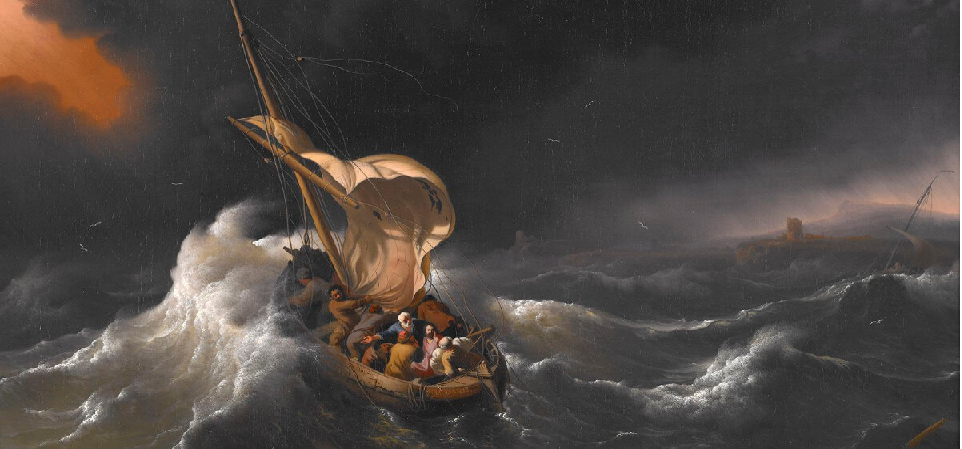
But one day, they were on the Sea of Galilee, legendary for its shallow depth – the lowest freshwater and second-lowest lake on earth. Fed by River Jordan, with the Golan Heights by the side, a wave can easily gather momentum causing problems along the paths. Like Shakespeare’s The Tempest, imagine a strong wave on a shallow freshwater!

On that day, the disciples, experts on waters, had their capabilities tested.  Four of them were recruited by their Master while working on that very Sea. There was a ferocious wave and the men worked to navigate it by themselves. They forgot their Higher Mentor. Then, they gave up, and asked for help. “Peace be still” were the words, and the storm stopped.

Our doctors, healthcare experts, and political leaders are those we cherish. We depend on them to protect and safeguard us. They are working and leading on the coronavirus pandemic. Yet, many need to hear “peace be still” to all the pains, confusions and paralyses coronavirus is bringing to families and nations; many experts are projecting that “tens of thousands” could die over coronavirus. 

Find a higher mentor, to reassure you that “things will be fine”. Do not lose it as the world juggles the paralysis of this virus. Find a way to stay calm – a higher purpose as we hope for a miracle-ated vaccine to tell coronavirus – “peace be still”.

Covid-19 PAUSES Nigeria – All International Airports Closed!

2

Coronavirus has paused Nigeria – all international airports to be closed from Monday, Premium Times reports.

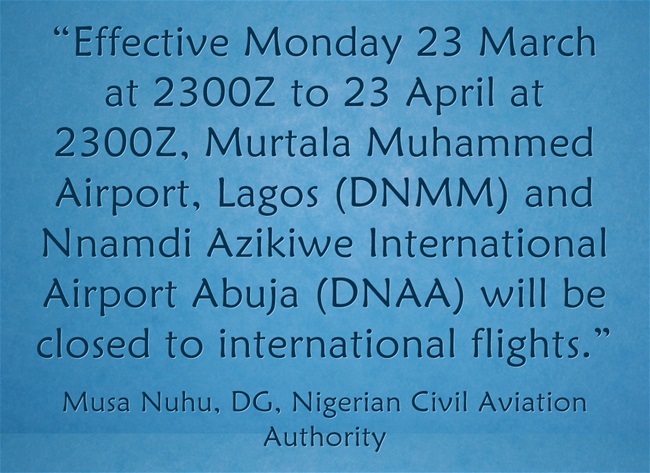
“Effective Monday 23 March at 2300Z to 23 April at 2300z, Murtala Muhammed Airport, Lagos (DNMM) and Nnamdi Azikiwe International Airport Abuja (DNAA) will be closed to international flights,” Nigerian Civil Aviation Authority Director-General, Musa Nuhu.

The directive follows Thursday’s suspension of international flights to other major airports that include Malam Aminu Kano International Airport, Kano; Akanu IbiamInternational Airport, Enugu, and Port-Harcourt International Airport, Omagwa.

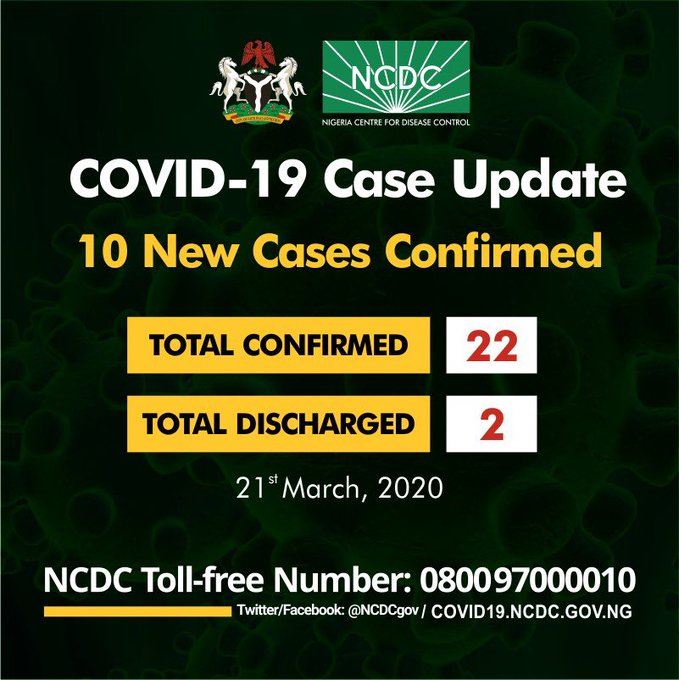
Meanwhile @Fmohnigeria has confirmed 10 new cases of #COVID19 in #Nigeria

Of the 10 new cases, 3 are in the Federal Capital Territory and 7 are in Lagos

9 out of the 10 cases have travel history outside Nigeria in the last one week. The 10th case is a close contact of a confirmed case.

Train stations are also paused:

The statement reads: “the board and management of the Nigeria Railway Corporation (NRC) have decided to stop all passengers’ trains operation as from Monday 23rd March,2020. This is in view of the report of the already known coronavirus (Covid 19) outbreak.

“Further information on passengers’ trains services will be made available in due course to our esteemed passengers.”

The federal government on Saturday, announced 10 new cases of Covid-19 in Nigeria.


Updated – 3/23/2020

Bad time for aviation business: Air transport business going through a decline in Nigeria, so the plea from NANTA [National Association of Nigeria Travel Agencies (NANTA)] is expected as the country’s Aviation Industry has been projected to lose N160.58 billion and 2.2 million jobs in 2020 as the Coronavirus continues to spread. The confirmed cases of Coronavirus in Nigeria is now 25, while two have been discharged.

Stocks To Buy In This Coronavirus Economy (Video)

0

Members, you can go straight to Week 6 Board for updates from other members. We’ve decided to share this to the general public. Yet, we prefer you use the Board as we follow better therein on comments.

We did not do our weekly webinar because of the extensive videos for this week’s session on capital markets, fundraising and investing; we received no extra question. However, we did receive some questions on the potential opportunities in the market.

First thing first, I do not recommend people buying stocks now. Yes, while you can make tons of money at this point, if things work out, a better strategy may be holding some cash because no one knows how long this paralysis will last. Also, there is no data that shows that coronavirus has hit the bottom. So, buying now could be “too early” as things could get worse. As noted in the video, unless we have a cure, covid-19 could become cyclical, wiping out economic systems around the world.

This week in Tekedia Mini-MBA we focused on capital markets, fundraising and investing. We have a FREE video as part of our academic lab by making a call on our choice stocks (public in U.S. and Nigeria) in this coronavirus global economy.

As you watch, we are happy to note that the 2nd edition of Tekedia Mini-MBA will begin registration on April 1 2020. Plan to join us here.

Yet, for academic purposes and practicalizing the weekly session on this Tekedia mini-MBA, our team has put together some stocks (only publicly traded stocks in the U.S. and Nigeria) which could be on play at this moment. We have examined the sectors and how they could play out in the coronavirus economy.

That said, everything can collapse. I expect the U.S. to lose at least 2 million jobs in the next two months.If that holds, markets would be rattled and the domino impacts will be felt across economies. The implication is that even safe stocks of today cannot overcome the SELL gravity. This content is delivered as part of our learning and training system for hundreds who signed up for this program.

As you watch this video, we are happy to note that the second edition of Tekedia Mini-MBA will begin registration on April 1 2020. Please visit here – tekedia.com/programs for the link on April 1 to register.


https://youtu.be/dXzBUzJEJLA


From the Classroom to the Streets: Localizing the SDGs in South West Nigeria

0

The Sustainable Development Goals is a set of 17 global goals set for attainment by 2030. The roadmap to the achievement of the goals was laid in 2015 with the intention to ensure the development of the most vulnerable parts of the world. This was to ensure a development that should leave no one behind. Consequently, everybody is expected to be carried along. No one should be without being aware of the goals as well as the knowledge of what they stand to gain from the implementation of the global goals. From No Poverty to Zero Hunger, Health & Well Being to Peace, Justice and Strong Institutions, the issues captured with the goals represented some of the fundamental development challenges faced by developing and less developed countries. So, the attainment of the goals would translate into measurable development for the nations of the world.

However, one of the major problems confronting the achievement of the goals is lack of buy in among the local people on whose behalf the goals are advocated for. As a matter of fact, the absence of local acceptability of the goals led to the death of its predecessor, Millennium Development Goals, which was later transmuted to the Sustainable Development Goals. Acceptability by local people and policy makers would go a long way in enhancing attainment. In accepting the goals, there must first be awareness followed by knowledge. Awareness makes the goals visible while knowledge increases understanding. Both make the goals clearer. Understanding what each stakeholder knows and think about the SDGs makes mobilization toward the attainment of the goals easier.  A report noted that awareness and knowledge of the goals are two different concepts. Awareness does not necessarily translate into knowledge. A compilation of results from a global survey in 2017 reveals that knowledge of the SDGs is not as high as it was expected two years after it was launched in 2015. For instance, only around 1 in 100 people know the SDGs very well  while 25% say they know the name only. It is also reported that in Germany and France, 2 in 10 citizens admit they are not aware of the SDGs when compared with about 4 in 10 citizens in the United Kingdom and the United States. But, awareness of the global goals seems to be on the rise even better than that of its predecessor, the MDGs.

Another major problem confronting the achievement of the SDGs is data. Data is very important to the implementation of the goals. It will provide evidence for policy-making and assists in tracking the progress made since 2015. It also goes to show the gaps and challenges. At the global and national levels, there is available data which captures progress made so far. However, there is little or no data on the global goals at the sub-national levels. To have an understanding of how localized the goals are, there is a need to have data which will indicate the progress made and the grounds covered in the implementation of the goals. To get the needed data, the academia must not only be interested in conducting empirical studies that speak to the goals, but also be willing to share the outcomes with stakeholders in order to make sense of what the data is talking about.  The language must be clear of academic jargons. The focus of this piece is a case of such done by students of Fountain University, Osogbo in Osogbo, Osun State, Nigeria.


How did it all start?

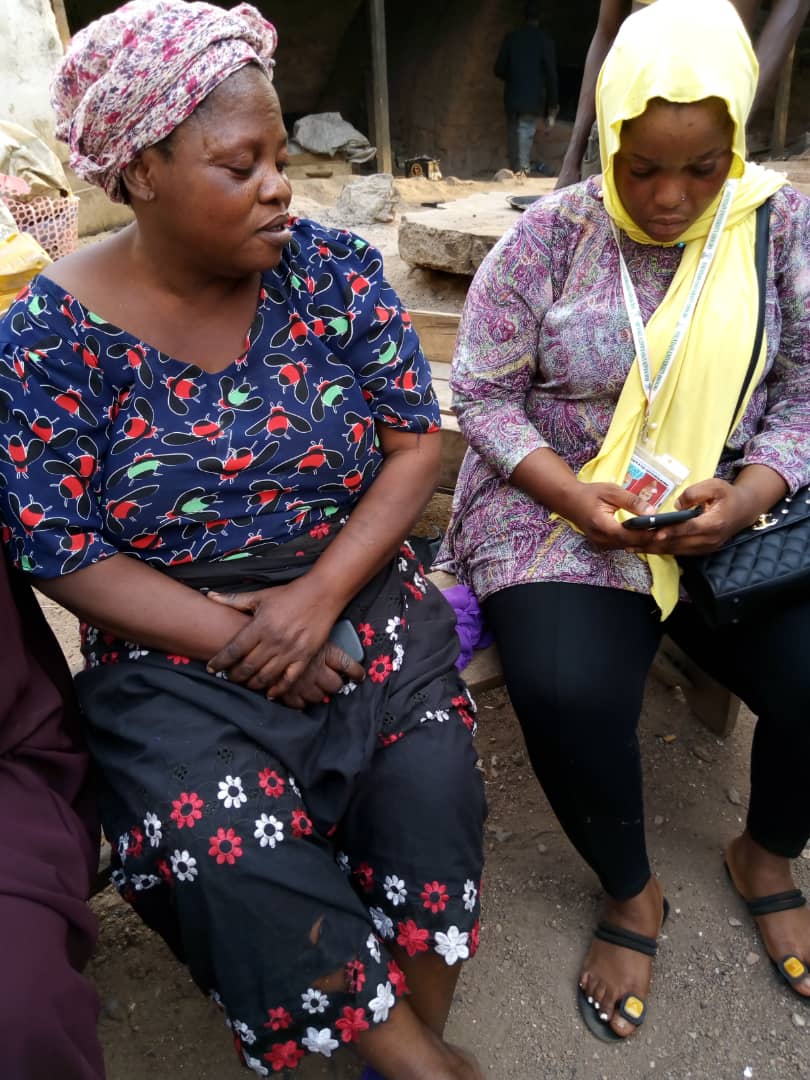
It began from a Communication for Development class where there was a focus on Sustainable Development Goals (SDGs). The discourse hovered around how much the people on whose behalf the global goals are advocated know about the goals and the intent behind them. The students were excited as an idea of the survey of the extent of the awareness and knowledge of the people was mooted in class. A Google document based survey questionnaire was designed and the students trooped out to selected streets in groups in search of information about the level of awareness and knowledge seeking habit of the people in Osogbo as far as the global goals were concerned.

SDGs are heavy on paper but light on the street

It was found that the awareness and knowledge of the SDGs was low in the metropolis. For instance, about 73% of the sampled residents reported that they had never sought information about the global goals. This also resonated with the knowledge seeking habits of the people concerning the SDGs. 75.3% of residents claimed that they had never sought any knowledge about the goals. So, on account of seeking information and knowledge about the goals, the survey revealed a poor outcome from the sampled respondents. The study also covered some other important variables surrounding knowledge seeking and dissemination of the SDGs. These include the ability to understand messages around the SDGs, language used to receive the messages and the most popular medium of dissemination. Of the residents that have heard messages about the goals, 70.3% claimed that the messages were understandable to them; that radio was their most popular medium and Yoruba topped the list of languages used in the dissemination of the messages. In specific terms about language used to understand the goals, Yoruba and English led the charge. For media, radio, television, newspaper and social media are the media through which information is consumed about the SDGs in Osogbo metropolis. Clearly, there was a need to explore other means of propagating the messages of the SDGs for people to get more familiar with them. The  three, out of the 17 goals, that recorded a high interest among the residents included Goal 1 (No Poverty); Goal 2 (Good Health and Well being) and Goal 3 (Quality Education). This is understandable based on the fact that majority of the respondents were between the age bracket of 21-40 with an annual income of between N50,000 to N60,000.


Taking the campaign back to the streets

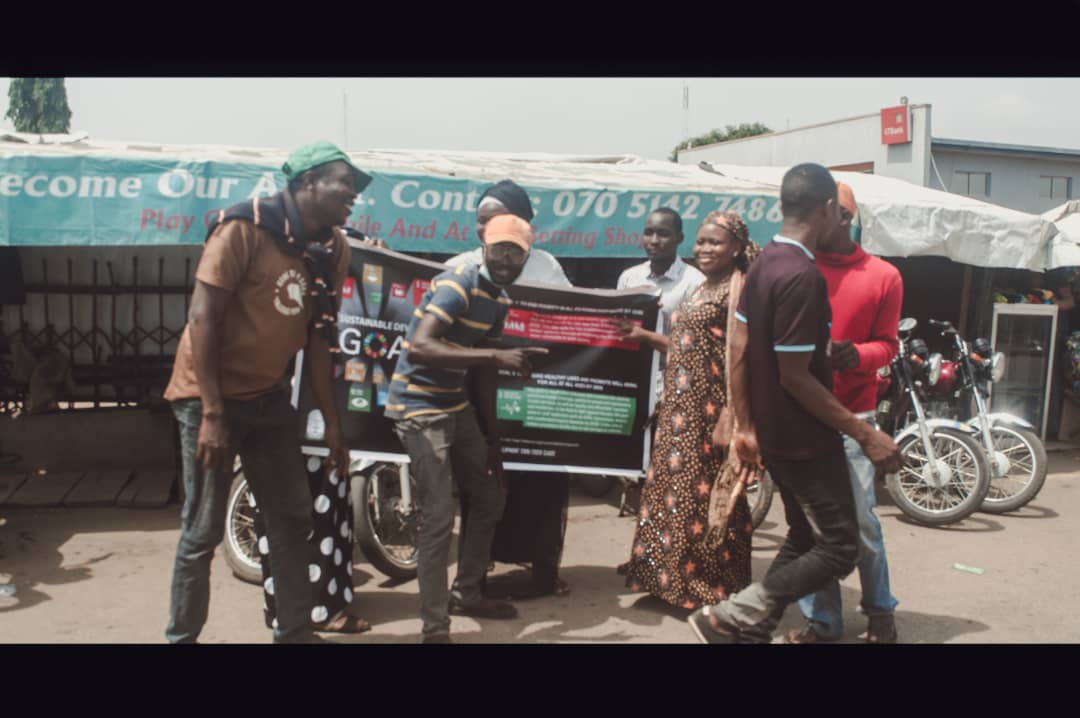
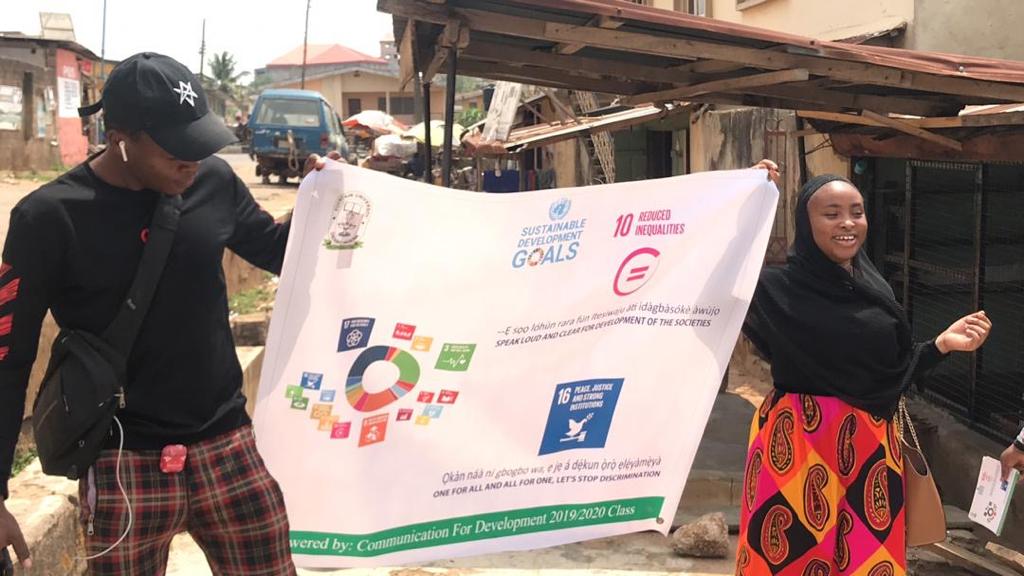
The students went back to reach the respondents who had earlier given them the data. Their mission was basically to tell them about the goals, the intent behind them and how they could go on to make the SDGs-related demands on their elected representatives. They chose to deploy a face-to-face, interpersonal means of explaining the global goals using the language the residents understand. This highlighted the fact that for the global goals to be localized, the ivory towers must be involved. The academia need to gather data that would speak to the void in the society and fashion out appropriate measures to enhance the attainment of the goals. The first 5 years out of the 15 years designated has already been frittered away. We need to double up if we must achieve substantially critical sustainable goals.

Picture 4 : Students back on the streets for campaign