DD
MM
YYYY

PAGES

DD
MM
YYYY

spot_img

PAGES

Home Blog Page 6473

Not Easily Broken: A Poem From My Research in Celebration of  International Women’s Day 2020

0

As we celebrate the 2020 International Women’s Day on 8 March 2020, I am pleased to share a timeline of my research on women (entrepreneurship) over the past decade.

Before I delve into the shortlist of papers, I crave your indulgence to state the obvious lest we forget. As far as women are concerned, we all do have them! Be it mothers, sisters, wives, daughters, nieces, female colleagues, acquaintances and/ or networks.

With that point established, it is now time to move on to my shortlist. Starting with my inaugural article Breaking the glass ceiling in Nigeria: A review of women’s entrepreneurship, which published in 2009 and currently cited 45 times on Google Scholar, I explored the relevance of the age-long conundrum known as the glass ceiling as ever more questionable for a number of compelling reasons. On the one hand, its root in the invisible barriers (push factors) facing women’s career progression prospects in the corporate world is ever-changing at a rapid pace across every region of the globe. Research, on the other hand, shows some evidence of a major dramatic increase in women-owned businesses as being attributable to women’s desire to gain more flexibility in their work arrangements (pull factors). By providing a catalogue of pull factors in women entrepreneurship in the African context (especially Nigerian), I surmised that:

The glass ceiling problem may have well been shattered in numerous spheres, and thus become less tenable as a gender-specific reality in the twenty-first century.

The second article Micro-credit for microenterprises?, which published in 2010 and currently cited 38 times on GoogleScholar, is a co-authored paper that examined those factors that constrain women petty traders’ access to microcredit, and the innovative measures they have initiated in order to counter these constraints. Based on in?depth interviews with 20 women micro-entrepreneurs and/ or petty traders in the market town of Awka in Eastern Nigeria, the study identified three main constraints – internal, socio?cultural and policy induced – as the key moderating influences on their ability to access the arguably widely available micro?credit. 

Moving away, albeit only slightly, from the ‘glass ceiling’ and ‘credit’ challenges facing entrepreneurial women, the third article Setting an agenda for women entrepreneurship in Nigeria, which published in 2011, highlights how the discourse on women, especially in a developing world context, seems to have moved from the margins of international obscurity to the mainstream. Adopting a narrative analysis of a single book on women written by “a woman of status” – i.e. Dr (Mrs) Faseke, a graduate of the University of Ibadan and former Head of the Department of History at the Lagos State University (Nigeria), the study highlights:

The “silent voices” of African women [in an unsung] publication that was encountered purely by chance – Modupe Faseke’s  The Nigerian Woman published by Agape Publications (Ibadan, Nigeria) in 2001.

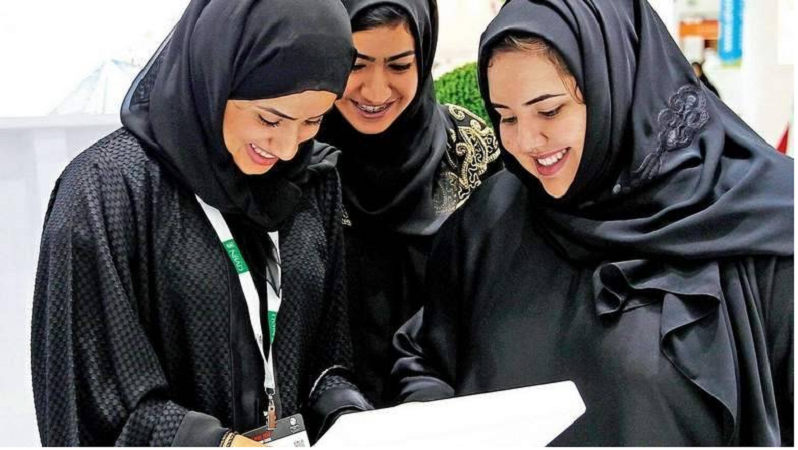
With three of the aforementioned articles having been based on the Nigerian context, the fourth study brings a breath of fresh air, as the focus is on the Middle East context. The article is a rather interesting one for two main reasons. First with was co-authored by a woman. Second, the acquaintance was coincidental as we struck a mutual relationship having been both conferred Emerald Literati Awards at an event in Dubai in 2010. 

Entitled Broken silence: a commentary on women’s entrepreneurship in the United Arab Emirates, the study took quite a while to eventual publish in 2012, in an equally well sought out journal, which made the longwinded process worthwhile. Currently cited 56 times on Google Scholar, the study draws upon the scant literature on women’s entrepreneurship in the Arab world context – notably the United Arab Emirates (UAE). Some of the highlights from that study include observations of:

Growing numbers of women graduates and businesses are observed, which suggests that the historical silence among this group is gradually being broken and that changes in government policies and the socio-cultural environment are the key drivers behind this evolution.

The fifth article is actually a book chapter entitled Women entrepreneurship in sub-Saharan Africapublished in 2015, which highlights the challenges of women business owners in Sub-Saharan African using in- depth interviews from four different countries – Ghana, Nigeria, Rwanda and South Africa. The primary aim of the study was to pinpoint shared challenges of these women entrepreneurs and/ or business owners drawing upon their narratives and attributions. Four critical dimensions on these similarities and/ or differences in experiences were:

The owner’s background (nationality, ethnicity, education, family etc.); prior motivations (why they chose to start- up); challenges (including start- up capital, government regulations, personal achievements), and plans for the future.

The sixth article, which comes with its own uniqueness as a full case study entitled Heaven Kigali-Knocking on Heaven’s Door, was published in a leading textbook, Strategic Marketing: Creating Competitive Advantage published in 2015. The case study narrates the story of Heaven Restaurant & Bar in Kigali, the capital city of one of Africa’s fastest growing economies, Rwanda. Owned and managed by an American woman doing business in a foreign Francophone African country, the study develops narratives of a woman who sought to overcome the liability of foreignness – not to mention gender. The case was triggered by a CNN documentary focusing on developments in Rwanda – dubbed Africa’s Singapore. Here’s a sneak peek:

Given Rwanda’s tourism plan in its Vision 2020 commitment to improving hospitality and supporting tourism, the story of Heaven, provides an ideal contribution to the realities of doing business abroad and the attendant liability-of-foreignness [associated with it].

Overall, the case highlights how a resilient woman, despite the observed portmanteau of challenges, overcame the liability of foreignness and gender disadvantage. 

Last, but not least, is my interrogation of gender stereotypes in the workplace, which is more international in focus, but drawing rich insights from the UK environment and celebrity chefs.  This 2013 article Sex in the kitchen: changing gender roles in a female-dominated occupation, speaks to the conversation on misplaced gender stereotypes at work and the changing dynamics in this space. It also highlights subtle elements of occupational segregation, safety in the workplace, and rather interestingly, identity and empathy in chef life. These issues, in addition to several others, have prompted both scholarly and policy intervention across unilateral, bilateral, and multilateral levels.

That study was only recently cited in a World Health Organisation report Delivered by Women, Led by Men: A Gender and Equity Analysis of the Global Health and Social Workforce Human Resources for Health Observer the delight of the publishers as reported in WHO recognises research in Inderscience journal. Here are a few excerpts:

He offers a gender entrepreneurship slant on the evolving landscape of the “culinary underbelly”. The well-known occupations stereotypically associated with women more than men social work, nursing, and elementary education.

The research cited brings to the boil the notion of “chef life” and gender segregation in the world of the commercial kitchen. Traditionally it seems cooking has been the preserve of women, in Asia, sub-Saharan Africa, the Middle East and North Africa. The modern culture of celebrity chefs and the prestige associated with glamorous restaurants has, however, enticed men to don the white apron more than ever before. It is as if men have adopted and adapted to this one last bastion of female career choice.

Overall, women are making major strides globally, are “not easily broken,” and worth acknowledging and celebrating. If not for the challenges they face on a day-to-day basis, irrespective of the cultural contexts, be it Nigeria, the United Arab Emirates, or the United Kingdom, and how they cope with these challenges, one thing remains a given, we all do have them!

Happy International Women’s Day!

Lagos LASTMA’s Poor N1.5 Billion Incentive

5

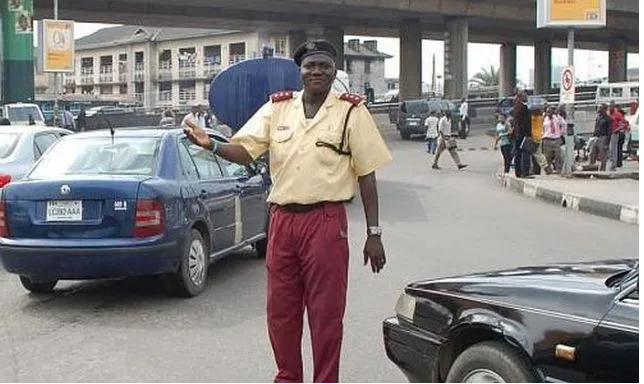
LASTMA, the highly un-loved transport management authority in Lagos has a big revenue target: hit 1.5 billion in 2020. It makes sense when internally generated revenue is the new mantra. But that is actually the problem. Yes, institutions like LASTMA, created for public safety, should not be designed to be revenue-generating just for revenue. (The Lagos state Ministry of Transportation evidently needs to bring in more revenue by operating buses, boats, etc but LASTMA, which is under the ministry, with primary purpose to ensure free flow of traffic in the state and also reduce road accidents should not).  Simply, mixing revenue with LASTMA changes the incentives on the mission, and could push the agency to focus on a new problem: making money over reducing traffic and accidents. (I explained this dislocation, typical on how big firms react to disruptive innovators, in Startup Incentive Construct here.)

The Lagos State Government has given Lagos Transport Management Authority (LASTMA), the mandate to raise its revenue generation to N1.5 billion for the year 2020. It is 150% from what it used to be in the past two years.

In 2016 and 2017, the revenue target given to LASTMA was N1.05 billion and N1.3 billion respectively. Those were the only years that have come close to the 2020 target. The 2018 and 2019 revenue targets for the traffic authority were about N600 million yearly.

The development has stirred anxiety and concern among Lagosians, many of whom see it as government backed means of extortion. A Lagos resident, John Adebayo told Guardian that the decision shows that the state governor does not have the interest of the people at heart. He said “if he does, he would not drastically jack up the revenue target for an agency like LASTMA.”

People, LASTMA should focus on reducing traffic violations on the roads. Here are things to consider:

  • If you put simple signs on Lagos roads, more than 40% of “illegal” fines Lagosians send to LASTMA will go. Most people make the wrong turns, not because they want to break the law, but because they do not know what is right or wrong.
  • And because LASTMA is not in the business of prevention but prosecution through fines, it has no interests to reduce these obvious traps. Within this mindset of higher revenue, the government is feeding an institutionalized illegal extortion of its citizens.

Sure, this is not to say that fines are not good on traffic offenders. The issue here is that anyone could offend in Lagos because there is no order. More than 15 years ago, I had an experience with LASTMA. I came to drop somebody at Jibowu for a journey to Abia via Chisco. At Jibowu, if you are coming from the Maryland side, under the flyover, you have two options to make a u-turn. I took the first one, and quickly they impounded my car. Within minutes, the car was driven to a garage where the tires were deflated. Later, I waited and they gave me an instruction to go to a bank in Allen Avenue Ikeja to pay the fine. 

I was on a night shift in a bank that day, so, to avoid being in trouble, I took a taxi and went to work; working in the IT unit of a bank does not usually accommodate excuses!. The next day, I went and paid the fine, returned to the garage and cleared the car. From the list of “certified” vulcanizers, I picked one and got the tires back.

Then, the big lesson: in November 2019, I passed that same Jibowu junction; no sign has been put to prevent people from making that u-turn. But by the side are LASTMA people positioned to catch drivers. You will then ask: why was it better for those men to lay siege on that turn instead of putting a small wooden sign that says “Use the next turn”?

Scale that Jibowu trap across Lagos and you will get the idea. Higher revenue for LASTMA is not a smart strategy because LASTMA will simply focus on money over public safety.

COVID-19: The WHO Sent 25 International Experts to China, This Is What They Found

0

The WHO has sent a team of international experts to China to investigate the situation. The team included Clifford Lane, Clinical Director at the US National Institutes of Health. Here is the press conference on Youtube and the final report of the commission as PDF after they visited Beijing, Wuhan, Shenzhen, Guangzhou and Chengdu. Here are some interesting facts about Covid-19 that I have not yet read in the media:

  • When a cluster of several infected people occurred in China, it was most often (78-85%) caused by an infection within the family by droplets and other carriers of infection in close contact with an infected person. Transmission by fine aerosols in the air over long distances is not one of the main causes of spread. Most of the 2,055 infected hospital workers were either infected at home or in the early phase of the outbreak in Wuhan when hospital safeguards were not raised yet.
  • 5% of people who are diagnosed with Covid require artificial respiration. Another 15% need to breathe in highly concentrated oxygen – and not just for a few days. The duration from the beginning of the disease until recovery is 3 to 6 weeks on average for these severe and critical patients (compared to only 2 weeks for the mildly ill). The mass and duration of the treatments overburdened the existing health care system in Wuhan many times over. The province of Hubei, whose capital is Wuhan, had 65,596 infected persons so far. A total of 40,000 employees were sent to Hubei from other provinces to help fight the epidemic. 45 hospitals in Wuhan are caring for Covid patients, 6 of which are for patients in critical condition and 39 are caring for seriously ill patients and for infected people over the age of 65. Two makeshift hospitals with 2,600 beds were built within a short time. 80% of the infected have mild disease, ten temporary hospitals were set up in gymnasiums and exhibition halls for those.
  • China can now produce 1.6 million test kits for the novel coronavirus per week. The test delivers a result on the same day. Across the country, anyone who goes to the doctor with a fever is screened for the virus: In Guangdong province, far from Wuhan, 320,000 people have been tested, and 0.14% of those were positive for the virus.
  • The vast majority of those infected sooner or later develop symptoms. Cases of people in whom the virus has been detected and who do not have symptoms at that time are rare – and most of them fall ill in the next few days.
  • The most common symptoms are fever (88%) and dry cough (68%). Exhaustion (38%), expectoration of mucus when coughing (33%), shortness of breath (18%), sore throat (14%), headaches (14%), muscle aches (14%), chills (11%) are also common. Less frequent are nausea and vomiting (5%), stuffy nose (5%) and diarrhoea (4%). Running nose is not a symptom of Covid.
  • An examination of 44,672 infected people in China showed a fatality rate of 3.4%. Fatality is strongly influenced by age, pre-existing conditions, gender, and especially the response of the health care system. All fatality figures reflect the state of affairs in China up to 17 February, and everything could be quite different in the future elsewhere.
  • Healthcare system: 20% of infected people in China needed hospital treatment for weeks. China has hospital beds to treat 0.4% of the population at the same time – other developed countries have between 0.1% and 1.3% and most of these beds are already occupied with people who have other diseases. The fatality rate was 5.8% in Wuhan but 0.7% in other areas of China, which China explained with the lack of critical care beds in Wuhan. In order to keep the fatality rate low like outside of Wuhan, other countries have to aggressively contain the spread of the virus in order to keep the number of seriously ill Covid patients low and secondly increase the number of critical care beds until there is enough for the seriously ill. China also tested various treatment methods for the unknown disease and the most successful ones were implemented nationwide. Thanks to this response, the fatality rate in China is now lower than a month ago.
  • Pre-existing conditions: The fatality rate for those infected with pre-existing cardiovascular disease in China was 13.2%. It was 9.2% for those infected with high blood sugar levels (uncontrolled diabetes), 8.4% for high blood pressure, 8% for chronic respiratory diseases and 7.6% for cancer. Infected persons without a relevant previous illness died in 1.4% of cases.
  • Gender: Women catch the disease just as often as men. But only 2.8% of Chinese women who were infected died from the disease, while 4.7% of the infected men died. The disease appears to be not more severe in pregnant women than in others. In 9 examined births of infected women, the children were born by cesarean section and healthy without being infected themselves. The women were infected in the last trimester of pregnancy. What effect an infection in the first or second trimester has on embryos is currently unclear as these children are still unborn.
  • Age: The younger you are, the less likely you are to be infected and the less likely you are to fall seriously ill if you do get infected:
Age % of population % of infected Fatality
0-9 12.0% 0,9% 0 as of now
10-19 11.6% 1.2% 0.2%
20-29 13.5% 8.1% 0.2%
30-39 15.6% 17.0% 0.2%
40-49 15.6% 19.2% 0.4%
50-59 15.0% 22.4% 1.3%
60-69 10.4% 19.2% 3.6%
70-79 4.7% 8.8% 8.0%
80+ 1.8% 3.2% 14.8%

Read: Out of all people who live in China, 13.5% are between 20 and 29 years old. Out of those who were infected in China, 8.1% were in this age group (this does not mean that 8.1% of people between 20 and 29 become infected). This means that the likelihood of someone at this age to catch the infection is somewhat lower compared to the average. And of those who caught the infection in this age group, 0.2% died.

  • Your likelihood to die: Some people who are in an age group read the fatality rate and think this is their personal likelihood that they will if they get infected. No, because all the other risk factors also apply. Men in this that age group will more likely die than women, people with preexisting conditions more than healthy people, and people in overcrowded hospitals more than those in hospitals where they get the care they need.
  • The new virus is genetically 96% identical to a known coronavirus in bats and 86-92% identical to a coronavirus in pangolin. Therefore, the transmission of a mutated virus from animals to humans is the most likely cause of the appearance of the new virus.
  • Since the end of January, the number of new coronavirus diagnoses in China has been steadily declining (shown here as a graph) with now only 329 new diagnoses within the last day – one month ago it was around 3,000 a day. “This decline in COVID-19 cases across China is real,” the report says. The authors conclude this from their own experience on site, declining hospital visits in the affected regions, the increasing number of unoccupied hospital beds, and the problems of Chinese scientists to recruit enough newly infected for the clinical studies of the numerous drug trials. Here is the relevant part of the press conference about the decline assessment.
  • One of the important reasons for containing the outbreak is that China is interviewing all infected people nationwide about their contact persons and then tests those. There are 1,800 teams in Wuhan to do this, each with at least 5 people. But the effort outside of Wuhan is also big. In Shenzhen, for example, the infected named 2,842 contact persons, all of whom were found, testing is now completed for 2,240, and 2.8% of those had contracted the virus. In Sichuan province, 25,493 contact persons were named, 25,347 (99%) were found, 23,178 have already been examined and 0.9% of them were infected. In the province of Guangdong, 9,939 contacts were named, all found, 7,765 are already examined and 4.8% of them were infected. That means: If you have direct personal contact with an infected person, the probability of infection is between 1% and 5%.

Finally, a few direct quotes from the report:

“China’s bold approach to contain the rapid spread of this new respiratory pathogen has changed the course of a rapidly escalating and deadly epidemic. In the face of a previously unknown virus, China has rolled out perhaps the most ambitious, agile and aggressive disease containment effort in history. China’s uncompromising and rigorous use of non-pharmaceutical measures to contain transmission of the COVID-19 virus in multiple settings provides vital lessons for the global response. This rather unique and unprecedented public health response in China reversed the escalating cases in both Hubei, where there has been widespread community transmission, and in the importation provinces, where family clusters appear to have driven the outbreak.”

“Much of the global community is not yet ready, in mindset and materially, to implement the measures that have been employed to contain COVID-19 in China. These are the only measures that are currently proven to interrupt or minimize transmission chains in humans. Fundamental to these measures is extremely proactive surveillance to immediately detect cases, very rapid diagnosis and immediate case isolation, rigorous tracking and quarantine of close contacts, and an exceptionally high degree of population understanding and acceptance of these measures.”

“COVID-19 is spreading with astonishing speed; COVID-19 outbreaks in any setting have very serious consequences; and there is now strong evidence that non-pharmaceutical interventions can reduce and even interrupt transmission. Concerningly, global and national preparedness planning is often ambivalent about such interventions. However, to reduce COVID-19 illness and death, near-term readiness planning must embrace the large-scale implementation of high-quality, non-pharmaceutical public health measures. These measures must fully incorporate immediate case detection and isolation, rigorous close contact tracing and monitoring/quarantine, and direct population/community engagement.”

source: China_flu

Lagos State Sets N1. 5bn Revenue Target for LASTMA, and It’s not Funny

0

The Lagos State Government has given Lagos Transport Management Authority (LASTMA), the mandate to raise its revenue generation to N1.5 billion for the year 2020. It is 150% from what it used to be in the past two years.

In 2016 and 2017, the revenue target given to LASTMA was N1.05 billion and N1.3 billion respectively. Those were the only years that have come close to the 2020 target. The 2018 and 2019 revenue targets for the traffic authority were about N600 million yearly.

The development has stirred anxiety and concern among Lagosians, many of whom see it as government backed means of extortion. A Lagos resident, John Adebayo told Guardian that the decision shows that the state governor does not have the interest of the people at heart. He said “if he does, he would not drastically jack up the revenue target for an agency like LASTMA.”

In 2018 and 2019, when LASTMA was given a target of N600 million yearly, the governor then, Akinwunmi Ambode explained that the reason for the reversal of the annual target is because the transport management authority was formed to control and ease traffic movement on Lagos roads, not to generate revenue.

The Chairman, Center for Anti-Corruption and Open Leadership, Mr. Debo Adeniran said that with the 2020 target, the Lagos State Government has set LASTMA against road users. And that is the concern every road user in Lagos has, everyone is liable to be a scapegoat in the course of time.

Justifying the revenue target, the Chief Press Secretary to the Governor, Gboyega Akosile said the transport management body needs to live up to exorbitant welfare demands it is making.

“Since they (LASTMA) needed more personnel and other equipment, the Budget and Economic Planning Ministry now challenged them that if they want government to give them the things they need, they should be able to perform better in their revenue drive,” Akosile said.

Lagos State Government led by Babajide Sanwo-Olu appears determined to deal with the terrible traffic situation of the state; it was part of his campaign promise. One way he aims to achieve that is by giving LASTMA more powers to arrest and fine traffic offenders.

The 2012 Lagos State Traffic Laws stipulated punishments that ranges from N5,000 to N50,000 fines or jail terms and forfeiture of vehicles for traffic rule breakers in the state. But the new government feels the fines aren’t punitive enough and has been aiding traffic violations as a result.

Therefore, the Governor Sanwo-Olu led government decided to up the penalties and fines. One way offense now attracts a fine of N200,000. Other offenses like ‘use of seat belt, unclosed doors, standing on the doorway of a moving vehicle,’ that had no penalties attached to them previously, now has a handsome reward of N20,000 each. And so it is with obstruction of traffic, parking on the highway, picking or dropping passengers in places other than designated bus-stops – they all attract a fine of N50,000 each.

Driving on the BRT lane is an offense of N70,000, driving on kerbs and parking on walkways N50,000, dropping passengers on laybys attracts N90,000. In case your vehicle is impounded, you have less than 24 hours to pay the fine or bear additional penalty of N1,000 for every night the vehicle spends in LASTMA’s custody.

The reason given for the hike in fines and penalties by the transport authority is that it will deter road users from breaking traffic rules.

“It is to ensure that apprehended violators do not easily get out of the offense, unlike before. The law says we should impound a vehicle that drives against traffic, which is the most common traffic offense these days.

“But giving them a fine of N50,000 is like a slap on the wrist. But with N200,000 fine or risk of impounding and being shown on camera during mobile court trial, they will think twice. The essence is deterrence,” said a high ranking member of LASTMA.

While this claim appears to be a measure by the government to punish and deter traffic violation, the recent N1.5 billion revenue target is revealing something else. It appears to be an avenue to ensure that the revenue target is met.

When an alleged traffic offender is arrested (in case of one way), he is charged to a mobile court where no one is ever found not guilty. The accused is then required to deposit a court bond of N100,000 or N150,000 while on trial. His vehicle is then released to him on the condition that he keeps appearing in court till the case is closed. If he doesn’t have the bond he will forfeit his car to the state government. In the end you are guilty of the alleged offense without evidence, only their words against yours.

The best you could get is being charged for a lesser offense which carries a lighter fine that will in the end amount to about N200,000. In cases where an offender can’t afford the fine, he is expected to forfeit his vehicle to the state government.

Many feel that such punitive measures are deserving because no sane person should drive one way, but there is more to it than meeting the eyes. LASTMA has notoriety in accusing road users wrongly just for the reason of extortion. Almost every motorist in Lagos has had a bitter encounter with officers of LASTMA who tried to extort them when they have committed no traffic offense. Uber and Bolt drivers have more sad tales to tell.

Additionally, in many places like Shomolu and Yaba, the roads are so confusing that anyone could go one way without knowing it. For instance, Herbert Macaulay Way Yaba is a double carriage way where a side of it has room for vehicles going to and fro. But then, the arrangement started halfway down the road, and so it is with so many other roads in the Yaba area. So if you don’t know it, your chances of going one way is high, and that’s exactly what the traffic officers want to see for the sake of their revenue target.

Moreover, most Lagos roads were built without laybys and spaces for pull over in case of emergency. This has offered opportunities to traffic officers to victimize road users. A motorist could pay as much as N20,000 for having a flat tyre, the same goes for making a U-turn where you are not supposed to. In most cases, the signs indicating all these are hidden so that many will fall victim.

LASTMA was instituted to ensure free flow of traffic in Lagos State not as revenue generating agency. The 2017 Lagos State revenue report showed that VIO and LASTMA generated a combined N11.35 billion in revenue, 0.6% of the state’s annual revenue portfolio. In a state where the minimum wage is N31,000, it will cost a worker seven months’ salary to pay a traffic offense fine. Concerned residents say it is insouciant and authoritarian for Lagos State Government to convert LASTMA to a revenue generating agency and increase traffic fines to such high amounts.

Multiple Chapters 3-6

0
  • Chapter 3: Faith
  • Chapter 4: Prayers
  • Chapter 5: The Price Of Perseverance
  • Chapter 6 – The anointing

Chapter 3: Faith

What is faith

  • Faith is knowing the will of God and following the way to actualizing it
  • Faith is sharing responsibility with God in the light of scriptures so as to have your desire delivered

So faith is not just a belief or hope, it is a lifestyle is an act. But your faith in God will answer based on your standing with God. Who you are to god will determine what happens to you.

What to note about faith

  • It is of a religious logic or sectional terminology
  • Faith is not a gamble
  • Faith is a tool of spiritual battle
  • Faith is the only connecting rod between the natural and supernatural
  • Faith puts you in command of situation and circumstances of life. In the very class of God.
  • Faith works or doest based o your walk with God
  • Faith is a heavy weight virtue

Why faith in business

Many people don’t even have faith in and the workings of their business. In faith you have a responsibility-work study, prayers, fellowship and communion with the holy spirit etc. faith is a personal responsibility meaning one man’s faith cannot answer for another, it is your “your faith that will make you whole’. You need faith in business because

  • It helps to rule in the world of impossibilities
  • Faith affects animate and inanimate object
  • Faith is an evidence of answered prayers
  • It builds expectation and hope which is critical to receiving
  • It motivates you to believe in God, people and yourself and by so doing you are unstoppable

Characteristics of faith

  • It is a seeking force
  • It is a driving force
  • It is a restful force
  • It is a daring force
  • It is an ever wining force

Start speaking sales, growth, and enlargement into your business. You have been  with those goods or properties for days, weeks.  Speak sales into it. Tell it to behave and have faith in God. If you ask in such a manner and do not doubt in your heart then your miracle is sure.

One unique thing about faith is that it gives a cheque in prayers and in the financial world a cheque is equivalent to cash.

Hope

What is hope?

Hope is expectation of a better outcome. It is futuristic. Expectation is the mother of manifestation and what you don’t expect you cannot experience.

Hope is what will keep you going in the face of opposition and resistances to your progress. But it is important to note that it is faith that fuels hope in a business person. Hope makes you keep seeking opportunities to make the most of your adventures and reaching your goal. Hope is the light that makes the assurances that something will turn in your favor which eventually will do. Hope keeps your expectation alive but since your expectation determines your experience then hope will make your experience a glorious one.

Ways to fan your hope

  • Always have a vision written and regularly reviewed
  • Keep company with hopeful people
  • Be open to new information and technologies: it will keep your mind fresh and sharpen your vision
  • Always have flexible plans
  • Focus on results not obstacles
  • B an impulsive thinker
  • Be a team payer

Chapter 4 – Prayers

Every individual, people pray irrespective of religion, sex, color, race or status. There is a natural consciousness that there is a supreme authority that is above all . I perceive as a reader you belong to a region.

You see, the dynamism and volatility of business makes it pertinent to engage in prayers. Remember that you are not the only one doing business there are lots of people so there is a risk factor, that’s why you seek a higher power to help you which is God. You can get books on prayer especially my book on praying and praying through for further reference.

Speaking in tongues

It is otherwise called praying in the spirit. It is common knowledge that the spiritual controls and influence the physical. Your spiritual buoyancy will have a direct role on your business, life and well being.

It is succinct to note that you can pray in knowledge and you can do that in the spirit. People resort to this sort of prayers when they sense that they need higher help from above.

Why should you speak in tongues?

  • Satanic forces are spiritual while you see their physical effect but if you want to fight back you engage in a spiritual fight
  • It edifies you
  • It is a secured medium of spiritual communication
  • Puts you in the place of dominion
  • Supernatural fruitfulness and enlargement is established
  • Hunger for the things of God
  • A good stimulant in prayers

Chapter 5 – The price of perseverance

Perseverance means endurance, persistence, unrelenting in a given task. It is an ever give up tonic from your inside until your business becomes a global success.

Many people give in and sellout, just a few days to breakthrough, they give up and throw in the towel. Friends, you are closer to success than where you have started. Research has shown that outstanding successes usually failed at least 7times.

I remembered vividly the story of Benjamin Franklyn who failed elections severally but finally became American president. Look at our dear president, Muhammadu Bahari who failed elections for 16 years but finally the made it in 2015. Can you imagine if he didn’t contest in 2015, he would have missed it in history.

The gift of Giving

As a business person there are different platforms to give

  • Tithing
  • Offerings
  • Corporate social responsibility
  • Taxation

I will technically focus on CSR and Taxation

There are many businesses evading and avoiding tax and so they don’t even engage in CSR. Remember without the society your business and you can’t exist. Remit your taxes, give back to the society also engage in religious giving. This is what they practice in the west, that is, why their businesses keep going well and profiting.

Chapter 6 – The anointing

The anointing is the divine enabling. It is divine help, divine grace, and divine ability. Your business is destined to be great and loaded but you will not explode without the anointing. Without the anointing you cannot break forth and manifest what God has loaded inside of you. Remember, your well being is the well being of your business. If you suffer spiritual defect, it will show in your business

Have the anointing

  • To rule and reign in the midst of your enemy
  • To open up your destiny
  • To preserve and sustain progress
  • To scale new heights-change levels
  • For empowerment

The anointing of the Holy Spirit is for all spheres of human endeavor. The more anointed you are the more the breakthrough you command. Your level or profitability is anointing dependent.

How to encounter the anointing

  • Righteous living
  • Genuine thirst
  • Pray for it
  • Look for men who have it and follow them
  • Humility

Note that anointing is the digging of hands of god in the life of a man.

The power of confession

What you say determines what you see. You can’t be confessing hardship and expect a flourishing business. In this part of the world, it is normal or termed humility to complain and that’s why many issues are complicated here. Keep saying good things about your business and you see it taking shape. Confession is very powerful; it creates your desired future. Words are every powerful, it is one of the strongest armory in spiritual warfare

Wake up at night and early in the morning and say what you want to see and you keep changing from glory to glory.


Back to Table of Contents