DD
MM
YYYY

PAGES

DD
MM
YYYY

spot_img

PAGES

Home Blog Page 6481

Review of the Best How-To`S and Tutorials for Students

0

Most teachers offer students a list of recommended textbooks. But it is very important to consciously approach the quality and quantity of acquired knowledge. You should choose some good how-to’s and tutorials for self-education. This will have a good effect on your professional growth and English proficiency. We will tell you how to choose modern, useful, and interesting books and in order not to get confused in a large number of publications.

Choosing the right English how-to`s and tutorials 

You should consider several factors at once in order to choose the perfect books:

  • First, you need to decide what level of the tutorial you need: beginner, intermediate or advanced. Thus, it is necessary to determine your level of English. The easiest way to do this is with one of the many online tests – for example, the British Council offers to pass such a test. When the level is determined, you need to formulate your training request. Do you want to master the most general basics of the English language, or do you have a specific goal (for example, to master business English for business use)? 
  • It is also worth thinking about what additional resources you would like to use. We recommend acquiring a manual that includes audio recordings for those students whose auditory channel is the main channel of perception, as well as for those who want to work on English pronunciation or develop listening skills. And if your visual channel is the basic channel of perception, then a book with a lot of illustrations will suit you.
  • Many modern English textbooks include online components: games, videos, and various types of exercises. They are especially useful for those who like to study in an interactive way.
  • It`s not easy to find a tutorial that includes all of the above elements. Therefore, you need to set priorities correctly, that is, decide which aspects are more important to you and which ones can be neglected. You can visit CustomWritings.com and choose what you need.

List of popular how-to`s and tutorials for students

Here are several how-to`s and tutorials that are very popular all over the world:

“English File” by Clive Oxenden and Christina Latham-Koenig. This tutorial was published by Oxford University Press in 2013. It has Intermediate, Intermediate Plus, Upper-Intermediate, and Advanced levels. This British edition is very popular all over the world. The relevance and modernity of lexicon, interesting topics, effective infographics, and illustrative examples are its basic features. At the same time, “English File” is an understandable, accessible and relatively easy textbook for students.

“Speakout” by Frances Eales, Antonia Clare, J.J. Wilson, and Steve Oakes. This tutorial was published by Pearson Longman in 2013. The textbook was developed in close collaboration with the BBC company, and this left a noticeable imprint on the quality of materials. The topics of the textbook are accompanied by excellent videos. Live interviews help develop spoken language and expand your vocabulary.

“Upstream” by Virginia Evans and Jenny Dooley. This tutorial was published by Express Publishing in 2002. The program of this textbook is deeper and therefore a little more complicated. The complexity of the materials is expressed in texts for listening/reading, and in grammar.

“New Total English” by Rachael Roberts, Antonia Clare, Araminta Crace, and J.J. Wilson. This tutorial was published by Pearson Longman in 2011. Both grammar and vocabulary are focused on trained students. The addition to this textbook has been released. It is available on the website where you can create an account for free by registering the ISBN number of your tutorial.

“Practice Makes Perfect ” refers to how-to`s with a huge amount of interactive exercises. You can even say that this is an expanded workbook in which each short lesson is followed by many practical tasks. There are 53 lessons in the book, which cover the tenses of the verb, possessive pronouns, prepositions, negatives, and so on. To avoid confusion and information overload, each lesson is very short and devoted to a separate grammatical phenomenon, and you can complete it in about 15 minutes. You can purchase “Practice Makes Perfect” on Amazon.com. The price will depend on which version you choose – electronic or paper, as well as whether it is a new book or a used one.

“Business Communication” by M.K. Sehgal and Vandana Khetarpal also refers to how-to`s for students. It was published in 2007. This book is a practical guide for business English learners. 

So, we have provided you with a list of 6 excellent English tutorials and how-to`s for different levels and different requests and goals. It’s time to start practicing!
Some Quotes from Tekedia Mini-MBA

0

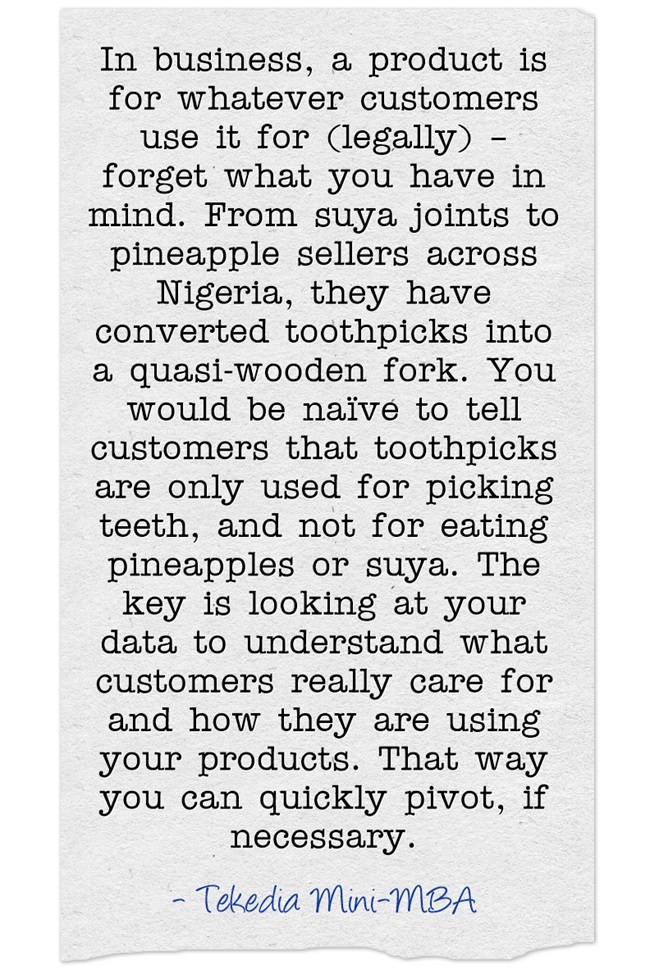
Here are some quotes from our materials and discussion boards on the ongoing Tekedia Mini-MBA.

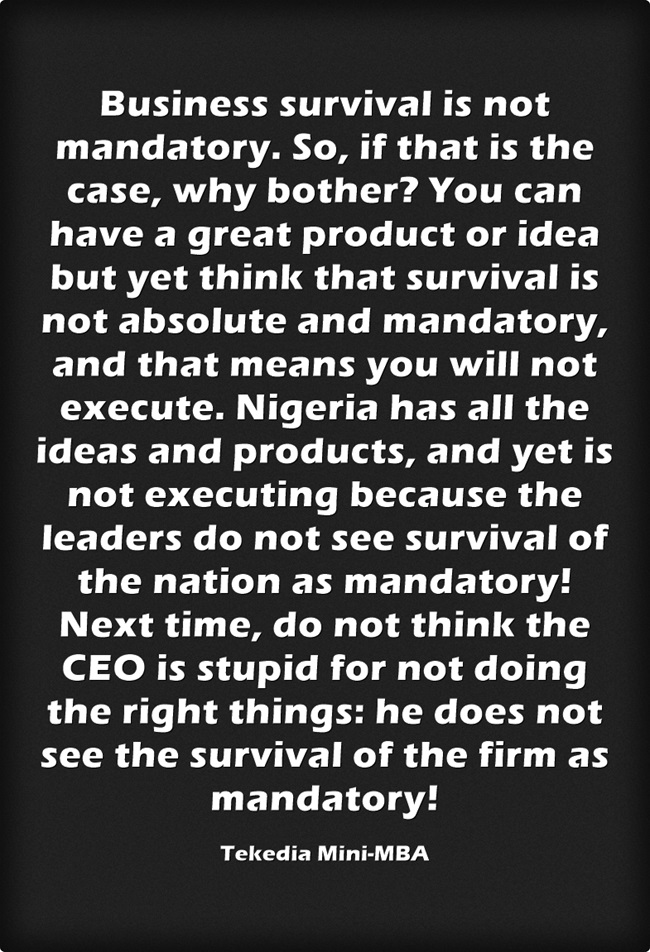
From Discussion Board (hope you see your firm survival as being mandatory)


Quotes from Tekedia Mini-MBA which continues to welcome members; register today.

Great Products + Execution = Great Company

1

In Africa, I have learnt that big press release rarely moves growth. Growth is not a one-time event. That is where it becomes challenging. Yes, you have built the product, ran some press releases and now you are waiting for sales to take-off. Nothing happens. You have paid Google and Facebook for adverts, waiting for the bank accounts to respond, nothing happens. This part of the world is different; you cannot hack growth as they do in America because hacking the pockets of Nigerians (and Africans in general) is tough. Yes, when the average income per day is $2, it is harder to find money in that pocket even when you have hacked into it!

[…]

One way to make growth happen is to have a system that actually measures growth. Until you have a clear desired growth target, you would be unable to mobilize the required resources to make it happen. Without measurement and pursuit of targets, everything becomes guesswork, a simple pendulum or rollercoaster with no clear deliverable expectation.

[..]

Pulse: Facebook created a position for Vice President of User Growth, ran by Chamath Palihapitiya, now the CEO of Social Capital. According to Chamath, they realized at the early phase of Facebook that having many users in Facebook was the most important feature in the business. In other words, despite any engineered feature, if there were no people in Facebook, no one would have cared. So, to give users the best feature – having their friends, families, etc there – Facebook formed a growth group which does nothing but work out mechanisms to bring people to use Facebook. Until you can measure and work on things that matter, top-grade execution will not happen.

When you are growing, you are executing well, and one key thing here is that more people will like to come and work with you. In a big company, your unit will begin to attract top talent and in a start-up, more quality talent will begin to apply. Where there is no momentum – i.e. the execution is stunted – visions fade and paralyses emerge: a tribe of believers is lost, not just in the firm but also in the market. If the workers do not see any momentum, doubts set in and customer relationships will become secondary as everyone will be updating his or her CV more. Suddenly, the business that was attracting great talent is now struggling to keep those it wants to keep in-house.

Growth happens when there is a great product to sell. No other trick can work, and anything else will fade over time. So, the summary is this: Make Great Products That Wow Customers.


Culled from Week 2 of Tekedia Mini-MBA Lecture Materials. You can still join us here by registering via the options provided here.

Zenvus Loci Begins Shipping to Partners

1

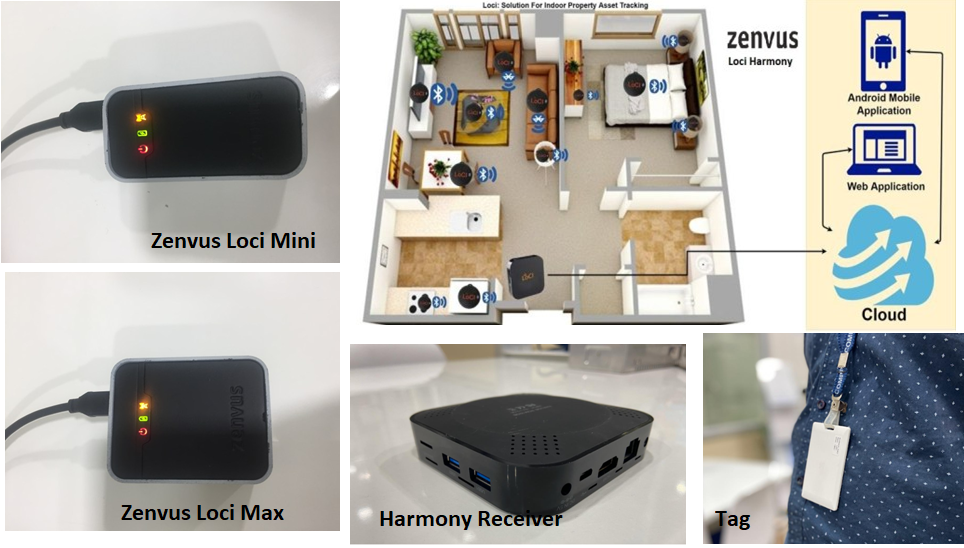
We are happy to note that all partners we have qualified can now place bulk orders to serve their retail customers for the following products: Zenvus Loci Mini, Zenvus Loci Max, Zenvus mLoci, and Zenvus Loci Harmony. We welcome intending new partners; email here to learn more. For intending partners, if we qualify you, we will send our price list.

Zenvus is a partner-first company. We have won many global awards on designs. In 2019, ZKM | Center for Art and Media Karlsruhe Germany displayed our works in their museum, recognizing “creativity and imagination”.

  • Zenvus Loci is a disposable or reusable package GPS that you can put in a briefcase, cargo, personnel, etc and monitor in real time its location. We see opportunities in tracking the specific cargoes (not just the trucks), ecommerce shipments, security guards, equipment on transit, law enforcement (police, army, etc), human (child, oil workers, etc), luggage (individuals shipping via buses, personal air travel luggage, etc), vehicles (no installation), etc. It is cheaper than anything in the market and it is rechargeable with USB. It has two versions: Zenvus Loci Mini and Zenvus Loci Max. Loci Max (up to 7 days of tracking, hourly reporting on full battery charge). Loci Mini (up to 3 days).
  • Zenvus mLoci: This works by tracking the phone of the driver using QR code and requires connectivity on the phone with GPS. The user (say a driver) must install the app. For every trip, a new QR code is generated. The driver scans it with his phone and clicks “begin trip”. That driver will be tracked until he clicks again in the app that ”trip is completed”. On a map, the driver location will be shown. Updates and notification via email and SMS. One code per trip sequence.
  • Zenvus Loci Harmony: Zenvus Loci Harmony is a solution for indoor property asset tracking. We will put a GSM- or WIFI- supported Zenvus receiver to pick location data from Zenvus chip stickers. You can have many of those stickers. Any device where you stick one (memos, files, phones, tables, chairs, TVs, bundle of cash, important assets, etc), and from our dashboard, you will know where it is. Each sticker has an 18-month battery life. Have Receivers and Tags(i.e. the trackers with beacons).

The Measures and Correlates of the 60 Years Crises in the Nigerian Banking Sector: Is Bailout a Sustainable Strategy?

0

In every decade, the Nigerian banking sector does not experience less than two crises. According to experts, banking crisis evolves when two conditions emerge.  The first condition is the significant signs of financial distress in the banking system such as bank runs, losses and liquidations must evolve. The second condition has been premised within the banking policy intervention measures in response to significant losses in the banking system.

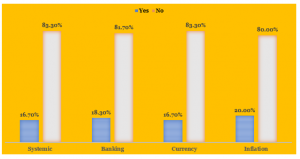
Our analyst is interested in understanding these conditions further with special attention to the Nigeria’s data on crises in the banking industry from 1954 to 2014. During the period, existing data show that country experienced 11 systemic crises followed by 10 currency crises in addition 9 sovereign external debt defaults and 12 inflation crises, which could be described as a mixture of ups and downs for the economy. For instance, systemic crisis started from 1987 to 1994. It resurfaced between 2004 and 2005.

Exhibit 1: Category of Crisis between 1954 and 2014

Source: World Bank, 2014; Infoprations Analysis, 2020

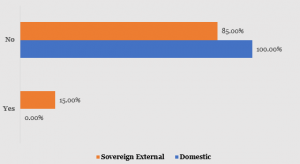
Exhibit 2: Debt Default between 1954 and 2014

Source: World Bank, 2014; Infoprations Analysis, 2020

What Effect Do Exchange Rates Have on Nigeria’s Inflation Rates in 30 Years?

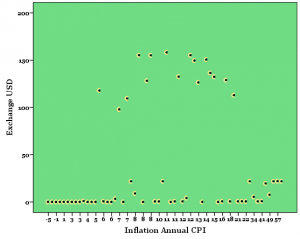
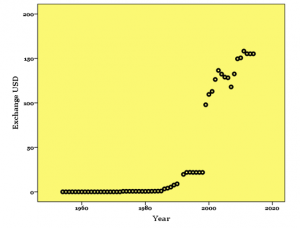
On a specific note, our analyst explored the impact of the exchange rate of US dollars on inflation annual (Consumer Price Index) rates in 30 years (out of the 60 years covered in the analysis), which in turn caused banking crises during the period. Analysis reveals -5.3% connection for the exchange rate and CPI. We also found that 0.3% of the fluctuation in the exchange rate could be understood from the CPI [see Exhibit 3].

These results align with the experts’ position that “When the exchange rate of its currency falls against multiple other currencies and the country imports goods from all these countries, the combined effect leads to economy-wide inflation in the country, even if its partner countries don’t raise their prices.” Going forward, our analysis suggests 21.8% increase in CPI for 2020 if the current exchange rate continues without adequate measures to checkmate it. Our analysis specifically indicates that one dollar increase in the exchange of Naira to Dollar would lead to a 21.8% increase in Inflation Annual CPI [see Exhibit 4].

Exhibit 3: Link between Exchange USD and Inflation Annual (Consumer Price Index) in 30 years

Source: World Bank, 2014; Infoprations Analysis, 2020

Bailout Sustainability and the Need for Stable Exchange Rates

Exhibit 4: Exchange USD per Year

Source: World Bank, 2014; Infoprations Analysis, 2020

According to our checks, during the period, government officials and experts agreed and disagreed on the rationales for bailout funds given to some banks. They also had divergent views on the policy interventions of the Central Bank of Nigeria and other regulatory authorities. In 2009, Lamido Sanusi, former governor of the CBN hinted that N620 billion was injected into the troubled banks due to non-performing and unsecured loans of the banks which led to tight credit in the economy. Checks have also shown that “Nigeria’s all-share index fell 2.5%, with financial stocks the heaviest losers after a 400 billion-naira ($2.6 billion) bailout of five banks knocked investor confidence in the sector.”

Having seen the gravity of unsecured loans and the cost of bailout on the government, in 2018 the Nigerian government through the Special Presidential Panel for the Recovery of Public Property announced its commitment to recover the $7 billion bailout fund granted to embattled commercial banks between 2006 and 2008 by the Federal Government. A year later, the Federal Government reinforced the need for the banks to revisit the risk management strategy because the use of huge bailout funds may not be sustainable in the financial system.

According to Professor Yemi Osibanjo, the Vice President, “First is the number of institutions, and implicit and explicit tools in our safety system and their sustainability. Perhaps the most significant challenge to the financial system that we have experienced so far was that bank crisis of 2009. “Going by the manner of resolution, it appears that the preferred option was the establishment of Asset Management Corporation of Nigeria – an option that cost something in the order of N5tn. Since then we have also seen the use of a mixture of bailouts and bridge banks.

“The problem, of course, is that the most reliable studies show that overly generous financial safety nets or system have generally tended to increase bank risks and systemic fragility. “My respectful view is that there must be some rethinking of the short and long- term implications of the use of these tools and their sustainability in the coming years. A reference was made in the past that we may not even have that option of the AMCON-type bailout given the sheer amount of money that will be involved.”

Beyond looking at the possibility of readdressing the bailout approach to rescue troubled banks, concerned stakeholders also need to devise the right policy interventions that would solve the exchange rate fluctuation in 2020 and coming years.  This is imperative as the World Bank’s Global Economic Prospects report says,  “There have been four waves of debt accumulation in the last 50 years. The latest wave, which started in 2010, has seen the largest, fastest, and most broad-based increase in debt among the four. While current low levels of interest rates mitigate some of the risks associated with high debt, previous waves of broad-based debt accumulation ended with widespread financial crises. Policy options to reduce the likelihood of crises and lessen their impact should they materialize include building resilient monetary and fiscal frameworks, instituting robust supervisory and regulatory regimes, and following transparent debt management practices.”