DD
MM
YYYY

PAGES

DD
MM
YYYY

spot_img

PAGES

Home Blog Page 6497

Five Years of SDGs in Africa: Why Setting Country Specific Benchmark in achieving the Global Milestones Matters

0

By September, 2020, it will be five years the global goals of Sustainable Development have been launched by the United Nations. At the launch in 2015, it was a consensus that by 2030, countries of the world would have made significant progress by achieving each of the goals. That could be said to be a very huge ambition on its own when looking at what led to the failure of its predecessors- the Millenium Development Goals (MDGs) and which brought in the SDGs. A quarter of the 15 years has already gone down if the countdown to the 5th anniversary of the launch is considered as September, 2020 approaches.

The five years of the global goals is significant in a lot of ways. One, if added to the previous 15 years of the MDGs, it would have been two decades of the United Nations’ attempt to make the world solve some of its major problems especially in vulnerable regions of the world including Africa. So, it calls for some reflection even as the SDGs could not be said to have been a new attempt at combating the problems identified through its set goals. So, there is a need to mainstream the attainment of the global goals to the local efforts being made to solve the identified issues focused by the goals.

Two, as the 5th anniversary inches closer, a deep look back at how the goals are propagated and keyed into by different regions of the world is equally vital. It is worthy to note that the UN has kept an eye on the achievements of the goals and what could be pointed to as considerable progress has been made. However, the attempt has been limited to regional levels. Success and milestones are measured on the basis of bloc achievement by countries in a region. This will not be helpful at all. Country-specific data at implementing the Goals should have rather been the focus. It is expected that by now, governments of different countries should have taken ownership and come up with national frameworks for the achievement of the 17 Goals.

Three, the first five years of the Goals is capable to give stakeholders a clear picture of whether the milestones of the implementation of all the goals are possible within the set timeframe. This calls for a five-year framework of assessment of the progress made on each goal. This would make setting up an early warning system for checking advancement on the goals. This will call for the cooperation of the countries of the world to give quality, accessible and timely data on progress made on each goal. Doing this would give room for a multi-layered approach to reviewing and tracking progress from country-level to regional-level and then the global-level.
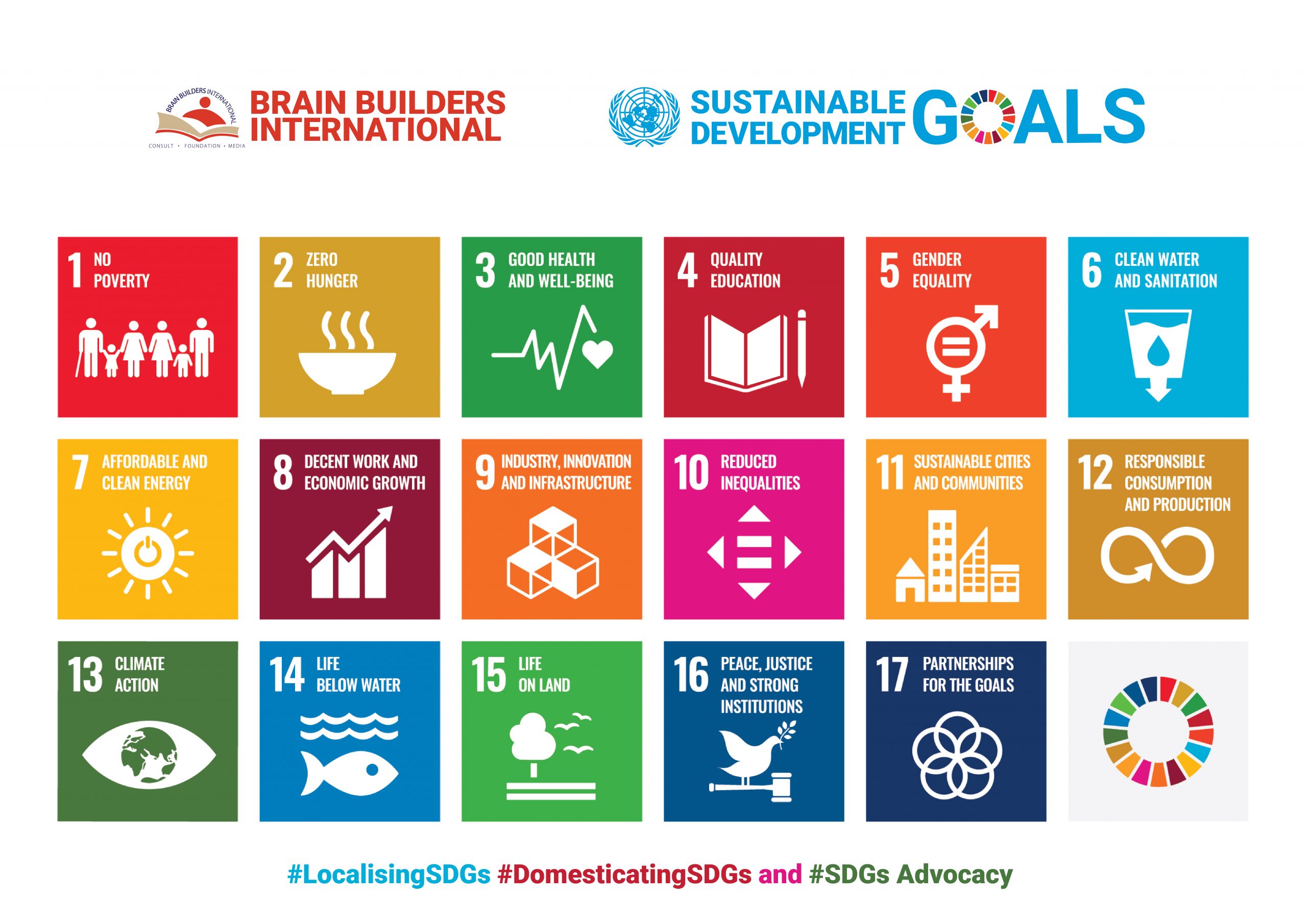
Four, there must be a mechanism to ensure each signatory country has  a way of  contextualizing the attainment of the Global goals within the dynamics of its structures. For example, Nigeria as a country has her peculiarities of governance structure. There are ways through which the three-tier government distributes power and governance issues. Even though, many of the problems captured by the SDGs are spread on the exclusive, concurrent and residual list, it would require more advocacy to have them synergized with the global goals. For an appreciable success to be recorded, the country must approach the SDGs the way it attempted to implement the abandoned National Economic Empowerment and Development Strategy (NEEDS) initiated in 2004.

The strategy was not only focused at the national level, it had acceptance at the state and local government levels. The national and sub-national governments must have a clear approach and an agreed framework on the implementation of the goals. As the year of implementation of the goals enters its fifth year, there is no pointer that that is going to happen.  This is more so that there is nothing legally binding the countries in implementing the sustainable development goals.

As we roll down the fifth of the fifteen years of implementation of the sustainable goals, it is imperative that the UN emphasizes that governments should not only look at external partnership but also be deliberate about internal cooperation to ensure the impact of the SDGs is felt by the most vulnerable people and that no one is left behind. The consequence of Africa not doing well on the Global goals is unimaginable.

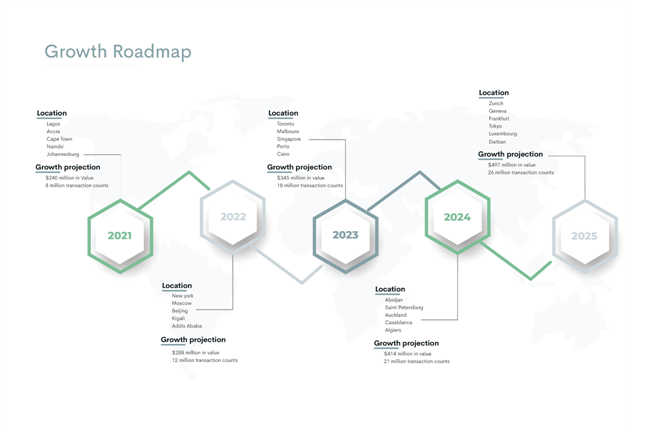
Call for Capital: A Fintech Startup with High growth potential is calling for seed funding & support

0

A Fintech startup registered in Delaware and Lagos, Nigeria is looking for investment in StackFX.

StackFX.io is a P2P FX transaction and remittance product that will facilitate the free flow of funds across the globe and is designed to serve all customer segments. It is owned and managed by Datastarck Inc and other accredited banking stakeholders in countries across the different continents of the world.

Datastarck Inc, registered in Delaware and Lagos, will use the capital to hire a business development team, acquire technologies & build a top-class team to quickly scale into the African and global markets. The company would also reserve a part of the fund for FX liquidity with its acquirer bank in Europe and the US. The deal is expected to close on February 12 2020.

The idea for StackFx came from the two Founders’ time at Procter & Gamble Nigeria, where the firm regularly ships in a high level of raw materials needed for the production line or plant at intervals.

“Most of the time, we are faced with the heavy task of sourcing for USD to be able to do this exercise, basically to pay foreign suppliers. Although there is year on year plans for same and this is tailored along the Central Bank of Nigeria’s USD buying window that is majorly executed through the commercial banks, most times, there’s always a shortage of exotic currencies to pay foreign suppliers of raw materials, which results in a halt in production &  minimum stock level. The firm then struggles or starts sourcing for exotic currencies from the black or grey market.

Sourcing from this black/grey market channels, which is the most unreliable with less liquidity, always comes with double fee/charges, because the firm buys at a rate with a commission from the black market fx traders then take this funds to the bank as a deposit before trading or paying from the corporate domiciliary account. At this end, the bank also charges its own fee at the end before processing the requirements and paying the suppliers abroad.”

In June 2017, the Datastarck team carried out a survey with a research team of 50 persons across the various BDCs, FX black/grey markets and banks FX trade desk, to ask the following: 

  1. What is the average daily retail FX in the grey markets?
  2. What is the volume or value done over banking FX desk?
  3. What is the actual FX value/volume in Africa as a whole?
  4. What is the daily retail FX in Nairobi, Joburg & Lagos by ranking or leading in Africa market? 
  5. What are the problems associated with retail FX sourcing in Africa and Asia?

The results of the survey revealed that there is a high level of inconsistency, lack of liquidity, unfavourable rates, multi-layer charges, inability to do instant FX between different countries of the world with ease, difficulty and delayed access FX service and all sorts of proprietary regulatory details and add-on cost.

StackFX was born to address these challenges as well as the existing foreign exchange and payments challenges faced by individuals & businesses. We will provide businesses and individuals with an online platform to exchange currencies with other individuals & businesses and make international payments to their business partners & suppliers abroad.

StackFX will allow customers initiate payments in the local currency of the initiating jurisdiction or US Dollars while the beneficiary receives a direct credit to his account or cash in the local currency or US Dollars (provided send currency is USD, GBP, Euro, SA Rand, Canadian Dollars, New Zealand Dollars, Australian Dollars and beneficiary has a USD account) in line with local procedures.

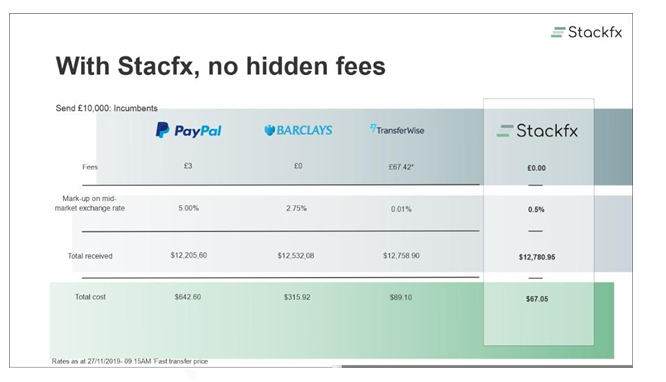
StackFx compared to incumbents 

Africa’s Forex within the small and medium businesses alone is estimated at $400billion in transactional volume. StackFX targets 75% and 25% of the Africa market share and globally traded volume respectively, which according to the Bank for International Settlements triennial report of 2016, the foreign exchange market cap averaged $5.1 trillion per day, for 2019 global daily fx volume was 6.6 trillion. 

We see a future for Africa that truly fulfils the continents immense potential, but we believe that this can only be done with hard work, passion & dedication, and the road must begin somewhere. We intend to be one of the biggest facilitators of business and trade within Africa and with the rest of the world. We hope to build a strong and long-lasting community based on trust and mutual well-being.

StackFX as a digital FX platform will serve both local and diaspora’s personal, trade advisory and business financial transfer needs, this is made possible through a unified FX platform that is both secure and accessible regardless of region. 

We aim to bring positive disruption to the redundant, restrictive and outdated bank’s FX transaction model by using technology to allow real-market participants to dictate their terms and pricing.

Datastarck Inc is calling for seed capital investment for StackFX from Angel Investors and VCs only who meet the following stringent criteria:

  • Must be willing to invest for the long term
  • Must be willing to allow the company to operate as-is, no change to company culture.
  • Won’t try to lock the founders into golden handcuffs or push complex deal terms, renegotiate and grind on terms
  • Won’t try to flip the business in 3-5 years

If StackFX sounds like a perfect fit and addition to your investment portfolio, please send your questions and inquiries in an email to investments@datastarck.com

Upon receiving your email requests, we’ll send you our pitch, demo video and financial model. 

Layer3 Is Set to Raise the Bar On Service Delivery in 2020

0

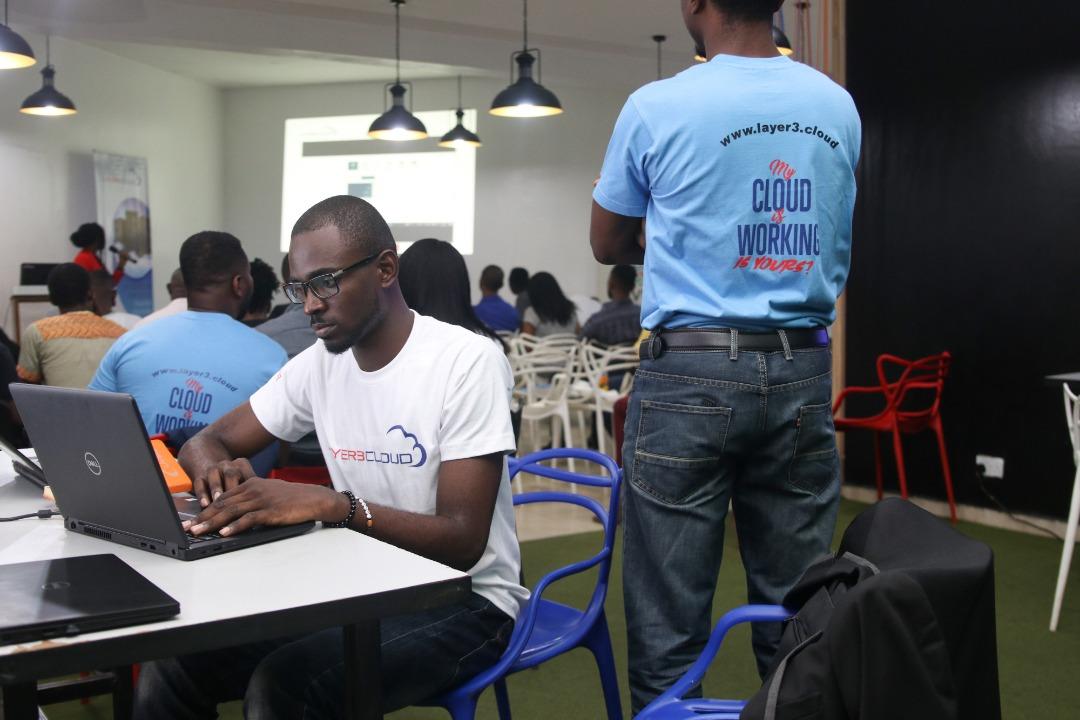
The year 2020 holds a lot of promise for IT services provision. It’s the start of a new decade, one in which innovative technologies will drive growth at all levels. 

For 14 years, Layer3 has helped Nigeria’s businesses and public sector agencies in this direction. Through services like managed security, cloud storage and connectivity, it has offered the country’s biggest organizations the platform to benefit from contemporary technology. 

This journey with its customers will continue in the coming months, as Layer3 strives to improve on its service delivery. In the New Year, it will have an impressive record to surpass- a 2019 marked by multiple awards, client successes, and ground-breaking partnerships.

Work on this front is already underway. Last year, the company strengthened its staff by on-boarding new expertise. A notable addition to the team was Shatse Kakwagh, who has joined the organization as its Executive Director. Mr. Kakwagh brings with him a wealth of experience from his previous roles at leading technology firms on the African continent.    

There’s also been progress made with cloud and virtual services. In July, Layer3 announced that it had entered the VMware Cloud Provider Program, with the launch of the Layer3Cloud, which runs on VMware cloud provider platform. This partnership allows Layer3 to deliver cloud computing services that meet global standards, at lower costs and with great efficiency.                    

In this same timeframe, the company was recognized by the London Stock Exchange Group as one of the Companies to Inspire Africa. The group’s report lists Layer3 among a number of dynamic growth businesses carving a path forward for industry on the African continent. 

Also in 2019, the company was named the Best Cloud Solutions Provider for the second year in a row at the Beacon of ICT Distinguished Lecture and Award Series. The lecture organizers said Layer3 had been presented with the award for consistently introducing innovative products to the Nigerian IT services market.

These recognitions serve as a guarantee to the company’s customers that it is working to meet their service delivery expectations. 

With the increasing demand from Nigerian organizations for various enterprise technologies, there’s a growing call for more IT companies in the country to fill the local content gap that exists in the sector, specifically with data hosting. Layer3 will be scaling up its operations to meet the ever expanding needs in these areas. 

As a customer-centric technology firm, we are firmly set on delivering on the promises we make to our clients in 2020, on all points at which we connect with them. They can rest assured that the company’s services will remain a solid foundation on which to build the organizations of contemporary times, and of the future. 


Source: Layer3.Cloud – Layer3Cloud helps organizations leverage cloud technology to maximize compute, network, and storage resources. We work with our customers to build secure, fast, and scalable solutions to deliver the integrated cloud experience they have been seeking.

Soulmate Going Digital To Serve Beauty To Its Customers

0

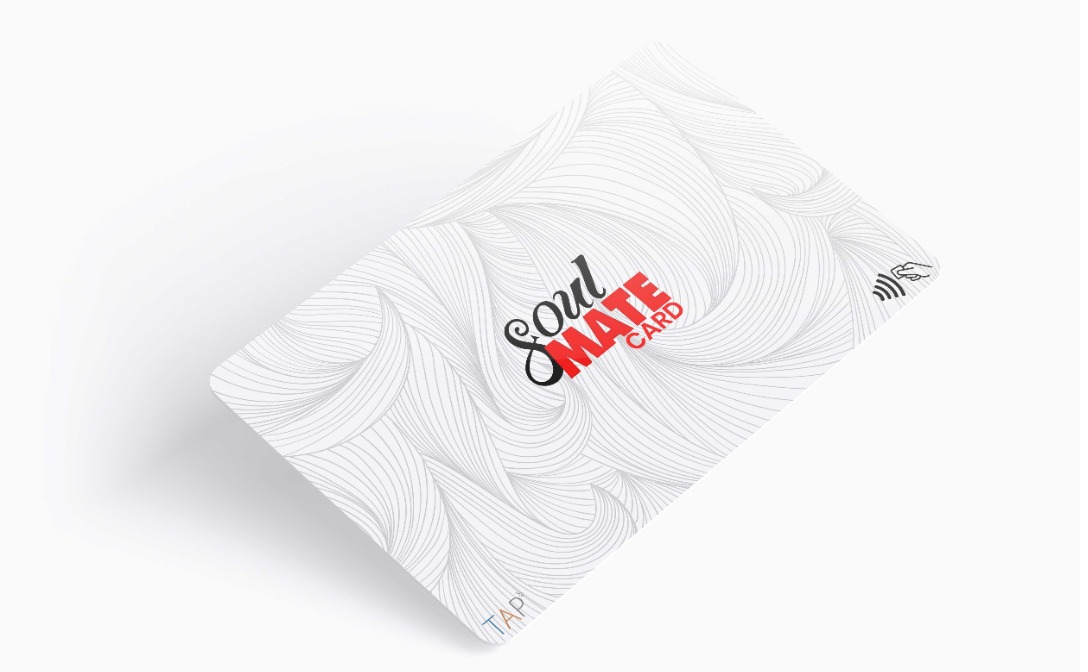
Soulmate Industries Ltd, Africa’s leading indigenous hair-care and body-care manufacturer, is going digital. Since a FUTO graduate formulated the HCP Conditioner (turning a class project into a multi-billion naira conglomerate), a generation of Nigerians and Africans has found a mate, in beauty care! Other products have followed over the years, making the brand a respected player in the industry. The new Olive Oil Mayonnaise is supreme; I paid excess luggage as my wife packed everything Soulmate as we made it back after Christmas.

To the Soulmate fans, something good is coming. Yes, it is huge and amazing. That soulmate will be easier to reach and relate with, at a deeper level, via digital technology. Yes, going digital to serve beauty to customers. When you find your soulmate, it is happiness galore. 

Meanwhile, interested in becoming a global or local distributor anywhere in the world, please click to explore more (PDF).

Nigeria’s Soulmate Industries Begins Quest for Global Expansion, Seeks Global Partners on JV, Distributorship, etc


Wragby Nigeria Wins Microsoft Partner of the Year, Unveils wBizManager for SMEs

0

I have spent a lot of time working with this amazing technology company. Run by industry leading experts on cloud and enterprise solutions, it continues to innovate, helping large corporations, SMEs and startups find new markets. In their design center in Lagos, you will find young people doing amazing things on tech. They are taking it further with something amazing.

Wragby, winner of many global technology awards, has  developed an ERP solution for Small businesses called wBizManager (Wragby Business Manager), to bridge this gap in the SME market space. wBizManager is an integrated suite of application that manages business processes such as sales, purchasing, accounting, human resources, customer support, CRM and inventory developed for SME. 

This is truly SME-ready at less than $3 monthly subscription with 24/7 customer support.

I also want to congratulate Wragby Team for winning 2019 Microsoft Partner of the Year. Please keep my zobo, nkwobi and not-amala!

About wBizManager

The impact of technology on enterprises, large or small, is inescapable. Research shows that adopting critical technologies is one of the foremost factors propelling businesses forward, especially when easily available at a cost effective price.

However, when it comes to SMEs (small and medium scale enterprises), the story is starkly different, especially in our region, as just a few use digital technologies for business growth. 

Looking at the key business goals of any SME which include improving revenue growth, increasing employee productivity, and acquiring more customers, all of which can be successfully addressed by technology; but often, the scale of investment for such solutions seems overwhelming, especially since top technology trends are developed for larger enterprises.

Wragby Business Solutions and technologies Limited, a relentless team of acclaimed world professionals, developed an ERP solution for Small businesses called wBizManager, to bridge this gap in the SME market space. wBizManager Solution is an integrated suite of application that manages business processes such as sales, purchasing, accounting, human resources, customer support, CRM and inventory developed for SME. 

Some of the key benefits of this solution include the fact that it is cloud Based, cost-effective (subscription is low as NGN 1,000 subscription monthly) and availability of 24/7 In-Country Expert Support. 

For more information, kindly visit our website at https://wbizmanager.smeproductivity.com/

Wragby Business Solutions and Technologies limited with its pedigree of firsts, remains at the forefront of technological innovations through the consistent delivery of trail-blazing solutions that guarantee their customers optimum productivity.

In PDF – WBIZMAN v5.1