DD
MM
YYYY

PAGES

DD
MM
YYYY

spot_img

PAGES

Home Blog Page 6499

The Mind of Aliko Dangote: How to become a successful businessperson (3 videos)

0
Aliko Dangote sees opportunities for everyone to invest in Africa
Aliko Dangote’s guide to being a successful businessman
Aliko Dangote says he built his fortune from scratch

Nice Move By the Finance Team on Finance Bill, 2019 (Now Finance Act) Nigeria

0
2018 Nigeria Budget

This is to commend Mr. President and the Minister of Finance on the Finance Bill, 2019 (now Finance Act) which has been signed into law by the President. I do think if the startups reinvest the profits, growth will come, even marginally. It may seem little but that spirit of allowing some of these taxes to go is one way we can help startups and broad SMEs (small and medium scale enterprises). The SMEs need this help, as most are like local government areas in Nigeria, providing their electricity, potable water, security , etc needs. Sure, the VAT increase from 5% to 7.5% reduces the fun; nonetheless, it is moving in the right direction.

The Nigerian Financial Bill was recently passed by the Senate. While it awaits the assent of the president, the Minister of Finance, Budget and National Planning, Zainab Ahmed, said the Bill will exempt companies and businesses with turnovers less than N25 million from Companies Income Tax (CIT)

She added that companies with turnovers of N25 million to N100 million yearly will be paying 20 percent as Companies Income Tax, but those earning over N100 million will pay 30 percent of their profit as income tax.

Presently, all companies are required to part with 30 percent of their profit as CIT to the Federal Government, but the Minister said there is going to be consideration to businesses earning less to enable them to expand.

Andersen Tax has some brief explanations:

  • the increase of the VAT rate from 5% to 7.5%;

  • the introduction of a N25 million VAT compliance threshold;

  • the exemption of companies with less than N25 million annual turnover from payment of CIT;

  • expansion of the scope of companies taxable in Nigeria to include companies that operate within the Nigeria digital space, among others;

  • requirement of a tax identification number for opening of bank accounts or continue operation of existing bank account;

  • provision of exceptions for the application of excess dividend tax under Section 19 of the CIT Act; and

  • imposition of excise on certain imported products.

The Nigeria’s Financial Bill And Magic of Tax-free $70,000-Turnover Companies

MPC Nigeria Raises CRR to 27.5% in the Face of Surging Liquidity

0

The Monetary Policy Committee (MPC) held its 271st meeting on the 23rd and 24th of January, 2020. The Committee noted the current environment of sluggish global economic recovery and financial market vulnerabilities, and tepid domestic growth.

Highlights of the Committee’s decision:

The Committee by a decision of 9 members, voted to alter the Cash Reserve Requirement (CRR) by 500 basis points from 22.5 to 27.5% while leaving all other policy parameters constant. Two members voted to leave all parameters constant. In summary, the MPC voted to:

  1. Change the CRR from 22.5 to 27.5%;
  2. Retain the MPR at 13.5%;
  3. Retain the asymmetric corridor of +200/-500 basis points around the MPR;
  4. Retain the Liquidity Ratio at 30%.

Their decision was guided by the following developments:

Global Economy: Outlook and headwinds

  • Global output is projected to grow by 3.3% in 2020 from 2.9% in 2019.
  • Broad slowdown in the advanced economies,
  • Resurgence of financial stress in the Emerging Markets and Developing Economies (EMDEs),
  • Rising geo-political tensions in the Middle-East and;
  • Extreme weather conditions in some regions.

Domestic Economy: Outlook and headwinds

The optimism in growth prospects in Q1 2020, and the rest of the year, is anchored on the enhanced flow of credit to the private sector, to improve manufacturing activities, and financial and exchange rate stability.

Identified headwinds to growth include:

  • Uncertainty in the oil market
  • High unemployment
  • Rising public debt and
  • Security challenges across the country.

Credit Update

  • Aggregate Credit (Net) grew to 27.33% in December 2019, from 23.12% in the previous month.
  • This was largely attributed to an increase in Credit to Government, which grew to 92.95% in December 2019, from 72.36% in the previous month.
  • Credit to the Private Sector also grew to 13.61% in December 2019, from 12.82% in the previous month.
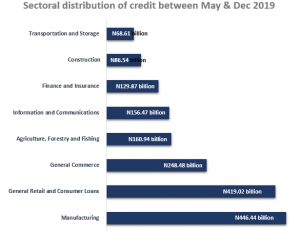
The Committee observed with delight that, over the last six months, aggregate credit grew by N2.0 trillion and urged the Management of the Bank to sustain the current momentum of improved flow of credit to the Private Sector, while exploring other options with the fiscal authorities to strengthen the legal framework for the enforcement of credit recovery.

The Committee noted the improvement in the financial soundness indicators, growth in assets of the banking system and the gradual switch in the composition of DMB assets from investments in government securities to growth in credit portfolio.
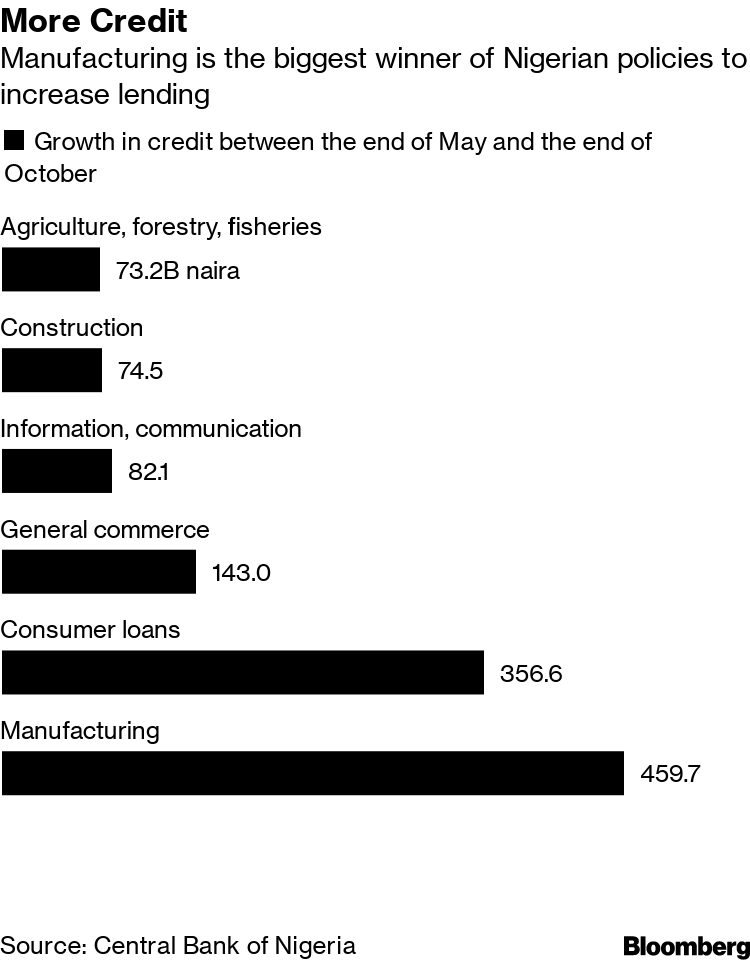
It also noted that in some cases, DMBs were not encouraging term deposits in their portfolios and therefore, emphasized the Bank’s commitment towards the implementation of the Loan-to-Deposit ratio (LDR) policy.

It is noteworthy that Gross credit in the industry grew by N2 Trillion between May 2019 and December 2019; channeled primarily to the employment-stimulating sectors such as agriculture and manufacturing, in addition to increased lending to the retail and SME segments, which is expected to help boost domestic output growth in the short to medium term.

The MPC believes that the aggressive pursuit of the current loan-to-deposit ratio policy thrust would continue to help to catalyze credit growth and positively impact growth and prices.

Despite the increase in CRR, we believe there is still enough liquidity in the system to sustain the current flow of credit. If you need a loan and/or credit advisory, send your request to our credit team at bjoseph@capitalbancorpgroup.com and aogunbanwo@capitalbancorpgroup.com.

Thank You Sterling Bank for the Gifts

0

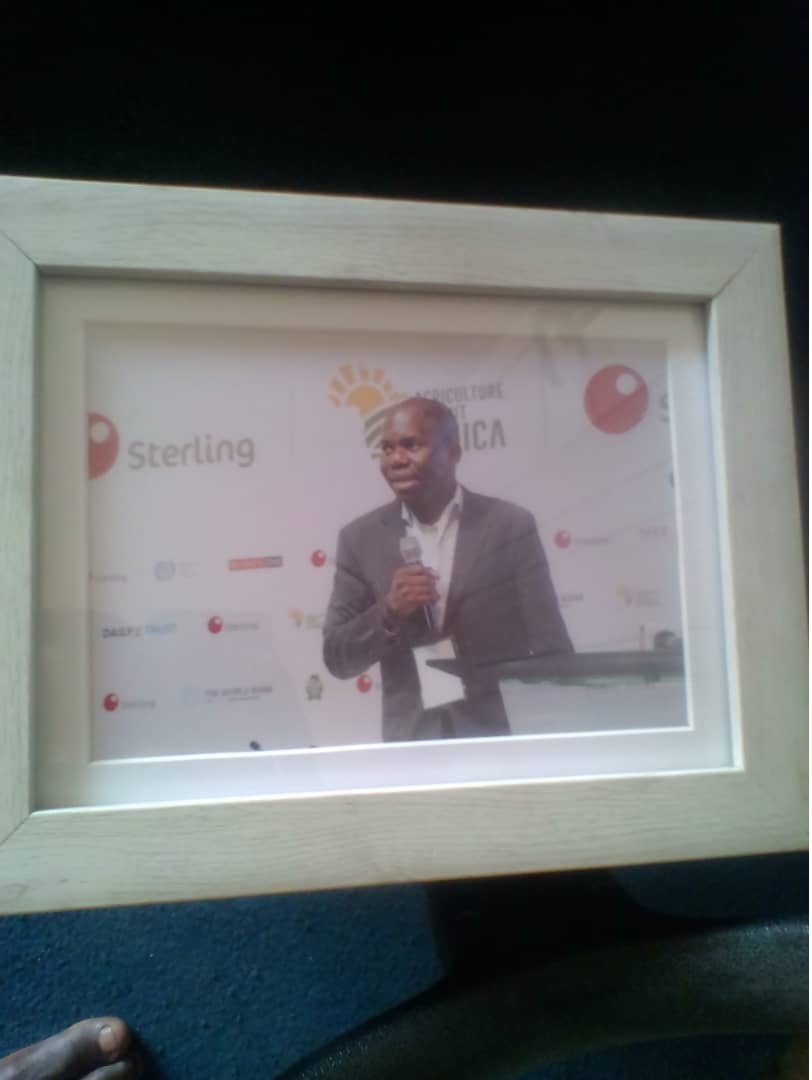
Thank you Sterling Bank Plc for the gifts you sent to me today via our Owerri office. In my village, when you are visiting an elder, you go with gifts. This Christmas, while in the village for 2+ weeks, I cherished the tradition as younger men came over with gifts, to greet. Of course, I returned the same: “Ichie, I have come in peace, take this gift to serve your guests, and may peace continues to reign in Ovim”. 

To Sterling Bank, I wish you a BIG profitable year. For remembering this village boy, and sending a framed photo with your logo, etc, you will thrive in markets and win territories. 

#SterlingBank – the bank with a HEART.


Tell me – what happens to Gokada, Opay, and Max in Lagos state?

3

Jubril A. Gawat, special assistant to the governor of Lagos state on New Media, reports thus: “The Lagos State Government has banned the activities of Commercial Motorcycles (Okada) & Tricycles (Keke) in some LGAs in the State: Apapa, L/Mainland, Surulere, Eti Osa, L/Island, Ikeja effective from Feb 1, 2020”. If you check, these are the most important and profitable local government areas in Lagos state for the ride-hailing companies.

Tell me – what happens to Gokada, Opay, and Max? These companies have raised $millions to pursue their missions. The government has a reason to deal with largely untrained okada drivers who cause accidents on Lagos roads. But one would have expected it to isolate the professionally trained ones from these companies. The distinction is evident but this is Nigeria – you must swim together by all costs!

More on click below.