DD
MM
YYYY

PAGES

DD
MM
YYYY

spot_img

PAGES

Home Blog Page 6510

Four Short Lessons Learnt from Osun Youth Agenda Campaign

0

Kimpact Development Initiative is a non governmental organisation situated in Osun State, Southwest Nigeria. It is the organisation that was in charge of the Vote not Fight campaign before the gubernatorial election in the state in 2018. Led by Bukola Idowu, the organisation is also in charge of the Osun Youth Agenda, a nine-month, research driven, stakeholder engagement campaign on mainstreaming issues that could lead to sustainable youth development in the policies of the state. In just nine months or thereabout, the campaign has proved very successful.  Instances of the success of the programme were captured in a previous article here. However, the focus of this piece is to examine some key principles that worked for the campaign. Here is highlight of these.

#Multi-layered Bottom Up Approach. The campaign was driven from the bottom up. Youth coordinators were selected from different local government areas in the state. The essence is to keep the engagement robust and make the advocacy neural. As the coordinating hub was consulting at the central level, the coordinators were feeding the secretariat with information from the grassroots level. Political office holders were consulted through the local representatives of the campaign. This made the campaign integrated. This also allowed the campaign to echo same message across different local areas in the state. The resultant effect is the success of the Osun Youth Agenda.

#Multiple Advocacy. The Osun Youth Agenda was a campaign that thrived on multiple advocacy. Stakeholders were properly identified and engaged. Since the campaign was a multi-sectoral engagement, adequate analysis of those who have the stakes in those sectors was done and critical agencies and personnel were involved in the process of developing relevant policy driven proposals and recommendations. From unions to indigenous organisations, the engagement yielded  a buy-in. Apart from the constitution of a board of technical experts for the campaign, the state legislators and members of the executive council equally focused. Recommendations were smartened to make them acceptable and fiscally realistic.    

#Data-Driven  Advocacy. Another factor that assisted the coordination of issues in the campaign was the extensive use of data. Data is the currency of the time. Initially, the campaign coordinating secretariat surveyed youths in the state with the aim of extracting their needs across the various sectors of the society. From Agriculture, education, health to wealth creation and employment opportunities, the demands of the youth were compiled and the implications were visualized. When advocacies are based on data, it gives the advocates a clear picture of the width and breadth of the issues and also attract attention.    

#Creative Programming. The OYA coordinating hub was creative in creating programmes around the campaign. From trainings of the coordinators to the advocacy, elements of creativity stares anyone who cares to look deeper in the face. The two policy dialogues and legislative interaction with the Speaker of the State House of Assembly were the icing on the cake. Arguably, the three programmes were the first in the state to be organized by non state actors in pursuit of campaigns such as this one.

The 9-month programme has come to an end. But, the lessons learnt from pursiung the goals should be warehoused by non-governmental organizations within and outside the state  in pursuing such projects. To pursue the greater good for the greater number, the approach must indeed  be different.

 

An Investment Option in Nigeria

0

“Gold clingeth to the protection of the cautious owner who invests it under the advice of men wise in its handling.” —The Third Law of Gold

The quote above is culled from The Richest Man in Babylon by George S. Clason. Recently, Prof Ndubuisi Ekekwe expounded it in How You Can Invest N10 Million in Nigeria Right Now. His investment counsel came at the most appropriate time when all interest rates are crashing with the Treasury Bills, TB, leading the pack. Before now TB has been a lucrative and the safest portfolio investment but it has lost its attractiveness and thrown investors into a dilemma.

Investors are having tough times in deciding the next best investment choice to secure and grow their wealth. And, according to the possible alternatives listed by the erudite professor, fixed deposits tops the list. He said,

“If you fix the money for 3 years, in a good bank in Nigeria. The Nigeria Deposit Insurance Corporation (NDIC) insurance will cover a part of the N10 million even in a rare case the bank collapses! So, your risk is fairly managed, broadly, for 10 million, the interest rate cannot be more than 10% looking at some numbers from most Nigerian banks. In short, the average for 10 million fixed deposits, for three years is about 6 – 7%.”

I find his position to be true of commercial banks by my validation. Two months back, I visited the major commercial banks to get their deposits rates and compare with that of AB Microfinance Bank under the guise of an investor. The variance was very significant.

I bet you are trying to retrieve the file of AB Microfinance Bank from your memory bank, just click here to know more. Hold on, before you click, know that AB MfB is one of the few national microfinance banks in Nigeria. It’s the largest German owned firm by number of employees (over 1000). It has been in operation since 2008 with 23 branches in Lagos, Ogun, Oyo, and Ondo states. Five more branches are expected to kick start in the five Southeastern states by the first quarter of 2020.

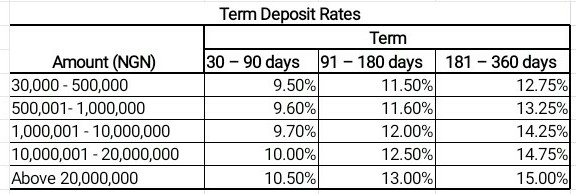
The highest rates on a fixed deposit hitherto offered by other banks is our starting point. How are we able to do this, you ask? Our investment is long term, and our clients are not the few macro borrowers who always fail to pay back their loans. We service the long neglected millions of the micro, small, and medium enterprises whose risk of default is manageable. This guarantees our profitability and continuity. The table below shows our current rates on time/fixed deposits.

Note:

  1. Interest rates are subject to 10% withholding tax (WHT).
  2. Interest rates reduction in case of early withdrawal:
  3. By 50%, if withdrawal is in the first half of the term; and
  4. By 25%, if withdrawal is in the second half of the term.
  5. If interest is paid monthly, the above interest rates are reduced by 0.5%
  6. You can also negotiate for higher rates than 15% for amounts above 20 million.

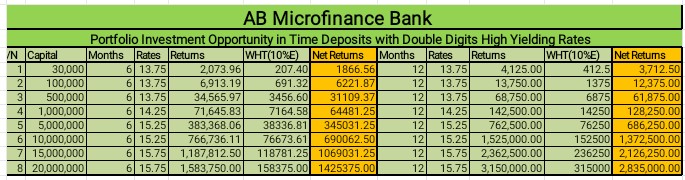
In the second table below, I showed the net earnings on some specific amount of money fixed for 6 months, and 12 months. The net earnings were determined by deducting WHT from the earnings at maturity.

In conclusion, another eternal truth from the Richest Man in Babylon will be helpful.

“Wealth, like a tree grows from a tiny seed. The first copper you save is the seed from which your seed of wealth shall grow. The sooner you plant that seed, the sooner shall the tree grow. And more faithfully you nourish and water that tree with consistent savings, the sooner you may bask in contentment beneath its shade.”

Benefits of Investing in AB MfB Term Deposits

  1. Minimum risk portfolio with predictable yield.
  2. High and stable interest rates above the level of inflation of  11.98%
  3. Flexible amounts and interests determined by clients preferences.
  4. Roll over option.
  5. Easily and readily available when demanded by clients.

Why not invest with AB MfB today? Contact David Gani at David.Gani@ab-mfbnigeria.com or call 0703 744 7482

Mitigate that risk!

Bolt Introduces Tricycle Ride in Uyo as MooveTV Launches in Lagos

0

Bolt is looking to expand its space in the ride-hailing business with the introduction of tricycle into its variance. The Estonian company has launched tricycle services in Uyo, the capital of Akwa Ibom State.

OPay’s OTrike was the first to embrace the tricycle in ride-sharing business and it is dominant in the southeast. Earlier this month, Bolt has introduced ‘multiple destinations and multiple passengers to one trip’ to ride-sharing options.

As the competition gets stiffer, Bolt is exploring other ways to rake in revenue and stay in business at a time when some others are joining the ride-sharing venture. The company is creating a space for those who can’t afford the taxi ride-hailing services. Bolt has successfully applied the method in a couple of east African cities and it is the first global e-hailing service to adopt tricycle into its fleet in a bid to entice low paying riders.

“At Bolt, we will continue to find innovative ways to cater to local demand for popular services,” said Bolt country manager, Femi Akin-Luguda. “We are thrilled to introduce the tricycle service in Uyo. We believe that it resonates well with the culture in this city and that this category will provide an easy and affordable transportation option for trips around Uyo.”

Tricycles seating up to three passengers have become a popular means of transportation in Nigerian cities. But safety has always been an issue leaving many riders to the inclination toward rides that give them a sense of security. Bolt is applying the same security measures it has successfully used in taxi-hailing across some cities in the country.

“We have already built the biggest ride-sharing platform in Nigeria for cars and the knowledge we have gained in that endeavor gives us a significant advantage in taking on the unique transportation challenges in all the cities where we operate. Tricycles in Uyo is the first step in this direction as we intend to bring a renewed effort to solving local problems with globally tested solutions,” Akin-Lugada added.

However, Bolt is going to face stiff competition from OTrike that has won many riders in Aba and Enugu, and appears ready to expand its operations to the south-south.

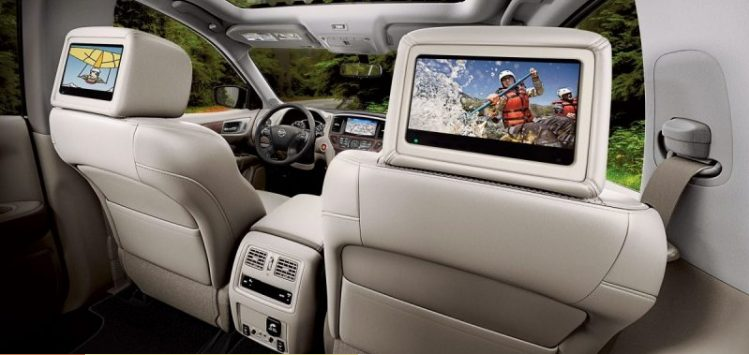
Meanwhile, MooveTV, a Nigerian advertising tech startup that offers entertainment to riders of public transportation (taxis and buses) is poised to keep Lagos commuters entertained on trips.

The startup was launched in December 2019 to provide succor to passengers who easily got worn out on trips due Lagos traffic. The platform offers entertainment ranging from music, movies, games, podcasts and live TVs, all for free. While these contents on public transport vehicles are not new, MooveTV came with a different vibe. The contents are designed to be streamed live giving riders a wide array of contents to make their choices of entertainment.

Since neither the driver or passenger pays for the content, in between the streaming, ads will be served. Drivers get paid for allowing the contents to be served through their vehicles.

“With MooveTV, the driver earns 20% of the revenue on every ad played to riders in their vehicles. The owner of the content also gets 30% while MooveTV takes the rest. In other cases, where there is a broker, they take 5% too.” MooveT Product Lead, Emmanuel Pastor told TechNext.

The tech is installed in cars and synced to display once the driver turns on the ignition to avoid arbitrary use of the contents. When the reception is poor, contents can be played offline via the storage system of the TV device, where pre-loaded contents are stored.

When there is poor signal, the device notifies the rider and prompts the offline option. The MooveTV devices are connected to a central database where contents are played or streamed from.

So far, there are about 70 users on board the MooveTV platform, but the company is hoping to expand its reach through partnership with Lagos State Government. Currently, the platform is only available on taxis, but the company plans on adding mobile and web versions before March to enable riders enjoy the streaming experience outside vehicles.

2020 Kicked off with a Roaring Start

0

The year 2020 kicked off with remarkable events ranging from political conflicts to natural disasters to pestilence. The sympathetic stories cut across continents and peoples with varying degrees of pain.

In the eve that ushered 2020 in, Australia was busy battling a range of wildfires that was wreaking contagious havoc in the country, spreading through lives and property, and constituting environmental hazard that has become more than an Australian problem.

Despite tremendous efforts to quench it, the fire succeeded 2019, and took a devastating toll on the country at the dawn of the New Year. Millions of acres have been torched, homes ravaged and scores of people killed. Gory images of its gruesome impacts liter the news and to make it worse, there are little signs that it’s receding.

Over half a billion animals have been killed in New South Wales, their charred bodies only beg empathy and help. Humans are not spared either, over 35 people have been killed so far and hundreds have been rendered homeless as the fires ravage through thousands of homes across Australian states.

About 15 million acres have been affected so far in over 200 fires burning across the country. About 3,000 firefighters are engaged including those who volunteered from the United States. In addition, the Australian Defence Force pulled 3,000 army reserve forces and others with specialist capabilities to help fight the flames that have been masterminded by intense heat and drought that have been attributed to climate change.

As the Australian wildfires kept gaining momentum, empathy, support and prayers followed it. It appeared the world concentration was centered on the country until the news of Coronavirus broke out from Wahum, China, raising another concern and breaking the focus. While the Australian wildfires take on anything that stands on the way, Coronavirus focuses on humans. They do have one thing in common – contagiousness.

Coronavirus started in the central city of Wahum, in Hebei province of China. It has so far infected over 530 people, leaving about 18 dead. It’s a contagious kind of pneumonia that has kept Asia and the rest of the world on high alert.

By January 9, two people had died of severe respiratory failure in the city Wahum, prompting an investigation by the Chinese authorities. The symptoms were found to be related to Severe Acute Respiratory Syndrome (SARS) and Middle East Respiratory Syndrome (MERS). The symptoms are fever, coughing and sometimes kidney failure. It also includes a runny nose, cough, sore throat, headache or fever that may linger for days.

Chinese scientists have linked the origin of the virus to animals. Leo Poon, a virologist at the School of Public Health at The University of Hong Kong, who was the first to decode the virus said.

“What we know is it causes Pneumonia and then doesn’t respond to antibiotic treatment, which is not surprising, but then in terms of mortality, SARS kills 10% of the individuals.”

Coronaviruses are a large group of viruses that are common among animals. In rare cases, they are what scientists call zoonotic, which means they can be transmitted from animals to humans – US Center for Disease Control and Prevention.

The human to human transmission of the virus happens when someone comes in contact with a carrier’s secretions. So a cough, sneeze or handshake can cause exposure. One can also be infected when he touches something an infected person has touched, then putting the hand into his mouth, nose or eyes.

There is no specific treatment for disease caused by a novel coronavirus. However, many of the symptoms can be treated. But treatment is based on the patient’s clinical condition. Every country in the world is taking steps to protect its citizens by setting up screening and quarantine measures at Port of Entries.

But Spain has got more than Coronavirus to worry about. A storm surge operating in the name, Storm Gloria has taken on the east coast of Spain and swept inland, destroying rice farms and homes in Barcelona. The delta region of the country has swept to devastation by the flood. Beach facilities have been wrecked, and seawater has caused major damage to beaches in Barcelona, Valencia and the Balearic islands. So far, about five people have been killed.

It has been described as the most devastating storm in recent times of the region. With sea waters flooding about 30sq km of rice plants and waves reaching as high 7m (23ft), crashing over a dyke protecting boats, it has become impossible for boats to sail.

“We have not seen anything like this before,” said Lluis Soler, the mayor of the delta region.

Meanwhile, France isn’t spared. Storm Gloria has reportedly touched down at Pyrenees-Orientales, France’s southernmost Mediterranean department. Gloria has been described as the worst storm to hit the region since 1982, and the authorities have been placed on high alert.

While the battle to contain these crises is being waged, East Africa has got locust-attack to deal with. Unprecedented swarms of locusts invading farms and devastating crops with such heavy impacts that may result in drought has got the region alarmed. Described as the severest locust invasion in 25 years, countries like Ethiopia and neighboring areas of Somalia, parts Sudan, Eritrea and northern Kenya are under serious threat of starvation.

The situation has also been attributed to climate change that has enabled favorable ecological conditions for locust breeding. The Food and Agriculture Organization of the United Nations (FAO) is warning that the insects may swarm to other regions in no time and cause food scarcity in the sub-region.

“This has become a situation of international dimensions that threatens the food security of the entire sub-region. FAO is activating fast-track mechanisms that will allow us to move swiftly to support governments in mounting a collective campaign to deal with the crisis, “FAO Director General, QU Dongyu said in a statement.

“Communities in Eastern Africa have already been impacted by extended droughts, which have eroded their capacities to grow food and make a living. We need to help them when the locusts are gone,” he added.

FAO said the ravaging swarms potentially contain hundreds of millions of locusts and that the insects can travel distances of more than 90 miles in a single day. And if left unchecked, the locust swarms could increase 500 times by June.

Tekedia Mini-MBA: Full Faculty, Weekly Format, NGO Package, Installment Payment, Custom Assignment

4

For Tekedia Mini-MBA, I will be the lead faculty but I will not be the only one. We have extremely experienced and talented experts in our faculty. They are market players in our economies and we have brought them together to co-share and co-learn with our business community here. This mini-MBA is business and management biased, focusing on growth, innovation and execution of business objectives.

Meanwhile, my team has added a package for NGOs. If you are an NGO in any part of the world, we have a package to ensure your staff can join this program (click and email them).

Also, we continue to support installment payment for those that need support to attend this program.

Furthermore, for companies sending at least 10 participants, my team must have informed you that the Challenge assignments would be customized for your company. Ensure your HR and Strategy teams are in touch. They will break the contingents into max of three working groups.

And finally, our team will answer your business questions and I will be available to have a 1:1 online conversation with you (limited space available). More so, we would have two-hour discussion webinars on Saturdays.

Registration continues into Feb 10 when program begins.

How To Register: 

  • PayPal: follow this link and pay $140 US dollars.
  • Bank transfer (Nigerian naira): Pay N50,000 into any of GTBank 0114016493, UBA 1019195493. Account owner: First Atlantic Semiconductors & Microelectronics.
  • Flutterwave: follow this link (naira) or this one (USD) to use your Verve, Visa, Mastercard, Amex, etc cards across Africa and beyond (you can use same links for other currencies, please ask for exchange rate before payment if not on Naira or USD).

The full program structure is here

Mini-MBA Sequence for a Typical Week

Week 1: Business Mission, Growth through Innovation

Monday

  • Introduction of Week  – Ndubuisi Ekekwe
  • Reading Material with flash cases – by Coordinating Faculty (here Ndubuisi Ekekwe)
  • Video (one-15 minute or two-15 minute) – by Coordinating Faculty (here Ndubuisi Ekekwe)
  • Challenge – by Coordinating Faculty (here Ndubuisi Ekekwe)

Week 2: The Grand Playbook of Business

Monday

etc etc

https://www.tekedia.com/mini-mba/