DD
MM
YYYY

PAGES

DD
MM
YYYY

spot_img

PAGES

Home Blog Page 6524

1.2 – Personality Analysis; 1.3 – Personality Identity

0

 1.2 Personality Analysis

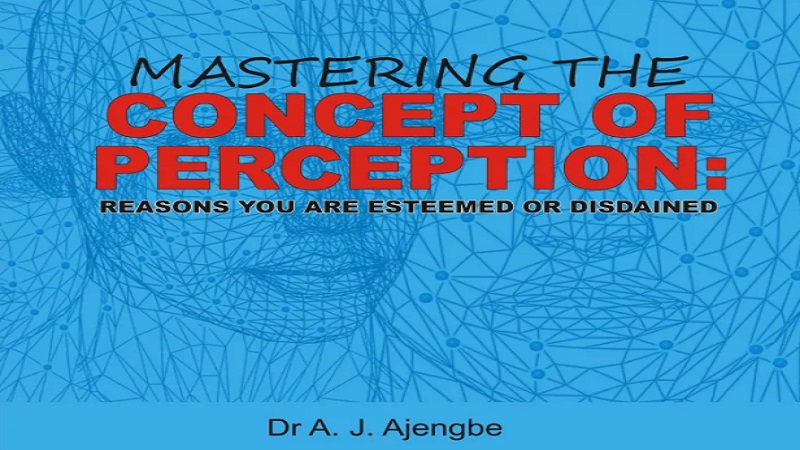
Personality analysis is… well, it can mean different things to different people. To a novice, it would mean assessing and evaluating a person’s core qualities and characteristics, such as determination, reliability, organization, or gentleness. But there are more to it. It goes further than assessing core qualities and characteristics. It means understanding their childhood past and its impact, subconscious and unconscious ideals, dominant love language, dominant sense (such as sight or hearing), dominant brain system(s), their temper, etc. 

1.3 Personality Identity

Personal identity is the concept you develop about yourself that evolves over the course of your life. This may include aspects of your life that you have no control over, such as where you grew up or the color of your skin, as well as choices you make in life, such as how you spend your time and what you believe. You demonstrate portions of your personal identity outwardly through what you wear and how you interact with other people. You may also keep some elements of your personal identity to yourself, even when these parts of yourself are very important.

Have you ever struggled with the question, ‘Who am I?’ or thought about who you might become in the future? These questions have been thought about and discussed throughout history, in particular by philosophers who have immersed themselves in the search for knowledge about the nature of being human. Such questions as, ‘What does it mean to be a person?’ and ‘Do I matter?’ have engaged key thinkers and created conversations that we still grapple with in our society. Most people feel they want to endure in some way, both in their lives and beyond death. The philosophy of personal identity aims to address these matters of existence and how we even know we exist through time.

The Philosophy of Personal Identity

How do you know you are the same person you were as a child? Is it because you remember yourself growing within the same body you have now? Or is it because you perceive that you have the same mind? What criteria can be used to confirm you are, in fact, a ‘person’?

When you ask yourself how you know you are the same person you were as a baby, this is a question of persistence. In this context, persistence means our existence across time and how we can prove it. In other words, we perceive that our self ‘persists’ through our life as the same human being, but how do we know for sure? The philosophers Plato and René Descartes, as well as many religions, have proposed that we persist because we have a soul, a timeless essence that continues in some form even after the death of our living, breathing human body.

Descartes, in particular, aimed to provide a scientifically-oriented argument for this enduring inner self. He used rational arguments and examples to demonstrate that the mind and body are distinct. He promoted the view that the mind can exist and persist without the body. This distinction between a person’s mind and body is known as mind-body dualism and has been an influential and powerful theory in our society.

Even today, you may often hear the phrase, ‘body and soul’. This way of thinking has evolved from the ideas of religious traditions as well as philosophical ways of viewing our personal identity.

Development of Personal Identity

Personal identity develops over time and can evolve, sometimes drastically, depending on what directions we take in our life. For instance, a person who at 25 identifies himself as part of a particular political party, of a particular faith, and who sees himself as upper-middle class, might discover that at 65, he’s a very different person. Perhaps he’s no longer interested in politics, he’s changed his religion, and he’s living on less money than when he was 25. Any variation is possible during a person’s life span.

Children developing their sense of self may experiment with different ways of expressing personal identity. This can include various ways of dressing or wearing their hair, and it will also include a variety of ways of behaving and thinking. They might find that some ways of expressing themselves work well and feel right, while others do not last. Throughout life, we have a sense of who we are that continually changes.

Back to Table of Contents

5G

0

This book is on 5G technologies and developments. 5G is the fifth generation wireless technology for digital cellular networks. It represents a shift from consumer technologies to industrial technologies as it promises to lead to the development of a highly automated and intelligent environment which would revolutionize many industries and every part of the society.

Table of Contents

1.0 – 5G Introduction

  • 1.1 What is 5G?
  • 1.2 Applications of 5G
  • 1.3 Ethical Implication of 5G

2.0 – 5G Spectrum

  • 2.1 Spectrum Re-farming
  • 2.2  Spectrum Sharing
    • 2.2.1 Spectrum Sharing – Unlicensed bands
    • 2.2.2 Spectrum Sharing – Under-utilized bands
  • 2.3 New Spectrum from mm wave band
  • 2.4 Dynamic Spectrum Management
  • 2.5 Spectrum Harmonization
  • 2.6 Summary

3.0 – Radio Technologies for Spatial Densification

  • 3.1 Network Densification
  • 3.2 Heterogeneous Network
  • 3.3 Cloud RAN for Backhaul
  • 3.4 Cooperative Communication
  • 3.5 Summary

4.0 – 5G System Architecture

  • 4.1 5G New Radio (NR
    • 4.1.1 Carrier Aggregation
  • 4.2 Non Stand Alone Architecture
  • 4.3 Stand Alone Architecture
  • 4.4 Summary

5.0 – 5G Core (5GC)

  • 5.1 Network Slicing
  • 5.2 Network Function Virtualization
  • 5.3 Software Defined Networking
  • 5.4 Control User Plane Separation (CUPS)
  • 5.5 Mobile Edge Computing
  • 5.6 Summary

6.0 – Other Technologies and Developments

  • 6.1 Other Technologies
  • 6.2 Waveforms and Access Technologies
  • 6.3 Security and Privacy
  • 6.4 Green Communication Technologies

7.0 – Conclusion

References


Ndubuisi Ekekwe Joins Board of World Bank’s Funded ACE-FUELS in FUT, Owerri

0

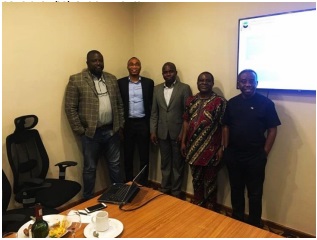
My alma mater and Africa’s leading technical university – Federal University of Technology Owerri Nigeria- recently received millions of U.S. dollars from World Bank for an advanced energy center.  On the invitation of the World Bank and the university leadership, I am serving on the Board of this Centre. Here are full Board members:

  • Sir Ndukwe Osogho-Ajala, OON (CEO, Soulmate Industries)
  • Dr Andrew Ejayeriese (General Manager Exploration, Exxon Mobil Nigeria) 
  • Engr. Victor Ugorji (Chevron Nigeria) 
  • Prof Theodore Ifeanyi Onyeche (Cutec-Forschungszentrum, Germany)
  • Prof Ndubuisi Ekekwe (Chairman, FASMICRO Group)

The Africa Centre of Excellence in Future Energies & Electrochemical Systems (ACEFUELS) at the Federal University of Technology Owerri, Nigeria, was established to fill a growing education, skills and information gap in the field of renewable and other clean energy sources within the sub region and in this way address regional development challenge of poor availability and access to energy. 

ACE-FUELS welcomes your partnership. The focus covers electrochemistry, production systems, software/AI, IOT, etc focusing on broad energy sector.

An interview with Chinenye Nzom on how to become a better person after graduation

0

You don’t need to have it all to pursue your goal in life. The moment you understand your process, you have already won.

Here’s an interview with a young graduate who started her journey right as an undergraduate. She shared some useful tips on how to become a better person after graduation.

Can you introduce yourself to the audience?

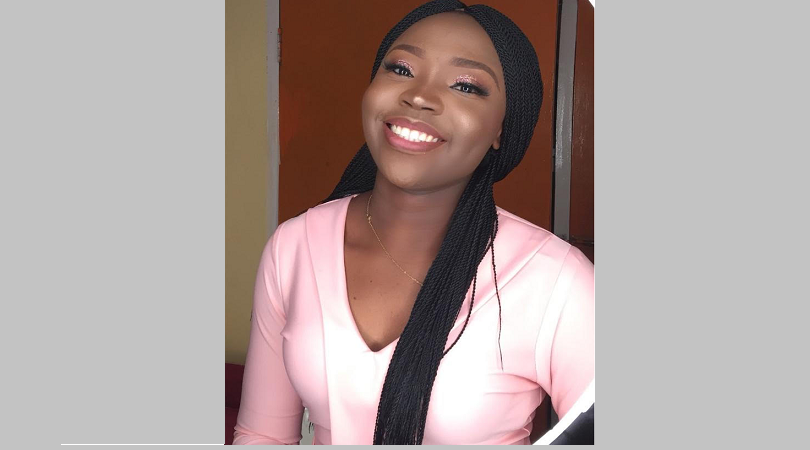
I’m Chinenye Nzom, a professional volunteer and a mental enthusiast. I am also the founder of Volunteers Hub Africa.

It is good to have you here after trailing your feed for a while now.

Wow! That’s a young founder and a female entrepreneur.

If I may ask, what is Volunteers Hub Africa all about?

Thank you!

Volunteers Hub Africa is an award winning social enterprise and volunteering organization that believes in strategic partnerships for the sustainable goals by providing Human capacity and professional volunteers to NGOs for the smooth running of their projects.

That’s quite interesting to know. What actually led you into this?

I’ve been someone who loves to help out, once I see a need for something, I love proffering solutions.

I attended a conference one-day and they called for volunteers, it was that day I knew what I was doing all along was “volunteering”.

I met with really great people because I volunteered for different social projects, and conferences, this made me have a clearer sense of my vision and purpose, I became bolder and courageous.

I grew so much because I decided to volunteer and give of my little knowledge, then I thought within myself that – if volunteering is what helps me become better, then young people should plug into it. 

This made me start the organization while I was in my final year at the University of Ibadan, the feedback have been overwhelming.

That’s what I call, selfless service. What makes it interesting, you started that as an undergraduate. How did you transition into the labour market after graduation?

Yes, I did start as an undergraduate. 

I saw an opportunity for fresh graduates who wanted to be trained in the media industry, I applied and a few weeks later, I got a mail that I’ve been chosen.

After the training, we had a test, of which I passed and I got the job in the media firm

What media company is that, and what is your role there?

Red for Africa,  I was in the Development sector (The Future Project) as a project manager.

Being a project manager and a founder, how has that being easy for you?

It’s not been easy at all because I have to travel during weekends, but I found a way to delegate to my team members at volunteers Hub Africa to do the work while I just supervise from where I am.

Chinenye, you are one of the few I respect because of your work ethic and energy. If you look into the current situation in the country, things are not just working. What advice would you give to fresh graduates out there?

The truth is, as much as we say things are not working, things are working so well for so many people. 

I would love to also say things are working for me, not because I’m living a perfect life, but because I’ve chosen to see life in a very positive light. 

One thing I’ll tell fresh graduates is to ensure they start training themselves and do everything it takes to make them not just “graduates” but people of value. 

They should take online courses, go to seminars, read books that will stretch their minds, network, volunteer!!!.

So that even if they don’t get a job immediately, they can still be of value to people which can still fetch them money. 

It’s about building your life for yourself, not just to get a job, but to live a life that is worthy and that you’ll be proud of.

Well said, Chinenye.

The first time we met, it was the City Scope Africa Boot camp. What’s your connection with John Fatanmi, City Scope Africa Co-founder?

Oh yes! 

He’s a mentor, and someone I look up to. 

I’ve been featured on his online platforms too. 

He’s been someone who inspires me to be better.

John Fatanmi is a great professional. Chinenye, can you share some of the work you have done with your organisation?

Yes, we have worked with quite a number of organizations like Coca-Cola, SheLeadsAfrica, Necci PR consults.

We have also partnered with social enterprises to carry our their charity and social projects .

Well done!

What should we expect from your organisation in the next five years?

We would have been a full-blown project management organization with luxury conference centers.

We would have partnered with the government and international bodies to carry our projects to tackle social issues.

May your dream come true, Chinenye.

Thanks for making out time to be with us on  this segment. It was great chatting with you. I wish you a wonderful new year ahead.

Thank you, Chinedu, for inviting me. I wish you the same.

Nigeria Needs Auditing-Only Firms (No Consulting Permitted) To Improve Audit Independence

1

According to Quartz, the Big Four accounting firms (PwC, EY, KPMG & Deloitte) now get the majority of their revenue from consulting, not their core auditing businesses. But can an auditor remain independent when it’s competing for lucrative consulting contracts? The constellation is that these firms are wired separately internally with big walls, theoretically making conflicts impossible. But with the level of impunity in Nigeria, believing that any wall would have a strong foundation would be dangerous. My suggestion (as articulated here) remains: Nigeria needs auditing-only companies. Yes, if you do auditing, you cannot do consulting or advisory services. This will help reduce corporate catastrophes which were enabled by auditing paralyses which are everywhere, reducing trusts on financial documents. 

At the big accounting firms, consulting is the tail that wags the dog.

It’s an open secret in the accounting industry that the biggest audit firms no longer get the bulk of their business from auditing. At Deloitte Touche Tohmatsu, for instance, only 22% of global revenues came from audits in fiscal 2019, compared with 60% from consulting and other advisory services. That’s a reversal from a decade ago, when it was 46% auditing versus 33% consulting. Deloitte’s global consulting revenue rose 13% in 2019; auditing revenue was flat.

Deloitte and the other Big Four firms—PricewaterhouseCoopers, KPMG, and Ernst & Young—have all increasingly emphasized and invested heavily in consulting in recent years. It’s easy to understand why: It’s lucrative, virtually unregulated, and offers greater potential for growth than the more-mature audit field. Advising companies on digital transformation and management is less structured and offers

(Remember: I am not against your job. Please accept that I have the rights to share my perspectives on things that affect Nigeria).

Nigeria Needs Auditing-Only Firms To Reduce Conflicts And Boost Independence