DD
MM
YYYY

PAGES

DD
MM
YYYY

spot_img

PAGES

Home Blog Page 6535

Why Barcelona Replaced Ernesto Valverde with Quique Setien

0

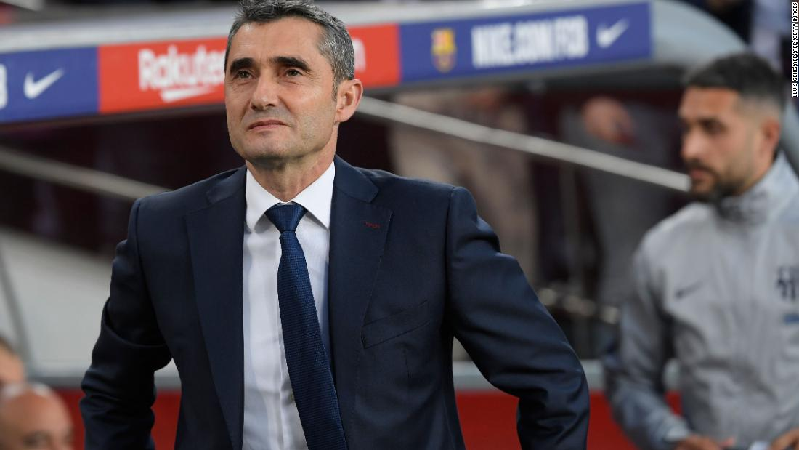
Barcelona has a new coach, his name is Quique Setien. He signed a two and a half years contract to replace the embattled Ernesto Valverde. Setien who has not hidden his admiration of Johan Cruyff and his style of football appeared perfect for the role of giving instructions at the dressing room. The former Real Betis  coach has the club’s philosophy and he is poised to win where Valverde failed, though it’s a long shot based on hope, the realities may play the other way round.

Meanwhile, it was a sad day for Barcelona coach, Ernesto Valverde, as he was informed by the club that his services are no longer needed at Camp Nou. But his sadness brought joy to millions of fans who have wanted the announcement for a long. “FC Barcelona deserves better” the say.

The failures that ousted Valverde

About three seasons ago, when Valverde was hired to lead the Catalans, he didn’t see his career ending this way. A bit of celebration and then, sadness and revolt from disappointed fans trailed part of his time as the head coach of the Catalan giants. And when you are at the helm of affairs in Barcelona, you know better than give the fans reasons to complain.

In 2017/18 season, it was a jolly ride for both parties in domestic and champions’ leagues, until the journey to Rome, where the wind blew and exposed the lump behind the fowl. Barcelona had 3 1 advantage, a good lead they needed to defend to secure a place in the champions league final. It was a good bet to the fans, no way Roma was going to overturn a first leg 3 1 lead, it’s impossible; after all, the team is Barcelona.

It was at the end of 93 minutes at the Stadio Olimpico that reality set in; hopes dashed, dreams shattered, and bets were lost. AS Roma did the unthinkable, they pulled the wolf power and turned the table. It was an unforgettable night, and the memory hurts the Cules to the pleasure of their rivals.

Though there were good times, at the end of 2017/18 season, Valverde delivered la liga and Copa de Rey, a pain reliever that somehow assuaged the bitter memory of Rome, by giving the fans something to celebrate and be happy about.

When the season started in August 2018, the club, the team, and the fans were all armed with hope of regaining what was lost, the Champions League trophy. Even Lionel Messi dared to make the promise that the team will bring it back to Camp Nou. But the hope and promise were responsibilities resting on the man who wouldn’t be in the pitch, but would take responsibility for anything that happens.

Barcelona made progress, beating Chelsea to face Liverpool in the semi-final was something the fans needed to keep their hope alive. Though the road to Madrid was still far away, Liverpool was an obstacle that needed to be removed to get closer. In the first leg of the encounter between Barcelona and the English side at Camp Nou, it was a thrilling display of the beautiful game. Barcelona was commanding the play and scoring goals. At the end of ninety minutes, the Catalans appeared to have sealed their place in the final with a 3 0 win over Liverpool – so everyone thought until the night of the second leg in Anfield.

The Liverpool vs. Barcelona match happened to be the most disappointing and impressive comeback in recent times: Disappointing to Barcelona and Impressive to Liverpool. At the end of the 90 minutes Liverpool has managed to cancel their three goals deficit and was going for the win. And the winner happened in the quickest way possible (Origi took the corner quickly) and there was jubilation for the winning goal against Barcelona.

It was a repetition of what happened in Rome a year ago. So no lesson was learnt and no trophy would be won. The devastation of the 2019 champions league season would later hunt Barcelona for a long time if not forever. The trolls on social media were something the fans couldn’t hold off, and pains went along with it.

The anger and disappointment were bulging out from the heart to the mouth; there were #ValverdeOut protests now and then by fans. But the club was patient; the coach has won two league trophies and deserves to be respected. In May 2019, there was yet another chance for the coach to appease the club and fans, the Spanish Supercup. But it went the way of others; Valencia beat Barcelona to it, having done so in the Copa del Rey final which gave them the cup over Barcelona.

Since then, it has been a struggle for the coach to win the confidence of the board and that of fans. The dwindling performance became less than average as the poor outing in the just concluded Spanish Supercup in Saudi Arabia has shown. Barcelona didn’t make it to the final, they lost to Atletico Madrid. It was as if any time the club gets close to a trophy, they put up their worst performance. Although Valverde doesn’t play in pitch, he plays in the training pitch and in the dressing room, telling players what to do and what not to do, with the full authority to punish any who doesn’t go by his rules.

In the end, Barcelona has had enough, the need for new hands and fresh ideas were communicated, Ernesto Valverde lost his job and Quique Setién got his.
Dangote’s Win and Lafarge’s Board Big Mistake on CEO Contract

5

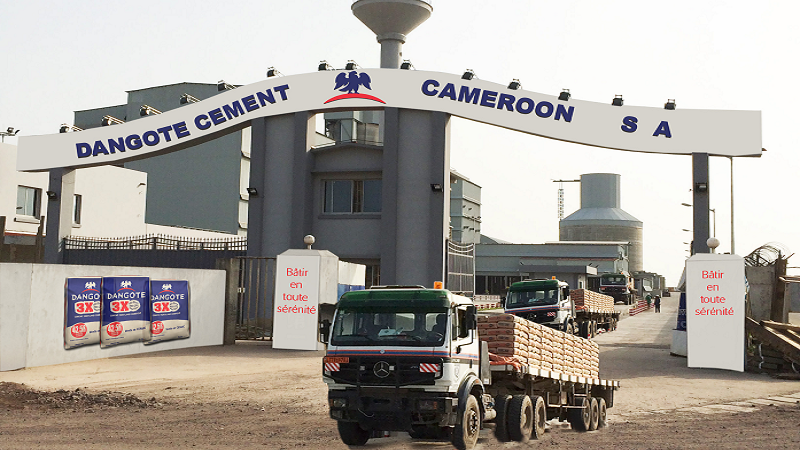
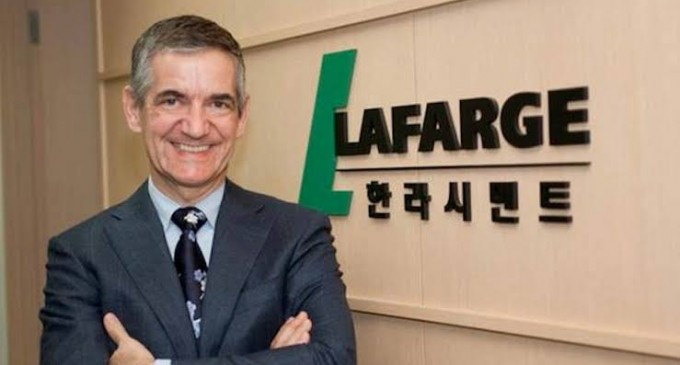
When I ran the piece that Michael Puchercos, GMD/CEO of Lafarge Africa Plc, was leaving Lafarge to take the CEO role in Dangote Cement,  I expected one specific comment here. Unfortunately, in our LinkedIn Nation and Tekedia, that did not come. I was largely disappointed that we have not sharpened the antenna for people to have noticed that Lafarge Africa failed on one of the most important governance systems in corporate boards: non-compete clause for Senior Executives within a specific period, upon exit. Yes, a CEO cannot leave Lafarge and join a competitor the next day!

If I had served in Lafarge Africa board, that would not have happened. Mr. Puchercos would have signed a document that would have made it impossible for him to resign from Lafarge and join Dangote Cement within at least three years. That Lafarge does not have that in the process is a total failure, and I do think shareholders deserve an explanation.

Michael Puchercos

Also, Mr. Puchercos, a beneficial of this obvious mess, has an explanation to offer. Possibly, under his watch, some executives could have departed Lafarge as he did not make sure the company has something to prevent them from joining a competitor immediately. You pay executives big money because their contracts are not typical like all of us. Part of the game is making sure they do not leave and join competitors with all the business secrets, proprietary information, etc which they have accumulated while working in a firm.

I serve on the boards of many companies. I have a playbook which becomes active when the CEO is not a Founder. A key requirement is that upon exit, the outside CEO cannot join a competitor within three years. That comes besides the typical non disclosures and confidentialities.

Lafarge Africa Board messed up big time. Of course, it could be possible that the board negotiated a monetary compensation with Puchercos/Dangote Cement which accelerated the lock-out period, from years to days. Yet, doing that does not make it better!

Michael Puchercos, CEO of Lafarge Cement, Joins Dangote Group

Ndubuisi Ekekwe To Keynote A Global Gathering of Project Managers in Ottawa Canada

1

I just accepted the invitation of one of the world’s largest project management professional associations to serve as a Keynote Speaker in their 20th Annual Symposium and 35th anniversary of the organization in Ottawa, Canada. The date is October 20-21 2020 at Ottawa Conference and Event Center. I will be speaking on designing and managing projects in the age of agility where customer needs are constantly evolving, with technology drastically changing the ordinances of market systems. My working topic is Evolve: Beyond Project Output to Value Realization on Project Management. I will share more in the coming weeks as I prepare to co-share with global project management experts, coming from NASA, Harvard, Amazon, Microsoft, Tesla, Goldman Sachs, etc. It is no more innovation; you need symphonic innovation to get leverageable value in project management.

Symphonic Innovation is innovation that is not domain-specific, but is anchored on a unified and harmonious approach in the deployment of technology components to accelerate productivity gains and cushion competitiveness. With Symphonic Innovation, you do not deploy and launch for one technology area like blockchain only to be tripped by AI or big data; you launch with a mindset that these technologies are like extended musical compositions which must be carefully organized to make the orchestra an unforgettable experience.


You Need Symphonic Innovation

All Hail The King – Elon Musk’s Rise of Electrons

1

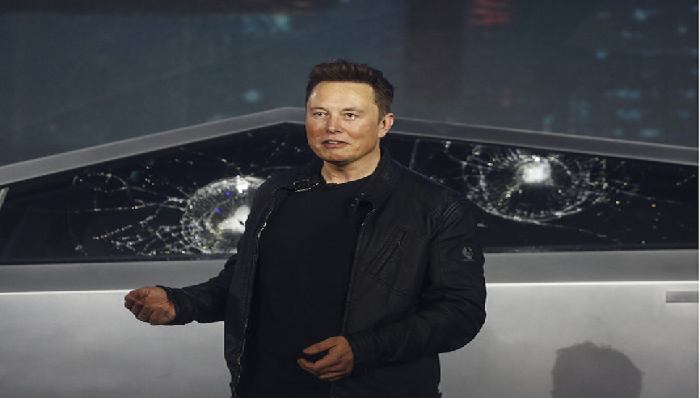
For years, the automakers told the world that making an all-electric vehicle was hopeless and impossible. We accepted it. Then Toyota crawled with a hybrid (electric + petrol). That was a quintessential moment that electrons, not just hydrocarbons, would move cars. But a new era began with the best in his generation – Elon Musk – when he took over, and redesigned the automobile industry. Today, Tesla is worth more than GM and Ford combined. Samuel Nwite goes deeper in this piece on how it all began, and why the future belongs to electrons, and not hydrocarbons, when it comes to moving people from one spot to another.  Tesla is eclipsing competitors by moving beyond customer needs and expectations to customer perceptions. In the mini MBA which begins Feb 10 (register here), participants will read a flash case on Tesla.

Tesla’s Journey to America’s Most Valuable Automaker

0

The year was 1990, an Engineer named Marc Tarpenning was returning home from Saudi Arabia where he was working for a company called Textron. At home in California, his longtime friend, Greg Renda was working for Wyse technology based in San Jose. Tarpenning went into the office on the invitation of his friend to see what he was working on. He saw the terminals that Renda was working on, he also saw Martin Eberhard, an engineer whose personality goes beyond the nuts and screws. He had entrepreneurial and companionship trait that Tarpening didn’t fail to notice.

In the next few days, the duo became bonded in entrepreneurial ideas that would defy the odds that have stifled some automotive inventions and stalled its progress. It was a beginning of a technical adventure that would cause a stir in the future of the automobile.

The first significant product of the duo was “tzero,” an all-electric two-seater, which could go from 0 to 60 in under 4 seconds. That was the beginning, in the days when the future of a company named Tesla Motors was hanging on hope, though it was promising.

In 2003, Eberhard and Tarpenning had pushed the company to the limelight, making Tesla a name that the future of electric cars could count on – Tesla Motors was born. It was at this time that the two friends realized that they needed more hands, more funds, to foster the idea of NEV beyond a garage housing a few cars; although the original idea was to develop electric sports car, it appeared in no time, that the American people will be demanding more of what they have been shown. So they got a brilliant young man with some millions to throw in – the co-founder of Paypal, Elon Musk.

Eberhard was Tesla’s CEO then and Tarpenning, its CFO. With Musk on board, it’s a game on. In 2004, Musk would serve as the Chairman of the new venture, and in the four years that followed, the union gave birth to its first complete electric car, the Roadster. The Roadster was a monster, commanding speed and unprecedented durability. In company’s test, it achieved 245 miles (394 km) on a single charge; it was a record for electric car. Roadster was powered by lithium-ion cells often used on laptop batteries. And like the tzero, it could accelerate from 0 to 60 in less than 4 seconds and could reach a top speed of 125 miles (200 km) per hour.

Without internal combustion engine, the tailpipe emission of Roadster was zero, a feat environmentalists rated high and it put the car on the verge of wide approval. The car’s efficiency ratings were equivalent to a gasoline mileage of 135 miles per gallon (57 km per liter). These features put Roadster at the cost of $109,000, even though it had federal tax credit of $75,000. It was a luxury many couldn’t wait to have. And it defied the logic of challenge and impossibility to pioneer the path that keeps getting better with time.

In 2007, Eberhard resigned as the CEO of Tesla Motors and joined the advisory board. Tarpenning too, who was serving as the vice president of electrical engineering of the company, and was directly supervising the development of electronic and software systems for Roadster, resigned in 2008. Elon Musk became the CEO, and moved to change vehicles on Tesla’s menu from sports to family-friendly sedan. But fund posed a problem, and Musk appealed to the US Government who through the Advanced Technology Vehicle Manufacturing (ATVM) loan scheme, provided the company with a whopping $465 million loan. It was the lifeline the company needed to stay in business and expand its all-electric vehicles business.

Two years later, the result was stated boldly in the stock market. In 2010, there was $226 million Initial Public Offer (IPO) for Tesla. It was another big leap in the journey that humbly started seven years ago.

In 2012, Tesla turned its attention away from the Roadster to concentrate on its new Model S Sedan, the recent addition to the family. Model S came with three different battery options with some changes compared with the Roadster. It has underneath space, creating extra storage space in front because its center of gravity is low. But it shared the same speed performance with tzero and Roadster.

The Tesla autos was spreading quickly across the US and Europe that the company saw a need to build Superchargers, charging stations designed to charge Tesla vehicles free of charge for users. The Superchargers were later renamed Tesla Stations, where services like battery replacement were offered to customers.

In 2014, the autopilot initiative came into play, a semi-autonomous driving idea that was introduced with the Model S, and subsequently, other models. The next year, the Model X came into play with a battery range of 295 miles (475), it was designed with seven seats.

But Tesla cars were expensive and the cost dampens the wish of many to own one, the situation prompted the debut of Model 3 in 2017, a four-door sedan with a range of 220 miles, and the price at $35,000. Well, the Model 3 didn’t break the sales-lock soon, not until 2019 when the order numbers started counting high, changing the financial status of Tesla.

In 2018, a tweet from Elon Musk got him into trouble. He had made a series of tweets about taking Tesla private, claiming that he had secured funding. That didn’t go well with the US Securities and Exchange Commission (SEC), and Musk was charged with fraud. The Commission alleged that he was lying and misleading investors with his tweets. But Tesla’s board rejected a settlement proposed by SEC because Musk threatened to resign, and the situation set the company’s stock crashing, forcing Tesla and Musk to accept $20 million fine, in a less generous deal which includes Musk stepping down as chairman at least for three years, though he was allowed to stay as the CEO.

The 2019 opening of Tesla factory in Shanghai was a milestone in the company’s decade. The demand from the world’s most viable electric vehicle market is adding pillage to the posture of the company. Tesla said it has delivered 112,000 vehicles in the fourth quarter, which exceeds the consensus estimate among analysts.

It is 2020, and Tesla’s market cap has crept all the way up to $85.8 billion, a staggering amount delivered within a decade and a half, which surpassed the combined market cap of GM and Ford; both have existed for decades before the birth of Tesla.

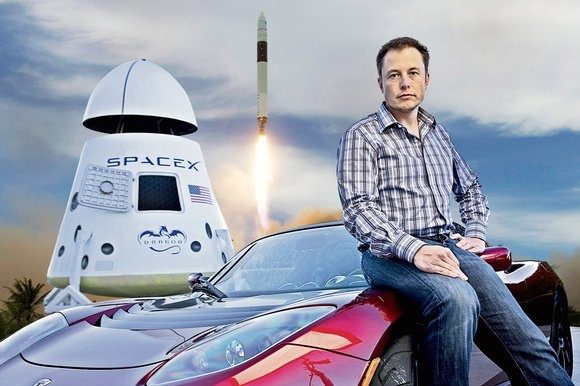
From Elon Musk’s Spacex project to solar panel to Tesla’s Shanghai Factory in China, it has been a decade to be proud of for the company and its 49 year old CEO, who is now the 34th richest person in the world. And with many new projects unfolding eventually, the innovation behind Tesla is yet to be born.