DD
MM
YYYY

PAGES

DD
MM
YYYY

spot_img

PAGES

Home Blog Page 6541

Nigeria’s Chooya is Google for organizing and centralizing trade data

0

Google, Microsoft and other key technology players have dominated the search engine ecosystem, but one search engine has emerged and it’s target is different from those of the tech giants. This article explains how an Aba based tech hub in Nigeria, is going head to head to make an innovation that will help aid trade and commerce

A web search engine or Internet search engine is a software system that is designed to carry out web search, which means to search the World Wide Web in a systematic way for particular information specified in a textual web search query.

To be more explicit, Search Engines are now part of our daily life, whether it be carrying out research for Xmas presents or where is the nearest coffee shop open before 7 AM or looking for the best suya joint in town. People are now becoming more and more dependent on search engines to get the answer for their everyday queries.

The relevance of search engine cannot be estimated, and that’s why the team at Rad5TechHub decided to create an all new innovative products that will provide a service for African trade and business. What is this innovative product you might wonder?

The Emergence of Chooya

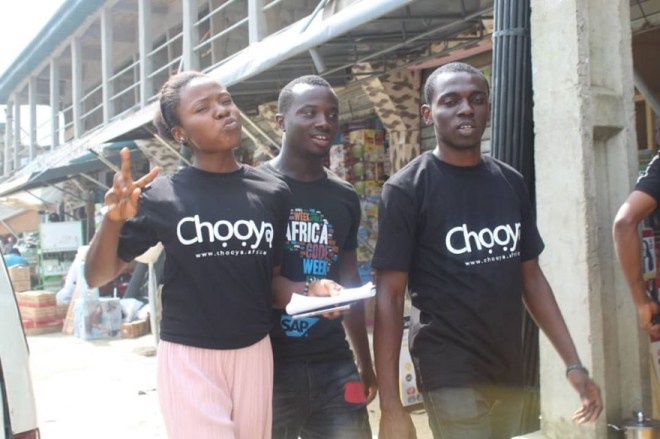
The Chooya Group, an innovative e-commerce startup company from the Rad5TechHub, came up with the mission “to facilitate speedily, secured, and open trade in Africa by organizing and centralizing all trade data and activities in one single place for all levels of users and stakeholders.”

This is strategic because most of the local traders in Aba and the Southeastern Nigeria have issues with gaining traction for their product sales. Take for example, the Chooya group have to go meet traders in places like Ariaria, Shopping Center, etc to collect data from them so as to make sure their businesses are listed on the products platform.

The loss of internet use by older generation in such areas is a huge factor that made the team go head to head to activate this service. Now, many traders in Aba and beyond have their business listed on the platform and can get tons of calls and queries for their products before the buyers physically come to meet them.

The Launch

Attendees at the Chooya Launch

On the 13th day of December, stakeholders and fellows gathered at the Rad5TechHub Center where the official launch of the Chooya took place. Speaking at the launch, Chinenye Ibiam a Graphics Designer/Visual Communicator had this to say: “It has been an amazing and challenging experience to work on the Chooya project. As a designer, I was constantly pushed out of my comfort zone, and I’m grateful for the opportunity to learn.

Chinenye Ibiam, Graphics Designer/Visual Communicator at Chooya.

Igwe Uguru, the Co-Founder of Rad5TechHub made some powerful statements where he opined that “what we are launching is a revolution. Chooya is going to change trade and commerce as we know it across Africa. There has never been anything like it.”

Igwe Uguru – Cofounder of Rad5TechHub

What’s Next?

It’s of interest to know that the Chooya team is really accelerating things at their end, a few days after the launch the team pushed the mobile app version of Chooya on the Google Play Store!

Akwa Peter, Expert Android Developer, during the Android Demo version of Chooya search engine.

Akwa Peter, an Expert Android Developer, during the Android Demo version of Chooya search engine, stated that they designed the Android App for Chooya bearing in mind that every user should find it easy and understandable to use not minding if they are techy or not. The focus has always been on creating engaging user experience.

Looking Beyond

The Chooya product is nice initiative, and it goes a long way to show the world what Aba a city looked down upon is really doing to accelerate the sustainable development goal especially in Social Entrepreneurship at a wide range. Chooya promises its users to expect more innovative features on the platform in the coming days.

Investors are also welcomed with open arms to help these young Nigerians compete at a global level.

You too can also Chooya when you visit here. And oh, did I tell you that Chooya is an Igbo word for ‘Find It’?

There you have it!
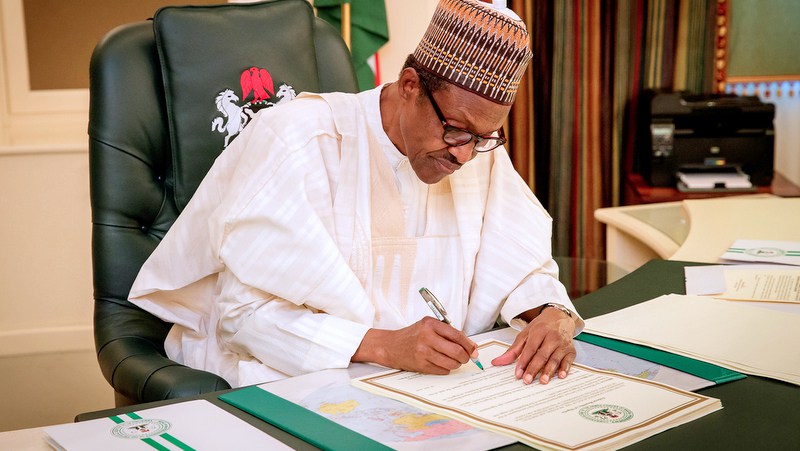
Buhari Signs N11 Trillion ($31 Billion) 2020 Nigeria Budget

0
Buhari New Appointments
Mr. Buhari, President of Nigeria

In the evening of Tuesday, December 17, 2019, President Muhammadu Buhari appended his signature to the 2020 Appropriation Bill of N10.59 trillion (about $31 billion at black market rate or $35 billion at official exchange rate)

The budget was sent to the President last week by the national assembly for signing. Buhari who used the occasion of his 77th birthday to endorse the Appropriation Bill was surrounded by some members of his party administration.

Vice President Yemi Osibanjo; Senate President, Ahmed Lawan; House of Representatives Speaker, Femi Gbajabiamila; Secretary to the Government of the Federation, Boss Mustapha; Minister of Finance, Budget and National Planning, Zainab Ahmed and the Minister of State for Budget and National Planning, Clement Agba, all graced the occasion.

The 2020 Appropriation Bill was sent to the National Assembly on the 8th of October 2019, by Buhari. The 9th Senate led by Ahmed Lawal promised to pass the budget before the January 2020, to reset the nation’s fiscal year from January to December. Delay in passage of previous budgets has resulted in disruption of the fiscal year that it depends on whenever the budget was passed. The House of Representatives had on Thursday passed harmonized version of the Bill to ensure that it runs from January to December.

The budget proposal was N10.33 trillion but the national Assembly increased it to N10.59 trillion, a N263 billion addition, out of which N5 billion was added to the National Assembly budget, making it a total of N128 billion.

In the new budget, N110 billion was appropriated for the Judiciary while Niger-Delta Development Commission was given N80.8 billion. The National Assembly also increased oil benchmark price to $57 per barrel, from the $55 that was set by Buhari. But the daily crude oil production rate was maintained at the rate of 2.18 million per barrel, GDP Growth Rate at 2.93%. Inflation rate 10.81% and Exchange Rate N305/$1 as proposed by the president.

Other breakdown of the budget is as follows: Defence got the highest vote for recurrent expenditure with N784.589 billion. It also got the highest vote for capital expenditure with N116.181 billion. Education came second with recurrent expenditure of N490.303 billion and capital expenditure of N84.728.

Works and housing got the highest capital expenditure vote of N315. 563 billion and recurrent expenditure of N27.983 billion. Universal Basic Education (UBE) got N111.7 billion, Public complaints Commission got N4.7 billion, Independent National Electoral Commission got (INEC) N40 billion, National Human Rights Commission was given N38. 49 billion and Basic HealthCare Fund, N44.49 billion.

Meanwhile, inflation is on its highest in 2019 at the rate of 11.85%, a result of its consistency for the third consecutive month. According data released from National Bureau of Statistics (NBS), the rise in inflation remains consistent due to the rising cost of food items, a development attributed to the closed border.

On month on month basis, the headline index is 1.02% slightly lower than the rate reported in October at 1.07%. Core inflation moved upwards on a monthly basis at 0.79%.

The cost of staples indicated a continuous rise, pushing food index upward by 14.48% compared to 14.09% in October. The increase was instigated by rising cost of bread, cereals, oils and fats, meat, yam and fish.

The uptick inflation will weigh on the upcoming Treasury Bills and Bonds primary market auctions this week as investors are likely to demand higher yields to match rising inflation.

The 2020 budget’s inflation rate is 10.81% while inflation is currently at 11.85%, (over 1% higher), and it may likely go higher in the coming months due to the rising cost of staples as a result of the closed borders. This means the budget is already failing since the government appears not to have the intention to reopen the borders soon.

Other local businesses are being impacted too. The government is counting heavily on the recently increased 7.5% VAT to generate revenue to fund part of the budget. But with many businesses struggling to cope due to border-made inflation, the Inland Revenue Service will find it hard meeting its revenue target. Therefore, the only hope lies on the stability of oil prices. If it hovers around $57, or a miracle happens, and it goes far above; that means the naira will remain stable at around $1/N305 to keep inflation in check.

The Three Types of Job Seekers That We Have – An Interview with Adora Ikwuemesi

3

When you fail job interviews, don’t blame recruiters. Look into the mirror. Often times, job seekers are always blaming recruiters for their own nemesis. They blame recruiters for being mean. But the truth is, are recruiters responsible for the job seekers’ woes?

I had the pleasure of interviewing a recruiter, Adora. She shared her insight on this matter. Every job seeker should read this:

Can we get to know you better, Adora?

I am Adora Ikwuemesi, I speak, I write and I advise on Human Resources and Careers. I am also a serial problem solver, a wife to the world’s best husband and a mum to 2 angels.

It’s really good to have you in this edition as you are one of the most respected professionals that I always learn from on LinkedIn. With your experience in the hiring department, what can you say about the job seekers you’ve come across?

I will categorise job seekers into 3 groups. We have those who know and know that they know, I will call them Group A.

Then we have those who don’t know but don’t know that they don’t know, let’s call them Group B.

Then lastly, we have those who don’t know and know that they don’t know, let’s call them Group C.

Group A are not in the job market for long, in no time they have several offers, they are skilled and experienced, even as fresh graduates they stand out amongst their peers.

The majority however, are in Group B and C. Group B represents many experienced people who have a skills gap that they are not fully aware of and is making their job search difficult and their market value low.

Group C represents the many fresh and inexperienced graduates, who are hoping to get their foot  in the door, they are willing, they are not yet able, they seek an opportunity but they also have skills and experience gap which they are not able to close at the rate at which the market demands.

Group B and C have a hard time finding a job and earning well.

Do you think the recruiting system is the problem or the graduates are just unemployable? 

I believe both because if you have determined a problem in a system which in this case is the inability to find the kind of people with the type of skills we need them, the onus is on those recruiting to seek or develop solutions that alleviate the concerns.

The problem won’t go away so we need to devise more effective ways of recruiting.  The educational system also has a big role to play. The skill sets taught at secondary and university levels should better prepare graduates for the world of work.

Being someone who has worked in the recruitment and selection department, what are the qualities you look for in candidates?

Even though I am still learning recruitment every day, there is no one secret sauce.

We just have options that may improve our outcomes. More and more it’s obvious that attitude and soft skills beat technical skills any day. This is particularly the case in a market where there’s a huge skills gap and we need to therefore seek aptitude when we can’t find skills.

I would say, seek people who can learn quickly, people with passion, compassion and a problem solving mindset. Passion will always strive and put in the hard work, compassion will mean you hire people with a good heart that can have genuine empathy and care and I would choose problem-solving  skills as this would mean that you have a person who is constantly creating solutions and innovating to get better and better.

You are the author of the book – ”Change Your Career”, what actually inspired you to write that book?

Two things inspired me to write the book, Change Your Career:

The first is I get a lot of requests online and offline from people asking me how to make a career change or how to even start their career.

Secondly, I have changed careers 5 times, I feel I am in a good position to help others do the same. I saw the book as a solution to a problem a lot of people have at one point or the other in their career life and I love helping people so I felt this was a more effective way of sharing that knowledge to the people who needed it.

There are so many employees out there who are only working for the paycheck, meaning, most of them are in the wrong career. In a country like Nigeria where the standard of living is tough, what would you advise such people to do?

Honestly, there is a time in most people’s career where they will find themselves in this situation and it’s a valid decision to work for a paycheck.

The only concern is for how long?

True happiness is found in working with purpose, working for something bigger than ourselves. At some point, we all have to sit down with ourselves and decide to live a life that matters and truly fulfills us.

That meaningful life is gotten from having a meaningful career that serves a higher purpose while also paying the bills.

I stumbled on your post about the ”7th HR Bootcamp Conference”, can you share more information about the conference and means of registration? 

The HR Bootcamp Conference was a platform I founded in 2009, it’s purpose is to foster innovative and positive shifts for people management practices. It was my very first impactful entrepreneurial attempt. Funny enough I started it when I was unemployed and today 10 years later it is a renowned gathering of HR Professionals.

All registration is online , the 8th one is scheduled December 2020.

What advice do you have for fresh graduates and employees, and what would you say to anyone looking to transition into another role?

Focus on skills required for the desired role. Remember that these skills aren’t all technical, some are behavioural e.g. problem solving, planning, leadership skills.

Your goal is to close the skills gap between where you are now and where you want to go. Determine the best way to close those skills gaps, the exact training or learning methods required.

Once you know that, set a timeline to execute and follow through.

To the audience reading this interview, where can you be contacted?

My website or via my Facebook Group – HR Nigeria.

What should we expect from you in the next five years?

  • Expect me to change my career!
  • Expect to see me do more purposeful work, enhancing workplace and career lives.
  • Expect me to speak more.
  • Expect me to have written some new books.
  • Expect me to be delivering happiness in my own way.

Thank you, Adora, for your time. I wish you a successful conference.

Thank you, Chinedu, for the opportunity to share my thoughts. It’s been a refreshing interview with great questions.

The BeepTool Innovations [video]

0

It is live in Nigeria and I invite all villages, communities, churches, mosques, offices and stakeholders to the party. BeepTool, through satellites, now makes it possible that anyone even in rural areas can speak to doctors in cities. It also uses the same connectivity to support farmers. With companies like BeepTool, the villages get more exciting as digital economy and opportunities are arriving at scale! Yes, BeepTool is a satellite connectivity company that offers services in agriculture, healthcare, finance, etc by making affordable internet possible in rural Africa, beginning with Nigeria.

Our vision in BeepTool is to connect every village in Nigeria to the world wide web. From rural health clinic to farming communities, we have the BeepTool satellite to make that connectivity happen. And our most affordable smartphones and tablets will empower people to go digital. These tablets and phones are engineered to turn GSM devices into satellite nodes so that you can go online, affordably, via satellites even when GSM operators like MTN and Glo are not present. Yes, we turn GSM phones through proprietary apps to work on our satellite systems.

The BeepTool solution is an innovative rural satellite connectivity network that enables robust, low-cost satellite services for a large number of users throughout Africa. The BeepTool custom and proprietary satellite Wi-Fi hotspots terminals loaded with the BeepTool Satellite firmware and the  BeepTool Satellite app beaming data connectivity wifi to more than 100 devices at the same time within the radius

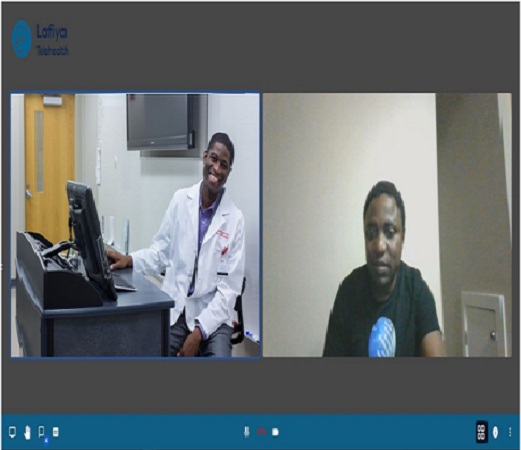
Lafiya Telehealth Is Changing the Way Healthcare Is Delivered in Africa

Beyond Efficiency in Nigeria’s Public Sector

3

If a man has 10 kids and earns $200  monthly, he will struggle compared to one that has 2 kids and earns $10,000 irrespective of his prudence or fund efficiency. Harvard University’s budget is 3x the WHOLE of Nigeria’s education budget, yet people are arguing that Nigeria’s problem is wholly mismanagement of funds. While we need to get better at managing the little we have, I want you to understand that there is a limit on efficiency. Unless Nigeria has more tax revenues, via growing private sector, the education ministry even at highest efficiency will continue to struggle. Yes, the private sector will rise before that education ministry would have a chance! 

Nigeria needs business pioneers to rise before political ones can emerge because markets will fund better ecosystems of improved public sector and public governance.

The Mirage of “Enabling Environment” for Business in Nigeria