DD
MM
YYYY

PAGES

DD
MM
YYYY

spot_img

PAGES

Home Blog Page 6544

Nigerian Hospitals’ Prejudice Against Victims of Arm-Violence

0

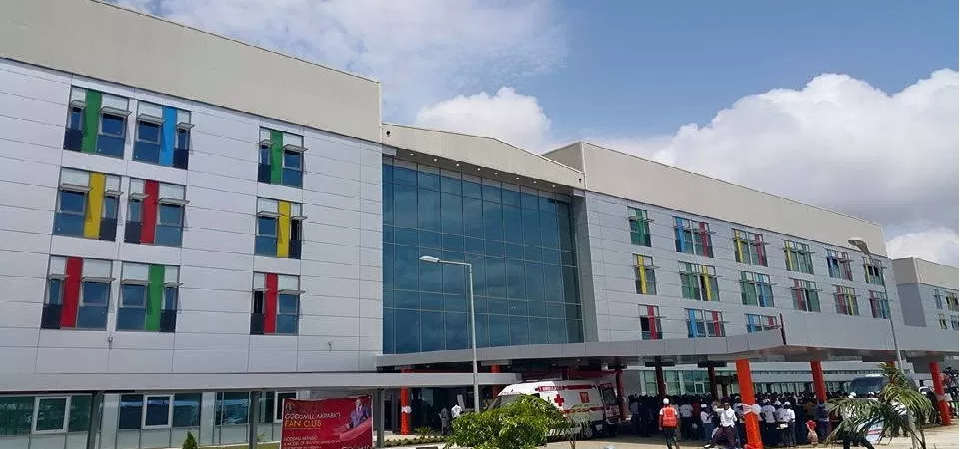
Earlier this week, Moradeun Balogun, a graduate of Obafemi Awolowo University (OAU) was robbed and stabbed in the neck around Gbagada area of Lagos. The report stated that Moradeun was rushed to a nearby hospital by passers-by but was denied attention because those who brought her couldn’t provide police report.

An eye witness recounts: “I was around the scene of the incident, the doctor came out immediately and on seeing the stab wound, he said they wouldn’t handle it in their hospital and she should be taken quickly to Gbagada General Hospital.”

This is just a situation of one case too many. Prior to 2017, it was the norm for hospitals in Nigeria to reject gunshot victims owing to police mandate that police report should be issued before treatment could be administered. The reason for such a rule was based on the claim by the police that hospitals were providing a safe haven for armed robbers who escaped with gunshot wounds.

It was a brutal rule that resulted in preventable deaths of many gunshot victims in Nigeria. In 2017, the 8th senate looked into the matter and enacted the Compulsory Treatment and Care for Victims of Gunshot Act 2017, mandating hospitals to attend to gunshot victims irrespective of police report.

Notable sections of provisions of the Act are highlighted thus:

Every hospital is to receive and treat victims of gunshot wounds with or without police clearance and/or payment of an initial deposit, but are duty bound to report to the nearest police station within two hours of commencing treatment on the victim.

The police may only receive a gunshot victim upon certification of fitness by the chief medical director of the hospital where he is receiving treatment.

The High Court of a State or the FCT may in deserving cases order a person convicted under the Act in addition to other penalties, to pay damages to the victims as restitution for injuries or loss sustained by the victim and such order is enforceable by the victim or by the prosecutor on behalf of the victim.

Any authority or person, whose omission results in the unnecessary death of a gunshot victim shall be liable to imprisonment for a term of not more than 5 years without the option of fine.

Any person who commits an offense under the Act, especially when the offense does not lead to death of victims but led to substantial physical, mental, emotional and psychological damage shall be liable on conviction to imprisonment for a term of not less than 5 years without the option of fine.

Where an offense (under the Act) is committed by a corporate body, the corporate head shall be prosecuted.

Post 2017, the Compulsory Treatment and Care for Victims of Gunshot Act, should have made cases of hospitals refusing to treat gunshot victims a story of the past, unfortunately, it didn’t happen.

In July 2018, the effectiveness of this Act was put to the test when a Channels TV reporter, Precious Owolabi sustained a gunshot injury while on duty covering the fracas between the Nigerian Police and members of the Islamic Movement of Nigeria (IMN). There was a public outrage over the incident for many reasons; one being that he was shot undeservedly by the people who should have protected him, two being that the hospital refused to attend to him because he was a gunshot victim – alas he died.

So the Act failed to protect victims of gunshot even though there are punitive measures stipulated thereof to deter hospitals and medical practitioners from flouting it. The questions many keep asking are: Why have Nigerian hospitals refused to comply with the Compulsory Treatment and Care for Victims of Gunshot Act 2017? Could it be that a section of it mandated hospitals to report a case of gun wound to the nearest police station within two hours?

Many claim there has been a little publicity about the law, and many hospitals don’t really know that it’s no longer business as usual. But that’s far from the truth. There have been many notorious instances of hospitals’ abandonment of gunshot victims that prompted police intervention and public clarification on the matter.

In 2018, robbers broke into one Mr. Akinwunmi’s house, shooting him on the rib before making away with his valuables. He was taken to two hospitals and each of them rejected him citing “police clearance” as reason. In the wake of the outrage that ensued, the police in Lagos publicly ordered hospitals to treat gunshot victims without prejudice, and that has been the case in many other states. There was also a presidential directive to re-echoing the order to hospitals.

The recent ordeal of Moradeun Balogun showed that it’s no longer about police clearance, that hospitals are deliberately abandoning weapon-violent victims to their death. It is believed that the impunity emanating from the lax of enforcement of the Compulsory Treatment and Care for Victims of Gunshot Act has emboldened hospitals to the abandonment of the victims.

And until the law becomes effective to a deterrent degree, many more people are going to fall victims.
The Lessons When The President Sees The Beautiful Art

4

In February, Eli Waduba made a pencil painting of the comedian, Kelvin Hart. He posted it on Twitter, tagged Hart and some other Twitter influencers and the painting went viral, catching the attention of Kelvin Hart, and there was a purchase deal.

In October, Osuolale Farouq proposed a new logo he designed for Innoson Motors and tagged the firm on Twitter. The new design caught the attention of the management and a deal was struck.

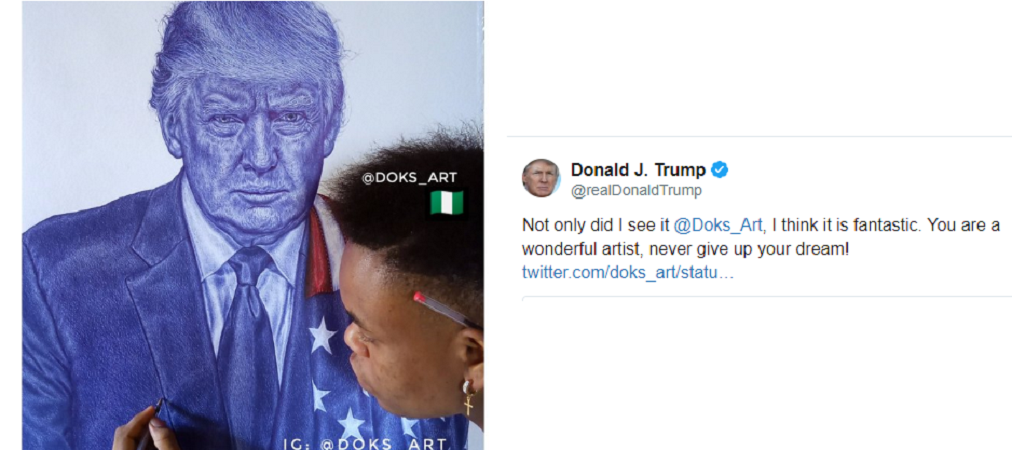
Barely two months after, another Nigerian youngster has used the same method to get the attention of the U.S President, Donald Trump. He made an artistic portrait of Trump and tagged him,  and Trump responded in the most encouraging way.

There may not have been a deal struck this time but there is a lesson. Just like Farouq and Waduba demonstrated, the key to being spotted lies on three things: 1. being good at what you do 2. doing a pro-bono job 3. taking advantage of the internet.

Being good at what you do

Practice is the secret of being good at what you do. Performance is a reflection of talent and skill, that means, you can improve on just about any task with a lot of practice. The quest to get better pushes one to learn more about what he is doing. And in order to maximize the quality of your knowledge, you have to develop the ability to explain things back to yourself.

Be open to entertain new ideas. Openness enables you to try new things and do something differently from how it is usually done. It reflects how much you are motivated to consider new ideas, concepts, and experiences. The most creative people are typically very open people. A new set of habits here and there create opportunity for improvement.

Asking questions has been a tested way of learning. Sometimes, people allow pride to get in the way and they deny themselves the opportunity to learn something new just because they feel it will belittle them to ask questions about things they don’t really know. It is a hurdle that may eventually result in failure.

Relying on one’s memory is also another way to improve skills. But sometimes, extracting the needed information from your memory becomes difficult. How then do you go about that? All you have to do is to ask your memory the question, and it will pull something up. Though it may not be the exact information you’re looking for, it will be just about it.

The most creative people don’t settle on a single way to think about a problem. Instead, they keep finding new descriptions to the problem while allowing their memory to explore more information to solve it.

When you fail, you can start afresh to practice the task, concentrating on the areas of your failure instead repeating the parts you have successfully executed. Learn one thing at a time; do not try to learn it all at once.

Getting a coach, a mentor is another way to improve your abilities. A coach can provide you with the criticism and feedback that you need to do things better the next time. Having a mentor will steer you in the right direction, help you to figure out exactly where you need to improve on and set the right goals.

Providing pro-bono services

The efforts you put together to get on top of your game usually comes at a high cost. Money spent on courses, sleepless nights and other sacrifices you must have made to improve yourself. Often, the intention of many will be to get a sort of compensation through high paying offers as soon as they are qualified.

But remember, you are not the only one who does what you do, and are very good at it. So personal development isn’t all you need to get the big gig. The competitive markets create unequal opportunity that you will have to go looking for clients instead of clients looking for you.

In that case, starting with free services becomes an option that may make the difference. Look for companies, people in your field of expertise and create what they need in a way that it has not been done before. It was a technique employed by Farouq and Waduba, and it worked out good.

Take advantage of the internet

Pushing your work to the notice of your target is a challenge that the internet can help with. Farouq got the attention of Innoson by merely tagging their twitter handle and asking others to retweet until they notice him. And so Donald Trump and Kelvin Hart’s attention was called to the art depicting them.

So social media offers you the opportunity to get in touch with people that it is quite impractical for you to reach offline: You create, you upload, you tag them and beg other users to help you push it to a viral point, although it doesn’t always have to be.

There is a possibility that your attempt may be ignored by and then discouragement comes in, considering the amount of time resources and creativity that have gone into the work. So before you put out any work, entertain the possibility of rejection and weigh other options in line with that assumption. Do not let it stop you from doing more work and reaching out to others, it may take only one successful pitch to turn your story around.

Festivals and Holidays: How Nigerians Will Patronise Motorbike Service Providers amidst Market Share War

0

In the last two decades, Africa’s transportation problems have continued to be complex due to many factors identified by experts and policymakers. The continent remains one of the continents in the world that has a high population growth percentage. It is a continent where governments spend less on infrastructure, especially public transportation despite its economy which needs modern trade routes. No doubt, transport is a perpetual problem on the continent.

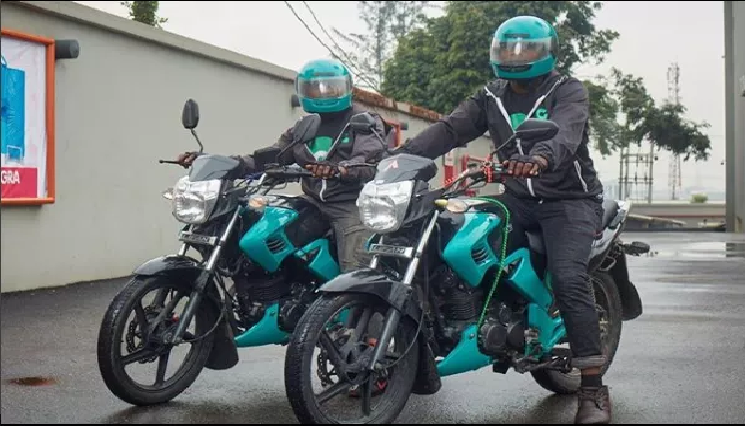
This explains the reason for the influx of motorcycles from countries such as China, India, among others, for easy movement of people and goods. For instance, statistics says the two-wheeler market in Nigeria would surpass $153 million by 2023. Before 2023, global motorbike market is expected to be $9 billion in value by 2021 with Nigeria as one of the three biggest markets.

The major focus of the providers in the last three years is to take prospective riders to their destination, spending less time. This has continued to increase the competitive space with the providers battling for traction and market share in the main cities such as Lagos, Abuja and Port-Harcourt.

In order to get the needed traction and market share, some providers have made a number of strategic moves. Some have improved delivery processes and sourced funds from investors. Recently, Gokada raised $5.3 million. Max.ng is targeting an accumulated total of 2 million rides by the middle of 2020.

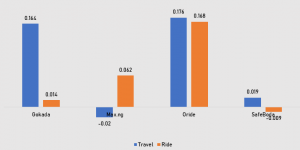
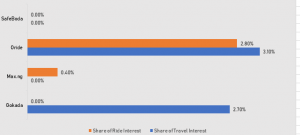
As the strategic moves continues, analysis has shown that the main players would compete more during festivals and holidays. Between September and November, 2019 analysis indicates that Oride and Gokada had a significant share of public interest in travelling and taking ride to various destinations [see exhibit 1 and 2]. This translated to more sales for the two providers, analysis suggests.

Exhibit 1: Link among Public Interest and Motorcycle Ride Providers

Source: Google Trends, 2019; Infoprations Analysis, 2019

Exhibit 2: Share of Ride and Travel Interest

Source: Google Trends, 2019; Infoprations Analysis, 2019

During the period, public interest in travelling and taking rides resonated with Gokada by 8.7%, Oride by 27.8% and SafeBoda by 1.7%. It was a reduction for Max.ng. We discovered a 9.8% reduction in the provider when the public interest in travelling and taking rides was at 1%.

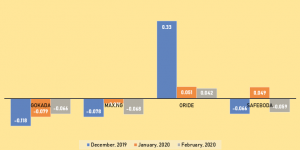
Going forward, Oride is expected to dominate public minds in December, 2019, January and February, 2020, analysis reveals. Passengers are expected to develop an interest in using the provider in December, 2019 more than other providers. However, the interest would dip in January and February, 2020. In January 2020, SafeBoda would be the only provider that would compete with Oride [see exhibit 3]. Others need to aggressive digital marketing in addition to other demand driving strategies.

Exhibit 3: Projected Interest in the Providers

Source: Google Trends, 2019; Infoprations Analysis, 2019


How to Save for New Year

1

Everybody knows that December is accompanied by heavy spending. No matter how hard you try to avoid it, somehow, you will still find yourself spending so much within the month. You spend money on clothes, food (you even buy more groceries than you needed within the season), gifts, transportation and so many other things (both the necessary and the unnecessary ones).

I was caught up in this year’s spending spree since October. I wrote down all the things I needed to buy for the festive period in a jotter and kept it close to my pillow (so I can add or remove items as the case might be). My list kept growing and re-growing everyday. I even noticed there is nothing in the list for me; everything there is for others – neighbours, blood relatives, friends and close associates. I really wanted to make sure I sent out as many Christmas gifts as I could.

Each time I went through this list, I asked myself how I was going to fund it. I had believed that planning early will help me achieve my goal of sending out gifts to people that have been there for me and still be able to have enough savings for myself. But each day made me realise that it wouldn’t be possible. So I needed to cut my coat according to my cloth (I can’t come and kill myself). But I wasn’t sure of how to go about it.

To say I wasn’t disturbed by my long to-do list will be a great lie. Each time I remembered I haven’t been able to achieve a thing from the list, my heart goes flip-flop. I was literally over-thinking and unhappy until I shared my worries on my WhatsApp status and received lots of enlightening responses from my contacts.

A lot of people responded to my post with hilarious memes of how large their Christmas budgets were and how little their salaries are. Of course those memes made me feel better but my decision to cut down (or rather slash my list) came through pieces of advice from some financial experts.

The suggestions I received (and the ones I read up elsewhere) on how I could manage my finance this festive period and still save up for January included:

Budgeting for Christmas Season

Of course I made budgets for this season and that was why I came out with a long to-do (or rather, to-spend) list. But from what I understood, my list is supposed to be within the limit of the amount of money I earmarked for the festive period.

This advice is good but it doesn’t really work within Nigerian context. A good example of how this method won’t work is that most of us are going to receive last-minute invitation cards to weddings and traditional marriages by our close relatives and they will expect us to honour their invitations. These people won’t understand when you tell them that they aren’t in your budget. So, you see, you may plan yourself very well and still be caught up unawares.

Make your Purchases Early

Everybody knows that Nigerians increase the prices of commodities during the Christmas period (when they are supposed to give promos). So it will be better to make some purchases early so that you don’t get yourself caught up in the price hikes.

This method is good if you are purchasing non-perishable goods like rice, vegetable oil, clothes, shoes and the rest. But you can’t buy meat, tomatoes and other perishable commodities early.

Cut Down on Expenses

Someone said here that I should make sure I don’t spend more than I earn. This is very necessary, especially for those of us that made long lists of things to buy. This season has a way of making people spend more than they have. I believe it comes from seeing others spend theirs and the expectations of people close to us. But, if we keep hammering it into our heads to cut down on expenses, I believe we will spend less.

Save for January

January is always the longest month of the year because a lot of people have little fund to see them through the month. The Christmas celebration has its way of getting the best of people and eating deep into their pockets. For this, people need to save for January.

Someone said that those that can’t help spending whatever they have should consider investing in money market funds, which they can withdraw in January. Another person said the best way to save for January is by moving a certain amount of money into an account that has no ATM card so that you don’t force yourself to withdraw it during the festivities.

I buy both ideas; they are good. But, the best way to save is by disciplining ourselves. If you lack discipline, you will still withdraw from those accounts within the period.

Creating an Emergency Account

I learnt this from Toyin F. Sanni, the Group Chief Executive Officer of Emerging Africa Capital Group. She advised that everyone should have an emergency account that should be fed every now and then. She said that this account should be fat enough that, in case of job loss, it will feed the owner and his dependents for a minimum of six months.

Now, just as in the case of moving money into an account that has no ATM card, there is still a need for discipline for this emergency account to work.

All these suggestions are good, but they failed to solve the problem of how we can spend the little we have in order to show appreciation to people that have been there for us throughout the year. I believe it is important to show gratitude to these people as the year runs out because we still need them in 2020. An article on how we can spend little to achieve greatly within this Christmas period will be posted later.

The Challenge Ahead As Nigeria Makes Progress on 5G

0
5G network, adaptable business model

On the 25th of November 2019, Nigeria beat other West African countries to trial 5G. Spearheaded by MTN, the telecom giant basked on the technical platform provided by the regulator, Nigerian Communication Commission (NCC), to put the possibility of fifth generation network in Nigeria to the test; and it worked out fine.

The world has been pushing for a faster internet speed, an alternative to 3G and 4G, and China and the U.S have been in the forefront of the quest. With this trial, Nigeria has shown its readiness to take advantage of modern technologies to promote efficient communication and faster internet services.

The benefits of 5G have been measured and its weight is expected to have a positive impact on businesses, healthcare and general services enabled by the internet. The 20 Gigabyte per second speed is a life-saving alternative to the crawling speed of 3G that is mainly available in Africa, and has been immobilizing innovative ambitions.

The impact is also expected to spur efficiency in the manufacturing and agricultural sector, creating smarter and faster ways of doing things. It is also a fundamental platform for the Internet of Things (IoT)- a collection of devices collecting, connecting, transmitting and sharing data via the internet.

However, Nigeria’s 5G ambition has not come without its challenges bordering on the availability of the spectrums and licensing needed to foster the establishment. Though in November 2018, the Executive Vice Chairman (EVC) of NCC, Umar Garba Danbatta, said that the regulator has made adequate provision for the infrastructure needed by operators to execute 5G related tasks. He told BusinessDay:

“We have taken steps to preserve the 26GHz, 38GHz and 42GHz spectrum bands for 5G. There will be a number of slots in all these bands and the commission has also made provision for subsidy payment for infrastructure companies who wish to deploy 5G. Public private partnership, infrastructure and the right regulatory standards are also necessary to facilitate deployment of 5G services across the country.”

Danbatta also stated in Abuja recently, during the trial of 5G that NCC will involve many stakeholders by consulting widely so as to ensure that the measures taken cover the security aspect of the framework.

“We are not oblivious of the global concerns around 5G network security vulnerability, and we will be working with our Parent ministry and security agencies to develop measures to ensure a high level of cyber security of 5G networks,” he said.

The Commission has been praised for its efforts in providing the needed infrastructure and support for operators who are willing to go 5G. The president, Association of Telecommunications Companies of Nigeria (ATCON), Olusola Teniola, said:

“In the case of MTN, the NCC allowed the operator to use 100MHz of spectrum to enable them to demonstrate the capability of 5G. The commission has vowed to support other 5G trial with Airtel, Globacom, 9mobile and other service providers when they apply. This demonstrates the readiness and dedication of the regulator to ensure that as many Nigerians that want to experience very high speed internet and innovative technology are able to do so.”

But there are other concerns, while the Commission has been lauded for the steps it took so far to implement the 5G network, transitioning from 2G to 3G to 4G and 5G, analysts are concerned that the provision may not be enough. There is a need to create enabling environment to accommodate foreign investors who would want to establish 5G networks in Nigeria in the coming few years.

“There are other factors that need to be taken on board to be able to commercialize 5G technology. We need to ensure that government is able to support the roll out of significant fibre across the country. We also need the support of government to ensure that the number of base stations deployed is at least doubled within the next two to four years. Currently, we have 39,000 base stations. We need 80,000 as minimum,” Teniola added.

Another concern has been the availability of 5G devices. GSA reported 15 new 5G devices addition in the last month, making it 48 in total. But that excludes regional variants and prototypes not expected to be commercialized. For Nigeria, the availability of these devices is going to take longer due to regional factors and product priority.