We welcome you to explore different partnerships we have here on Tekedia to serve companies and those building in Nigeria, Africa, and around the world.
Reach out to us today.
tekedia@fasmicro.com



Reach out to us today.
tekedia@fasmicro.com

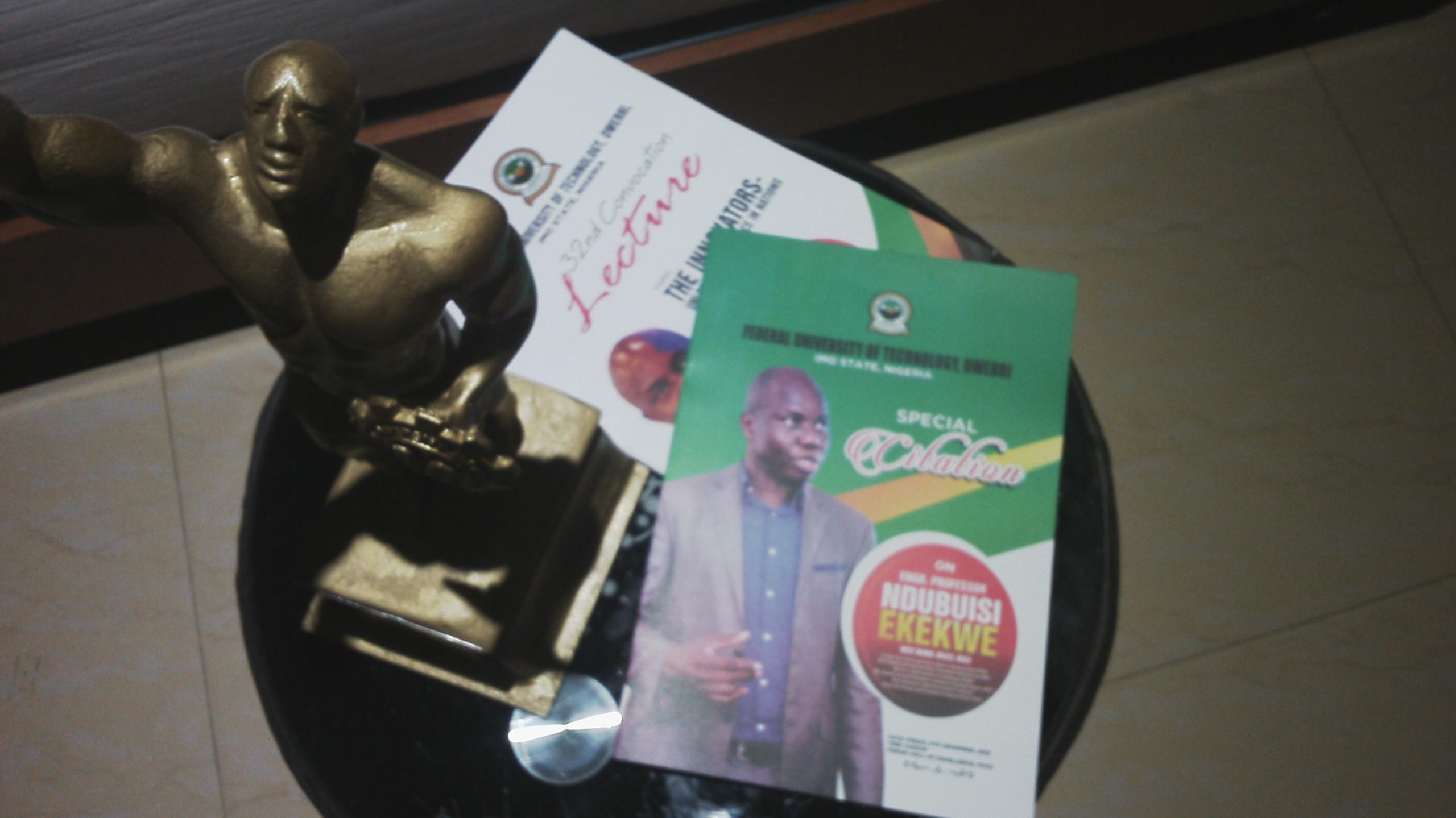
Thank you Federal University of Technology Owerri (FUTO) Nigeria for honoring me in ways that words cannot explain. That HODs, Deans, Chancellors, Professors and everyone would stand up for a standing ovation after my presentation was something I never expected.
Thank you for a new Ikenga – the FUTO Macho Man, our university’s symbol of strength, service and excellence. And I put on a tie – my wife and best friend, Ifeoma, requested for that; she got it.
It was a moment because I became the first graduate of FUTO to deliver the university’s convocation lecture.
You can find the 40-page presentation in FUTO library from Monday.


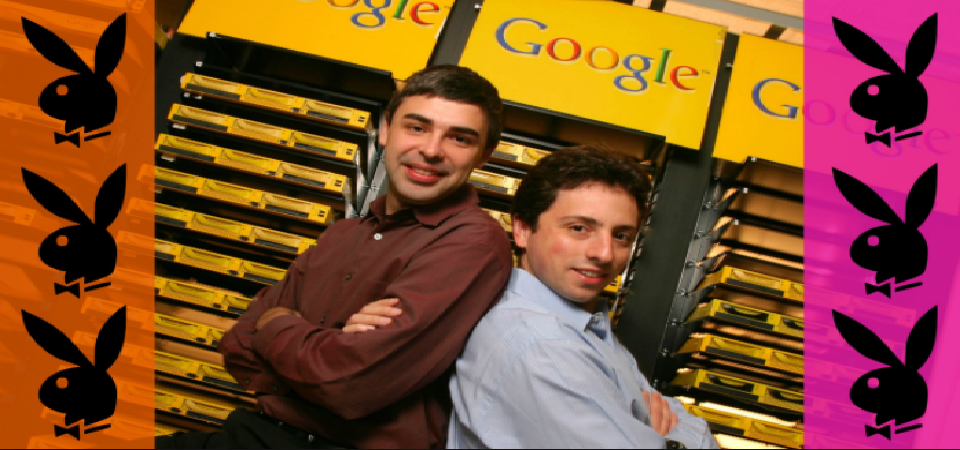
“[Yesterday], in 2019, if the company was a person, it would be a young adult of 21 and it would be time to leave the roost. While it has been a tremendous privilege to be deeply involved in the day-to-day management of the company for so long, we believe it’s time to assume new the role of proud parents – offering advice and love, but not daily nagging,” Larry Page and Sergey Brin said in a joint statement confirming they are stepping aside from Google.
It’s the end of an era, though a new era just began. Let’s take a look at the journey that brought them here, and what the future holds for the fledgling company.
In 1996, two Stanford PhD students, Larry Page and Sergey Brin sat at the corner of a room to develop an idea called “BackRub” a revolutionary search engine that used a technology called “PageRank” that would rank web pages based on how many other web pages linked back to them.
BackRub became a reality soon after, and the scent of progress brought a sense of a better name that will resonate with what the idea will bring to the world in the future as regards data – numeric. So came the name “googol” or the number one with a hundred zeroes after it. It was later modified “Google,” a name that has become a friend to almost all lips.
On September 15 1997, Google.com was registered as a domain to substitute BackRub on Stanford university server reading google.stanford.edu. But it didn’t last long on Stanford campus, Google got kicked out by the IT department because it was consuming too much its bandwidth. It was a challenge that neither Page nor Brin saw coming but they got a lifeline in the name of Susan Wojcicki who offered them her garage.
The period birthed two positive outcomes; a relationship with Wojcicki that resulted in future employment and $100,000 seed fund from sun Microsystems’ founder, Andy Bechtolsheim. On September 4 1998, Google incorporation became official in a garage headquarters.
The struggle to get better continues as the inevitable tech exigencies kept surfacing one after the other. First it was Page and Brin’s inability to use the HTML programming language efficiently which stalled a lot of functionalities of the Google system until they decided to focus on algorithms.
In 1998, the first ever Google Doodle appeared in commemoration of the Burning man festival. And the firm hired its first ever employee, a fellow PhD student at Stanford, Craig Silverstein. At this point Google has grown bigger than Wojcicki garage and needed more space which it found in a data center in Santa Clara, California. Being a shared data center, Page talked to the owner for a break on their bandwidth bills because most of the company’s web traffic was inbound, and the data center’s usual customers focused on pushing data out.
In 1999, Excite’s CEO, George Bell made a $750,000 acquisition offer for Google. But somehow, the deal failed. But then, it ignited a business passion in Page and Brin, and the push to make Google a world dominant search engine started. Soon, Google moved to 165 University Avenue, Palo Alto, its first ever office, sharing the building with Paypal, Logitech and some other tech companies.
Soon after, the search engine startup made its biggest move; raising its first venture capital, a staggering $25 million investment from Kleiner Perkins Caufield and Byers and Sequoia Capital. It was a sought of encouragement that would spur many innovative ideas in the coming few years.
In the late 2000, in the wake of internet evolution, Google has established itself as an online search force to reckon with. So there was the introduction of adwords that enabled businesses to buy ads related to search terms. It was such a big win because it guaranteed a steady flow of income for Google.
In 2001, Google brought in its first CEO, Eric Schmidt, a decision that was influenced by investors Sequoia, and it enabled Page and Brin to focus on the tech aspect of the company.
In 2002, Yahoo made a $3 billion acquisition bid for Google but Page and Brin looked away. Just three years ago, Google was a $750 000 company. The difference in a space of three years was convincing enough to portray the bigger picture, the major reason yahoo wanted Google in the first place.
In 2003, spontaneous growth pushed Google out of its space at Palo Alto, and it leased the Googleplex campus from Ailing, old-school tech giant Silicon Graphics International. The lease lasted for about 3 years. In 2006, Google bought the famous Googleplex outright, and subsequent innovations were all evidence of success where others have failed.
On April 2004, Google announced an alternative to the popular yahoomail, Gmail. Suddenly, yahoo became a competitor, a development it didn’t see coming that fast. On August 19th, 2004, Google had its Initial Public Offering (IPO) on the stock market, at $85 per share. And the drive took its concentration away from search to some other things. In September and October, Google bought startups Keyhole, Where2, and ZipDash. The three were later transformed into the popular Google Maps.
In 2005, Google bought another startup, a tiny company making an operating system for digital cameras. The name was Android. It was a decision they didn’t know it would give mobile phone users such a pleasure.
In 2006, Google bought Upstartle, a company making the popular web-based word processor called Writely. Upstartle was transformed to Google Docs. But it was not stopping there, its huge appetite for online diversity was going to consume more startups, and YouTube became the next victim. Google paid $1.65 billion in stock for YouTube, which was newly developed by Paypal’s ex-employees. The acquisition necessitated expansion so that later in the year Google opened up its first wholly-owned data center in the Dalles, Oregon, on the banks of the Columbia River.
The expansion came with overwhelming popularity that made “Google” another word for search. In June, the Merriam-Webster Dictionary added Google as a verb word for search.
2008 came with two major milestones that took the world by storm. Google introduced the first ever Android phone – the HTC Dream. The expansion was getting contagious, and Google wanted to narrow it to its services only, so Chrome was debuted also. The web browser enabled Google to control your navigation on each device so as to focus your attention on Google served ads only.
In 2011, Larry Page became Google’s CEO after Schmidt stepped down. The following years saw a whole lot of tech adventure, from driverless cars to flying cars to wearables.
In 2015, Google made a drastic change in its corporate structure, Brin and Page made Google a subsidiary of Alphabet, and Larry Page became the CEO. The development led to Sundar Pichai, former Google Chrome head, to become the new CEO of Google.
There has been crisis here and there since then, but nothing out of containment so far. The idea that started in a corner of a campus room has become a monster of varying proportions in the tech world.
As Sergey Brin and Larry Page bow out in retirement, one can only imagine the stuff the duo was made of, to birth the most dominant website in the world. The “$85 per share company” of 2004 is now worth about $1,000 per share and hovers around $1 trillion in market cap.
In a nutshell, Page and Brin revolutionized the tech industry, pioneering the Silicon Valley big moves that many other companies are copying today.
Recently, Google has had to deal with some crises bordering on antitrust issues and internal issues hanging basically on employees and bosses relationship. So far, it appears to be far from settled and raises questions on Pichai’s ability to handle it. But Pichai has been in the system for so long to know his way in and out of trouble.
However, Brin and Page have created a legacy that will outlive them, and more to that, they created a system that will sustain it.

When you have data and have it in abundance, one of the major issues you must worry about is which variable is important in the implementation of your model. Another to worry about is what exactly to do with the data. Probably, another concern is how is my data creating value?
At the intersection of the above 3 worries lies the consumer, who either benefit from your intelligent use of your data or otherwise. And to realize value, customers must ultimately benefit from the utilization of their data in analytics which is ultimately your aim as well.
I recently purchased a pair of shoes from Jumia. Apparently, I checked lots of designs before settling on one. I made my purchase and I was pleased and extremely satisfied with my choice. But guess what? Every webpage that I opened in the past weeks have Ads from Jumia displaying shoes to me.
Really!!! I wonder, should I still be getting shoe Ads even after purchasing one? Are the ads supposed to communicate to me that I made a bad choice or what? Are they to allure me to buy more shoes or what? What is the likelihood of me buying more shoes than I have already bought? Could it be that Jumia neglected a very important variable while building their recommendations and Ads engine? Or why on earth should shoe ads from Jumia be displayed all over my screen?
This is a case I referred to as poor machine learning implementation. The data point that has probably been neglected is very important (variable) here. If I checked an item on your website and refused to make a purchase (data available to you), then you have all justification to bombard my web pages with Ads of same items. Else if I had made the purchase, why would you think I will buy more than one? Neglecting a variable in a model build-up can become the bane of a model that otherwise would have been extremely valuable.
This is so because when you neglect an independent variable with high explanatory power on your dependent variable, you run the risk of being told a different story from what can be regarded as the real story. Truth be told neither I nor any other person will make a repeat purchase of what we bought and have not even utilized yet. Ask the people who run such Ads, it takes them nowhere.
What if instead of Jumia parading before my eyes pair of shoes I already bought they try to parade before my eye things people likely buy in addition to a pair of shoes? Say wristwatch, belt, shirts, and so on that can be regarded as up-selling or what Amazon typically calls “readers who bought this book also bought this”. Now, that is an intelligent use of machine learning.
You know by the virtues of your data points that this person bought these items already and the next thing he is likely to buy is this based on what the likes of him or her bought from previous purchases. Intelligent use of data and machine learning algorithm starts from following common sense, yes, common sense. Tosin Shobukola once said “we should be data-informed not data-driven” while trying to emphasis the importance of common sense while being data intelligent.
Data is being heralded as the new oil for a reason and the publicity is not unfounded. Data as we know it is the anchor of the new face of the industrial revolution where artificial intelligence becomes what we interact with in everyday life and that drive supper efficiency. Data can be tricky and the need to get it right from the foundation is important. Oil requires processes and mining before value can be outputted from it, this also is required of data.
It is not okay to just churn out models, between Zeros and Ones of all machine learning models lies logic, philosophy and abstraction of human behaviours. You need to factor in this reasoning to get maximum value from your data analytics and machine learning endeavour.
A level of thinking in terms of how logical, what philosophical stance do the majority of this strata buy into, how can we reduce this human behaviour to the level of Zeros and Ones is always involved.

The European Union is carrying out a campaign to protect women and girls against gender-based violence. But stories flying all over the air have shown that both the male and the female are victims of violence.
It is actually true that women and girls are more exposed to domestic violence but we shouldn’t rule out the fact that the opposite sex also suffers this. As far as I could tell, violence knows no gender, age and status. I have read stories of men, whose wives (or girlfriends) killed or maimed, just as I’ve read about men doing the same thing to their women. So, it will be inappropriate for the campaign against violence to be targeted on the feminine gender alone.
Several researchers have delved into the major causes of domestic violence. They used data gathered from victims in deciding these. But one thing most of these researches have not really put into consideration is that a lot of victims may present doctored information so as to save themselves from shame or more harm. Some may also provide wrong or exaggerated information in order to get the other party punished.
The only way to end domestic violence in Nigeria is to look deep into the underlying causes and curb it from there. For one to actually find these causes, one needs to live in the midst of the people that have suffered from it, or that are still suffering it. Data collected from arranged interviews and meetings may not really be accurate. Spontaneous actions and expressions will provide deeper insights into why domestic violence is on the rise today.
Below are some of the underlying causes I noted from my own observations.
The problem of peer influence can also be seen amongst women. For example, a woman who was told by her friends that her husband sleeps around will be forced to do “something” about it, especially when those friends insinuated that they wouldn’t tolerate such from their husbands.
As for the wife, the society expects her to be that Mickey Mouse that must condone whatever her husband dishes her way. The expression, “he’s a man o” is all it takes to remind her that she should find her “place” and shut up. Besides, if she passes through any form of violence at the hands of her husband, the society will tell her to “manage” because marriage is all about “managing”.
The influence of social media on the increase of domestic violence can never be over emphasised. It has brought so many good and evil to the doorstep of many lives. There is nothing you won’t see there – from how to kill to how to destroy. People really need to understand that things seen on social media should be taken with a pinch of salt.
The problem that arises from addiction to pornography is that these addicts expect their spouses to perform the sexual “overtures” of these actors and actresses forgetting that they were just artists performing on stage. Failure to meet up to this expectation usually leads to verbal or physical fights and embarrassments.
There are so many cases of mentally unstable men who beat their wives until they (the wives) run out of the house. Funny thing is that as that one is going, another is coming in without truly knowing the cause of the other person’s flight.
I was speaking with someone a few days ago concerning the increase of broken homes in Nigeria today. We had time to look into some of the marital problems our friends were passing through and we realised that their spouses have had traits of violence, which they exhibited even while they were in secondary school. We also realised that our friends noticed (or rather claimed to notice) these bad behaviours after they were married. And that was when it hit me – we marry these days without actually knowing the characters of our spouses.
In those days, before someone marries, his family will do what we call “iju ase”, where they find the true character of the intended spouse and that of his family members. Any little questionable character attributed to this spouse or any member of his family leads to the break of the marriage negotiations.
Today, we meet people in the streets and marry them within one month. We no longer allow the elderly and more experienced people to decide for us. We tell ourselves that we are adults and make serious mistakes that can affect us throughout our lives. There is need to drop civilisation out of marriage matters.
While I was in Ibadan, there was this area called Ikolaba village, which was inhabited mainly by the people of the lower class. I pass through that area daily while heading to work. Believe me when I say that I witness couples’ street fight on a daily basis. The causes of their fight always borders around “chop money”, “girlfriend matter” and “returning late”. For some reasons, these people have accepted that fighting is the only way to get their spouses to carry out is their domestic responsibilities.
There are other identified causes of domestic violence such as drug abuse, bad parenting, exposure to abuses while growing up, and so on.
Of course discovering the causes of a problem is a step away from solving it. But in this case, it won’t be easy because a lot of factors are involved – from societal factors to personal ones. However, I can only give the following suggestions:
As the EU continues with the campaign against gender-based violence, they should ensure that laws are created to protect both the male and the female. Nobody should be discriminated against.