DD
MM
YYYY

PAGES

DD
MM
YYYY

spot_img

PAGES

Home Blog Page 6574

5 Lessons From Busola Dakolo-Biodun Fatoyinbo Court Case Saga

0

Different reactions accompanied the court dismissal of the rape case filed by Busola Dakolo against Biodun Fatoyinbo. Twitter was divided into two major factions following this latest news. One faction saw the judgment as unfair while the second faction believed the verdict was justice at its best. In the midst of these reactions are lessons to be learnt.

#Lesson 1: Don’t go to court without enough evidence.

When Biodun Fatoyinbo was sued for raping Busola Dakolo 20 years ago, the first thing people around me asked was “does she have evidence”. Of course, even if there were evidence, 20 years is enough for it to be altered or completely destroyed.

A lot of good cases have been lost as a result of lack of evidence. We see this in Nigeria today, especially in the rural areas. For instance, in my village, there was this parcel of land in dispute. One of the parties claimed that the land belonged to their family but was given out on lease to the present occupant. So, they want the occupants to leave or buy the land at its current value. On the other side are the present occupants of the land, who claimed that the land was the collateral given to their grandfather when he lent money to its former owner. Since the borrower couldn’t pay, he forfeited the land as the loan repayment. However, there is no evidence of this transaction and the witnesses have all died off. Now both parties are threatening seeking legal action since umunna couldn’t resolve the issue. But then, what will be their fate in the court?

There are so many other people that easily seek legal actions without sitting down to ask themselves if they have tangible evidence to use. People need to remember that the court plays a different ball game altogether. They shouldn’t let their emotions take the best of them.

#Lesson 2: Court doesn’t grant revenge; it gives justice.

The second major reason Dakolo’s case against Fatoyinbo was struck out is that she sued him out of bitterness. She started by calling him out in the media. By the time she went to court, a lot of people have asked for Fatoyinbo’s head. This played against her because the presiding judge, Justice Oathman A. Musa, stated that her case was born out of cruelty and not from seeking justice. He saw the case as empty and sentimental.

As confusing as that assertion may be, it spelt out one thing – the court may not satisfy your thirst for revenge.

I believe Dakolo was called cruel because she raised so much dust before taking the matter to court. I’ve heard that things like this can affect court’s judgment. In other words, if you seek legal action for wrongs done to you, kindly refrain from making so much noise about it so you don’t appear “cruel”. At least, that’s how it is in Nigeria.

#Lesson 3: Don’t wait too long before going to court.

They called it “Statute barred”. Honestly, I didn’t know there is expiration date for offences, even in rape cases. However, the Dakolo-Fatoyinbo case has made it known that if something happens more than six years ago, it will no longer be valid for hearing in a court of law. This may sound inhuman but that’s how it is. So, obey it (my creditors, take note).

#Lesson 4: Judiciary is unsentimentally sentimental.

The first thing everybody will tell you about court of law is that the law knows no one and doesn’t play on sentiments. But I don’t think the judge was being unsentimental when he said Dakolo wasted the court’s time because that statement was emotionally constructed. Out of whatever emotion that gripped him then, he declared that Dakolo should pay Fatoyinbo the sum of one million naira, which should have been 10x more because she wasted the court’s time. Even if Dakolo lied against Fatoyinbo, there is no evidence to prove that. So, asking her to pay that amount of money was born out of sentiments, which is in favour of Fatoyinbo.

Secondly, it is wrong for a judge to tell someone that seek redress from the court that he wasted the court’s time. If not for anything, the court is there for the masses. It should give a listening ear to anyone that runs to it. Let me ask one more thing, will a judge tell the PDP presidential flag bearer that he wasted the court’s time because he rejected the presidential election result and took the matter to court?

#Lesson 5: Nigerian courts can’t handle rape cases.

A lot of people predicted that Dakolo will lose; and they have been proven right. The first person that told me that she will lose asked me if Fatoyinbo was caught in the act. According to this person, who happened to be a police officer, rape cases can hold water in Nigerian courts only in the following instances: if the rapist was caught in the act; if there are evidences such as torn clothes, pictures and video recordings; if the victim screamed during the act and people heard her; and if there are related bodily injuries and medical report indicating forced penetration.

This evidence will be hard to obtain because of several reasons. The victims’ screams would have been the easiest evidence to get if there is anyone willing to show up as a witness. Besides, most of these victims were muffled or threatened to comply with deadly weapons.

We know that a lot of rape victims do not come out to talk in Nigeria. Most of them bear the pain and take it to their graves. It will then be unfair not to find ways of granting these victims their much needed justice just because there is no concrete evidence or that it has passed the number of years that made it valid for hearing in a court of law. From what I can see, rape victims will withdraw deeper into their cocoons since the court of law has shown its lack of expertise in handling their cases.

Note that I am not insinuating that any of Dakolo or Fatoyinbo was saying the truth. What I’m after is that the court should have shown more expertise in the way it handled this case. It seemed so uncharacteristically quick to pass judgment. However, it’s good that Nigerian system has learnt to handle grave matters within a few months. This means there is hope for all the people awaiting trial while they rot in detention.

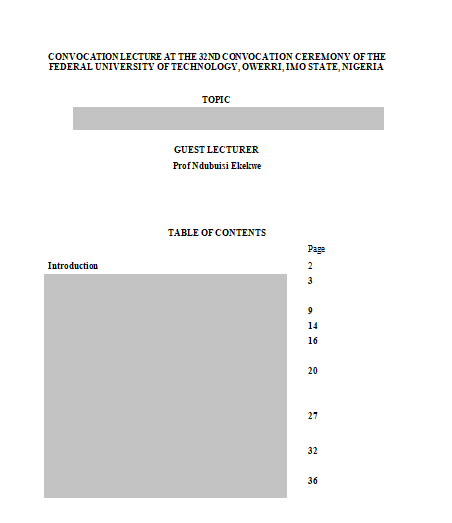
My FUTO Guest Convocation Lecture Finalized for Dec 6-7, 2019

3

Finally, it is done. Yes, I have finished writing my Convocation Lecture (see top page below) which I will deliver during FUTO (Federal University of Technology Owerri Nigeria) 32nd Convocation Ceremony. This is different from the Commencement Address. The Convocation Lecture is an academic liturgy and my speech is 36 pages long (single spaced, 12 font Times New Roman on Microsoft Word).  

Over the last ten days, I have been working on this speech. I do write very fast and practically my own library. But this one is different as I expect dozens of  professors attending under the chairmanship of the University Chancellor (Lamido Adamawa). 

It would be a great presentation. I like speaking in FUTO, my alma mater. In 2009, I delivered the University Lecture. When this is done, I will be the first graduate of FUTO to deliver its convocation lecture. That the Council, Senate, Committee of Deans, Students Union, Alumni and our Chancellors chose me, puts a deeper meaning on grace. “Qualify me, oh Lord, before men and women,” was a typical prayer in the Scripture Union in those days.

I hope many of you will join us in Owerri on Dec 6-7.

Ndubuisi Ekekwe Will Deliver 2019 FUTO Convocation Lecture

The Expectant Domination of the Lagos Transport System by Bike Hailing Services

0

Lagos with a stunning human population estimated at 21 million in 2016, which makes it the largest city in Africa is a center of excellence, and that is good for development. But for the 21 million residents of Lagos, how can they combat the heavy traffic flow and scale through the hustle and bustle of this great city? Learn why Bike hailing services are the long term choice of transportation in this great city.

This is Lagos! Ah, that’s the big signpost you see when you enter Lagos. For an onlooker they might not understand what that phrase means. But for the 21 million Lagosians, they sure know the deeper meaning of that phrase “This is Lagos.

To stay in a city like Lagos, you must be hardworking and that means you’ll be moving from one location to another. That’s where the trouble begins. You have to work, pay bills, stay healthy while staying alive and mentally okay. Transportation in Lagos is by four ways: road, water, rail and air.

 Yes, it’s by four ways; Lagos is very large. The most common forms of public transport in Lagos include taxis, buses and motorbike taxis, known locally as okadas. All of these forms of transport are generally unsafe and unreliable due to poorly maintained vehicles and reckless drivers (that’s according to Expactarrivals).

Now depending on your circumstance, you might have a car or even use a BRT, anything that takes you to your destination. But then, the problem lies in one problem, yes the Lagos Lock-down. Yes, the Traffic, that has never been de-congested for ages!

During my recent visit to Lagos, I had to see the reality that majority of Lagosians face as they go about their daily activities everyday. Now, let’s take a dive into the world of Bike Hailing.

Bike Hailing Overview

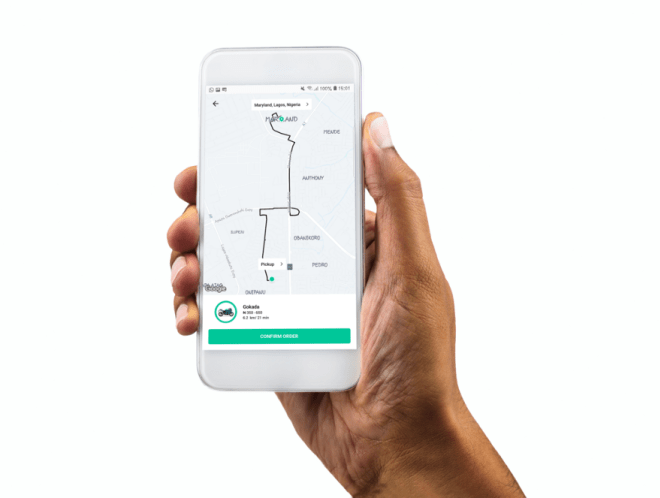
A bike hailing service is service offered to customers by the operators through a service medium like an app, or website. This is the same of Uber, Bolt and other e-Hailing services. The only difference is that you are not hailing a car but a motorcycle. Customers can order a motorbike ride through the company’s website, or by using the company’s geo-location based mobile app. This service is provided by various operators in the industry. They include Max.ng, Gokada, Oride, etc.

The bike hailing service came about due to marginal cost in operation. It has also been reported that the bike hailing service is also preferred by customers because of its accessibility.

Regardless, there is a world of limitless opportunities in the bike hailing business.

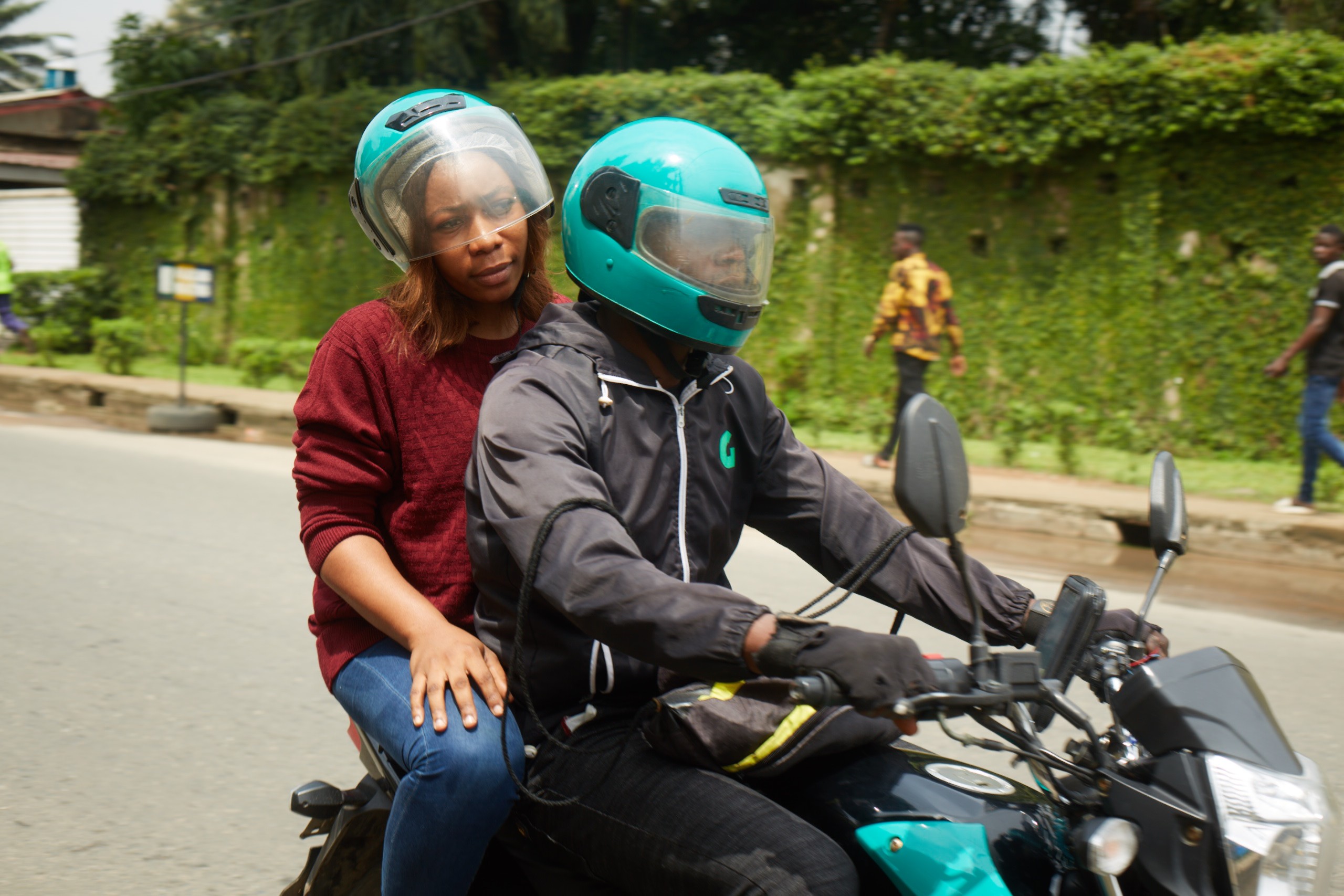
Gokada bike with a customer (source: Techcabal)

Why Bike Hailing Remains Unbeaten

At most parts of Lagos, bike hailing remains unbeaten. Why? Take a look at the population of Lagos, it’s definitely above 21 million inhabitants. When you take a close comparison with bike hailing services against the traditional cab hailing, you’ll spot a huge difference. The bike hailing services come a bit cheaper for commuters, this is because most Lagosians are on a budget so they cut their coat according to their size. Imagine someone who is earning 30,000 NGN in Lagos per month, use his salary to book services such as Uber? We all know what is going to happen.

Another reason why the bike hailing service will remain unbeaten in Lagos is their mobility. Think of that moment you’re stuck in traffic and the traffic is so bad to the extent that for the past 3 hours no car has moved. Looking across your window, you see bike hailing operatives such as Max.ng, Gokada, etc scaling through the traffic like there is no traffic. Oh, I get that feeling of being angry and wishing to convert your car to a bike to beat the merciless traffic.

Everyday, as one person leaves Lagos to another city, dozens come into Lagos. So you can see that the population of Lagos can accommodate all – the big e-hailing goons and beyond. Why? There are numerous cars on the road: the more the cars, the higher the traffic. And the higher the cars, the more the bikes get more patronizing. Why? No one loves to be stuck in traffic.

Even the CEO Ukaegbu Great (Jnr) of Keanyi, the Nigerian eCommerce place for locally produced products can tell you that the Future of transport in Lagos is the Bike Hailing services. Flora Mbeledeogu of Gova Designs will still tell you to beat Lagos traffic the street way.

To be honest, things will normalize when government does the needful to scale the Train Transport system. In the meanwhile, Prof. Ndubuisi Ekekwe recently launched Vetifly, a ride hailing for helicopters; you should check them out now!


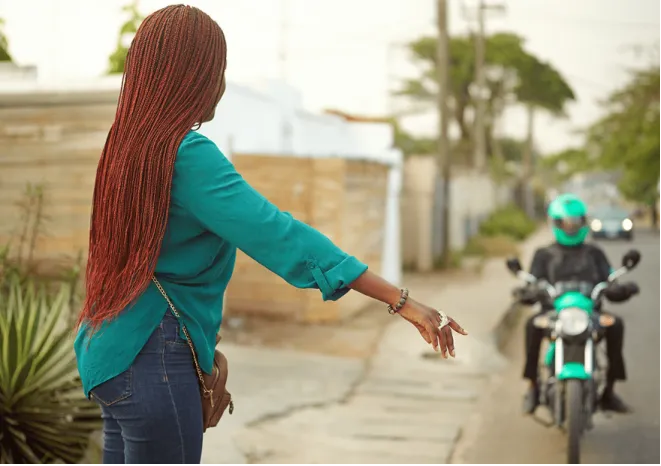
Featured image: A woman hailing a Gokoda Bike Operative. Image Courtesy of Gokada

The Challenge As Nigeria Goes Legislative To End Open Defecation

0

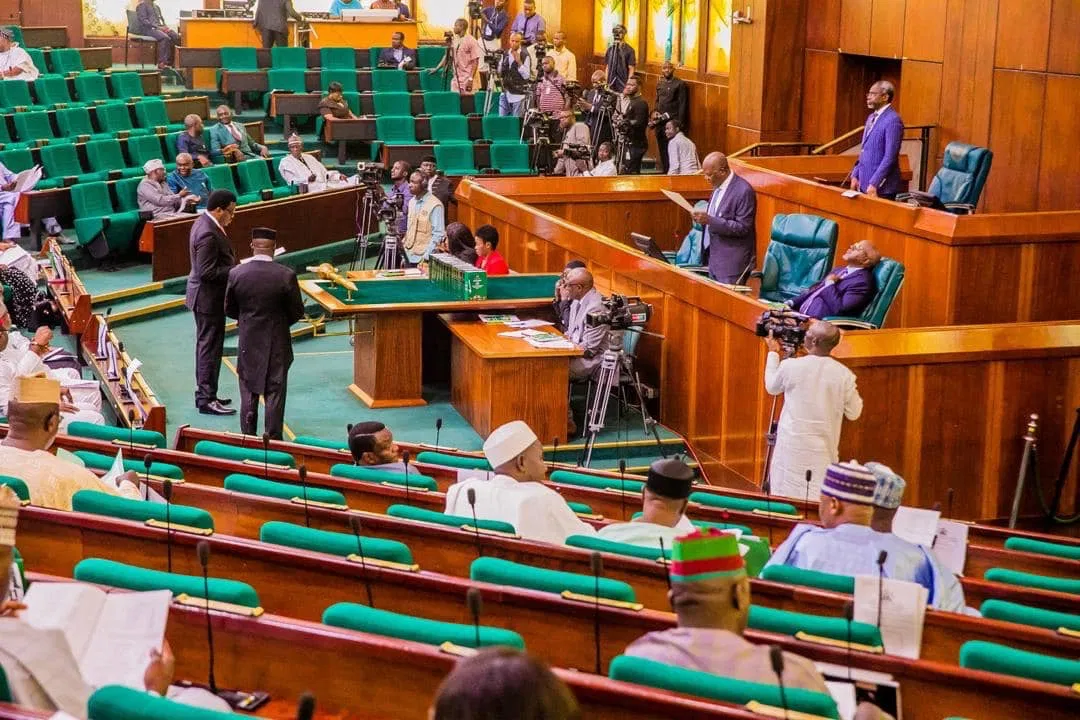
The Federal Government said on Friday it is looking for a legislated means to curb the menace of open defecation. We hope they build more public toilets across Nigerian cities.

Open defecation has grown to worrisome degree in Nigeria and there seems to be no end to it by the way it is going.

Therefore, the Federal Government has said an Executive Order shall be signed by President Muhammadu Buhari, to effect the punishment of individuals who have refused to use the toilet; a step it believed will help to eradicate the practice totally.

Nigeria has a 2025 national target of ending open defecation, according to the Minister of Water Resources, Suleiman Adamu, who told the press in Abuja, that the move is geared toward achieving that target. He said the Executive Order will instigate the needed discipline in Nigerians to promote good hygiene when it comes to defecation.

“In the national WASH (Water, Sanitation, and Hygiene) action plan that we are promoting which the states are adopting, there is a provision for some legislation to be made against open defecation.

“And there is going to be an Executive Order signed by President Buhari to that effect, where there is a law against open defecation. Also, law enforcement agencies will do their bit.

“We need individuals and communities to have this behavioral change. It the responsibility of a household and for their well-being and dignity for them to imbibe the culture of building and looking for toilets to relieve themselves,” he said.

He also disclosed that the Federal Executive Council (FEC)has approved ‘use the toilet’ campaign, and it will be flagged off in commemoration of the World Toilet Day, come November 19, 2019. He added that idea is to educate the public on the ills of defecating openly.

“We are hoping that once the campaign gets into the mind of people, our job is done. So when the communities begin to see that this is not right, this behavior will change.

“Open defecation is a bad practice and should be stopped. We as governments at the federal and state levels have our own responsibility, where these facilities are not available we should make concerted efforts to provide an alternative,” he said.

In October 2019, Nigeria became the country with the highest number of people defecating openly, putting India to second place. It is estimated that over 50 million people in Nigeria practice open defecation; a situation that has been attributed to poor health and education, especially among children.

In 2014, the National Council of Water Resources prioritized the development of a roadmap towards eliminating open defecation, in line with United Nations global campaign to end open defecation.

With 2025, as target, the Roadmap provides a guide towards achieving an open defecation free country using many techniques that involve provision of sanitation facilities in public places; community led total sanitation; promotional and media campaigns; creating enabling environment; capacity building and coordination mechanism.

The Roadmap also provides the estimated cost of meeting the target by government of all levels and the private sector, in areas of construction of sanitation facilities in public and private places. The Roadmap also provides a basis for the development of the partnership for Expanded Water Supply and Sanitation (PEWASH) programme that was targeted at establishing multi-sectoral partnership between governments, development partners and the private sector.

They will all work to provide rural dwellers with adequate water supply to enable adequate hygienic attitude. The Federal Ministry of Water Resources will provide the enabling environment, leadership and coordination required in achieving this target by working with the communities, civil society, development agencies, the private sector and government at subnational levels.

It was upon this Roadmap that quest to end open defecation was established and launched in 2016.

To achieve the 2025 target, Nigeria needs to build 2 million toilets yearly, from 2019 to 2025, a task that will gulp estimated N959 billion. The government is expected to provide only about 25 percent of the fund, which is around N234 billion.

Head of WASH at UNICEF Nigeria, Zaid Jurji, said that the remaining 75 percent of the fund will be incurred by households.

“The majority of the costs to households will be spent on constructing toilets for those that don’t have them, while funds from the government will be spent on public projects including ensuring access to toilets facilities at public places,” he said.

As the campaign is set to take off on the 19th of November, lack of fund will pose a major challenge to the target. The campaign is mostly going to dwell on publicity and sensitization, since there is no fund to start the implementation of toilet building and water supply, especially in rural areas. The success of the 2025 target on open defecation in Nigeria depends mostly on the 75 percent of the needed fund that is expected to be raised through multi-sectoral partnership. Without the fund, people will have no alternative to open defecation, and no matter what the punishment by Executive Order may entail, the call of nature must be answered.

Causes of Incessant Increase of Illegal Adoption Homes in Nigeria

0

Growing up, I noticed that mothers were more protective of their daughters than their sons. The reason behind this was that girls were at risk of being sexually molested irrespective of their age. Then, boys as young as four or five years old could roam the streets and enter any house they like and their parents won’t be worried, except that they, the boys, may be knocked down by passing vehicles.

When I joined the motherhood club, I realised that boys have joined the number of those to be guarded. They have become even more vulnerable than girls. They face the danger of accidents, molestation and, above all, kidnapping.

When I gave birth to my first son, I was warned by many caring mothers to keep a close eye on him. I was made to understand that children (especially boys) from 0 – 5 years are the most vulnerable. This, I learnt, is because if they happened to fall into the hands of kidnappers recruited by illegal adoption outlets, they can easily adjust to their new ‘homes’ and also forget their parents. Apart from that, they may not really know their full identity and would therefore not be in a position to alert neighbours and authorities. But from what I can see right now, even older children are not safe.

In case you are wondering what I’m trying to explain here, I want to refresh your memory with the cases of missing children who were found in another state of the federation, where they were illegally adopted. If you noticed almost all of those missing children were within the age bracket I mentioned above.

Most of these children were stolen from their parents when they took them to public places. The majority of the cases heard indicated that these kidnappers prefer places of worship such as churches and mosques. I’ve also heard of how they broke into a house in the middle of the night and stole a 3-year old boy, who was fast asleep in the room he shared with his older sibling. They were able to get away with this act because the parents of this affected boy went to the hospital that night on an emergency call. This shows that even our homes are not safe for our children.

These people that kidnap these infants take them to other states to give them up for adoption to childless couples or those looking for children of a particular sex – especially male. I want to call your attention to the fact that most of these children, that is the fortunate ones, were found in the eastern part of the country – a lot of them in Anambra State (this is not coincidental as far as I can tell).

If we decide to trace the root cause of this inhuman act, we may end up opening a lot of cans of worms. But I’ll first want to point out that our culture and its preference for male children is a major cause. As I stated earlier, boys are at higher risk of being kidnapped and “sold” to other families because of their higher demands and higher cost. For instance, every Igbo childless couple that wants to adopt a child would prefer a male one first and would pay whatever it takes to have one. As a result, male children are sourced more than their girl counterparts.

Another major cause of this illegal and inhuman means of adoption is the bottlenecks and heavy conditions placed by legal adoption homes. These government owned homes do not make it easier for people to adopt children (have you ever wondered why there are should be so many children in orphanages while a lot of people are looking for children to adopt). From what I heard, if you want to adopt a child from government-managed or approved homes, you will drop your application and other required documents. Then, you will have to pay a huge amount of non-refundable fee (speculation has it that for girls, it is 500k and then 700k and above for boys). When you are done with the required procedures, you will be asked to wait for your turn because there are others before you. You may have to wait for years without any result (meanwhile a lot of teenagers are giving birth and killing their babies). The resultant effect of this is that either the couples resort to illegal adoption outlets or they bribe the government officials to hasten the adoption process.

Note that I’m not saying that people should go through illegal means to adopt children, I’m just making it known that inefficiency of government owned homes are encouraging these illegal ones to thrive. There is no childless couple that will want to mess up their reputation by adopting stolen children.

Then, the greatest factor that leads to this atrocity is lack of humanity in the quest for wealth (and children). If these “sellers” and “buyers” still have any atom of humanity in them, they would consider the agony the children and their parents will pass through before embarking on this devilish act. But because their focus was only on money, they dropped off the cloak of humanity in their bid to make money. I don’t believe that the situation of the country is the cause of this inhumanity. These people are just plain mean.

But, we won’t allow these atrocities to continue. We parents should do our own bit by taking care of our children when we are in public places. These kidnappers target mostly those infants left in the custody of very young minders. Parents should endeavour not to leave their infants with older children unless they or other trusted adults are there. They should be mindful of the helps and relations they leave their children with. Children should also not be left with strangers, even if those strangers look friendly. In short, parents should be vigilant and protective of their children.

As for those adopting these babies and infants, if caught, they should be made to face the music because they won’t say that they weren’t aware of how unlawful their method of adoption was. They should be punished alongside those that were linked to the kidnap and the sale of the children (I use the term “sale” because this cannot be considered as an adoption).

However, as the saying goes, “prevention is better than cure”. If all parents decide to take care of their children properly, these baby traffickers will be kicked out business in no distant time.