In just a blink of an eye, I was struck from behind by a Chevy Blazer. At the point of impact my body flew over 30 feet through the air. Had I not been wearing full Motor-cross racing gear and a full-face helmet I am 100% certain that I would not be here today.
From becoming the first Canadian to complete a Double-Deca Triathlon—a grueling race equivalent to 20 Iron-man Triathlon races, to other incredible feats Shanda Hill’s ‘superwoman’ ability did not just come about by chance. Her journey is a remarkable one that will leave you in awe of how much pain she had to endure to get back on her feet.
Shanda Hill is an Ultra Triathlete. An Ultra Triathlete is anyone who competes in a triathlon longer than the standard Iron-man Triathlon. Shanda was born in Canada, and resides at the British Columbia. By relating to the events that unfolded later in her life, it becomes evident that Resilience is a factor that gives anyone the vigor to keep going.
Shanda Hill. Image Courtesy of Shanda Hill.
Events Leading to the Accident
Prior to 2003 I was a nationally ranked BMX racer. On May 9th, 2003 I had been riding my BMX bike with one of my friends downtown at the Skate park and we decided to ride up to my parent’s home half way up Silver Star Mountain. This ride was not unusual for me as it was a terrific way to help my cardio and legs for racing. Everyone always says that in a moment your entire life can change and so often we float through our lives knowing vaguely that this is true, but never really understanding how true it can be. That moment came for me that day, in just a blink of an eye. From the reports given, I was in the bike lane riding slowly on a gradual uphill when I was struck from behind by a Chevy Blazer. At the point of impact my body flew over 30 feet through the air. Had I not been wearing full Motor-cross racing gear and a full-face helmet I am 100% certain that I would not be here today.
Luckily, my friend was trained in first aid and performed C-Spine Control to stabilize my neck and spine. 911 was called and an ambulance arrived within 7 minutes and I was taken to Vernon Jubilee Hospital. I was completely unresponsive but had a pulse and was still breathing. The first vague memory I have after the accident is how bright the lights were on the hospital ceiling. They seemed blinding and then everything went fuzzy again. Finally I was stabilized and began the recovery and healing process.
Road to Recovery
Oct 10th 2003, 5 months after the accident, I was scheduled for an MRI in Vancouver and a month later on Nov 10th 2003, I received the results back from my MRI that showed grey area in the frontal global area of my brain that showed a pool of dried blood indicating a traumatic brain injury. I was also healing from neck and back injury which I found debilitating day after day. In Nov 2003 my Doctor advised me to try to find work and I began helping out our local pool assisting the disabled in swimming techniques.
I always had continual headaches and back pain and hoped that being in the water would be a low impact way to help. It was not until Dec 16th 2003 That I was finally given a final diagnosis by Dr Maryinak, who was a Rehabilitation Specialist. He stated I had a fractured back and Post Trauma Brain Injury. He recommended that I have physio three times a week and it would take about 6 months for my back to properly heal. It seemed like such a break- through at the time to finally have a medical professional validate such a serious problem. It was not until Jan 15th 2004, 7 months after the accident that I was sent to Dr Spellacys, a Psychologist, to be tested in Victoria, B.C. He confirmed that I had a brain injury As a result of the Brain injury I sustained in the accident I suffered from many symptoms some of which included, high sensitivity to light, dizziness and swelling of the back of my neck and head. Extreme sensitivity to high frequency noise emitted by the television. Irrational, irritable and continual headaches. I had sticky fluid that came out of my eyes for weeks after the accident not just at night but throughout the day. I spent nights with an ice pack on the back of my neck just to be able to sleep, and to this day I still experience swelling, tenderness and headaches after running.
My behavior changed drastically. I would over-react. I suffered extreme mood swings and frustration over the littlest things that seemed so overwhelming. I had trouble reading and concentrating.My biggest frustration came in the way of extreme fatigue. All this time it had been my goal to race my BMX again, at any level, I struggled with imbalance and the claustrophobia of putting a full face helmet on and finally settled for a half face so I would be less nauseous. By 2008 I was by no means a Pro bmx’er again at a level I had previously enjoyed. But I was making improvements every day. I had continued to walk, partially to be able to say there was something I COULD DO but also because it gave me some kind of focus and seemed to help my overall well being.
The Journey So Far. . .
Flash forward to 2009, six years after my accident. I had heard a couple of girls in the sauna at the gym talking about how they had been training for a half marathon for the last six months. I thought to myself, that this was something that would be a good goal for me. I had no idea what I was doing or even how far a half marathon was, but talked my father into signing up with me and we finished together at 2:01:56. The pounding from the running not only swelled up the previously injured area in my neck but it gave me a wicked headache and I had to depend on a ice pack just to sleep at night.
I remember thinking maybe running wasn’t my thing after all. It was full on BMX season after that run at the start of 2009 and I had made a bigger goal, even though I was classified as an amateur racer I decided that I wanted to get an overall national #1 placing. I not only was able to qualify in the U.S.A. and earn a #2 National Age Class Ranking in BMX but take home the Canadian Overall National Title for the Women’s Cruiser Class. One of only four Overall National Titles given out in men’s and women’s classes each year. As time goes on I have never been pain free, but I do believe I have developed a higher tolerance for it. I contribute a lot of my recovery to a plant based lifestyle which has always helped reduce my inflammation.
Regular visits to the gym to build muscle in my back where I have scar tissue has been the key to living with pain. Spring 2010 came and I was encouraged to take up running again. I went out and ran 10km, this time a much more reasonable distance and only one ice pack was used that night. Training has never been my strong point so instead I signed up for every race in the Okanagan I could find. If 10km worked, why not twenty? 42? 50Km?
As a result of my injury I had a lot of people telling me I wasn’t capable of such things. 2010 was my first full year of running and I ran over 700 kms in races over a 7 month period, including my first Marathon ever and my first Ultra Marathon 50km. I was hooked. Since 2010 I have competed in over a hundred races. In July, 2016, I competed in the Oregon Double Anvil—2x Ironman distance and won 2nd female overall In Oct, 2016, I signed up for the Virginia Quintuple Anvil and won 1st female overall and 5th overall in men’s. I was the 1st Canadian female ever to complete and I hold the fastest quintuple female overall course run time record to date of 47:33:21 (closest female was over 5 hours behind) I didn’t stop there.
In August, 2017, I flew to Buchs, Switzerland, and competed in the Swiss Deca Ultra Continuous —10x ironman distance. I placed 2nd in the female overall. I was the 1st Canadian woman ever to complete a Deca (38km swim,100km bike, 422km run) Almost immediately after that in Oct 2017 I flew Virginia and competed in the Virginia Triple Anvil 3x Ironman distance and won 1st Female overall. I was scheduled to fly home 3 days after that race and a friend & mentor was begging me to come and compete at a 2nd Deca race in Leon, Mexico. An hour from flying home I called the race director for the World Championships Deca from the airport and told him that I wanted him to enroll me for the following weekend. Instead of flying home I pulled all of my gear off the plan and flew Mexico instead. In Oct 2017 I competed in that Deca and placed #1 overall female.
In 2017 I received a title of #1 out of 26 female Ultra athletes in the world by the IUTA I made a IUTA confirmed World Record as the first female to ever complete two Decas in a year (nevermind back to back in 2.5 months). In 2018 I went back to Switzerland and completed my 3rd Deca where I placed 1st overall female.
Reflections. . .
Everyone always says that in a moment your entire life can change and so often we float through our lives knowing vaguely that this is true, but never really understanding how true it can be. Shanda Hill, has now broken records becoming the first Canadian to complete a Double-Deca Triathlon—a grueling race equivalent to 20 Iron-man Triathlon races.
Here are some of her quote:
“Your focus each day is to get up and keep moving,” she said.
“I really like to know what are our limitations and I really think now that it’s limitless.”
It’s true that life is uncertain, and we can only make the best of it while alive. Still, it is never too late to push on no matter the obstacles that come our way. This story of Shanda Hill, is one that shows Resilience against all Odds.
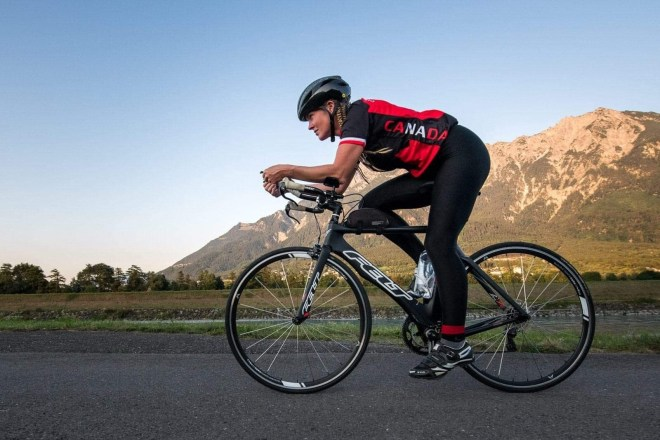
Featured image: Shanda Hill, Cycling. Image Courtesy of JD.
A heart-breaking experience of a job seeker made its way to the social media once again. This time, the story defies the logic beyond human dignity, it says:
“I went to collect employment letter at [name withheld] and something happened. I and some people were not employed because we didn’t stand up to greet the female MD that we barely know. We were asked to come very early, which we did. We sat at the reception, people were passing and we were greeting. When the MD passed and we greeted her “good morning ma” she said that “we are sitting to greet her, and for that reason we can’t work in the company.” That’s how she didn’t sign our employment letter. She employed those that came later than us who didn’t see her enter. We even knelt down to beg her that we didn’t know, but she refused. And I heard that they worship her there.”
Majority of job seekers in Nigeria have one experience or the other that resonates with the above story, and it’s not ending anytime soon because of the level of impunity that it thrives on.
Everyone who has an edge over others in Nigeria tries to exploit it, a tradition that can be traced to Nigeria’s political culture – worship leadership. From the offices to the streets, the question: “do you know who I am”? resounds with exploitative influence and abuse of power.
In the office, it has become so institutionalized due to the fact that there is no umpire and the actors have bossed their way through such liberty to every of their ignoble wish.
A staff recounts how he was suspended for three months because he was carried away on the phone and didn’t notice when the MD got into the office. So he didn’t stand up with others to greet her as her ego demands, and even though he went on his knees begging, his three months suspension was served faithfully.
There has been another case where the MD has ordered her staff to call her mummy, even those way older than her. It’s a choice of calling her mummy or losing your job, a predicament many are not ready to go through right now, so they bend to keep their job.
In the many instances of abuse of power and humiliation by employers, one question many keep asking is: “Where is the umpire”?
In 1978 when the Nigerian Labour Congress (NLC) was founded, it was with the aim to protect the interests of workers. The fundamental aims and objectives of the NLC are to protect, defend, and promote the rights, well-being and the interests of all workers, pensioners, the trade unions and the working class in general.
And part of its mandate is to promote and defend a Nigerian nation that would be just… transparent and prosperous through the attainment of the following objectives:
To promote, defend and advance the economic, political and social rights and wellbeing of Nigerian workers and pensioners.
To work for the industrialization and prosperity of the Nigerian nation and ensure protection of jobs, full employment and a humane working environment.
To continually struggle to influence public and corporate policies and legislation on all issues at all levels, in the interest of workers, disadvantaged social groups and trade unions… among others.
In line with these objectives, the interests of every Nigerian worker should have been upheld, and the excesses of employers put in check. But it has been more of a communiqué than a cause, and the proliferation of bad working conditions in Nigeria is telling the story.
A banker once narrated how their MD introduced the rule of morning worship in the bank. And it doesn’t matter your religion, you must join the devotion every Monday morning or face the consequences.
You find something similar in many other companies, where the bosses make the rules not minding people’s fundamental human rights: From sexual exploitation to extortive deduction from workers’ salaries to forcing religion on them. The semi-god rules are condoned by the workers because they want to keep their jobs, and because NLC has failed in its job to protect workers from humiliation and abuse.
Although in 2017, the NLC led a protest to MTN’s regional headquarters in Abuja over its entrenched practice of casualization. The protest pummeled MTN to make promises to address concerns on the company’s unethical and illegal corporate behavior against Nigerian workers. But MTN refused to keep their promise by addressing the problems until 2019, when Labour once again took a protest action to their offices.
The gesture yielded the needed results and was commended; MTN complied. But the NLC has focused on matters relating to the federal government, and the need to push for the amendment of the Labour Act to protect the right of every Nigerian worker has been pushed aside. That means, the abuse and humiliation is going to continue with much more impunity.
NLC should do more to protect workers from egoistic and all other forms of abuse that have become institutionalized because there is no umpire. There should be a complaint unit where workers can report their ordeal and get help. There should also be a legal accessory to the unit. One case treated as a warning example will serve as a deterrent to others, and gradually, bosses will learn to respect their workers’ rights.
Just months after the U.S. Government kicked Huawei out its soil for suspicion that it is enabling Chinese spy, another Chinese company has come under investigation. Two years ago, Beijing-based ByteDance Technology acquired Musical.ly, a short-form video sharing platform now rebranded as TikTok. In the latest curiosity move, the Committee on Foreign Investment in the U.S. (CFIUS), which has the responsibility of reviewing deals for national security deals, has launched an investigation into the activities of TikTok.
TikTok has pulled off a surprising growth speed to become one of the fastest growing social media platforms in the world. And it is popular among young people between the ages of 16 and 24. This has, however, stirred a national security inquiry over the concern that U.S. contents are being censored by Chinese authorities, and TikTok could be collecting personal data of its users.
In February, the FTC fined TikTok $5.7 million for illegally collecting children’s information. The agency said the video sharing app did not notify parents it is collecting data of minors. The FTC was also worried that the app’s open system could provide a room for pedophiles to contact children.
But that seems to be the beginning of what is to come. In the same month, the U.K’s Information Commissioner’s Office (ICO) opened inquiry on whether TikTok violated EU’s General Data Protection Regulation (GDPR), a privacy law which requires companies to provide specific protections when it comes to children’s’ data.
The head of ICO, Elizabeth Denham said: “We are looking at the kind of videos that are collected and shared by children online, so we do have an active investigation into TikTok right now.”
The ICO’s investigation in the UK is basically about children’s rights and protection, while in the U.S. it cuts across, the FTC and CFIUS are interested in the activities of TikTok beyond children’s interest. The CFIUS said it was not notified during the Musical.ly acquisition which cost $1billion, and that’s among other issues of security.
There have been a not-so-smooth relationship between CFIUS and Chinese companies recently regarding acquisitions of tech companies of U.S. origin, and TikTok is not exempt. And censorship and national security has been at the center of the squabble.
In the case of TikTok, there were concerns that video materials relating to Hong Kong protest were being censored to suit the Chinese narrative. And there was outrage earlier in October over an ISIS propaganda video allowed on the platform.
Although a Buzzfeed News Investigation found no evidence that TikTok censored or removed videos in support of the pro-democracy protests in Hong Kong, the regulatory bodies are not satisfied. They said they are worried Chinese law could force TikTok to hand over data on U.S. users to the Chinese authorities and that the company may censor videos that criticize China.
TikTok denied any wrongdoing, saying it does not remove content based on its sensitivities related to China. And moreover, it stores its data on U.S. servers with backup servers in Singapore. A TikTok spokesperson said: “TikTok has made clear that we have no higher priority than earning the trust of users and regulators in the U.S. part of that effort includes working with Congress and we are committed to doing so.”
ByteDance has been reported as one of the fastest Chinese growing startups. Owning the country’s leading news aggregator, Jinri Toutiao, and TikTok which has over 500 million users. The growing influence of these apps appears to be creating access for the Chinese government into the U.S. and that makes the U.S. government paranoid.
Last year, CFIUS halted China’s Ant Financial plans to buy MoneyGram International Inc, because of concerns about the safety of data of U.S. citizens. The agency also propelled Oceanwide Holdings and Genworth Financial Inc to go through a U.S. third party data administrator to ensure the Chinese company could not access the insurer’s U.S. customers’ private data.
So the United States is taking more than interest in tech innovations of Chinese origin, especially when the users will involve its military personnel or those who handle sensitive data.
Reuters reported that last month, Musical.ly founder Alex Zhu, who is the head of TikTok team, started to report directly to ByteDance CEO Zhang Yiming. He used to report to Zhang Nan, the head of ByteDance’s Douyin, another Chinese short video app. The change separates TikTok from other ByteDance companies, although it’s not clear if it’s as a result of TikTok’s meeting with CFIUS over mitigation.
However, one thing is sure; the trade war has altered the little elements of trust that used to exist between the two countries. And with the election coming next year, the U.S. is not ready to take chances that could result in another external influence of the elections.
The U.S. Minority Leader, Chuck Schumer, alongside other senators has long called for a probe into the activities of TikTok. And when it finally happened he said it is “validation of our concern that apps like TikTok… may pose serious risks to millions of Americans and deserve greater scrutiny.”
It is not certain when the dust of the political and economic differences between China and the U.S, will settle, what is sure is that more Chinese tech companies will bear the brunt.
Although there’s never any verifiable evidence of population numbers for this group, even the country’s population relies on estimates of anything between 170-200 million, various sources tend to suggest that there are at least about5000 Nigerians resident in the United Arab Emirates (UAE) with most of them based in Dubai. This seems to exclude the number of Nigerians studying in the country.
My point now is this. If Nigerians really love their food that much, as I pointed out in my last post, are they really being served? And yes I ask this literally if you are wondering.
I have posed a similar question many years ago in my 2007 paper on Nigerian Restaurants in London, which I have only recently tried to reconcptualise in a post highlighting the challenges of AfricanCaribbean restaurants in London.
Returning to the matter at hand, I am wondering just how Nigerian restaurants are faring in Dubai and its environs (e.g. Abu Dhabi, Sharjah and even Ajman)?
Not very well I dare say. These emirates (or city states with the UAE) seem to be the forte of South Asians (notably India, Pakistan and Bangladesh). Going further down the pecking order and even from those areas geographically defined (the socio-political definition seems to be somewhat different as many of these nationals tend to see themselves as Arab) as African e.g. Comoros, Egypt, Morocco, Sudan and Tunisia.
As for Nigerian restaurants, they seem to be operating at the lowest rungs of ambience. Sometimes one would wonder whether to tuck in at all after a site visit to places like the Gold Souk, Deira, Al Nahda and Al Sabkha (a small community between Al Rigga, Naif, Al Dhagaya and Al Buteen) in the Deira region of eastern Dubai.
Is it really surprising that no “African” restaurant comes close in the top-10 listing. Not even the much celebrated KIZA that claims to be Pan-African (with Swahili undertones). Obviously not Nigerian!
Is that Nigerian, Kenyan or African? No one really knows, and that’s where the confusion lies:
Tribes is a fun, casual dining restaurant located in Mall of the Emirates and The Dubai Mall. The menu has been inspired by the amazing food and flavours of Africa, an extremely diverse continent, with numerous tribes, who not only speak different languages, they also have very different foods, which they prepare and serve to their family and friends with a lot of pride.
Still on the upmarket offerings, here’s another one, Africana Home, which claims the following history:
Africana Home restaurant is UAE’s first African kitchen.The Restaurant first opened it doors in 1993 to the delight of customers craving for tasty African Cuisine and has continued to provide a home away from home feeling.
Why is it that Nigerian restaurants continue to operate from one bed room apartments? I’m not making this up, I lived in the country for nearly a decade and besides this personal first-hand experience, you may wish to read the message of the Managing Director a notable player, Africana Home, whom I assume to be the founder below:
When I first came to the UAE, I was unused to the taste and flavor of the food, although many tried to be as hospitable as they could but a lot was lacking, I just couldn’t stand it, And so the Vision for Africana Home was birthed.
From a one bed room apartment, cooking for friends, colleges and neighbors , to a small restaurant space with just 3 employees, to a thriving chain of restaurants, we truly have come from humble beginning.
Regrettably, only a few seem to have transitioned from such “humble beginnings”, as numerous other Nigerian “restaurants” (deliberately in quotation marks) are still operating under the radar in the most squalid of conditions.
What’s more? Filipino restaurants have started making inroads in the country with the recent announcement by the Al Ahli Holding Group for a new chain of Filipino restaurants, Little Manila restaurant in September at Al Muraqqabat Street, Deira, offering a variety of Filipino dishes from Fruitas, Mochi Créme, Zagu to the popular dish Binalot, grilled meat and rice on banana leaves.
“The idea behind Little Manila was to give the third largest expat community in the GCC an exposure to experience the flavors of their home country while staying in the Middle East and to give them a chance to come together as a community to call a place their own.”
Ok, I must admit I have recent heard of Gbemi Giwa’s new health-orientated African restaurant, Catfish, which operates out of the Kitchen Nation incubator space in Business Bay, but is this really bespoke? Why are Nigerian restaurants in Dubai still very few and far between?
Wake up Naija! “Carrying last” has never been part of your DNA.
On Nov 21, 2019, I will be speaking in the National Assembly – the Nigerian parliament. You know in my speeches, I have been making a case that Nigeria MUST get to $3 trillion GDP by 2030 (from sub-$500 billion today) if we want to equilibrate on our population growth, and avert pockets of nano-conflicts. Behind the scenes, I have written roadmaps on how we can architect that redesign. This presentation is part of moving to the next phase as the committee I am working is bringing university vice chancellors, business leaders, public sector leaders, etc for a day to examine how to architect growth through industrial reforms.
My optimism in Nigeria is unbounded because we have a solid capability firmware to build an operating system of unconstrained growth which will be felt across industrial sectors! Just think about it: if you put liquidity velocity in all farmlands in Nigeria, you will reduce severe poverty by more than 29% overnight as assets which are dead will suddenly have value to serve the owners!
Yes, those poor people in villages holding large farmlands will become richer. Doing that requires a new roadmap with technology under a governance system which the National Assembly must design and empower by law.
There needs to be new ways to use legislative policies to unlock latent opportunities and unleash growth in this economy.