DD
MM
YYYY

PAGES

DD
MM
YYYY

spot_img

PAGES

Home Blog Page 6582

Nigerian Capital Market – Lessons from Dangote and Dangote Flour Mills Plc

4

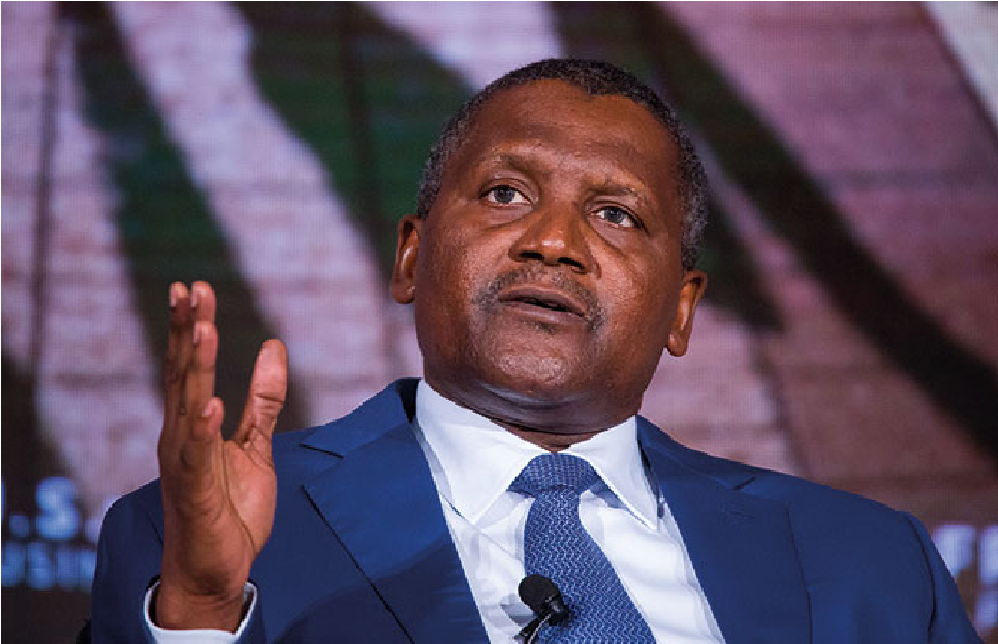
What will you call a man that sold a loss making business for $200 million, bought it back for $1 and sold it again for $362 million? I call him Dangote! Join me to take lessons from his business prowess. 

Lesson 1: the art of negotiating

In 2012, Dangote sold 65% of Dangote Flour Mills Plc (DFM) to Tiger Branded Consumer Goods Plc (TBCG) for $200 million.

In 2013, TBCG increased their stake to 70% to become the owners of the company and soon changed the company’s name from Dangote Flourmills to Tiger Branded Nigeria Ltd.

Dangote didn’t lose any sleep selling the company because it was a loss making business (the company made a loss of N2.8 billion in 2012).

TBCG didn’t have a problem buying it because they were sure they could turn it around considering their status as South Africa’s largest consumer goods producer.

Sadly, the company reported a loss of N12.6 billion in 2015 from N6.1 billion loss in 2014, and N7.9 billion loss in 2013.

On 11 December 2015, Tiger Brands and Dangote Industries Limited reached an agreement with respect to the sale of Tiger Brands’ shareholding (now 65.7%) in the Company to Dangote Industries Limited.

How much did Dangote pay to buy back DFM?

He paid $1 for 65% stake, same stake he sold of circa $200 million less than 4 years ago.

As part of the deal, Dangote would inject N10 billion into TBCG while Tiger Brands would settle all outstanding debt of about N5 billion.

This is a masterclass in deal making by all standards, when you sell a company for $200 million and come back to buy it for $1, it’s a stuff of legends, it’s no fluke. Did I hear what about the N10 billion? Don’t make a mistake, not a kobo will go to TBCG, it’s an injection of cash into the business, it’s a working capital for the business.

Before you think it was a fluke and not so much to be learnt, listen to Ian Cruickshanks:

“The chips are down now, it’s raining disaster. The sellers saw South Africans with deep pockets coming. We have shown ourselves to be totally naive in negotiating outside our own borders and have been taken for a ride,” Ian Cruickshanks, chief economist at the South African Institute of Race Relations

The punch line: “…totally naïve in negotiating…”

Lesson 2: in business, you must know what you are stepping into, no matter how promising, always do your due diligence.

It’s not sufficient to say it’s Dangote’s Company so it must be good. It’s Nigeria, there is a market so it must be profitable. In business, a deep understand of the business environment is everything.

An understanding of your business environment will reveal where your opportunities are and the possible threats to your business. This understanding will produce realistic plans, forecasts and ensure their effective implementation.

As big as Tiger Brands is, they failed those basics. Listen to what the CEO, Peter Matlare said:

“…substantial new flour capacity had come on stream in Nigeria between 2010 and 2012, when the deal was negotiated”

In perspective, if you make plans for a new market with the assumption that there is a potential to grow local capacity from 700 to 1,000 when in actual fact your competitors had grown it to a possible capacity of 1,600, you are on your own.

Again, they failed in due diligence. For a loss making business, you cannot be hanged for being too careful but they were not even careful enough.

“Someone is responsible here. Was the due diligence done properly and who did it? Were the numbers checked out by auditors and if so, let’s ask the auditors how far their professional insurance cover goes” Cruickshanks said.

Lesson 3: when you realise your mistake, take your lesson, take your loss and move on, else you will lose everything.

You have to respect the bravery and elegance of TCMG in the face of a huge loss. They were brave and swift in taking their loss. They wrote off $120 million dollars and assumed the debt of N5 billion, the CEO stepped down, the company received $1 from Dangote as consideration for 65% stake and moved on.

Tiger Brands chief operating officer Noel Doyle, said at that time that it was a “good outcome” for the group, as it protected the interests of 3,200 people in Nigeria. “It has given us as elegant an exit as is possible in the circumstances.”

Welcome Olam!

Some months back, Olam International made a cash bid of 130-billion naira ($362m) to buy Dangote Flour Mills (DFM) of Nigeria.

Via a scheme of arrangement that became effective on 1st November, 2019, Olam agreed to pay Holders of the shares of DFM N24 each per share for their holdings.

As at close of business yesterday 8th November, 2019, a lot of shareholders had received their payment, it was a good deal for shareholders of Dangote Flours by all standards, and Olam was glad to take on such a huge investment and challenge.

“We are confident about the growth prospects in this country, and this acquisition, doubling our installed capacity here, is evidence of our long-term commitment to the Nigerian economy,” KC Suresh, head of Olam’s grains and animal feed division, said.

On 30th October, 2019 DFM released their 9 months financials, it was another loss story of N6.8 billion. We hope it won’t be a de ja vu.

Whatever the outcome, the lessons from this Dangote Flour business case will remain a masterclass to be studied by foreign investors for a very long time.

We can only wish Olam well.

Final Lesson: billionaires never stop consolidating

On 4th November, 2019, Dangote Sugar Refinery announced a proposed business combination with Savannah Sugar Company Limited (SSCL), a private limited liability company engaged in sugar cane farming and sugar milling.

Dangote moved on from Flour to Sugar the same week he received consideration for his holdings in Flour, your bet is as good as mine, Sugar is sweeter.

All hail King Dangote!
Towards Curbing the Menace of Public Officers’ Convoys in Nigeria

1

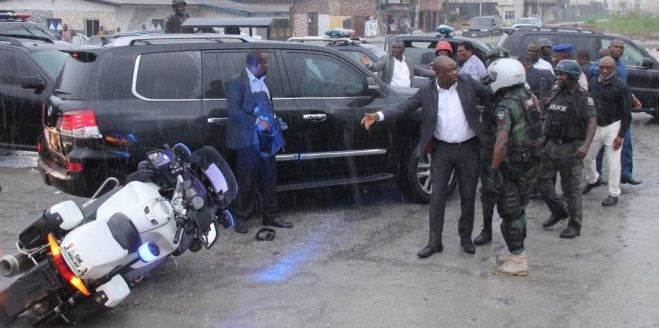
I met someone who just lost a dear one to an accident caused by a politician’s convoy. I didn’t get the whole detail, but from what I gathered, the person was inside a bus going to Nsukka from Enugu when they were ‘chased’ into a bush by the security personnel attached to a politician’s convoy. It was quite a painful story.

I didn’t doubt this person because I have experienced something close to this, except that we were lucky because our driver was good enough to nose the car into a safer place. We came out unscathed but much shaken. And to tell you that the convoy didn’t even stop to check on us is quite heart rending.

Just a few days ago, news of how a keke rider and his passenger were killed by an accident caused by this same thing I’m talking about filtered into the internet. These were not the only incident of politicians causing the death of road users. And if nothing is done, this kind of story will continue, especially as we are about to enter the festive period.

It is quite unfortunate that the people that are supposed to protect us are the ones harming us. They treat us like we are not supposed to exist. They forgot that without us, their offices won’t exist. Yes, Nigerian political office holders need to realise that they will not hold those offices if the masses are not in existence. They need to be educated on the importance of treating the masses with some respects.

For reasons best known to these politicians, they don’t want to share the roads with any other citizen. They allow their security details to cause accidents and deaths on our roads and they do nothing to stop them. We witness and hear stories about how their numerous security men – both the military, the police and the private ones – harass, beat and damage cars of people who dare not run into the bush while they pass. The people they do all these to only call on God and their ancestors to revenge their embarrassments and hurts because these politicians don’t care about what happened to the victims of their misdemeanours.

I once asked someone if these politicians will die if they slow down and pass through the busy roads like every other person. I was told that they (the politicians) were always in a hurry while passing through towns because they are afraid of assassination. I want to believe that this person was just saying what he felt because I don’t see why public officers should be afraid, unless they have nothing sinister to hide. And of course, the state of insecurity in the country doesn’t affect only public officers; we all face the danger of robbery, kidnapping and murder.

Besides, these office holders don’t move with this kind of security details while in FCT. At least, they respect every road user in Abuja, irrespective of who they are. I can’t remember sirens blaring on FCT roads, nor have I seen policemen attached to public officers breaking mirrors of motorists. So why do they treat the people in other states as if they are dirt?

They seem to forget how bad our roads are and wouldn’t be patient to wait for someone to clear out of the road properly for them to pass. All they care about is that once you hear their sirens blaring, you quickly steer clear and leave the road (whether you jumped into the gutter or bush is not their concern).

Speaking of the use of sirens, I thought sirens were banned in Nigeria, except in cases of movement of cash, ambulance, hearse and other emergencies. I know there was a time sirens weren’t used again by these office holders, but they have gradually brought back that custom. But if these people are truly running away from assassins, don’t they think that sirens will attract their ‘enemies’?

I’m honestly not against top public office holders rushing to meet up with some engagements; my concern is the harm they cause to themselves and to other people while they do that. They should consider meeting their engagements in time and in one piece. They should think about the safety of other road users and passers-by. They should equally consider taming their security men.

But then, it’s high time we Nigerians learnt to start taking these people to court. They damage lives and properties and get away with them. If people whose cars were damaged or who lost their dear ones through this inhuman act, decide to seek redress, even where the Nigerian factor in our judiciary delays judgement, a lot of positive changes will be brought into the system.

I also think the federal government needs to revisit the use of sirens by these office holders. I mean, what exactly are they trying to warn people of? Or does it mean they don’t really understand the meaning of that sound? Anyway, I don’t see any reason for them to make use of sirens because their presence shouldn’t alarm us. Even if they feel they must use siren, they should fix our roads so that cars can easily swerve out of the way when they come blaring like firemen that have an emergency case. Or alternatively, like someone said, they should move about with helicopters and leave us to manage our roads.

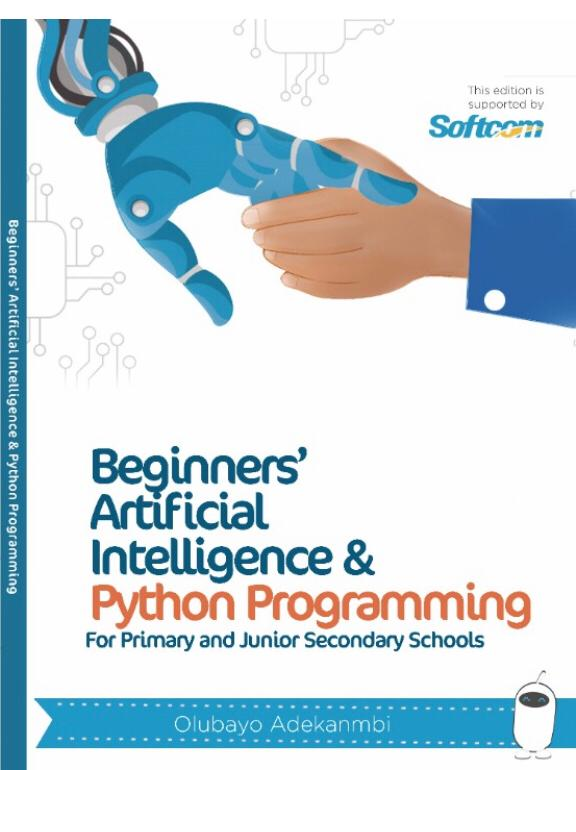
Data Science Nigeria Unveils AI Book for Primary and Secondary Schools

6

Data Science Nigeria (DSN), has launched Artificial Intelligent (AI) development book for primary and secondary schools in Nigeria. DSN’s objective is to develop communities of young minds with AI development capacity across Nigerian basic schools. The distribution of the AI development book to primary and secondary schools in Nigeria, free of charge, is one way to achieve the objective.

DSN has a ten-year road map aimed at building a community of AI experts from Nigerian primary and secondary schools. To meet this objective, the convener of DSN, Dr. Olubayo Adekanmbi, said the book will be distributed to schools nationwide with the hope that it will prepare Nigeria in the nearest future as the one of the top 10 AI destinations in the world.

In a country starved of AI knowledge, the book will serve as the foundation of the basic knowledge that young people need. It is designed to democratize AI through simplicity, a factor that will help young ones to comprehend the concepts of AI and yearn to develop what they are learning.

The book which will be unveiled at the annual Artificial Intelligence Summit that will be held on Tuesday 19th of November 2019, in Lagos, is the first of its kind targeting young students in Nigeria.

The event is scheduled to run alongside the Artificial Intelligence Demystified Masterclass for executives and the all-expense paid Artificial Intelligence bootcamp, expected to be tutored by 26 international experts. It is supported by Microsoft, Softcom, Lagos State Office of Innovation, Bluechip Technologies, Retina-AI U.S.A, Axa Mansard, Carbon, Terragon Group and MainOne.

Richly endowed with the basic and deeper information about AI, the book starts with generic introductions to the core concepts; machine learning, deep learning, reinforcement learning and then, using the Python programming language, introduces a step-by-step guide to programming.

Putting the Nigerian environment into consideration, the book is designed to develop the capacity of deep thinking in young ones: A concept that will position Nigeria to harness economic growth in the age of data mining.

The author of the book, Adekanbi said:

“My intention is to go beyond the traditional code-first approach and motivate readers by helping them to understand what the knowledge of coding can do particularly in AI as a way to build an application-focused mindset.

“By creating pervasive knowledge across the country, we will open opportunities for every Nigerian to build the skills of the future. I believe that Nigeria’s population of 200 million, with a median age of about 18 years, is a huge strategic advantage that will position Nigeria as one of the top 10 AI knowledge centers in the world, especially if we proactively re-tool and reskill our young ones with relevant skills that can drive increased employability, foreign exchange inflows, AI-enabled startups, and enhance the general quality of life through solution-oriented AI applications in health, agriculture, financial inclusion, smart cities, and more. This will greatly benefit the lives of Nigerians, starting with those who train as data scientists and artificial intelligence scientists,” he said.

Adekanmbi has accumulated experience of 20 years in hands-on data science; he is also a researcher and a business leader. These fields of play gave him the basis to develop the AI book to serve the need of Nigerian young minds.

He has led the DSN non-profit vision in its two years of operation to significant successes, initiating transformational engagements that have impacted students positively across the country. That includes the 1st Intercampus Machine Learning competition that involved over 10, 000 students from 95 universities and polytechnics, AI Masterclass for businesses in Nigeria, dedicated Artificial Intelligence Community Hub, Industry-oriented hackathons, AI summer schools for kids, AI+Clubs in secondary schools, development of Nigeria-centric Machine Learning/Deep learning curriculum etc.

Read: Where is Africa in the Age of AI? 

The spectator posture of Nigeria as the rest of the world advances in AI is worrisome. The governments have shown no or little interest in developing talents or skills linked to artificial intelligence. Therefore, Adekanmbi’s efforts in bridging the gap between Nigeria and the rest of the world when it comes to STEM bring hope to young minds whose knack for tech and science has been stymied by lack of development amenities.

There is hope that the introduction of this book to Nigerian schools will push the governments to action. The need to encourage technology among the youths cannot be over-emphasized, and as the world is moving away from oil to data-based economy, the importance cannot be ignored.

Africa Needs “Mines of Knowledge”

1

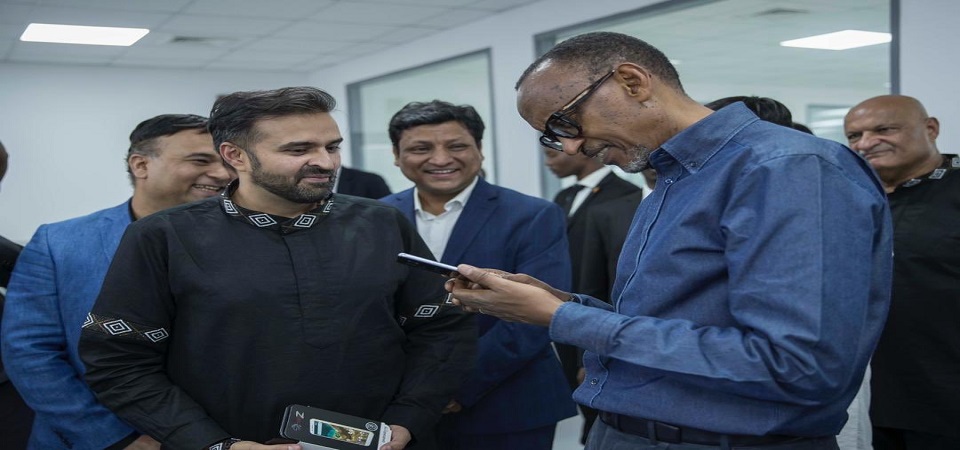
The centerpiece of new changes in Africa is the realization that mines of knowledge will always triumph over mines of gold or crude oil, in enabling sustainable economic developments. When the Rwandan government embarked on a mission to provide fast internet services via fiber-optic cable, it was working to tap into the ingenuity of its citizens. As the engineers dug the land to lay the cables, and not explore minerals, the country was extending the reach of its marketplace, not just within Africa, but internationally.


Lessons from Israel On Creating An Innovative Globally Competitive Economy

1

According to the World Economic Forum’s 2019-2020 Global Competitiveness Report, Israel is the number one country for entrepreneurship and embrace of disruptive ideas. It is also the first for macroeconomic stability, companies innovative growth, research and development expenditures and multi stakeholder collaboration.

Israel spends 4.3 percent of its GDP on R&D, the highest in the world. An average of 20 new R & D Centres are established every year by organizations in biotechnology, computing, electronics, defense and other various fields critical to human civilization with over 300 multinational corporations having their R&D Centers there. It is also first in the world for venture capital investments as a ratio to GDP.

As the Startup Nation, it breeds 600 net new startup companies every year. It’s Ecosystem is anchored on a tripod of Human Capital, Financing Infrastructure and Research Infrastructure which supports Research and Development that ultimately results in economic value.

The Israel Innovation Authority also known as Matimop is the state agency which promotes and supports Israel’s quest as an innovation nation. It helps in fostering skilled personnel across all Research Centers across the country, investment in research infrastructure, development of finance infrastructure, addresses the market failures in R&D and bridges finance death alleys.

The secret of Israel’s deep technological capabilities which breeds disruptive innovation in its society is rooted in the Israeli Defense Forces elite Talpiot Unit which exposes it’s officers to the best engineering education available in the world.  According to Eric Schmidt former Chairman and CEO of Google the Israeli tank commander who has fought in the Syrian wars is the best engineering executive in the world as they are operationally the best and are extremely detail oriented.

In the Israeli military, tactical innovation comes from the bottom up from individual tank commanders and their officers. Considering the fact that every Israeli undergoes some compulsory experience in its Israeli Defense Forces, technology talents in the Jewish nation are unbounded and unconstrained as the ideology of Chutzpah allows for thought provoking criticism aimed at challenging the existing status quo which is the secret of its victories against countries which threaten her national interest and security.

It’s immigration policy allows Jews from different countries of the world to settle in their ancestral homeland bringing their various skill sets which has led to its entrepreneurship success.

Israel established Yozma an initiative to fund innovators in conjunction with the private sector which supported a huge number of startups which recorded successful exits as unicorns and recently launched Our Crowd, a crowdfunding platform that has helped in deepening access to finance for its entrepreneurs.

Israeli Research Institutions were also the first in the world to commercialize academic research.  The Weizmann Institute of Technology established Yeda (knowledge) to commercialize its research which has fostered thousands of biotechnology products and companies amassing over $400million. The Hebrew University of Jerusalem’s technology transfer company Yissum earns over $1 billion annually from research and has registered over 5,500 patents and 1,600 inventions.

The Nigerian Ministry of Defense should collaborate with the Federal Ministry of Science and Technology and Communication and Digital Economy to engage retired officers of the three units that are engineering graduates to create startup companies.

A $1billion Defense Innovation Fund should be established by the Office of the National Security Adviser to promote Research and Development in the armed forces and fund cutting edge innovative solutions which will be deployed to solve the rising insecurity in the land and others which are important to national development that can be used by civilians will be supported by venture capital. The internet which has transformed human civilization and contributed over a trillion dollars to global economic output was a product of R&D from the United States Defense and Allied Research Products Agency that is at the heart of the USA’s technological dominance.

President Muhammadu Buhari should launch a National Innovation Fund which will be supported by the private sector and give tax credits to organizations that invest a minimum of $10 million annually to fund R & D and startups. This will help to deepen the innovation and entrepreneurship ecosystem in Nigeria to make her economy globally competitive in the comity of nations.